Меню
Страницы
Статья
About the work of the veterinary service
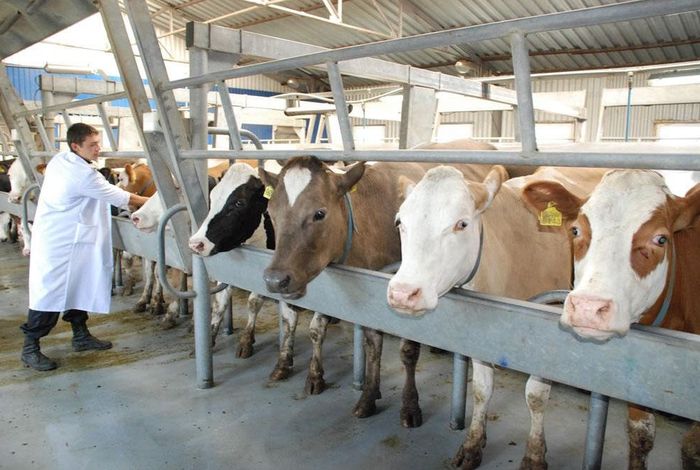
In order to ensure veterinary safety, veterinary preventive measures are taken in a timely manner to diagnose and prevent animal diseases. For the 1st quarter of 2021, veterinary preventive measures were completed by 60%.
889,364 preventive vaccinations of animals and birds were carried out against 12 diseases (9 types of especially dangerous and 3 enzootic diseases).
For the 1st quarter of 2021, a total of 287,894 diagnostic studies of animals of all types for brucellosis were carried out, allergic studies 162,545 heads (tuberculosis).
For the 1st quarter of 2021, positive responses to brucellosis were identified: cattle 190 heads, a dog 1 head.
There is a decrease in the detection rate of cattle brucellosis by 98 heads.
This year 4 unfavorable points were registered. The existing 4 points, of which 4 will be removed due to the completion of health-improving activities.
Compared to the same period in 2020, there is a decrease in disadvantaged points from 2 to 0 (- 2).
The epidemic situation with regard to avian influenza is stable. In connection with the registration of bird flu last year, a comprehensive plan of measures for the prevention of bird flu in the North Kazakhstan region for 2021 was developed.
Since the beginning of 2021, 145.1 thousand heads of offspring have been identified and entered into the cost-of-living index database, including: cattle 54.2 thousand heads, small cattle 58.8 thousand heads, horses 4.3 thousand heads, pigs 27 , 8 thousand heads.
In the region, according to the register, there are 379 cattle burial grounds.
All existing burial grounds do not meet the requirements of veterinary (veterinary and sanitary) rules approved by order of the Minister of Agriculture of the Republic of Kazakhstan dated June 29, 2015 No. 7-1/587 (primitive buildings of 1950-1960).
In 2020, 3 cattle burial grounds were built (Mamlyut 2, Taiynsha 1). Akimat of Zhambyl district in the village of Presnovka acquired a cremator AMT-1000 worth 4 million tenge, as an alternative to the cattle burial ground.
Reconstruction of 11 cattle burial grounds (Akkaiyn 1, Zhambyl 1, M. Zhumabayev 2, Kyzylzhar 4, Shal Akyn 3) was carried out. For these purposes, about 28.7 million tenge has been allocated from the regional budgets.
In 2021, a plan was approved for the construction of 26 cattle cemeteries and the reconstruction of 83 cattle cemeteries.
In addition to cattle cemeteries, there are 31 incinerators for the disposal of biological waste in the region, including 18 stationary and 13 mobile, which are an alternative to cattle cemeteries.
For 2021, it is planned to finance the Department of Veterinary in the amount of 1,686.1 million tenge. Increase of financing in comparison with the last year by 15.8%.
The total staffing of veterinary specialists of local executive bodies is 422, of which 398 are in veterinary stations and points. In fact, there are 362 units (60 vacancies), of which 341 units (57 vacancies) are in veterinary stations and points.
In 2020, a total of 42 people were employed, of which:
- graduates 12
- under the program of resettlement from labor-surplus regions of the republic 5
- under the program "With a diploma in the village" 10 young specialists
- others 15 people.
In 2020, 145,520 government services were provided.
According to paragraphs. 32-1 Article 8 of the Law of the Republic of Kazakhstan "On Veterinary Medicine", the function of conducting veterinary and sanitary control and supervision in 2020 was transferred to the territorial departments of the authorized body in the field of veterinary medicine (VCSC of the Ministry of Agriculture of the Republic of Kazakhstan) and, accordingly, the provision of state services for issuing registration numbers from local executive bodies were transferred to the regional territorial inspection of the VCSC of the Ministry of Agriculture of the Republic of Kazakhstan.
The optimization of the business processes of the state service "Carrying out identification of farm animals, with the issuance of a veterinary passport" was carried out by reducing them in terms of assigning an identification number to an animal and entering data into the cost-of-living index database, while maintaining the procedure for issuing a veterinary passport.
In 2021, the issuance of a license to engage in activities for conducting veterinary and sanitary examination of products and raw materials of animal origin was transferred to an electronic format.
In April this year, the veterinary service was reorganized. Veterinary specialists of the district departments of veterinary were transferred to the territorial inspectorates of the Veterinary Control and Supervision Committee (50 units) and the Department of Veterinary (16 units). The veterinary stations of the districts were transferred to the jurisdiction of the administration. Thus, the vertical of subordination was established region - district - rural district, approaches to management, organization and conduct of veterinary measures were changed.
In order to ensure veterinary safety, veterinary preventive measures are taken in a timely manner to diagnose and prevent animal diseases. For 2020, veterinary preventive measures have been 100% completed.
1,514.9 thousand preventive vaccinations of animals and birds were carried out against 12 diseases (9 types of especially dangerous and 3 enzootic diseases).
1,514.9 thousand preventive vaccinations of animals and birds were carried out against 12 diseases (9 types of especially dangerous and 3 enzootic diseases).
In 2020, a total of 2,445.5 thousand studies were carried out, including 997.4 thousand diagnostic studies of animals of all types for 14 diseases, allergic studies 517.5 thousand heads (tuberculosis, glanders).
In 2020, positive responses to brucellosis were identified: cattle 502 heads, small cattle 3 heads, tuberculosis 3 heads.
There is a decrease in the detection rate of cattle brucellosis by 418 heads, small cattle by 16 heads, and cattle tuberculosis by 64 heads.
This year, 14 disadvantaged settlements have been registered, restrictions have been lifted from 9 settlements. The existing 12 points, of which 7 will be removed due to the completion of health-improving activities.
There are 5 unsuccessful items remaining in 2021.
Compared to the same period in 2019, there is a decrease in disadvantaged points from 22 to 14 (- 8).
Regarding the avian flu epizootic situation. A total of 52 unfavorable points were registered.
In the outbreaks, a complex of veterinary and sanitary measures was carried out - this is the removal and destruction of dead and contact birds, mechanical cleaning and disinfection.
873 thousand doses of vaccines were allocated, 628.3 thousand heads of poultry were vaccinated. The work has been completed. Monetary compensation was paid to the owners of the seized poultry.
In connection with a complex of veterinary measures, the quarantine has been lifted.
The avian flu epidemic has stabilized.
In connection with the registration of African swine fever in the Omsk region of the Russian Federation in order to prevent an outbreak of the disease on the territory of the region, the veterinary service of the region has taken a number of measures, in particular:
- a comprehensive plan of organizational, veterinary, sanitary and economic measures was developed to prevent the occurrence of African swine fever, to prevent the introduction and spread of infection on the territory of the North Kazakhstan region from the border regions of the Russian Federation for 2020-2022;
- explanatory work is carried out among the population on the prevention of African swine fever (memos, posters);
- veterinary and sanitary control over pig farms has been strengthened.
The adoption of these measures will minimize the risks of the onset and spread of the disease in the region.
Since the beginning of 2020, 436.2 thousand heads of offspring have been identified and entered into the cost-of-living index database, including: cattle 104.7 thousand heads, small cattle 162.4 thousand heads, horses 36.2 thousand heads, pigs 132 ,7 thousand heads.
In the region, according to the register, there are 379 cattle burial grounds.
All existing burial grounds do not meet the requirements of veterinary (veterinary and sanitary) rules approved by order of the Minister of Agriculture of the Republic of Kazakhstan dated June 29, 2015 No. 7-1/587 (primitive buildings of 1950-1960).
This year, 3 cattle burial grounds were built (Mamlyut 2, Taiynsha 1). Akimat of Zhambyl district in the village of Presnovka acquired a cremator AMT-1000 worth 4 million tenge, as an alternative to the cattle burial ground.
Reconstruction of 11 cattle burial grounds (Akkaiyn 1, Zhambyl 1, M. Zhumabayev 2, Kyzylzhar 4, Shal Akyn 3) was carried out.
For these purposes, about 28.7 million tenge has been allocated from the regional budgets. The work will continue next year.
In addition to cattle cemeteries, there are 31 incinerators for the disposal of biological waste in the region, including 18 stationary and 13 mobile, which are an alternative to cattle cemeteries.
This year, in connection with the transfer of veterinary stations to the jurisdiction of the administration for veterinary measures, funds were allocated from the regional budget in the amount of 1 225.5 million tenge. Funding growth compared to last year 21.2%.
In 2021, it is planned to allocate 1 470.7 million tenge, an increase in funds by 20% compared to 2020.
The total staffing of veterinary specialists of local executive bodies is 417 units, of which 392 are in veterinary stations and points. In fact, there are 354 units, of which 335 units (57 vacancies) are in veterinary stations and points.
In 2020, a total of 42 people were employed, of which:
- graduates 12
- under the program of resettlement from labor-surplus regions of the republic 5
- under the program "With a diploma in the village" 10 young specialists
- others 15 people
In 2020, 137,580 government services were provided.
According to paragraphs. 32-1 Article 8 of the Law of the Republic of Kazakhstan "On Veterinary Medicine", the function of conducting veterinary and sanitary control and supervision was transferred to the territorial departments of the authorized body in the field of veterinary medicine (VCSC of the Ministry of Agriculture of the Republic of Kazakhstan) and, accordingly, the provision of state services for issuing registration numbers from local executive bodies was transferred to regional territorial inspection of the VCSC of the Ministry of Agriculture of the Republic of Kazakhstan.
The optimization of the business processes of the state service "Carrying out identification of farm animals, with the issuance of a veterinary passport" was carried out by reducing them in terms of assigning an identification number to an animal and entering data into the cost-of-living index database, while maintaining the procedure for issuing a veterinary passport. To date, changes are being made to the current regulatory legal acts regarding the issuance of veterinary passports in electronic format. This norm will simplify the issuance and speed up the receipt of veterinary passports by service recipients.
In addition, in 2021, the issuance of a license to engage in activities for the conduct of veterinary and sanitary examination of products and raw materials of animal origin will be transferred to an electronic format, which will reduce the conditions for corruption (lack of direct contact between the service recipient and the service provider), reduce the number of errors in the registration of veterinary documents.