Меню
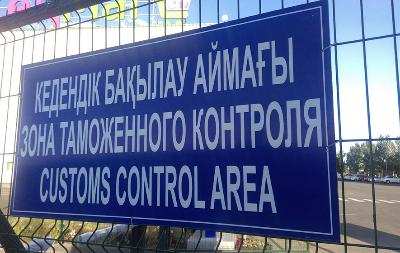
Customs control is carried out by the customs authorities in accordance with the customs legislation of the Eurasian Economic Union and (or) the Republic of Kazakhstan.
Customs control is carried out in relation to the objects of customs control with the application to them of the forms of customs control defined by this Code and (or) measures ensuring the conduct of customs control.
In order to identify goods transported across the customs border of the Eurasian Economic Union in violation of the customs legislation of the Eurasian Economic Union and (or) the Republic of Kazakhstan, customs control may be carried out in respect of individuals crossing the customs border of the Eurasian Economic Union.
When conducting customs control, the customs authorities proceed from the principle of selectivity of the objects of customs control, forms of customs control and (or) measures that ensure the conduct of customs control.
When selecting the objects of customs control, forms of customs control and (or) measures that ensure the conduct of customs control, a risk management system is used.
Forms of customs control and (or) measures ensuring the conduct of customs control are applied by the customs authorities to ensure compliance with the customs and other legislation of the Republic of Kazakhstan.
The application by customs authorities of forms of customs control and (or) measures that ensure customs control when performing customs operations related to customs clearance before release is carried out only on the basis of an automated risk management system.
Customs authorities, within their competence, carry out other types of control, including export, currency, radiation, in accordance with the legislation of the Republic of Kazakhstan.
On behalf of the customs authorities, customs control is carried out by customs officials authorized to conduct customs control in accordance with the legislation of the Republic of Kazakhstan and within the limits of their official powers.
Customs control in the form of verification of customs, other documents and (or) information, as well as in other forms or with the use of measures ensuring the conduct of customs control, may be carried out by customs authorities through the information system of customs authorities without the participation of customs officials.
In order to verify the information confirming the release of goods, customs authorities may conduct customs control in respect of goods located in the customs territory of the Eurasian Economic Union, if the customs authorities have information that the goods were imported into the customs territory of the Eurasian Economic Union and (or) are located in the customs territory of the Eurasian Economic Union in violation of the customs legislation of the Eurasian Economic Union and (or) the Republic of Kazakhstan.
When conducting customs control, the customs authorities do not require any permits, regulations or resolutions of other state bodies of the Republic of Kazakhstan to conduct it.
When conducting customs control, the customs authorities and their officials shall not have the right to establish requirements and restrictions that are not provided for by the customs legislation of the Eurasian Economic Union, customs and other legislation of the Republic of Kazakhstan.
When conducting customs control, it is not allowed to cause undue harm to the carrier, the declarant, persons engaged in activities in the field of customs affairs, and other persons whose interests are affected by decisions, actions (inaction) of customs authorities or their officials during customs control, as well as goods and vehicles.
Customs control is carried out in customs control zones and other places where goods are (should or may be) located, including international transport vehicles and vehicles for personal use, subject to customs control, documents and (or) information systems containing information about such goods.
The results of customs control with the use of customs control forms in the cases provided for by this Code shall be drawn up by drawing up customs documents of the established form or by other means provided for by this Code.
Answer
The taxation of IPN dividends depends on several conditions. A natural person is exempt from paying IPN from dividends if the following conditions are met at the same time:
on the day of accrual of dividends, the founder has owned a share in the LLP for more than 3 years;
The LLP is a resident of the Republic of Kazakhstan, but is not a subsurface user during the period for which dividends are paid;
the property of the founder, who is a subsurface user, in the value of the assets of the resident LLP, on the day of payment of dividends is no more than 50%.
If all three conditions are met simultaneously, the LLP has the right to accrue dividends to the founder and pay them without withholding the IPN at the source of payment.
If at least one condition is not met, the amount of dividends is subject to IPN at the rate of 5%.
When paying dividends, the social tax is not calculated if the conditions similar to the conditions for the exemption of dividends from the payment of IPN are met.
Customs operations related to the verification of the information specified in the transit declaration and its registration (Article 182 of the Code) are carried out within the time limits provided for in paragraph 5 of Article 154 of the Code, and customs operations related to the issuance of a transit declaration in accordance with Article 193 of the Code must be completed within four hours from the date of registration of the transit declaration.
According to Article 8 of the Code, goods are moved across the customs border of the EEU and (or) placed under customs procedures in compliance with prohibitions and restrictions.