Меню
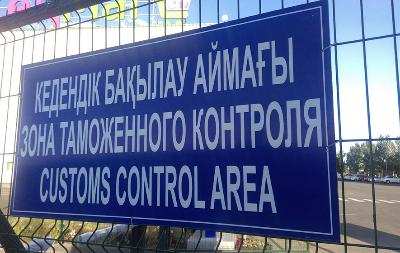
Customs control is carried out by the customs authorities in accordance with the customs legislation of the Eurasian Economic Union and (or) the Republic of Kazakhstan.
Customs control is carried out in relation to the objects of customs control with the application to them of the forms of customs control defined by this Code and (or) measures ensuring the conduct of customs control.
In order to identify goods transported across the customs border of the Eurasian Economic Union in violation of the customs legislation of the Eurasian Economic Union and (or) the Republic of Kazakhstan, customs control may be carried out in respect of individuals crossing the customs border of the Eurasian Economic Union.
When conducting customs control, the customs authorities proceed from the principle of selectivity of the objects of customs control, forms of customs control and (or) measures that ensure the conduct of customs control.
When selecting the objects of customs control, forms of customs control and (or) measures that ensure the conduct of customs control, a risk management system is used.
Forms of customs control and (or) measures ensuring the conduct of customs control are applied by the customs authorities to ensure compliance with the customs and other legislation of the Republic of Kazakhstan.
The application by customs authorities of forms of customs control and (or) measures that ensure customs control when performing customs operations related to customs clearance before release is carried out only on the basis of an automated risk management system.
Customs authorities, within their competence, carry out other types of control, including export, currency, radiation, in accordance with the legislation of the Republic of Kazakhstan.
On behalf of the customs authorities, customs control is carried out by customs officials authorized to conduct customs control in accordance with the legislation of the Republic of Kazakhstan and within the limits of their official powers.
Customs control in the form of verification of customs, other documents and (or) information, as well as in other forms or with the use of measures ensuring the conduct of customs control, may be carried out by customs authorities through the information system of customs authorities without the participation of customs officials.
In order to verify the information confirming the release of goods, customs authorities may conduct customs control in respect of goods located in the customs territory of the Eurasian Economic Union, if the customs authorities have information that the goods were imported into the customs territory of the Eurasian Economic Union and (or) are located in the customs territory of the Eurasian Economic Union in violation of the customs legislation of the Eurasian Economic Union and (or) the Republic of Kazakhstan.
When conducting customs control, the customs authorities do not require any permits, regulations or resolutions of other state bodies of the Republic of Kazakhstan to conduct it.
When conducting customs control, the customs authorities and their officials shall not have the right to establish requirements and restrictions that are not provided for by the customs legislation of the Eurasian Economic Union, customs and other legislation of the Republic of Kazakhstan.
When conducting customs control, it is not allowed to cause undue harm to the carrier, the declarant, persons engaged in activities in the field of customs affairs, and other persons whose interests are affected by decisions, actions (inaction) of customs authorities or their officials during customs control, as well as goods and vehicles.
Customs control is carried out in customs control zones and other places where goods are (should or may be) located, including international transport vehicles and vehicles for personal use, subject to customs control, documents and (or) information systems containing information about such goods.
The results of customs control with the use of customs control forms in the cases provided for by this Code shall be drawn up by drawing up customs documents of the established form or by other means provided for by this Code.


The Department of State Revenue for the Mangystau region informs that changes in the payment dates of import customs duties and taxes are carried out in the form of deferral or installments.
The grounds for changing the terms of payment of taxes, as well as the conditions and procedure for changing them, are established by the tax legislation of the Republic of Kazakhstan.
Deferred or installment payment of import customs duties is provided in respect of goods placed under the customs procedure of release for domestic consumption.
Deferral or installment payment of import customs duties is a change in the deadline for payment of import customs duties with a one-time or phased payment by the payer of the deferred or installment amount, respectively.
When goods are released with the granting of a deferral of payment of import customs duties, the amount of import customs duties in respect of which a deferral has been granted is payable no later than the last day of the period for which such deferral has been granted.
(unofficial translation)
The Department of State Revenue for the Mangystau region informs that a Passenger customs declaration is a document filled out by individuals when moving goods for personal use across the border of the Eurasian Economic Union (EAEU).
There are the following ways to submit a declaration:
- E-government portal eGov.kz ;
- e-Salyq Azamat mobile application.
The passenger customs declaration is submitted by individuals. The service is provided free of charge. The service period is within 4 hours of business hours from the moment of registration of the passenger customs declaration.
The goods for which a passenger customs declaration is required include:
- money in the amount equivalent to 10,000 US dollars (the exchange rate is taken into account on the date of border crossing);
- personal motor vehicles;
- precious materials;
- cultural values;
- animals and plants;
- weapons and narcotic substances.
When imported into the territory of the EAEU, goods whose quantity and value exceed the duty-free import rate are also subject to mandatory declaration.
Administrative as well as criminal liability has been established for non-declaration of goods for individuals.
(unofficial translation)
The Department of State Revenue for the Mangystau region informs in which cases, when goods are imported by an individual from abroad, they are recognized as goods for personal use, and what restrictions apply in this regard.
The specifics of the procedure and conditions for the movement of goods for personal use across the customs border of the Eurasian Economic Union are defined in Chapter 39 of the Code of the Republic of Kazakhstan "On Customs Regulation in the Republic of Kazakhstan".
In accordance with the criteria for classifying goods transported by individuals across the customs border of the Customs Union as goods for personal use (Order of the Ministry of Finance of the Republic of Kazakhstan dated 31.03.2015 No. 250), if:
1) their number does not exceed the following indicators:
fur products (including hats) classified in heading 4303 of the 10 Customs Code of the EAEU – 1 (one) item of the same name, size and style per person;
mobile phone – 2 (two) units per person;
tablet – 2 (two) units per person;
portable portable computer and its accessories (laptop, netbook) – 1 (one) unit per person;
jewelry – 5 (five) items per person;
bicycle – 1 (one) piece per person;
baby carriage – 1 (one) piece per person;
2) the frequency of an individual's crossing and (or) movement of goods across the customs border of the Customs Union does not exceed 1 (one) once a month.
Also, vehicles for personal use imported into the customs territory of the Customs Union by any means, if their number exceeds 1 (one) unit per year, are considered as intended for entrepreneurial activity.
Without paying customs duties and taxes, goods for personal use are imported into the customs territory of the EAEU within the limits of value, weight and (or) quantitative norms in accordance with the Decision of the EEC Council of December 20, 2017 No. 107.
That is, in addition to air transportation, the norm for goods imported on foot and accompanied and/or unaccompanied baggage is 500 euros and 25 kg. And the norm for goods delivered by the carrier or in international mail is 200 euros and 31 kg.
If the value and weight of the goods exceed the specified norms, 30 percent of the value, but not less than 4 euros per 1 kg of weight in excess, of the imported goods in accompanied or unaccompanied baggage, is paid.
If the goods delivered by the carrier or in international mail exceed the norm, 15 percent of the cost is paid in excess of the cost norm, but not less than 2 euros per 1 kg of weight in excess of the weight norm.
(unofficial translation)