
Sociological studies “On the religious situation in the Republic of Kazakhstan” and “Assessment of state policy in the religious sphere by the population of Kazakhstan”.
Sociological studies
In order to study and develop effective measures for the further development of state policy in the religious sphere, state-confessional and interfaith relations, including the study of pressing problems in the field of prevention and combating religious extremism and terrorism and the formation of population immunity to them, the Religious Affairs Committee of the Ministry of Information and Social development of the Republic of Kazakhstan annually carries out a complex of sociological studies in the field of religion.
In 2019, 2 sociological studies were conducted on the topics: “On the religious situation in the Republic of Kazakhstan” and “Assessment of state policy in the religious sphere by the population of Kazakhstan”.
These studies are aimed at identifying and studying urgent problems in the field of religion.
To date, 3,796 religious organizations are registered in the country, representing 18 faiths: 2,664 Islamic, 342 Orthodox, 86 Catholic, 591 Protestant, 60 Jehovah's Witnesses, 24 New Apostolic churches, 11 Society for Krishna Consciousness, 7 Jewish, 6 Bahai Community, 2 Buddhist, 2 Churches of Jesus Christ of Latter-day Saints (Mormons), 1- Unification Church (Munites).
According to the results of studies conducted in 2019, 92.8% of the population identified themselves as believers. However, there is a decrease in the number of believers in certain regions: North Kazakhstan (59.8%), East Kazakhstan (52.5%) and Pavlodar (44.5%) regions. Most of the country's population adheres to the Islamic (70.2%) and Orthodox (26%) religions.
The results of studies showed that 89.5% of the population support government policy in the religious sphere. 63.04% of the population support secular principles of state development. 76.9% of the population is informed about the work on prevention of religious extremism in the regions of the country.
According to the results of three measurements, the religious situation in the country was rated as “prosperous” and “rather prosperous” by 83% of respondents: in the 2nd quarter, this indicator was 92.4%, in the 3rd quarter - 75.5%, in the 4th quarter - 81, 2% (Figure 1).

Figure 1. How do you assess the religious situation in Kazakhstan?
The degree of religiosity in Kazakhstani society allows us to identify not only the share of the practicing population, but also to determine the proportion of people who may be sensitive in matters of religion in various contexts, ranging from the perception of news to domestic conflicts.
To this end, the questionnaire included questions on the determination of religious, ethnic, regional identity, as well as the nature of religious practices (Figure 2).

Figure 2. Do you consider yourself a believer?
Religious robes, especially hijab, are becoming the norm in our society and are positively perceived by almost half of the respondents. So, those who answered “positively, I respect the feeling of believers” dominate in number and make up 38.4% (in the 2nd quarter - 48.3%, in the 3rd quarter - 35.1%). In addition, in the 4th quarter the number of those who feel negatively about this type of clothing increased (Figure 3).
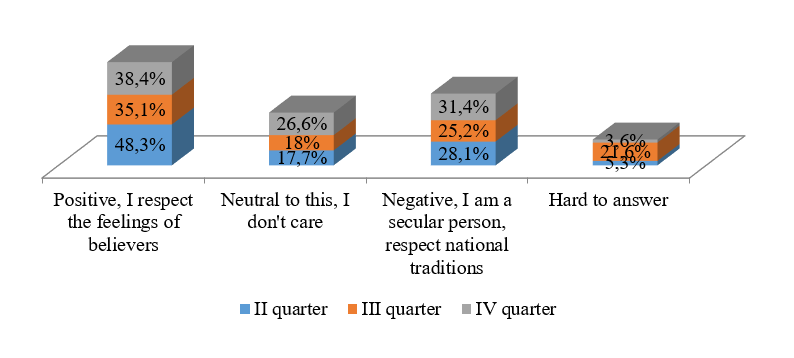
Figure 3. How do you feel about the fact that some Muslims wear clothes and objects that demonstrate religious affiliation? (hijabs, niqabs, etc.)
Thus, the four opinion groups that were grouped in the third quarter remain significant. A group of those who accept religious clothing, a group of people who are neutral on this issue, and a group of those who oppose this style of clothing, as well as those who have not thought about such a manifestation of our society (Figure 4).

Figure 4 Do you like the fact that some Muslims wear clothes and objects that demonstrate religious affiliation? (hijabs, niqabs, etc.) (in a regional section).
Today, the Internet is the most accessible source of information that is in high demand among the population.
12.1% of the population receive information on religious issues from watching television, which is one of the most important sources of information in rural areas, especially where mobile communications and Internet access are poorly developed. In the 4th quarter, this indicator decreased from 27.2% in the second quarter and 15% in the 3rd quarter (Figure 5).
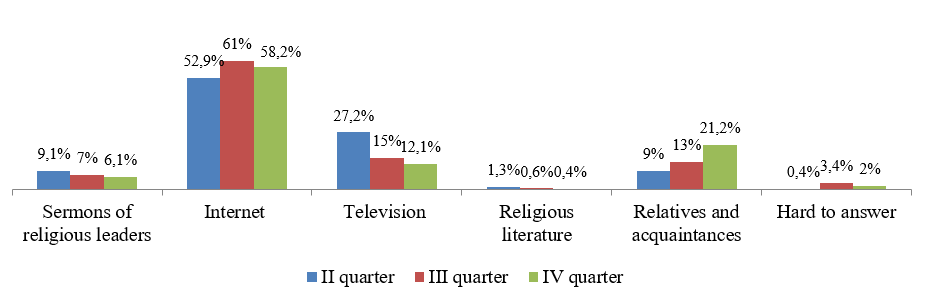
Figure 5. From what sources do you primarily receive information about religious issues?
According to the next survey, the vast majority of respondents did not encounter legal restrictions on religious grounds. The sum of the answers “no, I don’t feel that” and “rather no, than yes” in the second quarter was 85.8%, in the 3rd quarter - 92.4%, in the 4th quarter - 89.1%. The proportion of those who experienced infringement of their rights on religious grounds decreased in comparison with the previous measurement: in the second quarter - 7.6%, in the 3rd quarter - 14.2%, and in the 4th quarter - 10.9% (Figure 6).

Figure 6. Do you perceive violation of your rights on religious grounds?
Legislation in the field of religion regulates legal responsibility of citizens and religious organizations on the territory of the Republic of Kazakhstan. People rarely encounter this law in everyday life, however, during the study it is important to examine how well citizens understand the ideas of the law regarding state regulation of religious activities and the principles of the secular structure of the state.
In a rule of law state, citizens need to have an idea of the main provisions of the law. Therefore, the respondents were asked the question: “Do you know the laws that govern the religious sphere in Kazakhstan?”
According to the results of 4th quarter, more than half of the respondents (53%) are aware of the existence of such a law, but do not have sufficient information.
The proportion of citizens who confidently answered that they knew the law slightly increased: the 2nd quarter - 13.4%, the 3rd quarter - 10.5%, the 4th quarter - 16%.
About a quarter (23-27.6%) of Kazakhstani respondents do not know the law (Figure 7).

Figure 7. Do you know the laws that regulate the religious sphere in Kazakhstan?
In the regional context, a high level of civil legal culture in terms of knowledge of the law is inherent in the respondents of the Akmola region (82.6%), Aktobe (25.8%), Kyzylorda (22.1%).
Most of those interviewed who have heard but do not have enough information are residents of the cities of Shymkent (62.5%) and Almaty (61.8%), Aktobe (67.8%), West Kazakhstan (65.3%), Turkestan (64.9%) regions (table 1).
Table 1. Do you know the laws that regulate the religious sphere in Kazakhstan?
The study identified the causes of the spread of radical ideology in society. For these purposes, the respondents were asked the question: "What do you think are the main reasons for the spread of ideas of religious extremism in Kazakhstan?" The reasons indicated by the respondents can be divided into three groups: socio-economic, sociocultural and political.
According to respondents, the main reasons for the spread of the ideas of religious extremism in Kazakhstan are socio-economic difficulties. So, about one third of the respondents report “deteriorating living standards” as the main reason: 2nd quarter - 28%, 3rd quarter - 33%, 4th quarter - 26% (Figure 8).
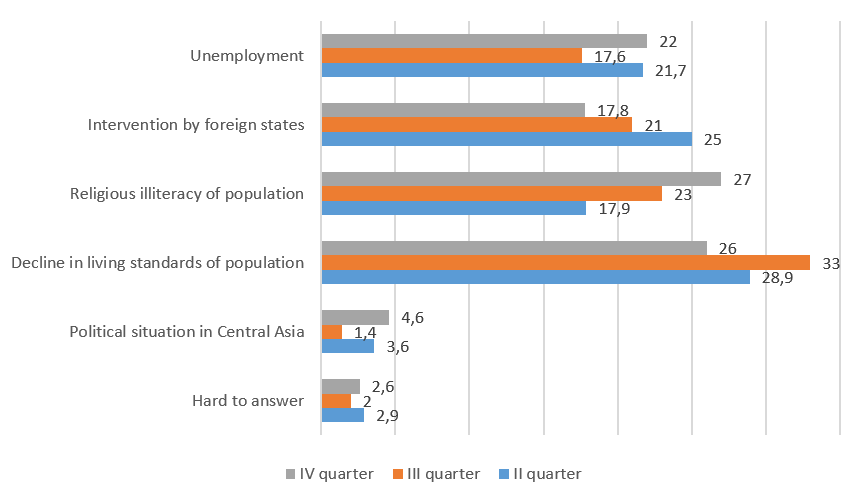
Figure 8. The main reasons for the spread of the ideas of religious extremism in Kazakhstan (%)
The effectiveness rating (the answers “effective” and “rather effective than not”) of the work of state bodies on the prevention of religious extremism and terrorism in the 4th quarter is as follows (Figure 9):
- National Security Committee - 77%;
- Ministry of Interior Affairs - 64%;
- City, district akimats - 59%;
- General Prosecutor's Office - 56%;
- Regional akimats - 51%;
- Ministry of Education and Science - 50%;
- Ministry of Information and Social Development - 40%.
The average level of effectiveness of government bodies in the prevention of religious extremism and terrorism is 56.7%.

Figure 9. Evaluate the work of the following government bodies on prevention of religious extremism and terrorism in Kazakhstan? (%)
Survey participants were asked to comment on what they think about the spread of destructive religious movements among various social groups.
Every second respondent indicated that destructive religious movements spread the fastest among young people (2nd quarter - 45.7%, 3rd quarter - 53%, 4th quarter - 50.4%).
More than one third (2nd quarter - 40.4%, 3rd quarter - 30%, 4th quarter - 37.8%) believe that the spread of destructive religious movements occurs most of all among the unemployed. Moreover, approximately one in ten of the survey participants pointed to the ethno-confessional aspect, bearing in mind that this phenomenon most often spreads among representatives of the Kazakh ethnic group (Figure 10).

Figure 10. Among what social groups do destructive religious movements spread? (%)
The most popular information source on issues of religion for respondents is the Internet. In turn, television is one of the most important sources of information in rural areas, where mobile communications and Internet access are poorly developed.
In this regard, to disseminate information on pressing religious issues, it is necessary to focus on the Internet, to increase the number of high-quality posters and short videos posted on online sites, especially given the widespread use of Internet resources by various categories of youth.
One out of every two respondents indicated that destructive religiosity spreads most quickly among young people.
Based on the answers received, the reasons for the spread of ideas of religious extremism in Kazakhstan, indicated by respondents, can be divided into three groups: socio-economic, sociocultural and political.
The main reasons for the spread of the idea of religious extremism in Kazakhstan are problems of socio-economic nature.
The results and recommendations of the research are used to further develop certain areas of activity in the religious sphere, including targeted spot work in the field.