Меню
The President's Message clearly States that the agricultural sector should become a new driver of our economy. Animal husbandry is also the main activity in our area. Therefore, the development of the agro-industrial complex is closely related to the growth of the population's welfare. The President of the country paid special attention to this in his message. Every year, large-scale support for this industry is provided through state programs.
The volume of gross agricultural output for the reporting period amounted to 9 billion 54 million tenge, which is 19% higher than in 2018.
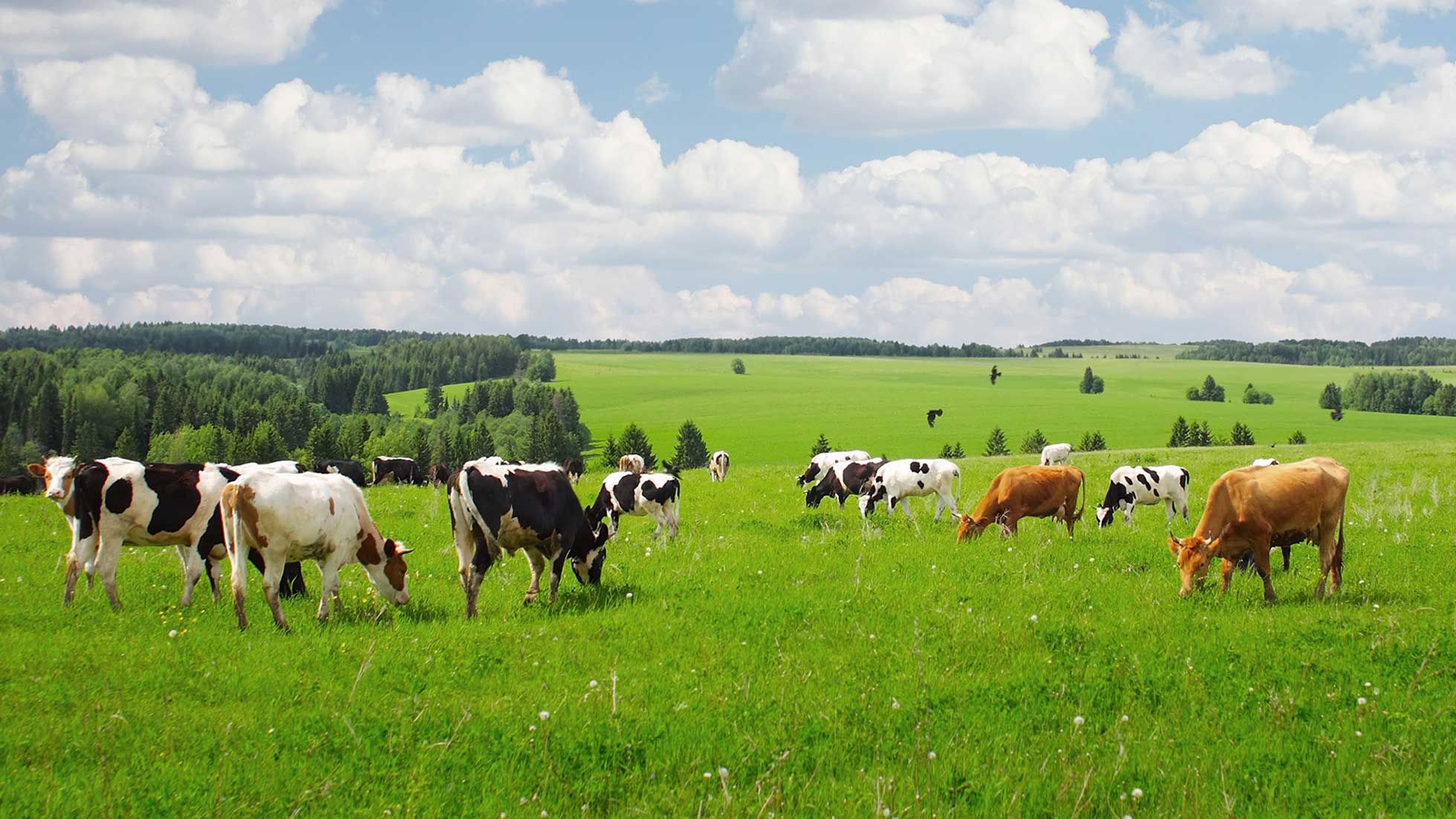
As of January 1, 2020, the number of cattle was 68,200, sheep and goats - 87,608, horses - 24,773, and camels - 971. Growth is observed in cattle and horses. For example, the number of cattle increased by 5,1%, and horses by 8,3%.
In the district there are 523 farms. Farms of the district produced 7,178 tons of meat, 13,076 tons of milk, compared with 2018, meat production increased by 5,4%, milk by 0,5%.
We are constantly working to demand efficient use of agricultural land and return unused land to state ownership. Last year, 10,700 hectares of land from 12 farms that were not used for their intended purpose were returned to state ownership. In 2019, according to the results of competitions organized for the development of free agricultural land, 23 farms were granted 15,500 hectares of land.
The district is actively working on the purchase and import of breeding Queens of cattle from abroad. Under the "Sybaga" program, 5 farms purchased 166 heads from Russia, 240 heads of Hereford and Angus heifers from Belarus, and the "Naryn" farm purchased 70 heads of Hereford heifers from the State breeding station.
Systematic work and results in animal husbandry have a positive impact on the reproduction of livestock. Last year, 3 farms received the status of "breeding livestock", which resulted in the number of these farms reached 24, they registered 7125 heads of breeding cattle (6074 heads of cattle, 771 heads of horses, 280 heads of camels).
In 2019, 486 million 570 thousand tenge was paid to 226 farms to subsidize the increase in productivity and quality of livestock products.
In order to ensure veterinary safety, systematic work is being carried out. During the reporting period, brucellosis was detected in 639 heads of cattle and 9 heads of small cattle. Compared to 2018, the number of cases of cattle decreased by 15%, and small cattle by 65%. And in camels and horses, brucellosis was not detected. Sick animals were isolated and transported to slaughter stations. In General, the epizootic situation in the area is stable.
135 thousand tons of feed were harvested in the district, and the plan was fulfilled by 100%.
Last year, 357 tons of cattle meat, 40 tons of lamb and 4 tons of horse meat were exported.
The material and technical base of the district's agriculture is updated annually. Last year, 33 tractors, 4 Gazelles and 1 UAZ and 50 units of various agricultural machinery were purchased for leasing. In addition, as part of the "Sybaga" program, 1 peasant farm purchased 2 American "John Deere" tractors.
In the area of 517 wintering areas, 291 of them are not connected to the electric grid. In recent years, in 183 wintering areas that are not covered by electric lighting, farms have installed solar panels as an alternative type of energy. Including last year, 102 solar panels were installed. In addition, 36 wells were dug as part of the project to supply water to livestock farms.
Farmers who updated their equipment, installed solar panels and built wells received investment subsidies from the state in the amount of 462 million 240 thousand rubles.