Меню
Страницы
Статья
Аbai 175
Abay wrote his first poem at the age of 10. By the age of 59, he had written more than 170 poems and more than 20 songs. In his "Words of wisdom", the poet described the life of that time, the behavior of people. These words are still relevant, as they describe the life of the Kazakh people and the image of the Kazakh society.
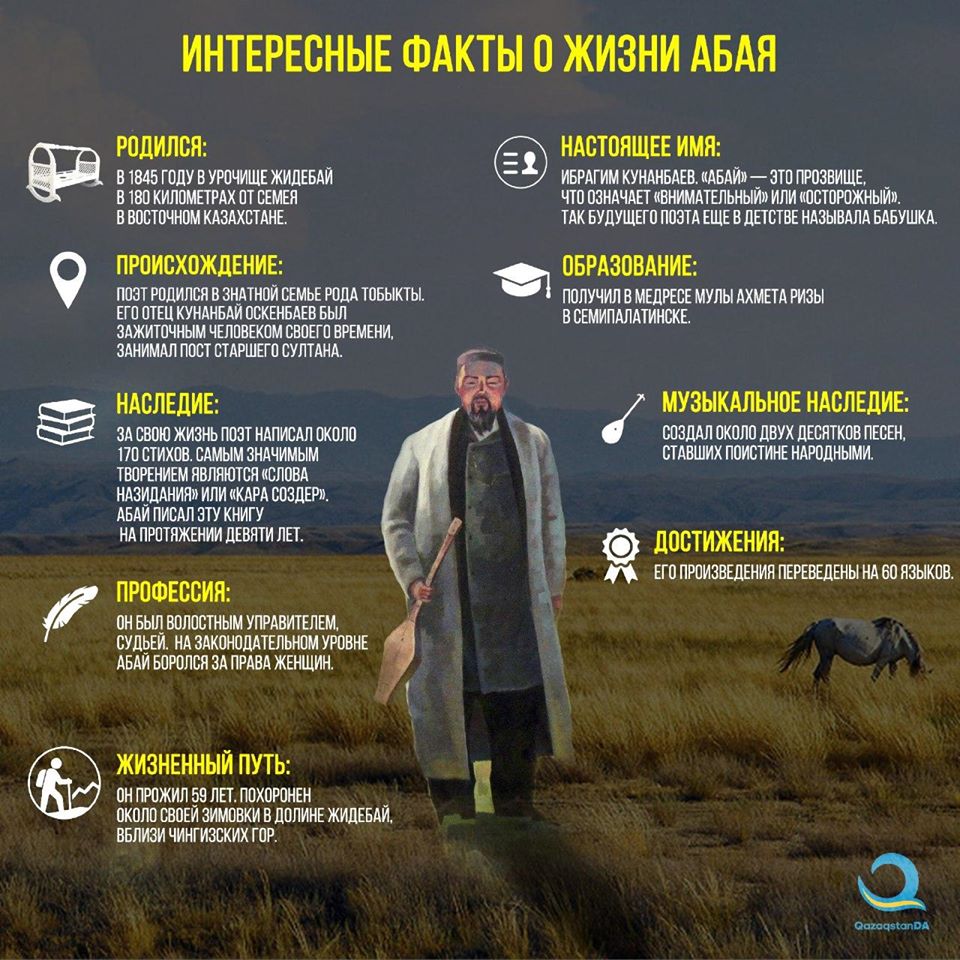
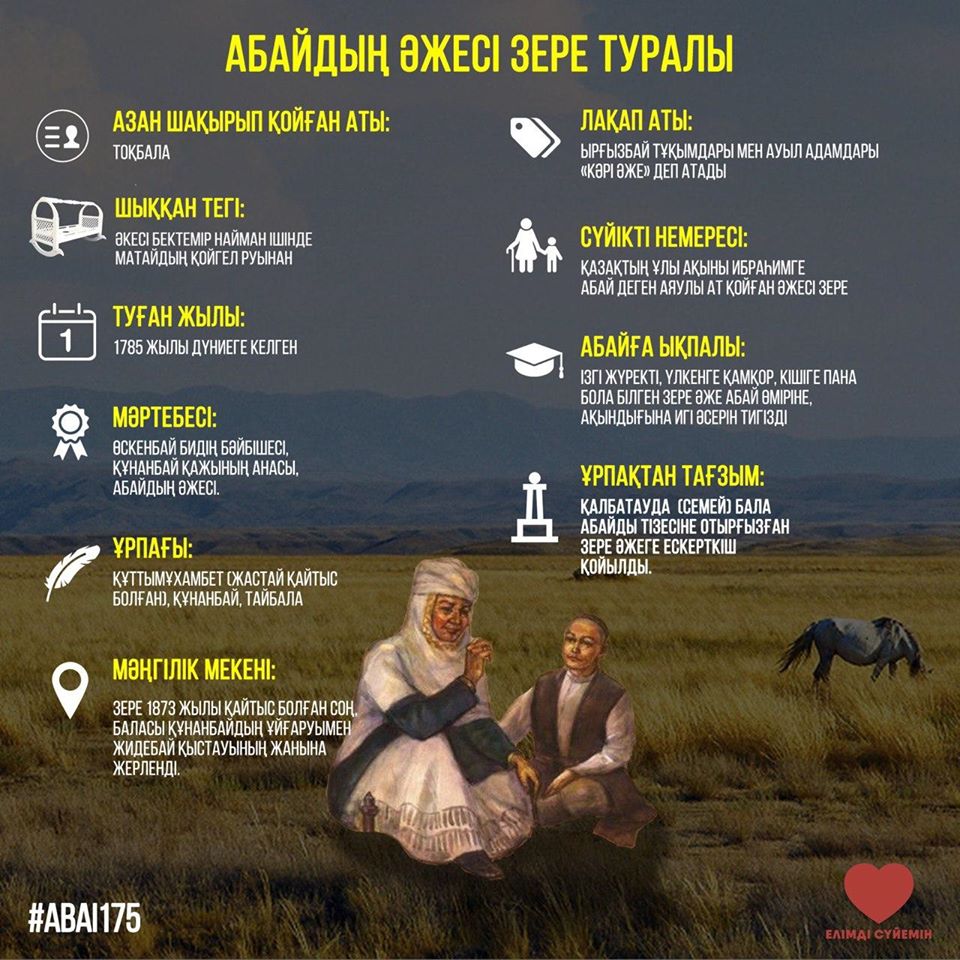
Ibrahim got the name Abai from his grandmother Zere. In Kazakh language "abai" means cautious and circumspect. This name was very suitable for a smart, precocious boy, who was not a bully, did not like to spend time just playing games with his peers. He enjoyed listening to stories and fairy tales by his grandmother and mother, and when he grew up, he read books that he found in the house.
As with all great artists, Abai’s legacy has been interpreted differently in each subsequent period. Soviet specialists put the strongest emphasis on the social relevance of his work: whereas in the 1920s, the focus was more on the individualistic and spiritual aspects of his texts, in particular, the suffering of the intellectual in a world that largely disrespects education, in post-Soviet decades, the national specifics of Abai’s oeuvre became prevalent. Reading Abai’s poetic texts today, it is clear that they contain multiple elements and allow for a variety of interpretive approaches, all of which are legitimate in their own way. However, the surest method to understand Abai in a way that is true to his original intentions. It is not an exaggeration to say that any exploration of Kazakhstan without an immersion in the legacy of Abai would be incomplete.
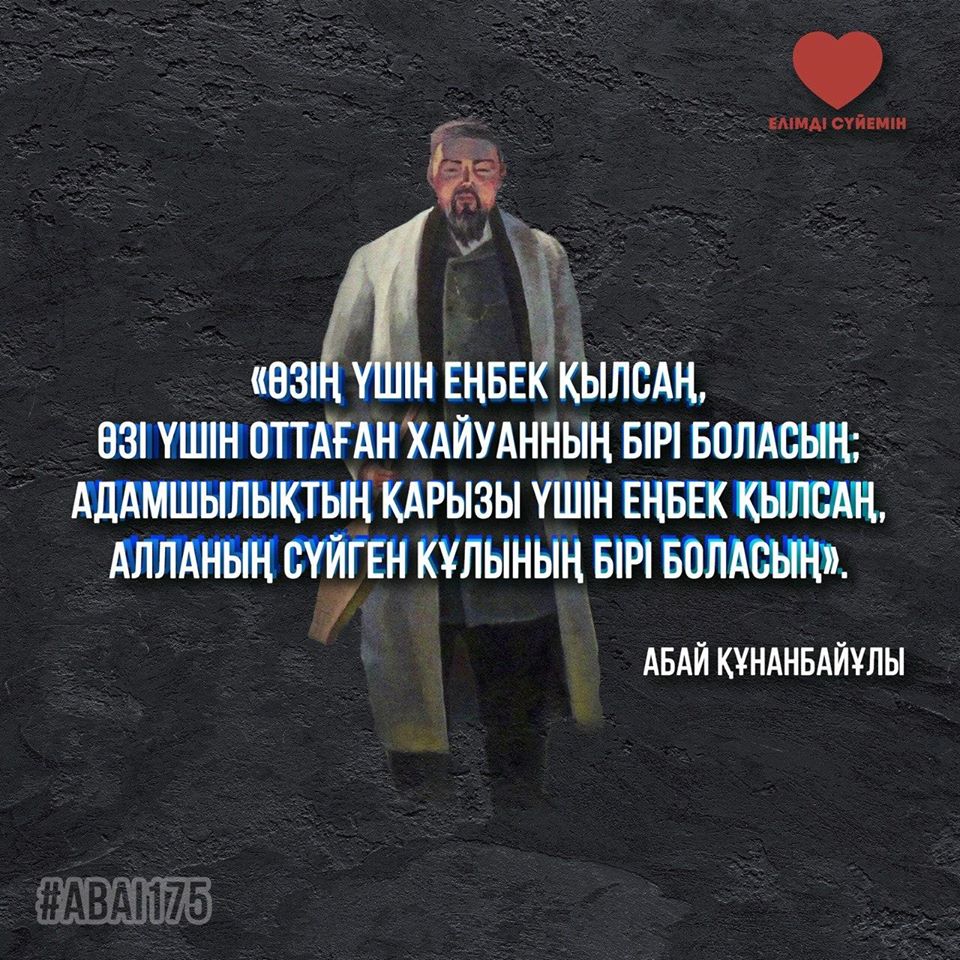
It is this uncompromising honesty about himself that earned Abai the right to judge his own people with unrelenting candor.

Abai harbored no illusions about humankind. He describes human behavior as dominated by greed, dishonesty, contempt for others, pride, and ignorance. But he insists that these same human beings, both as individuals and as a nation, are free to make moral choices. He knows human nature; he has observed it keenly and studied it deeply. He shares his insights, hard to accept though they may be, with those who are willing to accept harsh truths. These human beings can opt for the values that Abai holds dearly: education and knowledge, respect and decency, truth and honesty, peace and love. That is the message of Abai, Kazakhstan’s greatest thinker, an inconvenient sage. Because Abai’s poetry addresses such a wide array of themes, from nature and love to life, death, and the character flaws of the nation, it seems fair to say that Abai is a poet for all seasons. His universality, sensitivity, and truthfulness explain why Abai’s poetic legacy is alive and dear to Kazakh readers today.