GOV.KZ – Single platform for the digital resources of government agencies
On September 17, 2026, the Embassy of Kazakhstan in Mexico held a presentation on Kazakhstan’s investment and economic opportunities for representatives of federal and local government authorities, the business community, and non-governmental organizations. The event also attracted interest from staff members of foreign diplomatic missions.
Kazakhstan remains relatively little-known to the Mexican population. Getting to know our country often begins through Kazakhstan’s vibrant cultural and sporting projects. In particular, there is considerable excitement in Mexico surrounding Dimash Qudaibergen’s upcoming concerts in November.
In this regard, Ambassador Almurat Turganbekov expressed his special appreciation to Maribel Martinez Ruiz, Chair of the Friendship Group of the Chamber of Deputies of the Mexican General Congress, for her support in organizing a series of events in connection with the upcoming concert.
The world-renowned professional boxing star Gennady “GGG” Golovkin enjoys great popularity.
The talent of world No. 1 tennis player Elena Rybakina has also won many fans.
As part of the presentation, the Embassy informed the guests that Kazakhstan, as the heir to the civilization of the Great Steppe, has a rich history dating back many centuries.
Our country is pursuing a targeted policy aimed at both improving its domestic political structure and modernizing the economy and investment climate.
In particular, the participants were briefed on the key outcomes of the political reforms introduced following the adoption of the country’s new Constitution.
At the same time, the Embassy presented major national projects aimed at developing transport infrastructure along key international corridors passing through Kazakhstan, further advancing digitalization and the adoption of artificial intelligence across various sectors, as well as the construction of the new smart city of Alatau City.
Moreover, examples of the development of bilateral trade with Mexico and other countries of North and South America in recent years clearly demonstrated that distance is not a significant obstacle. In today’s world, seeking new opportunities is a key condition for maintaining stability and competitiveness, particularly amid disruptions to traditional supply chains.
In this regard, Kazakhstan is one of the countries with which expanding comprehensive ties offers additional opportunities.
Representatives of government and business circles expressed interest in cooperation. Particular attention was drawn to the potential for introducing Kazakhstani e-government technologies in Mexico, as well as expanding bilateral trade. Mexican entrepreneurs see potential in supplying Kazakhstan with locally produced varieties of coffee and avocados.
There are also certain expectations regarding the export of Kazakhstani grain to Latin American countries.
Following the presentation, the participants began developing specific projects in cooperation with Kazakhstan.
«QazETA» digital platform for foreign nationals
QazETA is a state digital platform designed to provide foreign nationals with convenient, transparent, and secure access to key migration and related services under the “one-stop shop” principle (a unified digital window for foreigners).
The project aimed to create a modern, user-friendly platform for foreigners interacting with the government authorities of the Republic of Kazakhstan, as well as to improve the efficiency and quality of public service delivery.
The QazETA platform is focused on:
- simplifying procedures for entry into and stay of foreign nationals in the Republic of Kazakhstan;
- creating a single digital entry point that ensures consistent interaction of foreign nationals with government services, from entry into the country to everyday services;
- increasing transparency of processes, reducing application processing times, and improving service quality;
- the digitalization of core migration procedures and their integration into mobile service;
The platform is currently operating in pilot mode and the implementation of the platform will be carried out in phases. Currently, the following services are available:
- issuance of electronic visas (e-Visa);
- issuance of an Electronic Travel Authorization (ETA);
- obtaining the status of an electronic resident of the Republic of Kazakhstan (e-Residency);
- issuance of certificates confirming the crossing of the state border of the Republic of Kazakhstan by foreign nationals (including for the purpose of IMEI verification of mobile devices).
Key services of the platform:
- Electronic visa (e-Visa)
An electronic visa is a digital form of a state service for issuing visas to foreign nationals and stateless persons.
Citizens of 104 countries may apply for a single-entry electronic visa under the following categories: "А3" (service), "А5" (investor), "В1","В2","В3", (business trip), "В9-1" (Digital Nomad Visa), "В10" (private travel), "В12" (tourist), "С12" (medical treatment).
An electronic visa is issued on the basis of an electronically issued invitation (the invitation is issued by the territorial police authorities of the Ministry of Internal Affairs of the Republic of Kazakhstan) and is valid only for the visa holder and does not apply to accompanying persons. In case of passport replacement, a new electronic visa must be obtained.
Foreign nationals and stateless persons are permitted to enter and exit the territory of the Republic of Kazakhstan using a valid electronic visa only through border crossing points of the international airports of the Republic of Kazakhstan.
- Electronic Travel Authorization (ETA)
The ETA is intended for citizens of countries that are exempt from visa requirements of the Republic of Kazakhstan. The authorization is issued in electronic form.
Foreign nationals planning to travel to Kazakhstan must submit an ETA application through the mobile application no later than 72 hours prior to travel.
The validity period of the ETA is 180 days.
The actual duration of stay of foreign nationals in Kazakhstan is regulated in accordance with the applicable migration legislation.
At the same time, the issuance of an ETA does not guarantee entry into the territory of the Republic of Kazakhstan. The final decision on admission is made by the authorized state body of the Republic of Kazakhstan during border control procedures.
The following categories are exempt from the requirement to obtain an ETA:
- holders of diplomatic and service (official) passports;
- members of official delegations;
- representatives of the diplomatic corps accredited in the Republic of Kazakhstan.
During the pilot period, obtaining an ETA is recommended but not mandatory for citizens of countries exempt from the Republic of Kazakhstan’s visa requirements. After the pilot period, the ETA will be gradually introduced as a mandatory requirement for these categories of citizens.
- Electronic Residency (e-Residency)
e-Residency is an innovative instrument that provides foreign nationals and stateless persons located outside the Republic of Kazakhstan with access to digital government and commercial services within the jurisdiction of the Astana International Financial Centre (AIFC).
The e-Residency program is implemented within jurisdiction of the AIFC and provides for:
- remote issuance of an Individual Identification Number (IIN);
- opening of bank accounts and payment cards;
- issuance of eSIMs;
- remote company registration and business operations
within jurisdiction of the AIFC.
Further expansion of the platform’s functionality is planned, including the issuance of health insurance, the possibility of expedited border control for ETA holders (Fast Track), payment of service fees, and other digital services.
The QazETA mobile application is available for download on Google Play and the App Store.
As part of the project, a technical support service is in operation. Inquiries and suggestions are accepted via email at support@qazeta.kz.
On May 19, an international symposium titled “The Golden Horde as a Model of Steppe Civilization: History, Archaeology, Culture, Identity” was held at the Palace of Independence in Astana with the participation of President Kassym-Jomart Tokayev.
The Golden Horde occupies a special place in the history of Kazakhstan as a state that became the historical predecessor of the Kazakh Khanate and played a key role in the formation of the Kazakh people. It was during the Golden Horde period that the Turkic-Muslim civilizational space took shape, alongside the development of statehood, trade, culture, and diplomacy.
The President of the country has repeatedly emphasized the importance of preserving historical memory and deeply reexamining national history. The symbols and traditions of the Golden Horde continue to be reflected in the modern statehood of Kazakhstan. In particular, the name of the President’s residence, “Ak Orda,” is historically connected to the headquarters of the rulers of the Ulus of Jochi, while the name of the national currency, the “tenge”, originates from the monetary system of the Golden Horde.
Speaking at the symposium, the Head of State shared interesting historical insights.
“No historian doubts that the Golden Horde was a powerful empire that freely extended across the vast expanses of Eurasia and ruled over the territory of the Great Steppe. This is a recognized historical fact,” the President stated at the international symposium on the history of the Golden Horde.
According to Kassym-Jomart Tokayev, the Golden Horde became a political entity that connected East and West, and its history naturally remains the subject of numerous fundamental studies.
The Head of State noted that, unlike many states of that era, the Golden Horde demonstrated a principle of strategic openness in its development, which was reflected even in the appearance of its cities.
“At the height of its flourishing, the cities of the empire were not confined within fortress walls, but developed as spaces of intensive trade and high human mobility. This experience convincingly refutes the myth of an allegedly eternal conflict between the steppe and the city. On the contrary, it was precisely their interaction that created one of the most flexible models of medieval statehood”.
The President noted that the topic of the Golden Horde has not lost its relevance and holds special significance both for national history and for global historical scholarship. In this regard, Kazakhstan intends to continue the systematic and comprehensive study of this period in cooperation with the international academic community.
“It is important that this symposium has brought together different schools of research specializing in the history of the Golden Horde and the history of the Great Steppe. In this regard, it is only fair to note the role of Russian scholars, who for many years have been productively engaged in studying this vast subject and have succeeded in creating a substantial body of academic work that provides extensive knowledge about the Golden Horde. At the same time, the topic of the Golden Horde has gone beyond the boundaries of any one state and has attracted the attention of researchers from China, Mongolia, the United States, India, Pakistan, Japan, Kyrgyzstan, Uzbekistan, Egypt, and a number of European countries, and one could say that this topic is confidently making its way across the globe”, the President said.
The Head of State also expressed special gratitude to UNESCO for supporting Kazakhstan’s initiative to hold the symposium.
Mexico City, March 11, 2026 –The Ambassador of the Republic of Kazakhstan to Mexico, Almurat Turganbekov, visited the headquarters of the Agency for the Prohibition of Nuclear Weapons in Latin America and the Caribbean (OPANAL), where he met with the organization’s newly elected Secretary-General, Juan Carlos Ojeda.
During the meeting, the parties exchanged views on current issues on the international agenda, including strengthening multilateral cooperation between the Republic of Kazakhstan, in its capacity as Chair of the Treaty of the Central Asian Nuclear-Weapon-Free Zone (CANWFZ), and OPANAL.
Ambassador Almurat Turganbekov noted the important role of OPANAL in promoting initiatives aimed at building a nuclear-weapon-free world and expressed appreciation to the organization’s Secretariat for its consistent support of Kazakhstan’s initiatives in the field of nuclear disarmament and non-proliferation. In this context, the significance of the signing of the Memorandum of Cooperation between OPANAL and CANWFZ in December 2024 was emphasized.
Secretary-General Juan Carlos Ojeda, in turn, highly praised Astana’s contribution and efforts in consistently advancing the nuclear-weapon-free agenda both in Central Asia and at the global level. He informed the Kazakh side about the organization’s current activities and presented several proposals for further development of cooperation between OPANAL and CANWFZ.
The parties reaffirmed their mutual interest in further strengthening cooperation among nuclear-weapon-free zones in the field of non-proliferation and disarmament.
During the conversation, Almurat Turganbekov also drew attention to the worsening situation in the Middle East and, in this regard, emphasized the need for further consolidation of international efforts to reduce risks in the field of nuclear security.
The Kazakh diplomat also informed his counterpart about the key provisions of the constitutional and political reforms being carried out in Kazakhstan, noting that a nationwide referendum on amendments to the Constitution will be held in the country on March 15, 2026. It was emphasized that these reforms represent a continuation of the consistent political and socio-economic transformations being implemented by the President of the Republic of Kazakhstan, Kassym-Jomart Tokayev.
In addition, Almurat Turganbekov informed about the upcoming large-scale event, the Regional Environmental Summit 2026, which aims to consolidate the efforts of the Central Asian countries, in partnership with the UN and other international organizations, to develop joint environmental solutions.
Juan Carlos Ojeda noted his awareness of the current developments in Kazakhstan and expressed interest in participating in the aforementioned event.
At the conclusion of the meeting, the parties reaffirmed their mutual intention to maintain regular dialogue and continue working to further strengthen the partnership between Kazakhstan and OPANAL in the field of nuclear non-proliferation.
The Embassy of the Republic of Kazakhstan in Mexico and the Friendship Group in the Chamber of Deputies of the General Congress of Mexico signed an Action Plan to expand cooperation for 2026.
The document covers a wide range of areas aimed at enhancing interaction, including the development of political and interparliamentary dialogue, economic and cultural diplomacy, cooperation in the fields of technology, innovation, artificial intelligence, sustainable development, and others.
One of the concrete steps includes the intention to organize an exchange of visits between parliamentarians. Mexican legislators expressed interest in possible parliamentary elections in Kazakhstan should a constitutional reform be adopted.
As part of their work with the Parliament of Kazakhstan, interest has been expressed in studying Kazakhstan’s experience in developing and adopting laws in the field of artificial intelligence.
Another important area where the parties can join efforts is the issue of opening an Embassy of Mexico in our country.
Mexican parliamentarians are preparing to assist the Embassy in organizing the celebration of Nauryz within the Mexican Chamber of Deputies.
Measures have also been outlined for joint presentations to students from various universities in Mexico City on topics related to Kazakhstan.
Mexico City, February 19, 2026 – A meeting was held between the Ambassador of the Republic of Kazakhstan to Mexico, Almurat Turganbekov, and the Director General for Africa, Central Asia and the Middle East at the Ministry of Foreign Affairs of Mexico, Anibal Gomez Toledo.
During the talks, the parties exchanged views and agreed on approaches to implementing the action plan for cooperation between the two countries' foreign ministries for 2026. The steady development of bilateral dialogue and the parties' interest in its further deepening were noted.
Particular attention was paid to the development of the institution of Honorary Consuls. Almurat Turganbekov noted that the Embassy of Kazakhstan intends to further expand this mechanism, viewing it as an effective tool for enhancing trade, economic, humanitarian, and regional cooperation.
The parties praised the intensification of interparliamentary cooperation, including the establishment of the “Kazakhstan-Mexico” friendship groups in the parliaments of the two countries in 2025 and the holding of their first online meeting.
Ambassador Almurat Turganbekov presented the key provisions of the constitutional and political reform in Kazakhstan. He provided detailed information on the substance of the constitutional transformations and the draft of the new Constitution of the Republic of Kazakhstan, noting that a national referendum on amendments to the Basic Law will be held in the country on March 15, 2026. It was emphasized that these reforms are a continuation of consistent political and socioeconomic transformations being implemented in light of new geopolitical realities under the leadership of President Kassym-Jomart Tokayev.
For his part, Anibal Gomez Toledo emphasized that Mexico is closely monitoring the ongoing processes in Kazakhstan and has expressed interest in the experience of the reforms being carried out. In this regard, he inquired about the procedures for organizing international observation of the referendum and the possibility of Mexico's participation.
The Ambassador confirmed Kazakhstan's openness to international observation and noted that the Mexican side would be further informed about the relevant procedures.
Following the meeting, the parties agreed to continue coordination between their foreign ministries and to develop practical steps for the further advancement of bilateral cooperation.
On February 11 of this year, a briefing was held at the Embassy of the Republic of Kazakhstan in Mexico for representatives of the Mexican Association of International Relations Faculties (AMEI), during which explanations were provided regarding the main provisions of the constitutional and political reforms in our country. AMEI is the largest such association in Latin America and the Caribbean.
Ambassador Almurat Turganbekov gave a detailed presentation on the draft of the new Constitution of the Republic of Kazakhstan, informing that a nationwide referendum on the adoption of amendments to the country’s Basic Law will take place on March 15, 2026.
The information sparked broad interest among AMEI’s professor members and invited representatives of the local media. It was noted that Kazakhstan is on the path of comprehensive and progressive modernization against the backdrop of ongoing changes in the global order.
An agreement was reached to provide more detailed coverage of developments in Kazakhstan through a special association podcast and a series of interviews in the near future.
The Embassy of Kazakhstan is also preparing a series of lectures for students at various Mexican universities.
Furthermore, a new chapter of cooperation has been opened between the diplomatic community, including the Embassy of the Republic of Kazakhstan, and AMEI. In particular, a Memorandum of Cooperation was signed, under which the diplomatic corps will strengthen its contacts with future Mexican specialists in international relations.
Mexico City, February 10, 2026 – Following the agreements reached after the first online meeting of the “Kazakhstan-Mexico” parliamentary friendship groups in November 2025, a working meeting was held between the Ambassador of the Republic of Kazakhstan to Mexico, Almurat Turganbekov, and the Chair of the Mexican friendship group, Deputy Maribel Martinez Ruiz.
During the talks, the current level of Kazakh-Mexican cooperation was discussed and a plan of joint activities for 2026 was agreed upon. Special attention was given to strengthening trade and economic ties, developing political and cultural dialogue, and expanding interparliamentary cooperation.
For her part, Maribel Martinez Ruiz expressed confidence that the establishment of the “Kazakhstan-Mexico” friendship groups in the parliaments of both countries in 2025 would give new momentum to bilateral cooperation.
In turn, Almurat Turganbekov noted the steady development of relations between Kazakhstan and Mexico and emphasized the importance of intensifying interparliamentary contacts as an effective instrument for promoting joint initiatives.
He also separately briefed the Mexican side on the current process of constitutional reform and the policy of President Kassym-Jomart Tokayev, aimed at modernizing public administration, strengthening institutions, and building a sustainable economy.
In addition, Kazakhstan’s strategy in the field of digitalization and the development of artificial intelligence was presented to the Mexican side. The Ambassador noted that 2026 has been declared the Year of Digitalization and Artificial Intelligence in the country, with key priorities including increasing labor productivity, creating export-oriented industries, and integrating Kazakhstan into global digital economy value chains.
Following the meeting, the parties agreed to develop practical recommendations for the further course of action and to maintain regular contacts.
The highly anticipated cultural exchange program Voice Beyond Horizon is set to premiere. The show is produced by Hunan Satellite TV’s Luo Xinxing team under the guidance of the International Cooperation Department of the National Radio and Television Administration supported by the Kazakhstan Government and tourism authorities.
Starting Thursday, February 5, 2026, audiences can tune in to Hunan Satellite TV and Mango TV at 22:00 weekly to embark on a musical journey across Kazakhstan. As the first Kazakh-Sino co-produced music variety show dedicated to Silk Road cultural exchange, the program will air simultaneously in both nations, bridging Kazakhstan and China through the universal language of music.
This Variety Show is Packed with "Uniqueness."

Voice Beyond Horizon is not only Mango TV’s first music variety show filmed entirely abroad, but also marks the debut of globally acclaimed vocal powerhouse Dimash Qudaibergen as the show’s initiator and lead.
This “celestial-voiced prodigy” from Kazakhstan burst onto the scene as a dark horse on Singer 2017. He captivated audiences with stunning performances of songs like S.O.S D'un Terrien en détresse and The Show Must Go On. Endowed with an astonishing five-octave vocal range and masterful singing technique, he quickly amassed a global fanbase, and was affectionately dubbed “the beloved imported heartthrob” by Chinese netizens. Now, he returns to Hunan Satellite TV with a brand-new role. Acting as the perfect guide, he leads young musicians from six different countries on an immersive journey through his homeland, Kazakhstan. Through the language he knows best—music—he will help uncover the most engaging landscapes and stories of this treasured land.
The show also features an elite panel of mentors, including four acclaimed Chinese artists—Lei Jia, Li Yugang, Peng Jiahui, and Cai Guoqing—alongside celebrated American music producer Walter Afanasieff. Together, they provide professional depth and emotional resonance to every performance.
The Cross-Border Stage: Six Nations’ Vocalists Await Their Moment of Glory
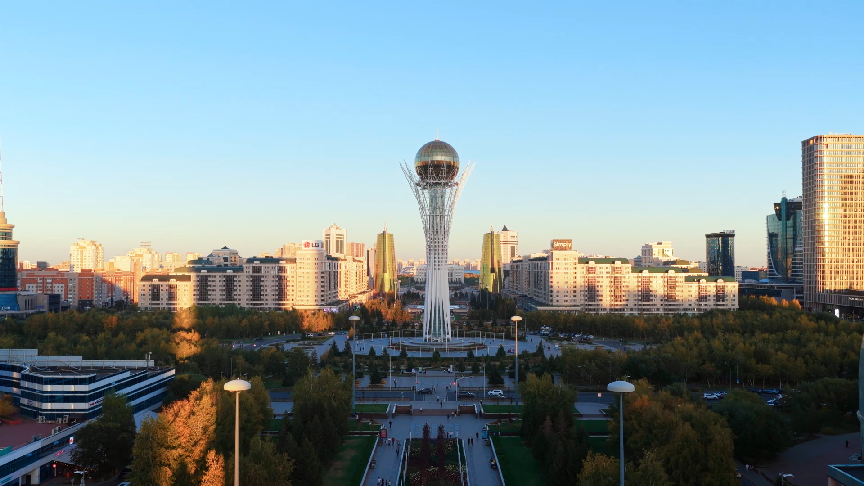
Heeding the call of Dimash, eight elite vocalists from Kazakhstan, China, Kyrgyzstan, Serbia, Malaysia, and Italy embark on a 22-day “expedition-style” journey across Kazakhstan. Venturing far beyond the typical tourist trails, the artists immerse themselves in bustling local bazaars, vast grasslands, and serene lakesides, forging deep connections with the people they meet in the cities of Turkestan, Aktau, Almaty, and Astana. Even the sites of “Belt and Road” cooperation projects become creative hubs for their musical inspiration. Ultimately, every story told and emotion felt on the road is “translated” into music, culminating in eight spectacular performances that blend ethnic heritage with contemporary creativity.

Every stage is a high-octane collision of inspiration and talent. These global artists are gearing up, treating every performance as a pivotal battle to push their limits as the ultimate showdown approaches. Utilizing a rigorous points-based system, the journey will crown three champions who will be bestowed with the prestigious “Star of Glory” title, officially recognized by the Kazakh government. This is more than a competition, it is a musical diary of the Silk Road, capturing both the warmth of friendship and the adrenaline of elite competition.
Program Highlights: A Hit-Making Factory Meets the Ultimate Travel Guide
The show’s core philosophy is built on three pillars: “Boundary-breaking songs, viral-worthy scenery, and world-class vocals.” By tearing down stylistic barriers, Chinese and international artists collaborate to create tracks that fuse profound cultural roots with a global edge. Every performance is poised to be a “chart-topping hit” that audiences will have on repeat.

Through the lens, Kazakhstan reveals a mesmerizing, ethereal beauty: The ancient ruins of Turkestan resonate with the echoes of a millennium of Silk Road heritage; In Aktau, the Caspian coastline stretches into the horizon, where crystalline waters melt into an endless azure sky; In Almaty, The snow-capped peaks overlook Xian Xinghai Street, a tribute to the enduring bond between Kazakhstan and China; In Astana, futuristic architecture blends seamlessly into the vast steppes, epitomizing the perfect fusion of the traditional and the contemporary. This intricate tapestry of nature and humanity creates a spellbinding exotic charm, and every frame is a masterpiece worth savoring.
Even more profound is how the show transforms cultural exchange into something tangible and audible. Young talents from six nations use their voices to document their genuine experiences and forge transnational friendships. They turn the vision of "Ten Thousand Miles of Silk Road, One Song from the Heart" into a vibrant musical reality, establishing a groundbreaking cultural IP that bridges nations and revitalizes the spirit of the Silk Road.
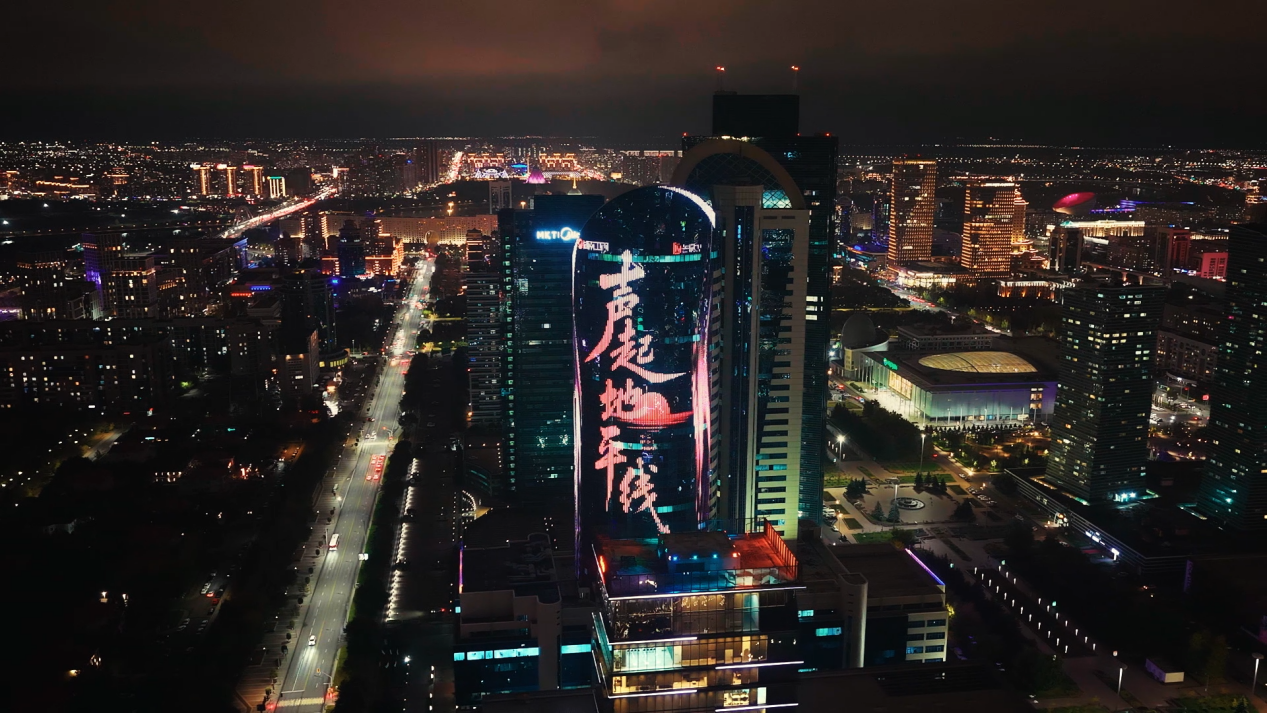
In 2026, board this musical caravan and let your ears lead the way on the journey of a lifetime! Starting on February 5, tune in to Hunan Satellite TV and Mango TV every Thursday at 22:00. Let the Silk Road resonate within you—we’ll see you there!
Mexico City, January 28, 2026 — An event dedicated to the World Day of the Turkic Languages was held in the capital of Mexico. It was organized by the Yunus Emre Institute in Mexico with the participation of the diplomatic missions of Turkic states – Kazakhstan, Türkiye, and Azerbaijan.
Welcoming remarks in their native Turkic languages were delivered by the Ambassador Extraordinary and Plenipotentiary of the Republic of Kazakhstan to Mexico, Almurat Turganbekov, as well as the Ambassadors Extraordinary and Plenipotentiary of the Republic of Türkiye and the Republic of Azerbaijan, Murat Salim Esenli and Seymur Fataliyev.
In his speech, Ambassador of Kazakhstan Almurat Turganbekov emphasized that Turkic languages are an integral part of the shared historical and cultural heritage of the Turkic peoples and an important factor in preserving their uniqueness and spiritual identity.
Ambassador Turganbekov paid special attention to the growing role of humanitarian and cultural cooperation among Turkic states, as well as to the activities of the Organization of Turkic States (OTS) as a key platform for preserving and promoting Turkic languages and culture. He noted Kazakhstan’s active contribution to the implementation of OTS initiatives aimed at strengthening cultural ties and expanding international dialogue between the Turkic world and the countries of Latin America.
As part of the event, a lecture was delivered by Professor Mehmet Necati Kutlu, Doctor of Sciences, on the development and interconnection of the Turkic languages. In his presentation, the professor gave a detailed account of the historical origins of the Turkic languages and their Proto-Turkic roots, tracing them back to the Orkhon-Yenisei inscriptions, which are among the earliest recorded sources of the Turkic written tradition.
In addition, Professor Necati Kutlu highlighted the significance of the World Day of the Turkic Languages Family, which is celebrated on December 15 and was established by a decision of the UNESCO General Conference adopted in November 2025 in Samarkand. The professor emphasized that this initiative contributes to strengthening the linguistic and spiritual unity of the Turkic world, as well as creating conditions for expanding mutual communication among the peoples of Turkic countries and fostering their cultural integration.