GOV.KZ – Single platform for the digital resources of government agencies
Madam President,
Mr. Secretary-General,
Distinguished Delegates,
For eight decades, the United Nations has played a pivotal role in combating humanity’s global challenges.
Over that time, it has led our common efforts on collective security, nuclear non-proliferation, peacekeeping, development, poverty reduction, sustainability, and human rights.
But we must also face the truth: the world around us has changed profoundly – and, unfortunately, not for the better.
That is why the United Nations remains today a symbol of hope for millions around the globe.
This historic meeting is a unique opportunity to recommit ourselves to the founding principles and goals of our universal and truly indispensable Organization.
However, we cannot turn a blind eye to the real crisis of trust in multilateral institutions.
Serious violations of international law have become “a new normality”, which undermines global stability and erodes confidence between peoples, between political leaders, and between states.
In this challenging time, we all must empower the UN to make it more adjustable to the realities of today’s unpredictable world.
The spirit of mutual understanding and eagerness to cooperate must prevail over dangerous warmongering. State leaders have a responsibility to move toward making peace.
A failure of the current generation of leaders to act is not an option because future generations will pay a much greater price.

In this regard, comprehensive reform of the United Nations is a strategic necessity, not a subject for endless contemplations.
We need to establish a new group of truly dedicated people who will highly professionally and without any hesitations make concrete proposals for reforming the UN to make it better suited to the challenges of today and objectives of tomorrow.
A central pillar of this bold effort to renew the UN should be a reform of the Security Council.
Major powers of Asia, Africa, and Latin America should be represented in the Security Council on the rotational basis.

In addition, Kazakhstan strongly believes that the voices of responsible Middle Powers also need to be seriously amplified in the Security Council.
In fact, they have already started to play a larger positive role in international relations, bringing balance and building trust.
They can act as bridges within the UN when major powers are divided or failing to resolve pressing issues of common concern.
Above all, a credible UN for the 21st century requires Member States to take concrete steps toward durable peace and security.
Otherwise, the UN is doomed to forever mitigate consequences while root causes forever proliferate.
We can begin this process already today by reaffirming our steadfast commitment to the Charter of the United Nations.
The founding principles of sovereignty, territorial integrity, and peaceful resolution of disputes must be upheld without exception. Selective application of the Charter undermines its credibility.
The world needs a new consensus based on trust, inclusiveness and shared responsibility.
For example, the “enemy state” clauses of the Charter, historical remnants of the Second World War, have already been recognized by the overwhelming majority of the international community as obsolete.

For all these reasons, it is time to have a serious conversation about Charter review.
Today we face an alarming reality: arms control treaties are collapsing, and with them so are the foundations of strategic stability.
Global military spending in 2024 hit a record 2.7 trillion dollars. The global cost of violence reached nearly 20 trillion dollars.
Therefore, rebuilding a robust global security architecture should remain a top priority for the international community.
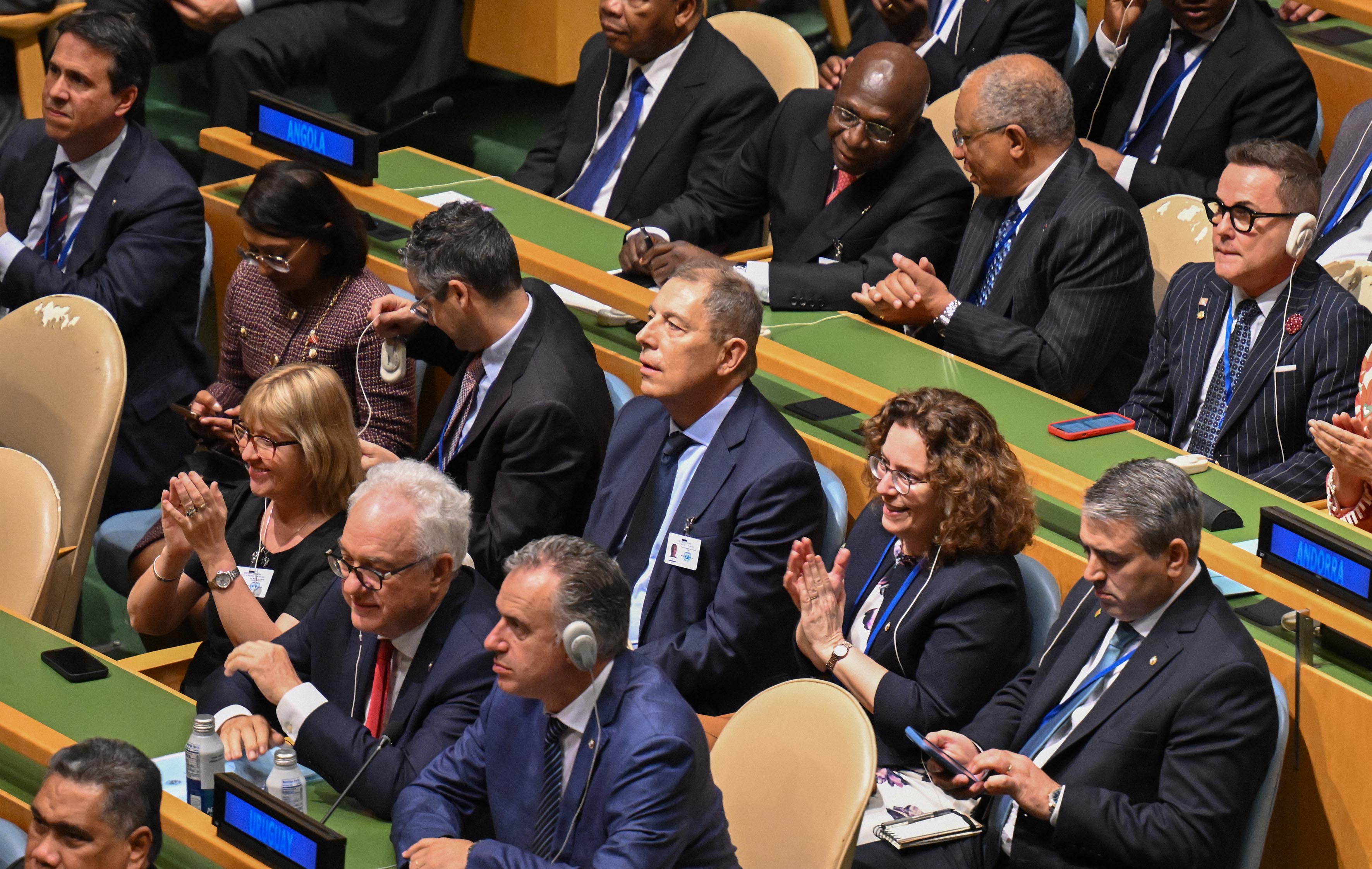
We advocate relaunching high-level dialogue among nuclear powers and stronger multilateral action to drastically reduce the looming threat of nuclear weapons.
More widely, we must begin the hard work of getting rid of the militant mindset. We can do so by tracking closely how much our countries invest in peace.
Kazakhstan is ready to host a new dialogue on nuclear disarmament and non-proliferation. We can focus on informal inclusive exchanges that reinforce the NPT and support progress toward the CTBT.
We also call to advance our proposal to establish International Agency for Biological Safety and Security.
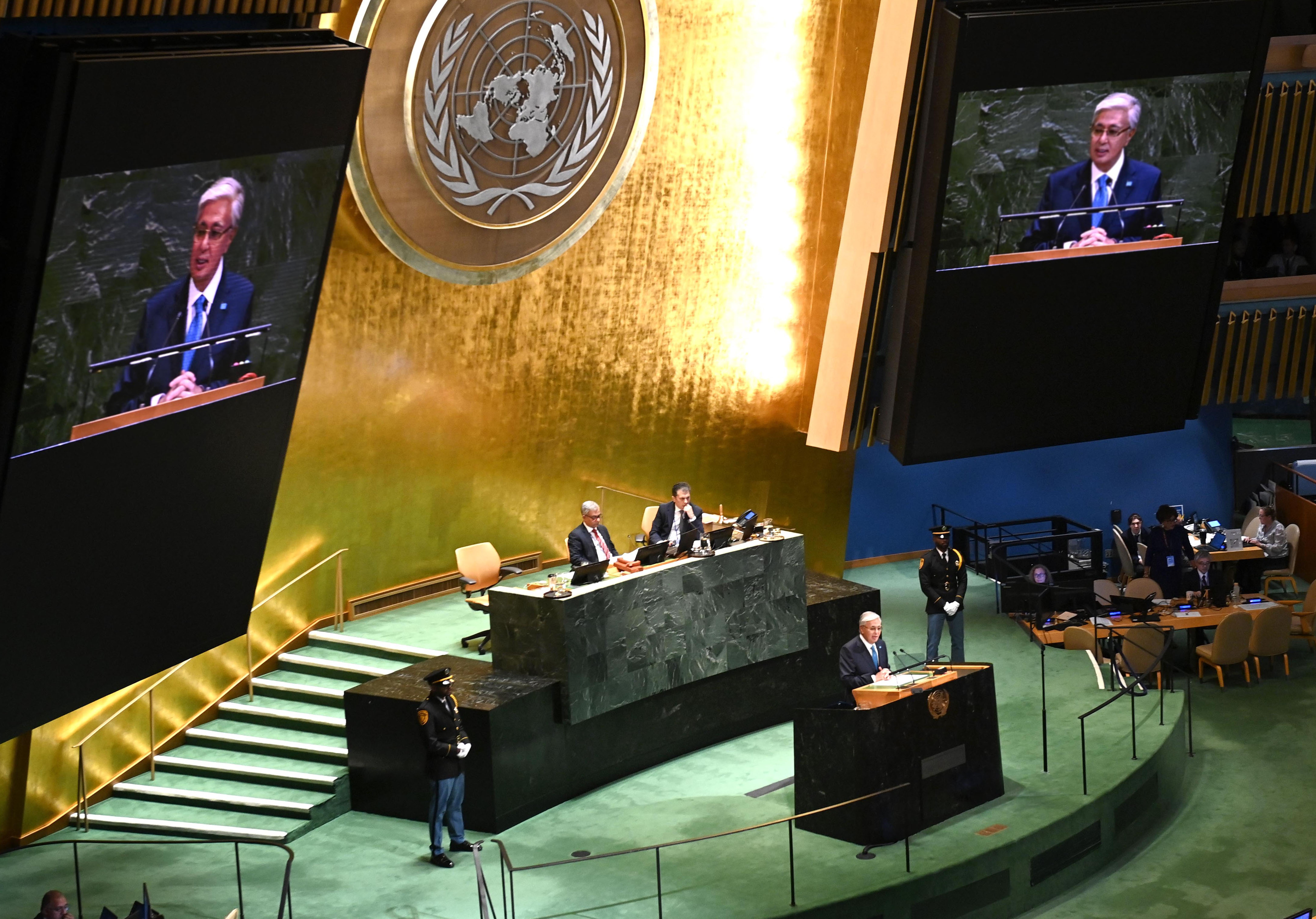
Kazakhstan remains concerned by the Ukrainian Crisis, which continues to seriously harm civilians, damage global trust, and undermine international security.
Nonetheless, bilateral and international diplomatic efforts on this conflict should continue along with political flexibility to meet the long-term interests of both states.
Territorial disputes are never easy to resolve and require mutual restraint and responsibility for the sake of future generations.
The psychology of animosity drags all involved in conflicts to the abyss – leaving no chance to reach peace.

The humanitarian crisis in Gaza has reached a disastrous scale that cannot be ignored.
This conflict stems from a complex historical background. We cannot ignore the root cause of this belligerence.
Kazakhstan calls for full protection of all civilians, and unhindered humanitarian access in strict compliance with international humanitarian law.
We reaffirm our support of the two-state solution with the UN playing a central role.
Kazakhstan acknowledges diplomatic initiatives aimed at regional reconciliation in the Middle East, including the Arab Peace Initiative, the New York Declaration, the Abraham Accords, and others.
They demonstrate that leadership and political will can turn division into cooperation and shared benefit.
We also welcome the normalization of relations between Azerbaijan and Armenia under the mediation of the United States’ President.
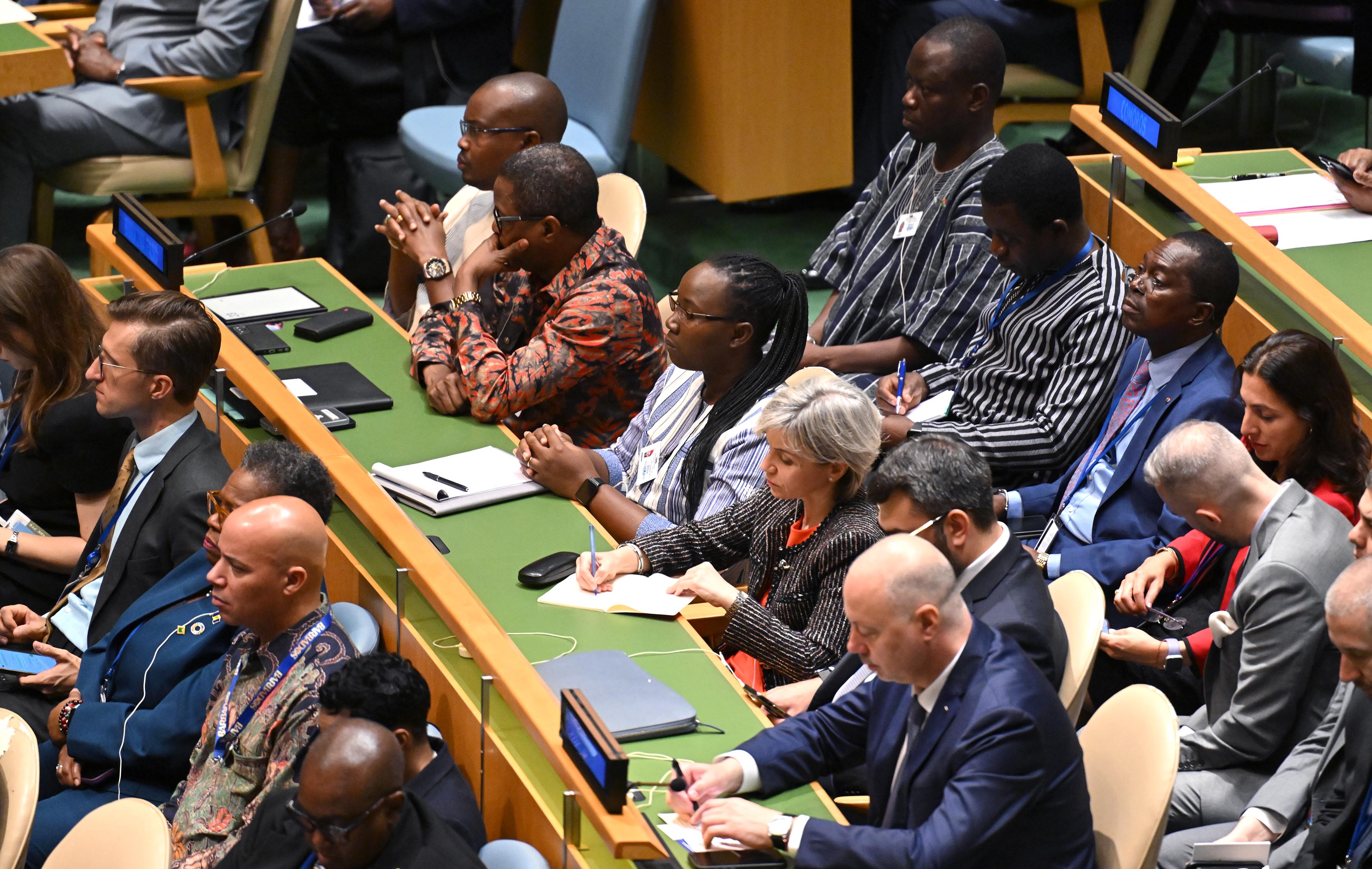
It shows that even entrenched conflicts can be settled through diplomacy and common sense.
Guided by this principle, Kazakhstan consistently favors diplomacy over escalation and dialogue over force.
Current geopolitical tensions sometimes tempt some leaders to claim that a clash of civilizations is inevitable.
Yet, these divisions are not fact or fate. They are political choices.
Global public goods such as science, medicine, sports, religion and culture should not become subjects of geopolitical divisions and sanctions.
These spheres of human activity bind us together under a humanitarian umbrella.
When political leaders make irresponsible statements or take reckless decisions, manipulating religion and identity for political gain, they in fact seriously damage the trust and goodwill in striving for peace.
Political leadership must be rooted in mutual understanding and respect, not mutual suspicion and arrogance.
Tolerance and wisdom are the foundation of lasting peace and must be upheld through the rule of law.
Dear colleagues,
We observe a growing fragmentation and political bias of investment flows.
As a result, global FDI fell to $1.5 trillion last year.
Kazakhstan strongly advocates for greater international investment cooperation. More than 400 billion dollars have been attracted to our economy within 30 years of Independence.
Our commitment to open market principles is absolutely firm and will remain a cornerstone of our state policy.
Located in the very center of Eurasia, Kazakhstan is poised to play a crucial role as a logistics hub, handling 80% of all overland transit between Asia and Europe.
We are investing tens of billions of dollars in our transport and transit infrastructure, including the Belt and Road Initiative, the North-South and the Trans-Caspian transit corridors.
Kazakhstan will continue to develop regional supply chains that are the heart of the emerging global transport network.
By 2029, we plan to build 5 thousand kilometers of new railway lines.
Kazakhstan has made the Sustainable Development Goals a core pillar of its national agenda, integrating their targets into state planning and budgeting.
With the support of the UN Secretary-General and partner-states, Kazakhstan now hosts the new United Nations Regional Centre for SDGs for Central Asia and Afghanistan in Almaty.
Today, Central Asia is demonstrating a renewed sense of unity and mutual trust. It is emerging as a proactive contributor to international peace and progress.
The “Central Asian Five” are strengthening cooperation, proving that regional solidarity can be a powerful force for development and security.
This has enabled our region to engage key global partners in the unique “Central Asia Plus” dialogue format.
Kazakhstan believes that inclusive development in Afghanistan is a basis for long-term regional peace and stability.
We continue to support the Afghan people through humanitarian assistance and cooperation in trade, food security, infrastructure and transport connectivity.
Distinguished delegates,
Last year was the hottest year in human history and Central Asia is warming at twice the global rate.
The melting of glaciers in the Alatau mountains is accelerating, multiplying threats to water and food security for millions.
Kazakhstan has drawn profound lessons from the tragedy of the Aral Sea. Thanks to our consistent efforts, including at the international level, we succeeded in preserving the northern part of the sea.
As the current chair of the International Fund for Saving the Aral Sea, Kazakhstan will continue to play a proactive role in this common priority.
Meanwhile, the Caspian Sea is rapidly shrinking. It is no longer just a regional concern, it is a global warning signal.
Therefore, we call for urgent steps to preserve the Caspian water resources with our partners across the region and the wider international community.
Last year, Kazakhstan co-organized the One Water Summit with France, Saudi Arabia and the World Bank.
Looking forward, stronger coordination, investments, and sustainable solutions are urgently needed to prevent future water crises.
To help advance this agenda, Kazakhstan will host a Regional Ecological Summit in Astana in April next year, to be convened in partnership with the United Nations and other international organizations.
As part of our broader environmental commitment, Kazakhstan is implementing a nationwide “Clean Kazakhstan” campaign.
This national movement mobilizes millions of volunteers in clean-up actions, waste reduction, and eco-education.
At the initiative of Kazakhstan, the UN declared 2026 the International Year of Volunteers for Sustainable Development. We invite all Member States to collaborate on this important endeavor.
In this spirit, I propose that the General Assembly adopt a resolution proclaiming April 22 as the International Day of Greening the Planet.
Dear friends,
Kazakhstan views Artificial Intelligence not as one more technological advancement, but as a major breakthrough that can be a true engine of human progress.
Yet as AI accelerates, so do the related risks – specifically deepening technological, economic and geopolitical divides.
At the same time, we should not let ethical norms fall behind this rapid evolution.
Pressing questions of fairness, accountability, and individual rights must be addressed with clarity and urgency.
We must act collectively to ensure that every country can benefit from AI.
Kazakhstan welcomes the establishment under UN auspices of the Global Dialogue on AI Governance.
We stand ready to actively contribute to this platform to help ensure that AI remains safe, inclusive and human-centered.
In Kazakhstan, artificial Intelligence will be integrated across all sectors of economy and public services.
The basic infrastructure to deliver this plan is being built, and our bright young people are getting ready to turn this vision into reality.
Our strategic goal is to transform Kazakhstan into a fully digital power within the next three years.
Large-scale digitalization and widespread use of AI have become a national priority in Kazakhstan.
E-government is an important pillar of our national development strategy.
Around 90% of public services are already digitalized.
Kazakhstan has recently launched its fastest national supercomputer ever.
But AI and automation are expected to threaten jobs in many countries.
That is why digital progress must go hand-in-hand with professional education.
Therefore, Kazakhstan believes it is imperative not just to increase employment but to valorize the technical professions.
Ladies and Gentlemen,
Amid global turbulence, Kazakhstan is pursuing a bold national renewal to build a truly Just and Fair State.
Over the last three years, we have carried out large-scale political and economic reforms that are unprecedented in our part of the world.
Through a national referendum, we introduced a single seven-year presidential term, thereby strengthening democratic accountability.
We remain committed to the formula of strong President, influential Parliament, and accountable Government.
Guided by strong wish to modernize Kazakhstan, I have proposed a single-chamber Parliament for a national referendum to consider.
Our objective is to continuously embrace the political system to make it more transparent, effective and reflective of people’s aspirations.
At the heart of these reforms lies a clear principle: Law and Order must prevail.
We believe that only a governance rooted in common-sense and the rule of law can ensure public order and protect the rights of all citizens.
It creates good conditions for international investment, trade cooperation, and more broadly, the dynamic development of our country.
The interests of law-abiding people and decent citizens must always come first, maintained through justice, accountability, and mutual respect.
Kazakhstan’s economy is showing clear signs of sustainability and resilience.
This year, economic growth is expected to exceed 6%, underscoring the sustainability of our economy as the largest our part of the world.
But we are not complacent. We will continue our efforts to ensure a long-term growth.
Kazakhstan’s energy strategy is based on four pillars: oil and gas, coal, uranium, and critical minerals. These precious assets are the basis of reliable energy partnerships.
Climate change and the green agenda cannot be accepted by all countries that have huge deposits like coal, which nowadays can be cleaned up by advanced technologies.
That is why we have committed to decarbonize our country in 35 years. Renewable energy is not the single solution to all energy problems.
Agriculture is another driver of our development with huge potential for global markets.
Kazakhstan’s grain export capacity has amounted to 12 (twelve) million tons, reaching a great number of international markets, creating new opportunities for trade expansion using enhanced transport connectivity.
We will continue our cooperation with all major international partners and regional stakeholders to further diversify our external trade and economy, making it more inclusive and resilient.
Excellencies,
We will remain firmly on this path – deepening governance reforms at home while supporting global governance abroad.
Kazakhstan will continue to serve as a bridge-builder and peace-maker. It will also continue to choose balance over domination, cooperation over confrontation, and peace over war.
We stand ready – in cooperation with other players, stakeholders of the international community – to renew the promise of the United Nations as a beacon of peace, justice, and cooperation.
Thank you!
The information and educational platform has been created with the support of the Ministry of Culture and Information in order to popularize a cultural heritage of Kazakhstan, and promote a national brand.
A creation of the website is an important step in attracting the attention of the world community to the cultural and historical heritage, and diversity of Kazakhstan. The promotion of cultural values in Kazakhstan, as well as in the near and far abroad, remains one of the priority areas that President Kassym-Jomart Tokayev sets in front of the Kazakh Government.
A large-scale project, reflecting a diversity of our country’s cultural heritage, covers the six official languages of the United Nations, as well as the Kazakh and Turkish languages.
A special place at the information portal is occupied by the publications of the unique Archive Fund of Kazakhstan. The section, which provides access to a rich historical collection of the documents and archival materials of Kazakhstan, is an invaluable resource for the researchers, historians and anyone interested in the past.
The heart of the website will be a news blog, where all the cultural news of the country and world will be covered as well. The assets of the project include the bright festivals, fairs, contests, as well as the premieres of theatrical productions, domestic films, and presentations of the books by famous and aspiring writers, art exhibitions, anniversary celebrations and regional projects of various scales.
In addition, the platform will host an information indicating the Kazakh mobile applications with topics about the events and news in the field of art and culture of the country.
The section “Culture of Kazakhstan through the prism of artificial intelligence” will provide the visitors with a unique opportunity to explore all the regions and their attractions through virtual reality.
A special attention is paid to the information technologies at the portal. “Qazaq Culture” gives the spectators a unique opportunity to explore various regions of Kazakhstan and their attractions through virtual 3D tours. Moreover, with the help of artificial intelligence, each guest of the website will be able to change his photo and see himself as a hero (batyr) or warrior of the Great Steppe.
A main feature of the website will be a Single Ticket System for all the cultural facilities. For the convenience of visitors to the portal, there will be an active link to purchase a ticket for this or that cultural event.
Astana, 12 February 2024 – Central Asia’s leading international conference, the Astana International Forum (AIF), will take place under the aegis of the President of Kazakhstan, Kassym-Jomart Tokayev, on the 13th and 14th of June 2024 in Astana. Building on the success of the inaugural Forum in 2023, this year’s event will provide a critical opportunity for the international community to unite in the face of mounting challenges to global security, stability, and prosperity.
The Astana International Forum 2024 will gather government and business leaders from around the world to exchange perspectives on the most pressing issues of the day and identify new avenues for cooperation.
Expanding on the record-breaking attendance numbers of 2023, which included over 5,000 participants from more than 50 countries, including heads of state, world’s foremost policymakers, business leaders, and public intellectuals, the Forum’s programme will once more be split into four pillars: Foreign Policy and International Security, International Development and Sustainability, Energy and Climate Change, and Economy and Finance.
The pillars will serve as the principal topics for two days of engaging panel sessions, armchair discussions and dedicated networking opportunities, with the ultimate aim of delivering actionable results for the revival of multilateralism and new opportunities for bilateral partnerships.
Commenting on the launch of the second Astana International Forum, President Kassym-Jomart Tokayev said:
“In an era marked by polarisation and fragmentation, continued economic and geopolitical disruptions threaten to erode the essential principles of cooperation and mutual respect. I am deeply proud that, through the Astana International Forum, Kazakhstan is helping protect and enhance the international system at this key juncture.
Under the banner of ‘Empowering People, Uniting Nations: Building a Better World Together’, AIF2024 is poised to once again re-energise the global community, providing fresh perspectives and collaborative solutions to some of the most critical challenges facing humanity today.
Kazakhstan has long served as a vital bridge between East and West. This strategic vantage point on the world – geographically, culturally, and politically – positions us to drive crucial discussions and foster meaningful conversation among the world’s foremost policymakers, business leaders, and public intellectuals.”
The Astana International Forum 2024 is an important milestone for Kazakhstan on the world stage, as the country is set to chair several leading international organisations this year, including the Shanghai Cooperation Organisation, the Conference on Interaction and Confidence-Building Measures in Asia, the Organisation of Turkic States, the Islamic Food Security Organisation, and the International Fund for Saving the Aral Sea.
Registration for the event is now open and interested parties can sign up here: https://astanainternationalforum.org/
Nestled in the heart of Kazakhstan, the Atyrau region emerges as a vibrant mosaic of cultural richness and economic vigor. This dynamic region, burgeoning with international partnerships, has become a nexus for business tourism, hosting over 1,000 companies from more than 50 countries.
But Atyrau's allure extends far beyond commerce. It's a tapestry of cultural, educational, and natural wonders. Delve into the depths of Atyrau's history, traditions, and customs. Experience the thrill of sports and amateur tourism with exhilarating hunting and fishing expeditions. From ethnographic to ecological, recreational to youth tourism, Atyrau offers a kaleidoscope of experiences.
In the heart of Atyrau city, embark on curated sightseeing adventures, weaving through historical landmarks, cultural monuments, and vibrant entertainment hubs. Savor the culinary diversity at local restaurants, offering an array of regional flavors. Immerse yourself in Kazakh culture at our creative center, showcasing weekly displays of national traditions.
Nature enthusiasts will revel in the splendors of Akzhayik State Nature Reserve on the Caspian coast, a haven for rare bird species, including those listed in the Red Book. Traverse the “World of Nature” and “Water World” routes, marveling at 292 bird species in their natural habitat.
Step back in time at the ancient Sarayshyk settlement, a gem along the northern branch of the Great Silk Road. Its historical significance and allure make it a cornerstone of regional tourism.
Along the Ural River, discover resorts like Altyn Sazan, Baklani, and Atamura, offering an array of activities from rope parks to horseback riding. Explore the therapeutic wonders of the salt lake in Inder district, a beacon for health tourism.
Adventure seekers will find a paradise in the Zhyluisky district, home to the Golden Man's discovery site, the chalk mountains of Akkegershin, and the mystical Ibankara caves. Experience the thrill of hunting and fishing along the Kigach River in the Kurmangazinsky district, a favorite among international tourists.
Witness the unique spectacle of rare Lotus flowers blossoming in Kazakhstan, an ephemeral display of natural beauty from July to mid-August.
Join us in celebrating the splendor of the Atyrau region.
Take a look at the beauty of the Atyrau region on TikTok and on Instagram.
The Ministry of Foreign Affairs of the Republic of Kazakhstan received with deep sorrow the news of the death of people as a result of a fire at a mine in the Karaganda region.
We express our sincere condolences to the families and loved ones of the deceased and share with them the bitterness of this irreplaceable loss. We wish a speedy recovery to the injured.
Due to the death of the miners in the Karaganda region, October 29, 2023, has been declared a Day of National Mourning in the Republic of Kazakhstan.
Дорогие соотечественники!
Поздравляю вас с главным праздником нашей страны – Днем Республики!
Это день возрождения нашей многовековой государственности, берущей свое начало с эпохи Тюркских каганатов, Золотой Орды и Казахского ханства. В этот день воплотилась в жизнь идея свободы, за которую боролись деятели Алаш.
Неспроста говорят, что без суверенитета нет и страны. 33 года назад с принятием Декларации о государственном суверенитете восторжествовала историческая справедливость. Этот важнейший документ открыл дорогу Независимости Казахстана.
Принятие Декларации было нелегким делом. Этнодемографическая структура страны была сложной. В Верховном Совете, Парламенте того времени и во всем обществе происходили долгие и горячие дискуссии. Защищать и обосновывать приходилось каждую статью, каждое слово документа.
Алихан Бокейхан говорил, что путь к свободе лежит только через единство нации. Государственные деятели нашей страны показали верность этому назиданию великого сына нашего народа. Объединившись в ответственный момент, они смогли отстоять национальные интересы.
Судьбоносный документ соответствовал устремлениям и ожиданиям народа и был принят благодаря мудрости и рассудительности патриотов страны. Их смелость и решительность, проявленные в критический час, можно расценивать как подлинный героизм.
Сегодня мы строим Справедливый Казахстан, поэтому деятелям прошлого, их труду и заслугам, нужно давать достойную и справедливую оценку.
В летописи нашей независимости почетное место должны занимать имена Салыка Зиманова, Серикболсына Абдильдина, Каратая Турысова, Зинаиды Федотовой, Ерика Асанбаева, Абиша Кекильбаева, Гайрата Сапаргалиева, Султана Сартаева, Озбекали Жанибекова, Олжаса Сулейменова, Александра Княгинина, Мырзатая Жолдасбекова, Омирбека Байгелди, Куаныша Султанова, Сергея Терещенко и многих других личностей.
Необходимо, чтобы их патриотизм и верность интересам нации служили непреходящим примером для последующих поколений.
Мы должны твердо придерживаться исторической справедливости. Поэтому будет правильным отметить и историческую роль первого президента Нурсултана Абишевича Назарбаева, внесшего огромный вклад в укрепление основ нашей страны как независимого государства.
Уважаемые соотечественники!
Издавна у нас в народе говорят, что только суверенная страна уверенно смотрит в будущее.
С обретением суверенитета укрепился дух нашей нации, мы достигли значительных успехов. За годы Независимости наш народ прошел колоссальный путь. Мы состоялись как ответственное и сильное государство. Наш флаг гордо реет в штаб-квартире Организации Объединенных Наций. Благодаря конструктивному диалогу с соседями Казахстан решил все пограничные вопросы. Так мы сформировали границы настоящей дружбы и обеспечили свою национальную безопасность.
Обо всех достижениях нашего государства нужно помнить и говорить, поскольку они воплощают в себе реальный суверенитет Республики Казахстан.
В то же время следует помнить и допущенные ошибки, а они, конечно, были, извлекать из них полезные уроки, чтобы обеспечить поступательный прогресс Казахстана.
За последние годы в нашей стране осуществлены коренные преобразования.
Мы провели масштабную и уникальную в нашем геополитическом регионе конституционную реформу, которая получила убедительную поддержку народа на общенациональном референдуме.
В результате значительно расширилось участие граждан в политическом процессе. На новый уровень вышло партнерство государства и общества, значительно укрепился общенациональный диалог.
Важными составляющими политической реформы стали введение однократного семилетнего мандата для Президента и переход к смешанной избирательной системе.
Год назад я говорил о том, что мы вступаем в большой электоральный цикл. За короткий период по новым, более справедливым правилам, мы поэтапно провели выборы Президента, депутатов Сената, Мажилиса и маслихатов всех уровней.
Эти выборы продемонстрировали возросший уровень политической и электоральной культуры граждан.
Одним из важнейших шагов политической реформы стало введение прямой выборности сельских акимов. На сегодня в более чем 1900 сельских округах прошли выборы, корпус сельских акимов обновился почти на 60%. В скором времени граждане смогут, пока в пилотном режиме, избирать акимов районов и городов областного значения.
Усовершенствована система защиты прав человека, воссоздан Конституционный Суд, усилены статус и полномочия омбудсменов, ужесточена ответственность за семейно-бытовое насилие.
Серьезного прогресса мы достигли в социальной сфере. Государство прилагает огромные усилия для укрепления здоровья нации. Как следствие, средняя продолжительность жизни граждан выросла до 74,4 лет – это рекордный показатель в нашей истории.
Мы смогли преодолеть демографические потрясения тяжелых девяностых, когда население Казахстана быстро сокращалось. Совсем скоро численность наших граждан достигнет 20 миллионов. Это зримое свидетельство устойчивого прогресса нашей страны, уверенности людей в собственном будущем и будущем своих детей.
Принят закон для реализации инициативы «Нацфонд – детям», и уже через два месяца на счета наших детей начнут поступать средства.
Одним из ключевых приоритетов государственной политики является всестороннее развитие регионов. «Сильные регионы – сильная страна» – это не просто красивые слова, а определяющая формула в построении Справедливого Казахстана.
Проведя в прошлом году точечные изменения в административно-территориальном устройстве страны, мы придали новый импульс развитию ряда регионов.
По моему поручению принята Концепция развития сельских территорий. Одно из главных направлений этого важного документа – создание на селе современной социальной, инженерной и транспортной инфраструктуры.
Начата реализация проекта «Модернизация сельского здравоохранения», в рамках которого будет построено 655 амбулаторий и фельдшерско-акушерских пунктов, оснащенных всем необходимым оборудованием.
Кроме того, будут открыты 20 новых многопрофильных и модернизированы 12 действующих межрайонных больниц. В результате качественные медицинские услуги станут доступны для более чем четырех миллионов сельских жителей.
В рамках проекта «Комфортная школа» к 2026 году во всех регионах страны запланирован ввод сотен современных школ. В селах будет открыто 100 спортивных центров, построено и отремонтировано 650 объектов культуры.
Как вы знаете, в своем недавнем Послании я представил новый экономический курс страны. Он базируется на принципах справедливости, открытости и честной конкуренции.
Наша новая экономическая политика нацелена на справедливое распределение национального богатства, ускоренную модернизацию инфраструктуры, стимулирование предпринимательства, широкое привлечение инвестиций.
Перед Правительством и акимами стоит задача безусловного выполнения директивных установок Главы государства. Эта работа должна осуществляться под пристальным парламентским контролем.
Одним словом, результаты экономических преобразований в ближайшее время должны ощутить все граждане.
Казахстан, как суверенное государство, неизменно проводит сбалансированную, конструктивную внешнюю политику, соответствующую национальным интересам нашего народа, играет важную роль в региональных и глобальных процессах, нацеленных на обеспечение международной безопасности.
Мы будем продолжать усилия, направленные на сближение мировых религий и развитие их конструктивного диалога.
Убежден, что на современном этапе только коллективные усилия государств, мудрая, высокопрофессиональная дипломатия могут привести к долгосрочной стабильности в мире и всеобщему прогрессу, построению справедливой системы международных отношений на основе Устава ООН.
Казахстан будет и далее прагматично следовать принципам «мир внутри – мир вокруг», «единство в многообразии».
Перед лицом новых беспрецедентных вызовов нам необходимо продолжить поступательное развитие страны и предъявить миру образ большой и единой казахской нации, устремленной в будущее.
Добиться суверенитета непросто, но сохранить его – еще сложнее. Независимость страны превыше всего, и укреплять ее – ответственность всей нации. Мы должны каждый день, неустанным трудом и непоколебимым единством, защищать наш суверенитет. Самое главное, нам нужно сохранить мир и стабильность в стране, без чего все остальные усилия напрасны.
Вы видите, какая сейчас сложная обстановка в мире. При этом многие авторитетные международные эксперты называют Казахстан колыбелью мира. Сегодня наша страна стала региональным культурно-духовным центром. В этом году зарубежные творческие коллективы провели у нас свыше 200 культурных мероприятий. Это яркий показатель стабильности и спокойствия в нашей стране, можно сказать, образец для других. Ведь никто не стремится в страну, в которой нет стабильности и спокойствия.
Мир и согласие – наше главное богатство, ценить которое – наш общий долг. Важно, чтобы это понимал каждый гражданин, особенно подрастающее поколение.
Казахстан вступил в новый этап развития, когда нам нужно совместить политические и социально-экономические реформы с коренными изменениями в общественном сознании.
В своем выступлении в Туркестане я говорил о новой общественной этике. После заседания некоторые члены Курултая направили мне свои предложения, обратив внимание на необходимость укрепления в стране системы ценностей. Считаю, что это актуальная инициатива, которую нам нужно всесторонне рассмотреть.
Ранее мною было предложено понятие ответственного гражданина – «Адал азамат». В этой связи хочу отдельно обратиться к нашей молодежи.
Все преобразования, осуществляемые сейчас в нашей стране, делаются в первую очередь для вас. Именно вы будете пожинать плоды проводимых сегодня реформ, и именно вы продолжите эти начинания.
Любое государство оценивают по его гражданам. Можно сказать, что нынешняя молодежь олицетворяет собой образ Казахстана. Какой станет наша страна в будущем, зависит от подрастающего поколения.
Поэтому я всегда говорю, что наша молодежь должна быть патриотичной, образованной, трудолюбивой, бережливой, справедливой, неравнодушной, активно занимающейся физической культурой, спортом.
Мы должны всеми силами продвигать эти ценности, чтобы положительные качества отдельного человека переросли в качество всей нации.
Молодежь восприимчива к любым изменениям, легко впитывает все новшества.
Призываю вас учиться хорошему и отвергать плохое, избегать пяти вещей и стремиться к пяти вещам, о которых говорил великий Абай.
Ценности, которых вы придерживаетесь, сразу укореняются в обществе, поддерживаемые вами изменения быстро воплощаются в жизнь. Вместе мы достигнем нашей общей цели – построим по-настоящему справедливое общество.
Я верю в созидательную силу молодого поколения. Имея таких сознательных сыновей и дочерей, как вы, Казахстан непременно покорит все вершины прогресса.
Для укрепления основ нашей государственности крайне важно обеспечить верховенство закона.
Для построения Справедливого Казахстана нам необходимо развивать правовую культуру.
Беззаконие, беспорядок, бескультурье приведут страну к пропасти. Таким негативным явлениям мы должны противостоять всем обществом. Важно это глубоко усвоить.
Общество, в котором есть порядок, будет цивилизованным – это аксиома. Если каждый гражданин будет уважать законы страны, будет и единство, и благополучие. Другими словами, если у нас все будет по закону, то все у нас будет в порядке.
Мы неуклонно следуем по пути последовательной трансформации общества и внедрения демократических принципов.
При этом в условиях нарастающей политической и экономической турбулентности в мире критически важно обеспечить в стране диктатуру закона и порядка.
Государство будет твердо проводить политику нетерпимости к любым проявлениям радикализма, экстремизма, правового нигилизма, бытового вандализма.
Агрессия и риторика ненависти, попирание общественных норм, призывы к насилию, действия, оскорбляющие достоинство граждан, – всему этому не должно быть места в нашем обществе.
Мы будем жестко пресекать любые слова и действия, которые входят в противоречие с законом, разобщают граждан и расшатывают стабильность нашей страны.
Те, кто преступают эту черту, противопоставляют себя и государству, и обществу.
Это должны хорошо понимать все граждане, и особенно публичные личности и так называемые «лидеры мнений».
Осуществленные за неполных два года реформы в нашей стране существенно изменили политический менталитет народа, который, уверен, уже не допустит возврата к прежним методам управления государством.
Результаты реформ носят необратимый характер. Они, безусловно, будут иметь продолжение и полностью изменят облик нашего государства.
Однако, проводя реформы, мы в первую очередь должны думать о важности обеспечения внутриполитической стабильности.
В противном случае государственность Казахстана может подвергнуться фатальной опасности с тяжелейшими последствиями для будущего нашей нации.
Именно поэтому я говорю о необходимости соблюдения всеми без исключения гражданами страны законности и порядка.
Все мы, словом и делом, должны способствовать сплочению нашего общества вокруг созидательной повестки, укреплять общенациональное единство.
Благодаря единству наш народ сохранил и пронес через века мечту о сильном и справедливом государстве, свободе и независимости нации.
Сегодня наша государственность обрела цивилизованную правовую форму динамично развивающейся суверенной республики.
Защищать и всецело укреплять Независимость государства – наше общее дело и священный долг перед прошлыми и будущими поколениями.
Нам нужно донести до молодежи глубокий смысл и содержание Дня Республики как символа масштабных преобразований, нацеленных на построение сильного государства и просвещенной нации.
Необходимо, чтобы День Республики стал особенным праздником, укрепляющим в людях веру в будущее.
Важно проводить в это время множество патриотических, волонтерских и благотворительных мероприятий.
Наше общее дело – сделать День Республики по-настоящему всенародным праздником, воплощающим в себе торжество любви к Родине.
Уважаемые друзья!
Каждодневный труд граждан является залогом прогресса нашей страны.
Усердный труд всегда приводит к большим достижениям. Высококлассные специалисты обеспечивают развитие всех сфер, особенно производства.
Поэтому мы активно продвигаем в обществе ценности труда. Важно, чтобы честный и ответственный труд стал одним из ключевых элементов нашей новой общественной этики. Недаром говорят: «По делам и почет».
В числе наших сограждан, отметившихся своим трудом и заслуживших уважение в народе, – видный государственный и общественный деятель Бактыкожа Измухамбетов. Он долгие годы плодотворно трудился в нефтегазовой сфере, на производстве и государственной службе. Его жизненный путь – пример для подрастающего поколения.
Сегодня мною принято решение о присвоении звания «Қазақстанның Еңбек Ері» Бактыкоже Салахатдиновичу, внесшему огромный вклад в развитие страны.
Немало наших соотечественников успешно трудятся в других отраслях, в том числе сельском хозяйстве.
Одним из таких настоящих людей труда является житель Кызылординской области Имамзада Шагиртаев. Его село и хозяйство – пример многим. Было бы замечательно, если бы каждый успешный человек так же заботился о родном селе.
Имамзада Куанышбаевич, внесший большую лепту в развитие своего региона, сегодня стал обладателем звания «Қазақстанның Еңбек Ері».
Я всегда говорю, что человек труда должен пользоваться особым почетом.
В этом году на свое выступление в Парламенте с Посланием народу я специально пригласил людей труда, среди которых были и учителя.
Сегодня, в эпоху знаний, на передовой прогресса находятся просвещенные люди, а стремление к образованию становится одним из важнейших качеств. Поэтому мы уделяем особое внимание развитию сферы образования, повышению статуса и поддержке учителей.
На прошедшем в Астане съезде педагогов я отдельно остановился на этом вопросе, поскольку педагогическое сообщество формирует новое качество нации.
Быть учителем и воспитывать подрастающее поколение – это благородная миссия, которую в нашей стране честно и ответственно несут тысячи людей.
Своим каждодневным трудом они вносят огромный вклад в развитие Казахстана. Поэтому учитель должен занимать особое положение в обществе, педагогам везде должен быть почет.
Несколько лет назад по моему поручению было учреждено звание «Қазақстанның еңбек сіңірген ұстазы». Недавно я лично наградил группу педагогов.
Сегодня эта хорошая традиция находит свое продолжение.
Учитель математики школы-лицея №7 города Семей Алма Шукыжанова на протяжении 50 лет учит и воспитывает подрастающее поколение.
Мною принято решение о присвоении Алме Сайдахметовне звания «Қазақстанның Еңбек Ері».
Обладателями высоких государственных наград стали и другие учителя. Тем самым я хочу выразить свое большое почтение всему педагогическому сообществу.
Особую роль в духовном развитии нации играют наши писатели. Ранее поднимался вопрос о возвращении звания «Қазақстанның Халық жазушысы». На заседании Национального курултая в Туркестане я выразил свою поддержку этому предложению.
Почетное звание будет вновь, спустя четверть века, присваиваться нашим писателям. Группа видных писателей, внесших значительный вклад в развитие отечественной литературы, сегодня удостаивается звания «Қазақстанның Халық жазушысы».
По моему поручению также было возвращено звание «Қазақстанның Халық әртісі», которое, как и прежде, будет присваиваться известным на всю страну деятелям театра, кино, музыки и других сфер искусства.
Весной, на XXXII сессии АНК, мною было поручено учредить специальный орден, который позволит отметить многолетний созидательный труд наших сограждан по укреплению единства нации и общественного согласия.
После внесения необходимых законодательных изменений был утвержден орден «Ел бірлігі». В иерархии наград он занял достойное место и сегодня вручается впервые.
Государство уделяет большое внимание развитию отечественной науки и придает особое значение признанию заслуг и достижений наших ученых.
В этом году Государственная премия в области науки и техники имени аль-Фараби присуждается коллективу ученых Национального ядерного центра Республики Казахстан.
Центром проведены уникальные исследования и созданы передовые по мировым меркам разработки в атомно-энергетической отрасли.
Спасение жизней людей, невзирая ни на какие опасности, – настоящий подвиг. Люди, совершившие его, достойны любых почестей. И сегодня мною будут награждены несколько таких героев.
В целом, жители всех регионов, специалисты всех отраслей вносят свой вклад в развитие нашей страны. Мы всегда относимся к ним с уважением и почтением.
Государственные награды в первую очередь нужно рассматривать как благодарность народа. Ведь на самом деле нет ничего важнее такого признания.
Желаю вам и дальше плодотворно трудиться на благо Родины.
Пусть процветает наше священное Отечество!
С Днем Республики!
Kassym-Jomart Tokayev participated in the plenary session of the International Conference on Primary Health Care (PHC) celebrating the 45th anniversary of Alma-Ata and 5th anniversary of Astana Declarations on PHC.
Welcoming the conference participants, the Head of State noted the special significance of the Alma-Ata and Astana Declarations in improving the international health care system and primary health care.
“45 years ago, the historic Alma-Ata Declaration was adopted, providing the basis for a socially just primary healthcare model. This Declaration became the Magna Carta of global healthcare and has inspired many countries to improve people's health by recognizing it as a fundamental human right. The Alma-Ata Declaration also played a pivotal role in reducing maternal and infant mortality rates as well as increasing life expectancy in many countries. By now, many states have built national healthcare systems driven at their core by primary healthcare. This was reconfirmed five years ago in the Astana Declaration,” the President noted.
As Kassym-Jomart Tokayev emphasised, the primary health care system plays a crucial role in the early identification of pandemics and in responding to unforeseen challenges. Therefore, it is necessary to take into consideration all possible risks and keep the health care system in constant readiness. According to him, public healthcare organizations have shown resilience and an ability to adapt quickly. The Head of State expressed gratitude to all medical workers for their contribution to humanity’s fight against COVID.
Kassym-Jomart Tokayev informed about the measures being implemented to develop the healthcare system in our country.
“The entire child population of the country is covered by preventive medical examinations. There are youth health centers in almost every major settlement. Moreover, every year, about 3 million adults undergo screenings and professional examinations. To provide village residents with equal opportunities to receive medical services, we have been carrying out large scale reforms. Since 2018, the number of primary care village clinics has grown threefold. Digital technologies such as telemedicine and remote monitoring are being introduced. These technologies open up more possibilities for increased primary healthcare accessibility,” underscored Head of State.
In conclusion, the President proposed, with the support of WHO, to create a Coalition of countries on primary healthcare. This association will make it possible to promote the principles of prevention and health care as well as to elaborate joint recommendations for the development of primary healthcare.
The Head of State also noted that he has high hopes for young people in the further development of primary health care and the health care system in general. The President stressed that during his meetings with young people he always emphasises the importance of sports activities, as well as encourages them to be hardworking and purposeful.
The plenary session of the conference was also addressed by WHO Director-General Tedros Adhanom Ghebreyesus, WHO Regional Director for Europe Hans Kluge, Head of the Global PHC Unit of the Office of Health System Partnerships at the University of Toronto Katherine Rouleau.
Dear representatives of foreign mass media!
The Government of the Republic of Kazakhstan, the World Health Organization and the United Nations Children's Fund (UNICEF) are hosting the Global Conference on Primary Health Care, dedicated to the 45th anniversary of the Alma-Ata Declaration and the 5th anniversary of the Astana Declaration on Primary Health Care, to be held in Astana on October 22-23, 2023 as well as the 73rd session of the WHO Regional Committee for Europe on October 24-26, 2023.
These events are expected to be attended by WHO Director-General Tedros Adhanom Ghebreyesus, UNICEF Executive Director Catherine Russell, WHO Regional Director for Europe Hans Henri P. Kluge, UNICEF Regional Director for Europe Regina De Dominicis, as well as 80 official delegations of WHO member states at the level ministers of health, representatives of international organizations, young scientists, medical workers, etc., which makes in total 600-650 delegates in person, as well as more than 1000 participants online.
In this regard, we invite you to cover these events.
For accreditation, it is necessary to fill out the attached form (download) and send it to e-mails rymbayevaa@who.int and mfa.pskz@gmail.com until 3 p.m. on October 17, 2023.
In case of additional questions, please contact the Communications Officer of the WHO Country Office in Kazakhstan, Aizhan Rymbaeva, mob. +7 (777) 999-91-93 and the contact person at WHO/Europe for Foreign Media – Banu Batnagar, e-mail bbhatnagar@who.int and the Press Secretary of the Ministry of Healthcare of the Republic of Kazakhstan Assel Artakshinova, mob.+7 (701) 255-94-79, e-mail a.artakshinova@dsm.gov.kz.
The program and venue of the events are to be announced by the Ministry of Healthcare of the Republic of Kazakhstan.
On October 11, 2023, the capital of Kazakhstan, Astana, hosted the XXI Session of the Secretariat of the Congress of the Leaders of World and Traditional Religions.
Maulen Ashimbayev, Chairman of the Senate of the Parliament of the Republic of Kazakhstan and Head of the Secretariat of the Congress of the Leaders of World and Traditional Religions, chaired the Session.
The Secretariat members and honored guests took part in the Session.
Members of the Secretariat:
Representatives of Islam:
Dr. Abdulrahman Abdullah Al-Zaid, Deputy Secretary General of the Muslim Word League.
Nazir Mohamed Mohamed Elnazir Ayadad, Secretary General of Al-Azhar Islamic Research Academy.
Sheikh ul-Islam Allahshukur Pashazadeh, Chairman of the Caucasus Muslims Board.
Nauryzbai kazhy Taganuly, Chairman of the Spiritual Administration of Muslims of Kazakhstan, Supreme Mufti.
Mohammed Abdulwahed Alarifi Advisor at the Ministry of Islamic Affairs, Dawah and Guidance of the Kingdom of Saudi Arabia.
Dr. Mohamed Alshahhat Abdulhamid Mohamed Algindi, Rector of the Egyptian University of Islamic Culture Nur-Mubarak.
Muhammad Zia Ul-Haq, Director General at Islamic Research Institute, International Islamic University, Islamabad.
Dr. Ali Akbar Ziaei, Head of the Center for Interreligious and Intercultural Dialogue, Islamic Republic of Iran.
Neşet Bodur, Counsellor on Religious Issues at the Embassy of the Republic of Türkiye in Astana.
Representatives of Christianity:
Gennadiy, Bishop of Kaskelen, Manager of Affairs of Russian Orthodox Church in Kazakhstan.
Deacon Elijah Kashitsyn, Secretary for Interfaith Relations of the Department for External Church Relations of the Moscow Patriarchate.
Tomash Bernard Peta, Archbishop-Metropolitan of the Roman Catholic Archdiocese of Saint Mary in Astana.
Monsignor Khaled Akasheh, Bureau Chief for Islam of the Dicastery for Interreligious Dialogue, Vatican city.
Yuri Novgorodov Representative of the Lutheran World Federation, Archbishop of the Evangelical Lutheran Church in the Republic of Kazakhstan.
Bishop Jo Bailey Wells, Deputy Secretary General of the Anglican Communion.
Representatives of Judaism:
Rabbi Yeshayahu Elazar Cohen, Chief Rabbi of Kazakhstan.
Rabbi Joel Adler, Representative of the Ashkenazi Chief Rabbi.
Representatives of Buddhism:
Pu Zheng, Deputy Secretary General of the Buddhist Association of China.
Khunkhur Byambajav, Da Lama of the Gandan Tegchenling Monastery – the Centre of Mongolian Buddhists and Secretary General of the Asian Buddhist Conference for Peace.
Monk Jookyung, Chairman of the Central Council of the Jogye Order of Korean Buddhism.
Montian Tananart, Secretary General of the World Fellowship of Buddhists.
Representative of Hinduism:
Mr. Samir Shantilal Somaiya, Chancellor of the Somaya Vidyavihar University.
Representative of Taoism:
Master Li Xinjun, Chief administrator of Beijing Baiyunguan Monastery of the Chinese Taoist Association.
Representative of Shintoism:
Shinsaku Mitsui, Head of the International Cooperation Department of the Jinja Honcho Association of Shinto Shrines.
Representative of Baha'i:
Lyazzat Yangaliyeva, the Director of the Office of Public Information for the Baha'i Community in Astana.
Representatives of international organizations:
Anna Pavlyuchenko, Advisor to the High Representative of the UN Alliance of Civilizations.
Judge Mohammed Abdelsalam, General Secretary of the Muslim Council of Elders.
Representatives of the Republic of Kazakhstan:
Kairat Umarov, First Deputy Minister of Foreign Affairs of the Republic of Kazakhstan, Deputy Head of the Secretariat of the Congress of Leaders of World and Traditional Religions.
Kanat Iskakov, Vice-Minister of Culture and Information of the Republic of Kazakhstan, Deputy Head of the Secretariat of the Congress of Leaders of World and Traditional Religions.
Bulat Sarsenbayev, Chairman of the Board of the N.Nazarbayev Center for Development of Interfaith and Inter-Civilization Dialogue and Commissioner for Promoting the Goals and Objectives of the Congress of the Leaders of World and Traditional Religions
Honored guests:
Aida Balayeva, Minister of Culture and Information of the Republic of Kazakhstan.
Afra Mohamed Alsaabri, Director General of the Ministry of Tolerance and Coexistence of the United Arab Emirates.
Zamir Haji Rakiev, Supreme Mufti of the Kyrgyz Republic.
Hamid Ishmatbekov, First Deputy Chairman of the Muslim Board of Uzbekistan.
Shaikh Abdullah bin Ahmed Alkhalifa, Chairman of the Board of Trustees of the King Hamad Global Centre for Peaceful Coexistence.
Rabbi Mark Schneier, President of the Foundation for Ethnic Understanding.
* * *
The participants of the XXI Session of the Secretariat of the Congress discussed the status and momentum of interreligious dialogue, as well as a wide range of issues of interreligious cooperation within the Congress of the Leaders of World and Traditional Religions.
The participants held a fruitful and constructive exchange on the promotion and follow-up of the Declaration of the VII Congress of the Leaders of World and Traditional Religions.
The participants of the Session noted the successful 20 years of activity and the important formative role of the Congress in strengthening and developing global interfaith and intercivilizational dialogue.
It was also noted that in the face of growing geopolitical tensions, eroding world order and growing conflicts, the Congress of the Leaders of World and Traditional Religions is particularly relevant as a platform for global interfaith and intercivilizational dialogue.
The participants of the Secretariat supported the idea of the President of the Republic of Kazakhstan Kassym-Jomart Tokayev to launch a new global movement for peace to build a robust system of international security and address acute challenges and issues facing many countries of the world. A significant step in implementing this idea was the Initiative on World Unity for a Just Peace and Harmony, put forward by Kazakhstan as Chairman of the Shanghai Cooperation Organization.
Religious figures stressed the importance of using the potential of spiritual diplomacy to start a global peace movement and help address pressing global challenges.
The participants of the Session expressed a common desire for a just, secure and prosperous world, and active promotion of the principles of interreligious and interfaith harmony. The participants also emphasized the fundamental importance of moral values and guidelines for spiritual and social well-being of humanity.
The participants at the XXI Session of the Secretariat expressed deep concern over the serious aggravation of the situation in the Middle East, which has resulted in numerous civilian casualties. They committed themselves to pursue peace in the region and called on both sides and the international community to settle the situation peacefully.
The religious figures unanimously condemned the desecration of books considered sacred and any provocative actions escalating tension, undermining trust between peoples and religions. It was emphasized that such behavior cannot be considered as a manifestation of freedom of speech.
The participants also stressed that extremism, radicalism, terrorism and other forms of violence, regardless of their motivations and goals, should be resolutely rejected.
One of the main outcomes of the XXI Session of the Secretariat was the adoption of the 2023-2033 Development Concept of the Congress of the Leaders of World and Traditional Religions.
The Concept defines the promising directions of the Congress' activities, outlines its role in contemporary international efforts towards secure, stable, tolerant and prosperous world. The implementation of the Concept will both strengthen the Congress as a platform for global interfaith dialogue and cooperation, and ensure a wider use of the potential of spiritual diplomacy.
Following the Session, the participants decided to hold the next XXII Session of the Secretariat of the Congress in autumn 2024 in Astana. It was decided to hold the next session of the Working Group of the Secretariat in 2024 to properly prepare for the XXII Session of the Secretariat of the Congress.
In conclusion, the Session participants expressed gratitude to the Kazakh side for the excellent organization of the XXI Session of the Secretariat of the Congress of the Leaders of World and Traditional Religions.
Republic of Kazakhstan, Astana, October 11, 2023.
Astana, October 11, 2023 - Astana hosted the 21st Session of the Secretariat of the Congress of Leaders of World and Traditional Religions. Religious leaders and their representatives from 23 countries discussed the progress in implementing the Declaration of the Seventh Congress of Leaders of World and Traditional Religions. The Session also approved the Development Concept of the Congress for 2023-2033, prepared on the instructions of the Head of State. This round table at the Palace of Peace and Reconciliation gathered representatives of Islam, Christianity, Judaism, Buddhism, Hinduism, Taoism, Shintoism and other religions, as well as international organizations.
Opening the Session, Maulen Ashimbayev, Speaker of the Senate of the Parliament of the Republic of Kazakhstan and Chairman of the Secretariat of the Congress of Leaders of World and Traditional Religions, read out the address of the President Kassym-Jomart Tokayev to the Session participants. The Head of State noted that over the two decades, the Congress of Leaders of World and Traditional Religions has gas significantly facilitated the interfaith peace and harmony, promoted ideas of tolerance and mutual support, and helped to address major global challenges.
"The platform voices isdeas and proposals aimed at peace-keeping, fostering dialogue and culture of mutual respect and cooperation. In lights of the current difficult international situation, the importance of values such as morality, kindness, and humanism is growing. To overcome the fundamental challenges facing humanity, it is important to develop a new international security system. To that end, we need to join global efforts advocating peace and stability. In contemporary conditions, spiritual leaders can play a major role. I am confident that the world's religious leaders will work together to contribute to the resolution of global issues facing humanity. These and other important issues will be discussed at today's Session of the Secretariat. I am confident that the Session will be meaningful and fruitful," the welcoming address states.
In his remarks, Maulen Ashimbayev, Speaker of the Senate of the Parliament of the Republic of Kazakhstan and Chairman of the Secretariat of the Congress, also emphasized the uniqueness of this dialogue platform. He noted that the format of the Congress, as an open and honest interfaith dialogue with the participation of reputable political and public figures, and heads of international organizations, allows us to comprehensively consider pressing issues of global development and to call for the resolution of conflicts and disputes based on mutual respect and understanding. The Speaker also noted the Congress contribution to mitigating a "clash of civilizations" and conflicts on religious grounds. Maulen Ashimbayev emphasized that spiritual and moral values, and culture of tolerance and dialogue, should be the unshakable pillars of the contemporary society. They should underpin the new world order and are reflected in the outcome Declaration of the Seventh Congress of Leaders of World and Traditional Religions.
"President of our country Kassym-Jomart Tokayev stressed at the 78th session of the UN General Assembly that Kazakhstan promotes interreligious and interfaith dialogue as an integral element of a culture of peace and harmony. We are concerned by the actions of provocateurs, who are trying to manipulate the religious beliefs for self-serving purposes. Burning sacred scriptures and insulting religious symbols is vandalism that incites hostility between peoples and religions. Such inadmissible and barbaric actions, as the Head of State noted, have nothing to do with freedom of speech. These values can provide peace and a solid foundation for a new world order. The role of leaders of world and traditional religions in this process is very important," the Speaker of the Senate stressed.
During the Session, the participants approved the Development Concept of the Congress for 2023-2033, prepared on instructions of the President. The document is aimed at deepening the cooperation of the Congress with UN agencies and other credible international entities to expand the circle of partners and the geography of the forum's activities.
"The Concept offers an updated vision of the development of our forum for the coming years. The key novelty in the draft Concept is the expansion of the mission of our Congress. World religious leaders, united, could make a significant contribution to overcoming the global problems of the modern world - poverty, inequality, and disintegration. The can contribute to the cessation of wars and conflicts, and spread a culture of dialogue and mutual respect. The Concept outlines the mechanisms for promoting the Congress' mission at a new stage. It is proposed to introduce the institute of Goodwill Ambassadors of the Congress. It is planned to hold a Forum of Young Religious Leaders. The Concept should lay a clear vector for the dynamic development of our forum for the coming years," said Maulen Ashimbayev, as he dwelled on the key areas of development of the Congress outlined in the Concept.
Religious leaders noted the special importance of the work of the Kazakhstan Congress during their speeches. The importance of combining the efforts of religious and political leaders to achieve mutual understanding and harmony between religions and cultures was emphasized. The spiritual leaders also focused on the scale of the issues raised within the framework of the Congress aimed at fulfilling the common mission of all participants of the Congress – maintaining peace and interfaith harmony.
In addition, during the meeting, the ceremony of awarding the participants of the Secretariat meeting with state awards of the Republic of Kazakhstan and commemorative medals of the Congress took place. Thus, for his contribution to the formation and development of this dialogue platform, the Order of Dostyk II degree was awarded to the Chairman of the Spiritual Administration of Muslims of the Caucasus, Sheikh-Ul-Islam Allahshukur Pashazade, and a number of participants were also awarded Shapagat medals and Honorary Medals of the Congress.
Following the meeting, its participants adopted a communique in which its participants noted the successful 20-year activity and the important creative role of the Congress, and also supported the idea of the President of the Republic of Kazakhstan Kassym-Jomart Tokayev on the need to create a new global movement for peace in order to build a solid system of international security and overcome acute challenges and problems. In particular, it was noted that a significant step in the practical implementation of this idea is the Initiative on World Unity for Just Peace and Harmony, put forward by Kazakhstan as Chairman of the Shanghai Cooperation Organization. The meeting participants also decided to hold the next XXII meeting of the Congress Secretariat in autumn 2024 in Astana.
On the same day, a solemn ceremony was held to extinguish the anniversary postage stamp, specially issued on the occasion of the 20th anniversary of the Congress of Leaders of World and Traditional Religions. Issued in a circulation of 10 thousand pieces, it will be added to the philatelic catalogs of the world.