Меню
Страницы
Статья
Biography of Abai
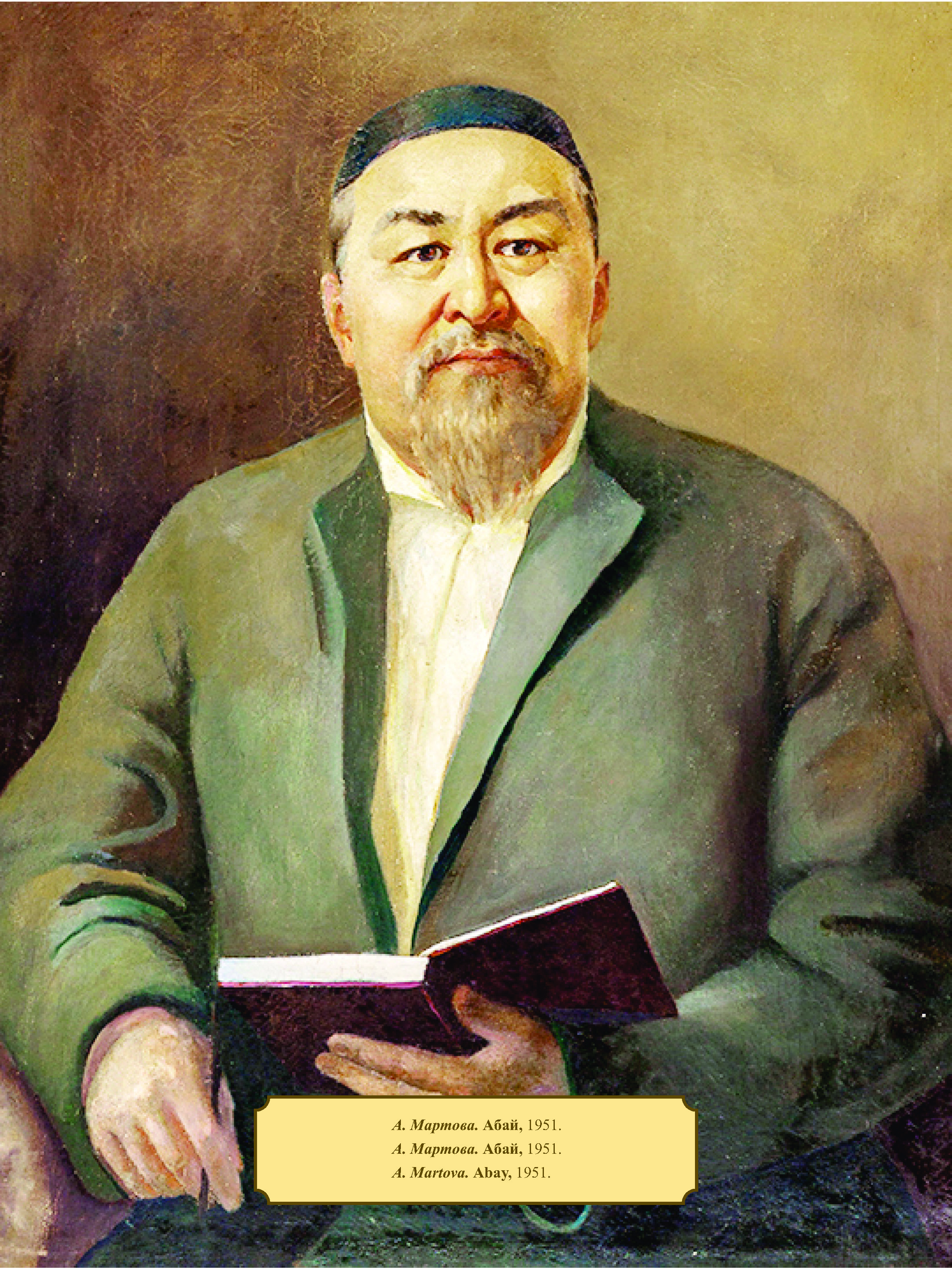
Abai Kunanbaiuli (1845–1904)
Abai (Ibrahim) Kunanbaiuli (August 10, 1845–July 6, 1904) was a great Kazakh poet, composer and philosopher. He was also a cultural reformer toward European and Russian cultures on the basis of Islam.
Abai was born in East Kazakhstan Province; the son of Kunanbai and Uljan, Kunanbai's second wife, they named him Ibrahim, but because of his brightness, he soon was given the nickname " Abai " (meaning "careful"), a name that stuck for the rest of his life.
At his school in Semipalatinsk, Abai encountered the writings of Mikhail Lermontov and Alexander Pushkin. Abai's main contribution to Kazakh culture and folklore lies in his poetry, which expresses great nationalism and grew out of Kazakh folk culture. Before him, most Kazakh poetry was oral, echoing the nomadic habits of the people of the Kazakh steppes.
During Abai's lifetime, however, a number of important socio-political and socio-economic changes occurred. Russian influence continued to grow in Kazakhstan, resulting in greater educational possibilities as well as exposure to a number of different philosophies, whether Russian, Western or Asian.
Abai Kunanbaiuli steeped himself in the cultural and philosophical history of these newly-opened geographies. In this sense, Abai 's creative poetry affected the philosophical thinking of educated Kazakhs Post mark of Soviet Union honoring Abai. The leaders of the Alash Orda movement saw him as their inspiration and spiritual predecessor. Contemporary Kazakh images of Abai generally depict him in full traditional dress holding a dombra (the Kazakh national instrument). Today, Kazakhs revere Abai as one of the first folk heroes to enter into the national consciousness of his people.
Abai also translated into Kazakh the works of Russian and European authors, mostly for the first time. Translations made by him include poems by Mikhail Lermontov, Johann Wolfgang von Goethe, Lord Byron, Ivan Krylov's Fables and Alexander Pushkin's Eugene Onegin.
Abai's major work is “The Book of Words”, a philosophic treatise and collection of poems where he encourages his fellow Kazakhs to embrace education, literacy, and good moral character in order to escape poverty, enslavement and corruption. In Word Twenty Five, he discusses the importance of Russian culture, as a way for Kazakhs to the world's cultural treasures.