Меню
Страницы
Статья
About Kazakhstan
General information
- Official name: Republic of Kazakhstan
- Capital of the Republic of Kazakhstan: Astana
- President: Kassym-Jomart Kemeluly Tokayev
- Region: Asia (Central Asia)
- Territory: 2,724,900 km²
- Population: over 20.5 mln people
- Independence day: December 16, 1991 (from USSR)
- Administrative divisions: unitarian state, administratively consisting of 20 territorial unit: 17 regions and 3 cities of republican significance
- Government control: Presidential republic
- Head of State: President elected for 7 years
- Top lawmaking body: Unicameral Parliament — the Kuryltai of the Republic of Kazakhstan
- Supreme executive organ: Government of the Republic of Kazakhstan
- Currency: Kazakhstani tenge (KZT)
- ISO code: KAZ
- Web domain: .KZ
The Republic of Kazakhstan is a unitary state with the presidential system of government. Under the Constitution, Kazakhstan is a democratic, secular, legal and social state which recognizes the man, his life, rights and freedoms as the supreme values of the country.
Kazakhstan gained independence on December 16, 1991. Astana is the capital city of the country. Kazakh language is the official language of Kazakhstan. The Russian language has the status of the language of interethnic communication. The unit of currency used in Kazakhstan is tenge.
National symbols
In the Republic of Kazakhstan the state symbols are the State flag, the State Emblem and the National anthem.
About National Symbols of Kazakhstan.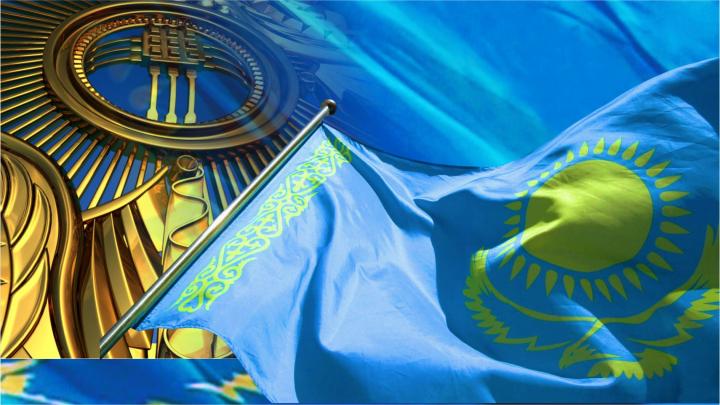
Branches of government
The President of the Republic of Kazakhstan is the head of state, the highest official, who determines the main directions of domestic and foreign policy of the state and represents Kazakhstan both inside and outside the country. The President is a symbol and guarantor of the national unity and state power, inviolability of the Constitution, human and civil rights and freedoms.
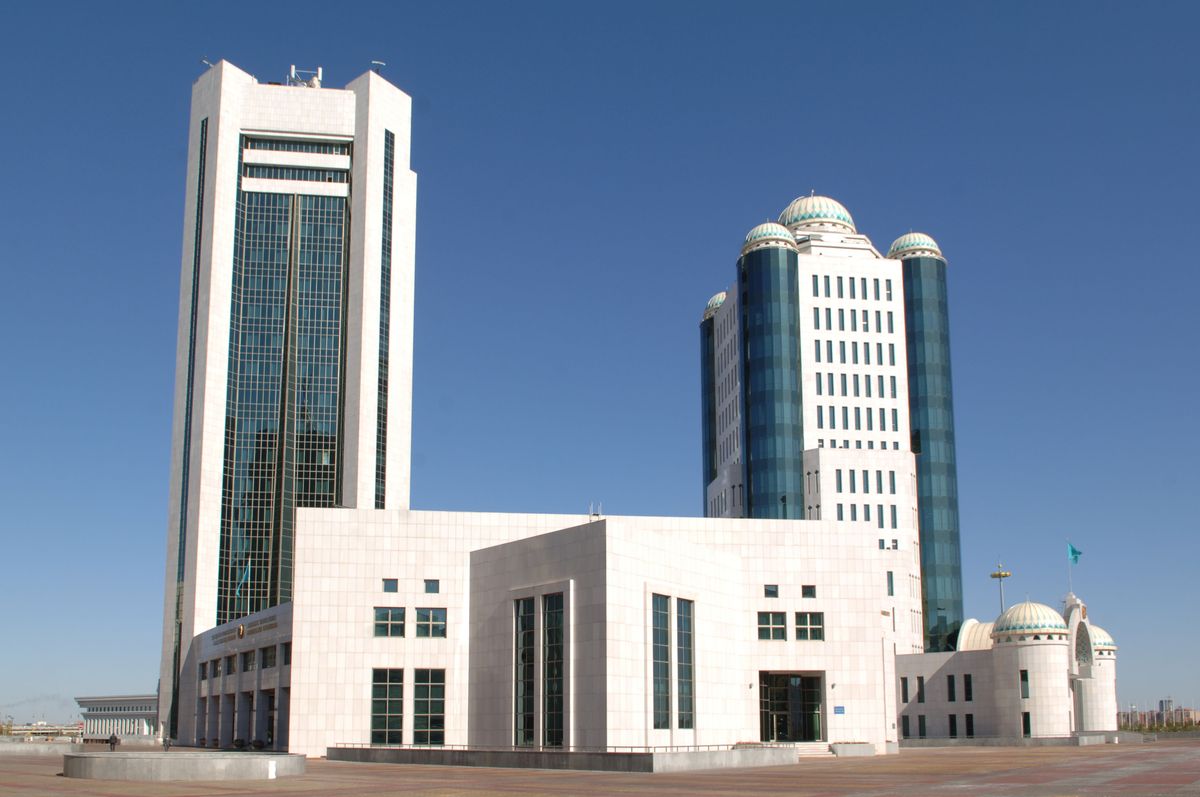
The government exercises executive power, heads the system of executive bodies and manages their activities.
Legislative functions are performed by the Unicameral Parliament — the Kuryltai of the Republic of Kazakhstan, which consists of 145 deputies elected for a term of five years under a proportional electoral system based on party lists. All deputies of the Kuryltai are elected by the citizens of the Republic of Kazakhstan.
Administrative and territorial structure
The administrative and territorial structure of the country includes 17 regions and 3 cities of republican significance.
The population of Kazakhstan is a little over 19 million people.
With the territory of 2 million 724.9 thousand square kilometers, the country is ninth in the world in terms of area. In the north and west, the republic has shared borders with Russia: 7.591 km (the longest uninterrupted land border in the world), in the east with China: 1.783 km, in the south with Kyrgyzstan: 1.242 km, Uzbekistan: 2.351 km and Turkmenistan: 426 km. The total length of the land borders is 13.200 km.
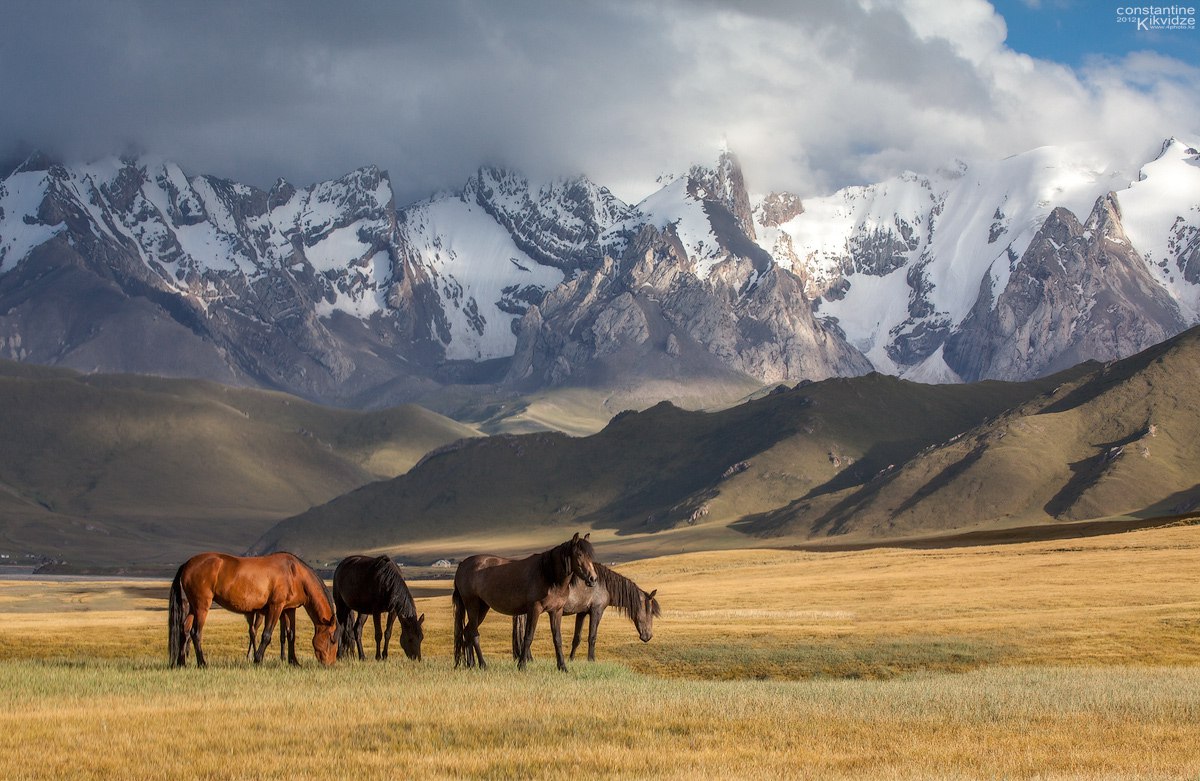
Kazakhstan is the largest country in the world that does not have direct access to the World Ocean. Most of the country's territory is deserts - 44% and semi-deserts - 14%. Steppes occupy 26% of the area of Kazakhstan, forests - 5.5%. There are 8.5 thousand rivers in the country. The northeastern part of the Caspian Sea is included in the republic borders. The Aral Sea is divided between Kazakhstan and Uzbekistan. There are 48 thousand large and small lakes in Kazakhstan. The largest of them are Balkhash, Zaysan and Alakol. The remoteness from the oceans determines the sharply continental climate of the country.
Economy
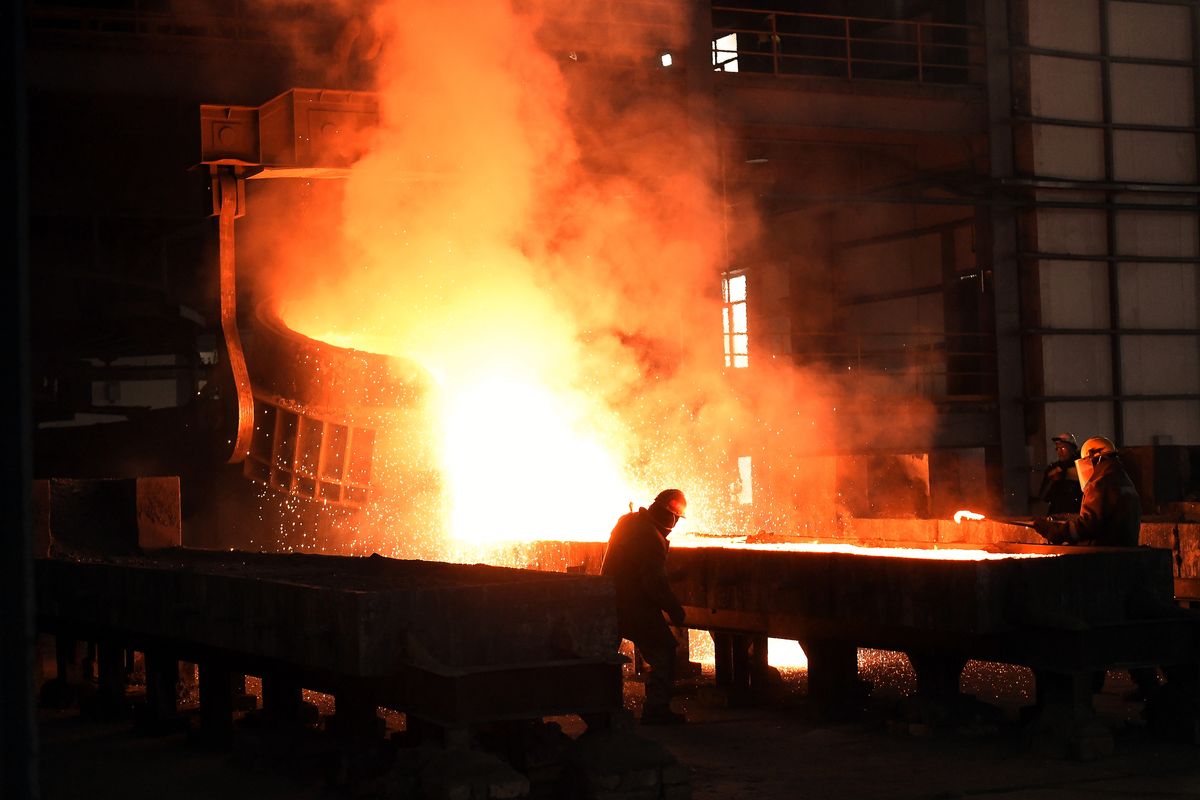
The mineral resources base of the country consists of more than 5 thousand deposits. The forecasted cost of the deposits is estimated at tens of trillions of dollars. The country is on the first position in the world in terms of explored reserves of zinc, wolframium and barytes, second position in silver, lead and chromite, third in copper and fluorite, fourth in molybdenum, and sixth in gold.
Also, Kazakhstan has significant oil and gas resources (ninth in the world in terms of explored oil reserves) concentrated in the western regions. Moreover, the country ranks eighth in coal reserves and second in uranium reserves.
Kazakhstan is one of the ten leading world exporters of grain and one of the leaders in flour export. Seventy percent of arable lands in the north are occupied by grain and industrial crops such as wheat, barley, millet. Rice, cotton and tobacco are grown in the south of the country. Kazakhstan is also famous for its gardens, vineyards and cucurbits. One of the leading areas of agriculture is animal-breeding.
The main export commodities are products of mining, fuel and energy, metallurgical and chemical industries, as well as the grain industry. The main trade partners of the country are Russia, China, European states and CIS.
For the purpose of the economy diversification, the industrial and innovative development program is being successfully implemented under which old enterprises are renovated and new enterprises are established.
Kazakhstan is implementing a large-scale project called “New Silk Road”, which is to revive the country's historical role of being the main connecting link of the continent and turn it into the largest business and transit hub in the region, i.e. sort of bridge between Europe and Asia.
In 2014, the Head of State announced about the “Nurly Zhol” program for large-scale infrastructure construction intended to connect the regions of Kazakhstan with main lines and update logistics/social/industrial infrastructure.
Kazakhstan has embarked upon the implementation of the Plan of the Nation “100 Concrete Steps”, which provides for fundamental transformations in order to implement the Five People's Reforms, namely, generation of professional government machinery; ensuring the rule of law; industrialization and economic growth; identity and unity; and establishment of an accountable state.
A large-scale social modernization of the country is underway. Thus, new schools, professional colleges and universities have been built; modern medical clinics and hospitals have been opened and the system of social support for the population has been improved.
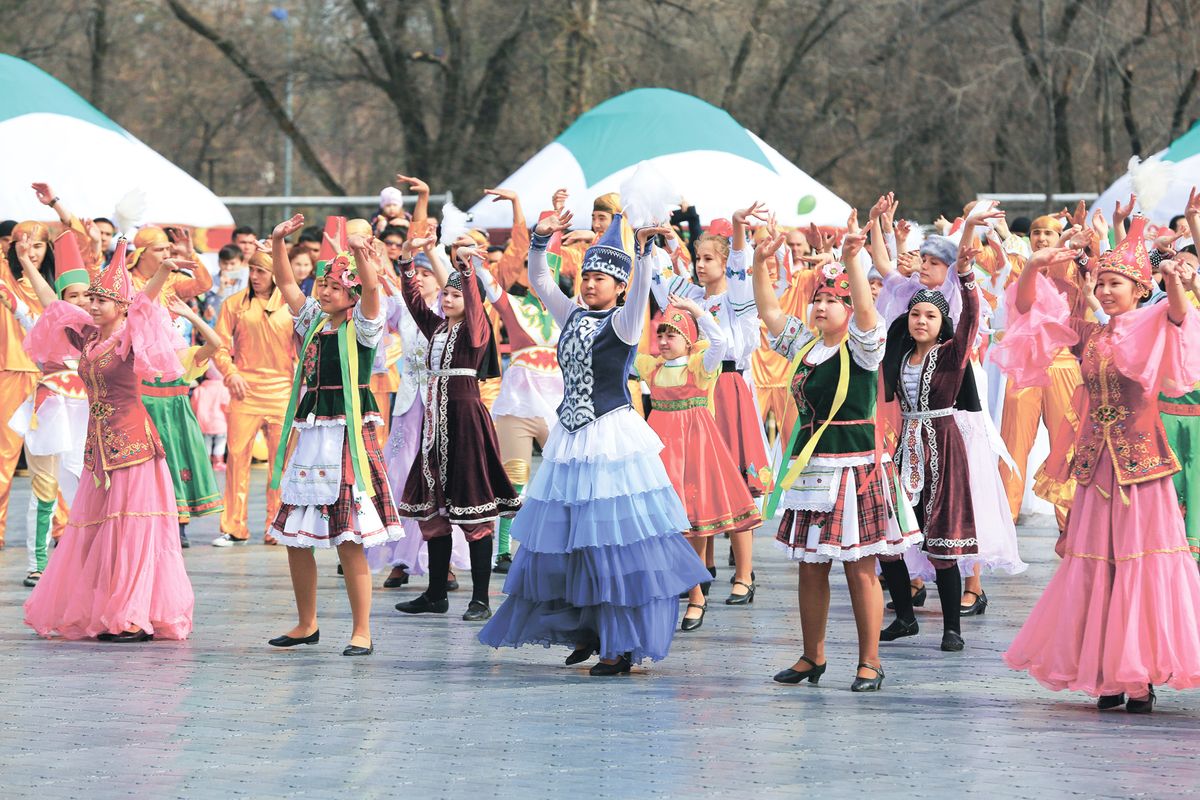
Today, representatives of 130 ethnic groups live in the country. The Assembly of People of Kazakhstan, which is a consultative and advisory body for coordination of interethnic relations, successfully operates in the country. In Astana, Congresses of Leaders of World and Traditional Religions are held on a regular basis.
Politics
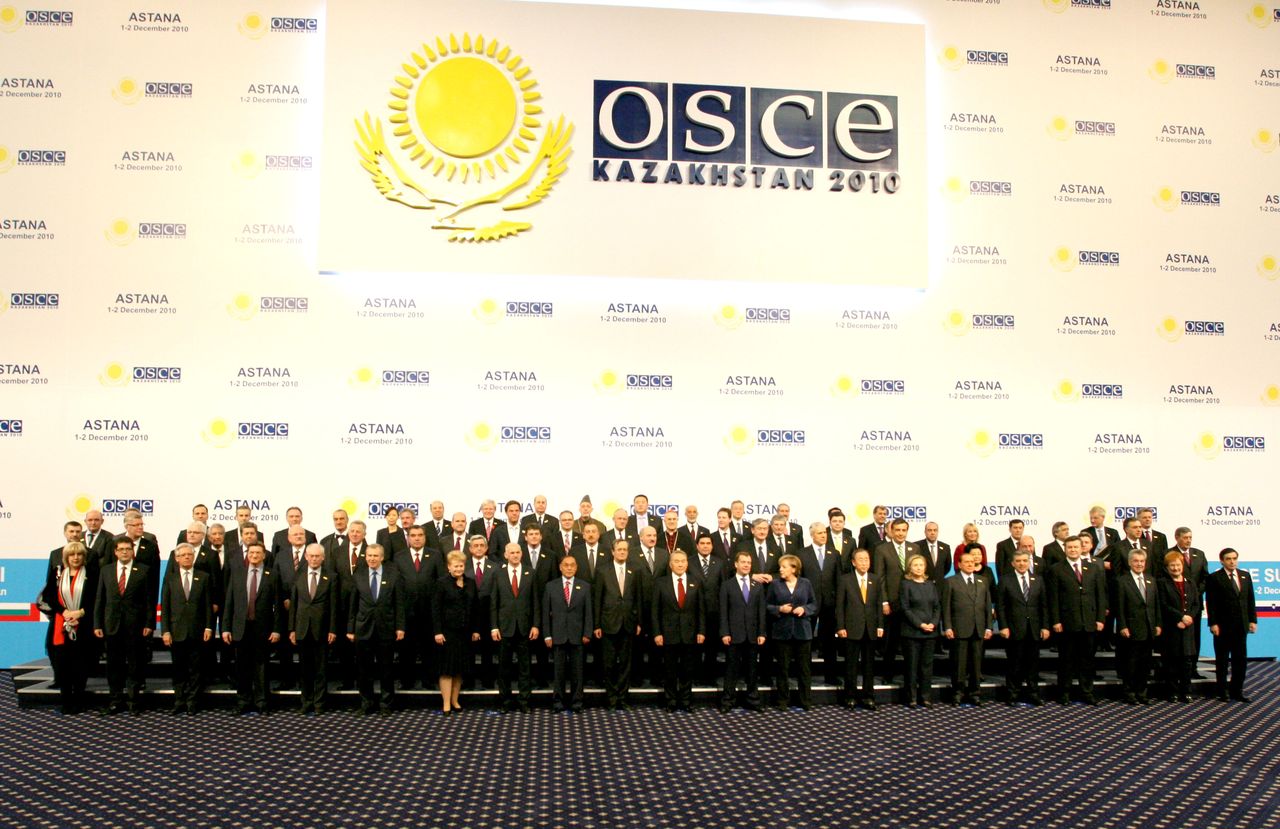
Being the Central Asia leader, the country makes a significant contribution to strengthening the stability of the region. The country has made a great progress in the world stage. This is proved by the chairmanship of Kazakhstan in the OSCE and holding of the Summit for this international organization in December 2010 in Astana. A significant initiative introduced by the country was the launch and development of the CICMA project, which is the Asian analogue of the OSCE. The productive activity of Kazakhstan as being the chairman of the leading organization of the Islamic world (OIC) received positive feedback. The country is also a recognized leader in the global anti-nuclear movement.
Kazakhstan is a member of the Eurasian Economic Union.
Stable growth of all the economy sectors, international recognition and political stability have become the basis for the prosperity of Kazakhstani society. Kazakhstan is the country looking ahead, which at the same time preserves its cultural traditions and successfully implements its huge potential in today's accelerating world.
Education
The Kazakhstani education system helps to acquire knowledge that later enables people mastering the profession. In the Republic of Kazakhstan, education is divided into general and professional. School (secondary) education is divided into classes: primary (grades 1-4), basic and senior. Primary vocational education (after the 9th grade) can be obtained in specialized lyceums, and secondary vocational education at academies or colleges.
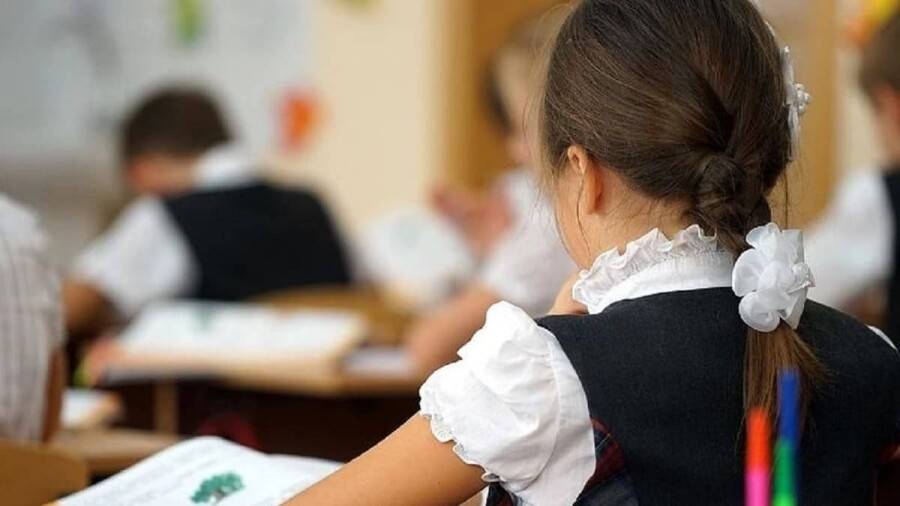
The education system in the Republic of Kazakhstan consists of several stages:
- pre-school;
- secondary;
- higher;
- professional.
To enroll to a higher educational institution, prospective students should take the UNT test (Unified National Testing). The points scored at the Unified National Testing are the main indicator for enrollment to Kazakhstani higher educational institutions. Applicants have the opportunity to enroll to a chosen university on a paid basis (at their own expense), or they can get an education free-of-charge by obtaining an educational grant. It takes 4 years to get a bachelor's degree. Also, those applicants who already have a bachelor's degree can enroll to a master's degree, which is postgraduate education. It takes from 1 to 2 years to get a master's degree. Citizens of the Republic of Kazakhstan have the opportunity to get the “Bolashak” scholarship to study abroad. Foreigners have the opportunity to get education on the same rights as citizens of the Republic of Kazakhstan. The education system is controlled by the relevant ministries - the Ministry of Education of the Republic of Kazakhstan and the Ministry of Science and Higher Education of the Republic of Kazakhstan.
Transport
In recent years, the Republic of Kazakhstan has been actively developing its transport system as transport is an important economy and politics sector in Kazakhstan. First of all, this is due to the advantageous geographical position, vast territory of Kazakhstan, low population density, remoteness of settlements from each other, dynamics of globalization and integration processes. Kazakhstan ranks ninth in terms of land area in the world, and consequently, transport isthe only way to cover long distances between regions, which applies both to transportation of goods and people. New railway branches appear and highways are being reconstructed. The country does not have access to the seas and oceans, except for the Caspian Sea, and as a result, the bulk of all traffic falls on land transport. All types of transport are represented in the country: road, railway, water and air transport.
Due to the geographical features, railway and road transport is actively used in the country. For citizens, this transportation types are not only convenient, but also a low-cost option to travel. The base of the country's railway network is made up of four trunks: Turksib, TransKazakhstan (Petropavlovsk - Karaganda - Shu), Orenburg - Tashkent and Kungrad - Beineu - Makat - Astrakhan, as well as three latitude turnks: TransSiberian, Central Siberian and South Siberian (with branches). The length of railways in Kazakhstan exceeds 14 thousand km.
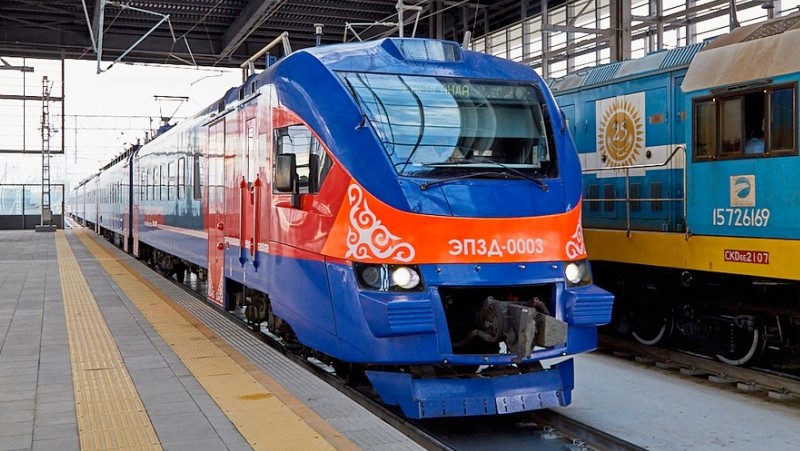
The total length of the road network of the Republic of Kazakhstan is 96 thousand km. Today, all regional cities of Kazakhstan have road traffic with all district centers and villages. The investment policy is aimed at modernization of existing international and local importance roads and construction of new ones. Kazakhstan is implementing a large-scale project called “New Silk Road”, which is to revive the country's role as a bridge between Europe and Asia.
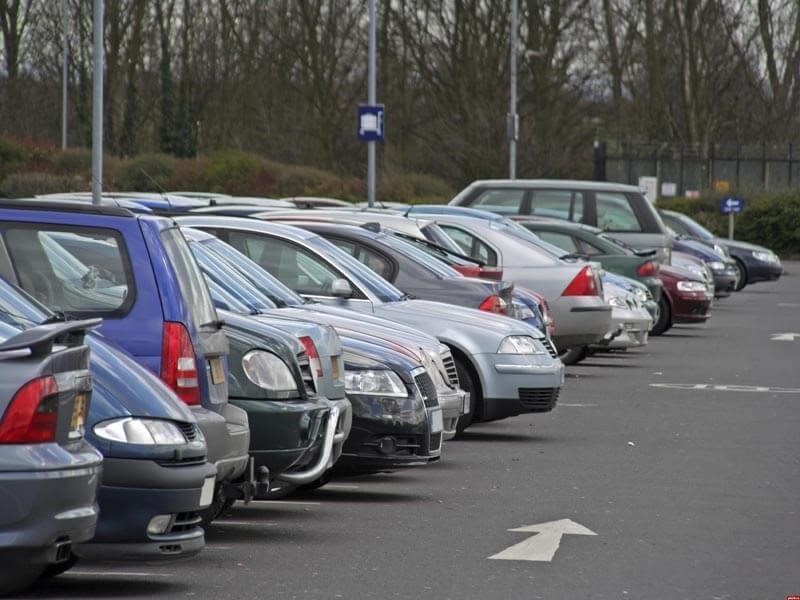
Motor and urban electric vehicles. This category includes transportation by buses, trams, trolleybuses, and other land passenger transportations, in particular, underground (in Almaty), road freight transport, as well as taxi services. The transportation services of this category are available in any city of Kazakhstan. Today, use of various taxi services, food/ food products delivery is very developed in Kazakhstan. Each of the services has mobile apps.
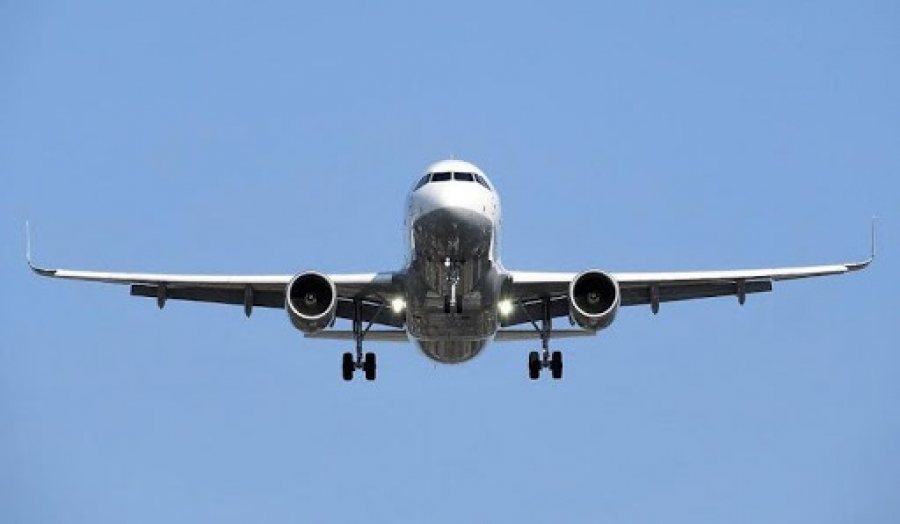
Air transport. Air transport plays an important role in the transport system of Kazakhstan, due to the large geographical extent of Kazakhstan. There are 22 large airports in Kazakhstan, of which 14 serve international traffic. The transit of air cargo and passenger traffic between Europe and Asia is of great importance for the industry. The largest airline in Kazakhstan is Air Astana.
There are many options to purchase air tickets (air ticket offices, travel agencies, etc.). Today, online services are very popular in the country and provide an opportunity to book and buy tickets directly. The services offer variety of options for air tickets in different directions, you just need to choose the most convenient for you.
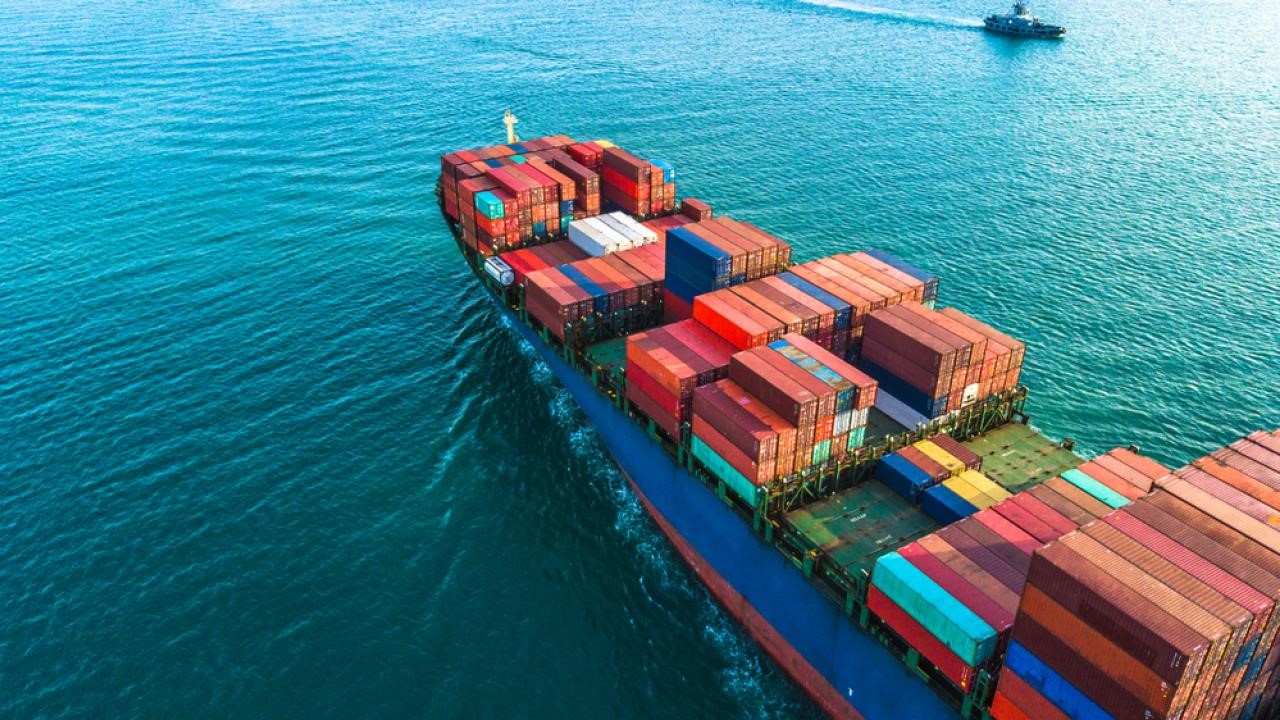
Water transport. This kind of transport is developed in the Caspian Sea. There are two large seaports on the Caspian coast: Aktau and Bautino. Passenger ships from Russia, Azerbaijan and Iran come to the seaports. The length of the waterways open for navigation in Kazakhstan is 3982 km. Boat traffic is also possible on some rivers in Kazakhstan: Irtysh, Syrdarya, Ural and Kigach, Ili and Ishim.
Customs restrictions
Kazakhstan is part of the Eurasian Economic Union (EEU). This means that the same rules for transportation of various goods across the border are applied on the territory of the country as in other countries of the Customs Union. In 2019, the Eurasian Economic Commission canceled the EEU restriction imposed on the export of alcohol and tobacco by individuals for personal use.
Today, individuals can import the following goods on the EEU customs territory:
- cigarettes or tobacco in an amount of 200 cigarettes/50 cigars/250 grams of tobacco per adult. Anything that exceeds the limits is illegal;
- no more than three liters of alcohol can also be imported to the territory of Kazakhstan without payment of duty.
If a price and weight of the imported goods exceed the established thresholds, then an owner will have to pay a duty in the amount of 30% from the cost of goods.
Since January 1, 2019, the threshold for duty-free import of goods for personal use by land and sea transport to the territory of the Eurasian Economic Union (EEU) countries has decreased to 500 euros, and the total weight of such goods should not exceed 25 kilograms.
Also, tourists or guests of the country can bring items for personal use. However, number of the items should not exceed the relevant standards:
- food products: no more than 10 kilograms per person;
- clothes and footwear: no more than one item in the same name, cut and size. This refers to outer clothing made of leather and furs;
- jewelry: five items;
- bicycles: 1 per person;
- baby stroller: 1 per person;
- mobile phone: 2 per person;
- tablet: 2 per person;
- laptop/netbook: 1 per person.
What is prohibited to import into Kazakhstan?
Pursuant to the customs rules, it is prohibited to import the following goods into the territory of the country:
- any types of weapons and ammunition;
- drugs and medications containing drugs;
- materials containing promotion of war, terrorism, racism, violence;
- materials with sexual content;
- soil and subsoil, including plants in soil,
- plant diseases and pests;
- quarantineable products and products infected with quarantine organisms.
Note that if prohibited goods are found in a passenger's baggage, they are withdrawn and an offender will face administrative or criminal liability.
Import and export of foreign and national currency in cash, certified securities and payment documents is carried out by residents and non-residents without restrictions upon compliance with the requirements of the customs legislation of the EEU countries and the Republic of Kazakhstan. Customs declaring procedure is not required for individuals importing or exporting foreign and national currency in cash (except for coins made of precious metals) and traveler's checks in a total amount equal to or not exceeding the equivalent of ten thousand US dollars (about KZT 4.2 million). An amount exceeding the equivalent of ten thousand US dollars is subject to mandatory customs declaration, except for cases of import/export carried out from the territory or into the territory that is an integral part of the customs territory of the EEU countries.
Customs declaring procedure involves fill-in of a customs declaration in writing for the entire amount with indication of the origin and purpose of cash and traveler's checks.
From January 1, 2021, it will be possible to import duty-free goods in an amount not exceeding 500 euros and weighing not more than 25 kg. The amendments do not cover goods imported into the EEU territory in accompanied baggage by air. When traveling by plane, one still can import duty-free goods in the amount up to 10 thousand euros and weighing no more than 50 kg.
Geographical position
The Republic of Kazakhstan occupies a very advantageous geographical position being in the central part of the Eurasian continent at an equal distance from the Atlantic and Pacific oceans. The country area is 2724.9 thousand km². The indicator is ninth in the world and fourth among the countries of Eurasia.
The capital of Kazakhstan is Astana.
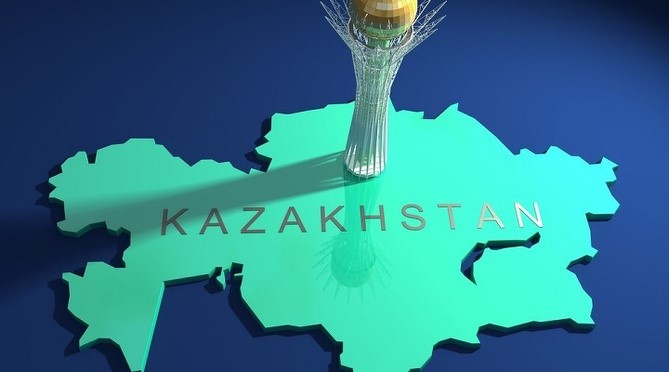
The key asset of the country is mineral resources. Thus, experts assure that the Kazakh Earth's interior contain almost all the periodic table elements.
Kazakhstan is distinguished by its landscape diversity. The natural attractions of Kazakhstan are as follows: northern ridge of the mountains, which is part of the famous Tien Shan; an area of the Altai mountain system and Saryarka also known as the Kazakh Upland.
Time zone
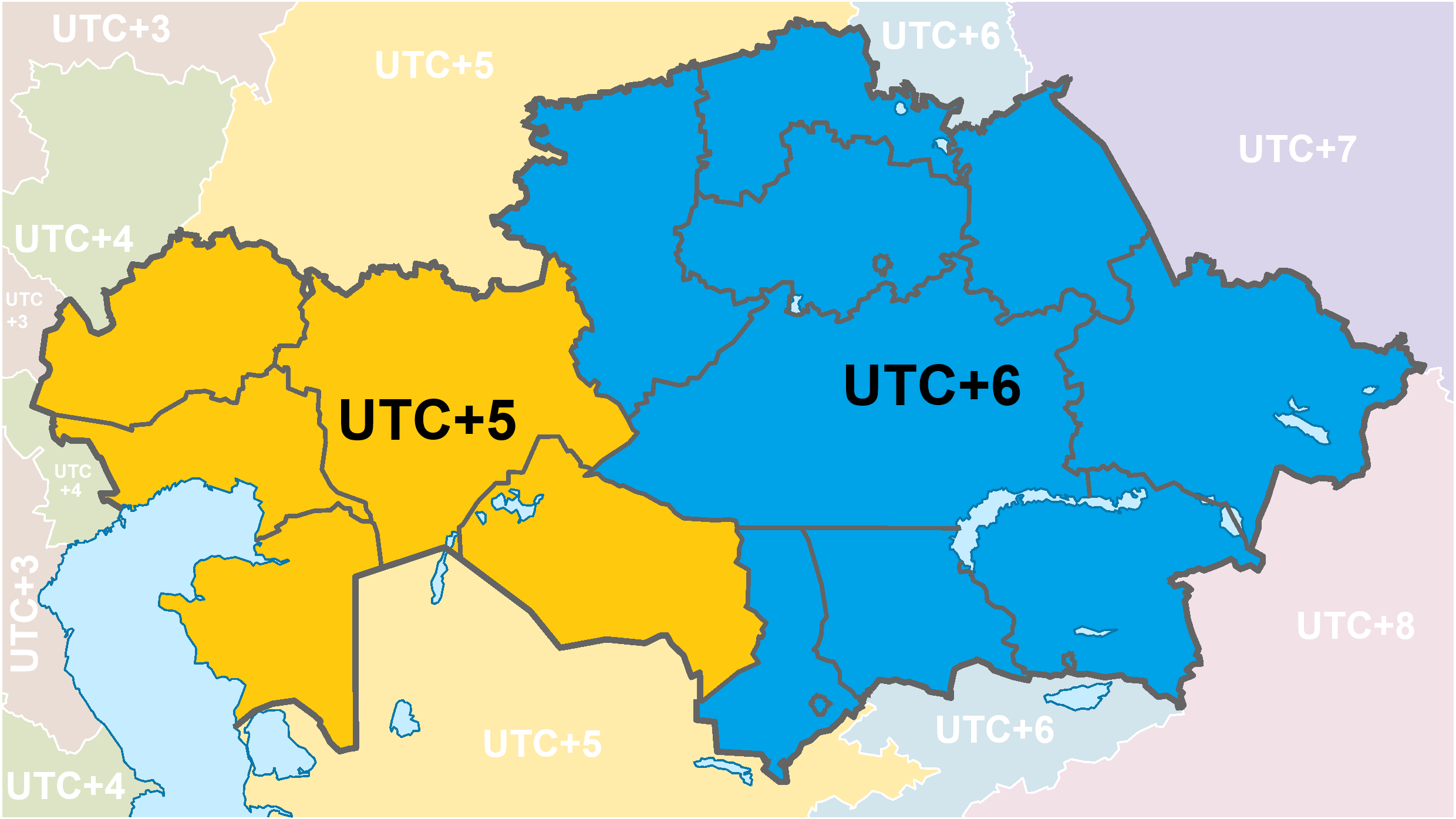
The territory of the Republic of Kazakhstan is divided into two time zones (officially – 4th and 5th) with the current time UTC + 5 and UTC + 6, although it actually locates in four geographic time zones: UTC + 3, UTC + 4, UTC + 5, UTC + 6.
Switch to daylight saving time was cancelled in 2005.
Climate
The climate of Kazakhstan is sharply continental, i.e. with cold winters and hot summers. The weather can vary significantly in different regions of the country due to spatial features. When spring sowing is taking place in the far south of the country, snow can still lie or blizzards can rage in the north.
In winter, the average temperature in the north reaches -18.7 °C in January, while in the south it is -1.5 °C. Snowy winters are ideal for winter sporting activities in places like ski resorts. One of the most popular ski resorts is Shymbulak ski resort in Almaty.
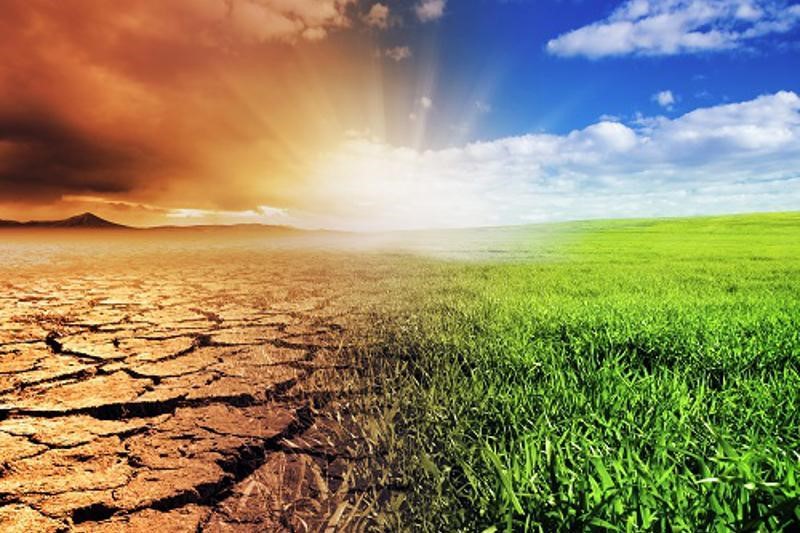
In summer, the average temperature of the hottest month, July, in the north of the country is + 18.8 ° С, while in the south it goes up to + 28.8 ° С. During a hot summer, a favorite type of recreation for Kazakhstani citizens is beach holiday on the picturesque shores of seas and lakes as well as in various recreational centers.
Kazakhstan is a sunny country. Thus, in some regions the sun shines up to 330 days a year and the sky is almost always deep blue.
Population
As of September 1, 2021, the total population of Kazakhstan exceeds 19,000,000 people. The country ranks 64th in the list of countries in terms of population. The average density is slightly less than 6.93 people per km² (184th position in the list of countries in terms of population density).
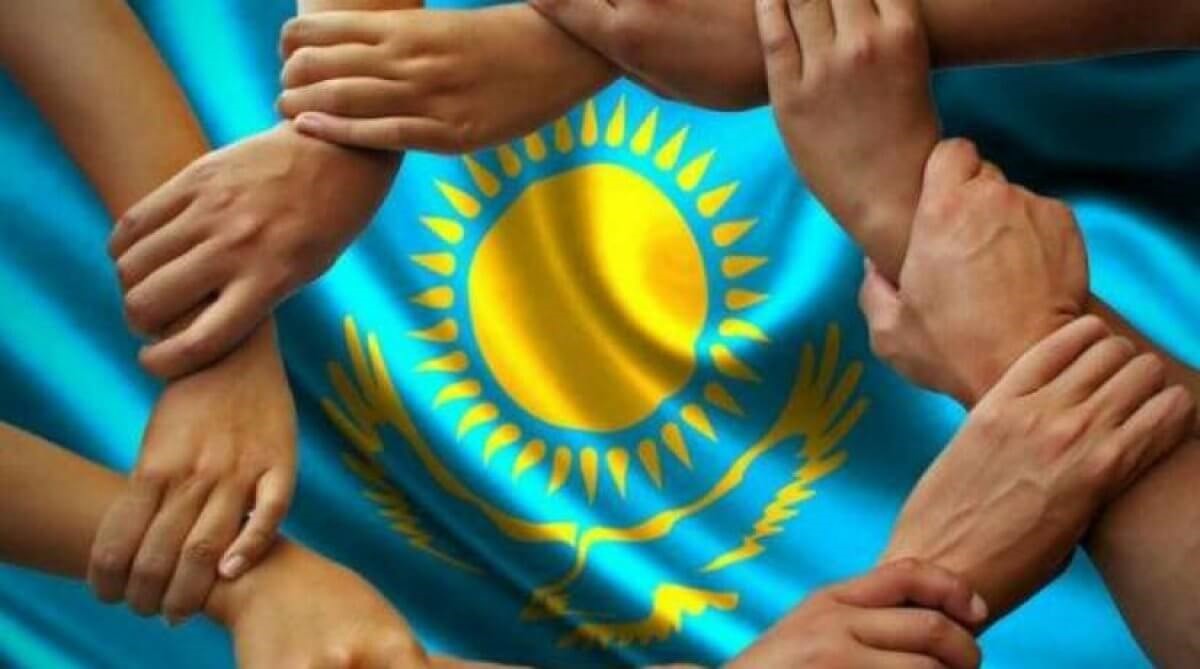
Today, the Republic of Kazakhstan is a country with multi-ethnic composition of the population. According to data at the beginning of 2021, Kazakhs make up the majority of the population (69.01%), then Russians (18.42%), Uzbeks (3.29%), Uighurs (1.48%), Ukrainians (1.36%), Tatars (1.06%) and others.
Republic of Kazakhstan Population Census
In Kazakhstan, national population census has been carried out in the time dedicated to the world census rounds. The post-war Kazakhstan population censuses as part of former USSR, had been held in 1959, 1970, 1979 and 1989. During the Republic of Kazakhstan Independence time, the population censuses had been conducted in 1999, 2009 and 2021 years.
In accordance with Law of Republic of Kazakhstan "On State Statistics" and Rules and timing of national censuses, approved by Decree of Government of the Republic of Kazakhstan dated October 11, 2010 No. 1049, as well as Decree of Government of the Republic of Kazakhstan dated June 19, 2019 No. 419 according to the Action Plan, it was decided to conduct the third regular national population census in the Republic of Kazakhstan in the period from September 1 to October 30, 2021.
It should be noted that census planned for conduct in 2020 on behalf of President of the Republic of Kazakhstan was scheduled from October 2020 to October 2021 due to the spread of coronavirus infection and restrictive quarantine measures being introduced in the country. At the same time, the online census has begun on September 1, 2021.
In online mode, with the help of a virtual assistant, the respondents, regardless of the location, independently have completed the census for themselves and their family members. The respondents who submitted information through the website were free from being interviewed by the interviewer. The online survey was available 24 hours a day from September 1 to October 15 , 2021.
At the same time, authorized users of e-Government Portal (e-Government) were provided with the opportunity to take an online population census without being registered on the website www.sanaq.gov.kz
In addition, it was possible to take online survey through “Aitu” mobile application in the population census section (Aitu sanaq.aitu.io).
The second traditional continuous round was conducted on October 1 to 30, 2021, using electronic census questionnaires on tablets by interviewers to increase the convenience and their mobility. Also, an individual identification number was included in the census form to avoid the duplication of information and update of information databases.
The population census data findings will reflect economic, demographic and social changes that occurred in the Republic of Kazakhstan during intracensal period in demographic and socio-economic development of population such as changes in the population structure in the country and in urban and rural area and by regional context in terms of sex and age, marital status, national composition, citizenship, religion, education level, language proficiency, household number and size, housing conditions and other qualitative and quantitative characteristics.
The publications, press releases and other statistical, analytical and informational materials that had been prepared based on the 1999 and 2009 census data are available on the website of the Bureau of National Statistics of the Agency for Strategic Planning and Reforms of the Republic of Kazakhstan www.stat.gov.kz.
According to the 2021 preliminary census data, the population is 19,169,550 people, of which the number of men is 9,337,667 people or 48.71% , of women is 9,831,883 people or 51.29 %. The average population age is 31.94 years. In the context of age groups, out of the total population number, the children (0-17 years old) make up 6,511,171 people or 33.97 % ( including preschool age (0-5 years) - 2,422,081 or 12.64%), and the youth (14-28 years) - 3,779,601 people or 19.72%.
Referendum 2022
Republican referendum was held on June 5, 2022. President of the Republic of Kazakhstan Kassym-Jomart Tokayev had proposed to hold it on April 29, 2022 at the People of Kazakhstan Assembly session. On May 5, 2022, a decree was signed to hold a referendum.
A draft Law of the Republic of Kazakhstan “On Amendments and Additions to the Constitution of the Republic of Kazakhstan” was put to a republican referendum with the following wording of the question in the ballot: “Whether you admit amendments and additions to the Constitution of the Republic of Kazakhstan set forth in the draft Law of the Republic of Kazakhstan “On Amendments and additions to the Constitution of the Republic of Kazakhstan” that was published in the media on May 6, 2022”.
The Central Election Commission of the Republic of Kazakhstan has carried out Central Commission functions during the referendum.
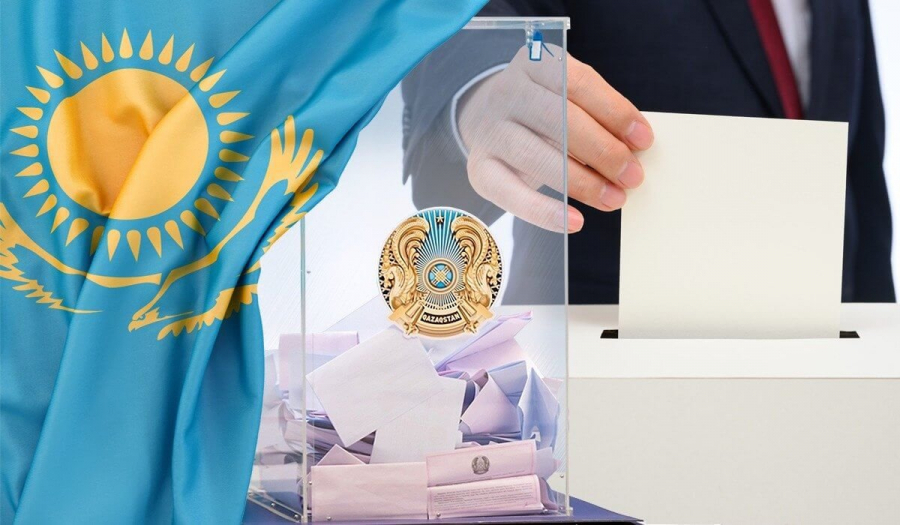
According to the official voting results at the republican referendum on June 5, 2022, the total number of citizens who had the right to participate in the referendum amounted to 11,734,642 people, of which 7,985,769 people or 68.05% took part in the vote. At the same time, 6,163,516 citizens or 77.18% of those who took part in the voting voted “affirmative” to the question put at the referendum. The number of citizens who voted “negative” to the question was 1,490,470 people. There were 205,924 ballots declared invalid. In the 17 regions, cities of republican significance and capital city, the citizens who took part in the voting voted “affirmative” to the question.
The referendum on the question “Whether you admit amendments and additions to the Constitution of the Republic of Kazakhstan, set out in the draft Law of the Republic of Kazakhstan “On amendments and additions to the Constitution of the Republic of Kazakhstan” published in the media on May 6, 2022”, is deemed to be effected, as more than half of the citizens eligible to participate in the referendum took part in the voting.
The Law of the Republic of Kazakhstan "On Amendments and Additions to the Constitution of the Republic of Kazakhstan", that was raised at the republican referendum on June 5, 2022, is deemed accepted, as more than half of the citizens who took part in the voting voted “affirmative” in the amount of at least two-thirds of the regions, cities of republican significance and capital city.
Religion
Modern Kazakhstan is a secular state. Kazakhstan has always been a place of contact between major world confessions. Provision of stability in society, revival and development of religious traditions in Kazakhstan is the result of a balanced and coordinated state policy aimed at ensuring freedom of religion, preserving social harmony and stability in society.
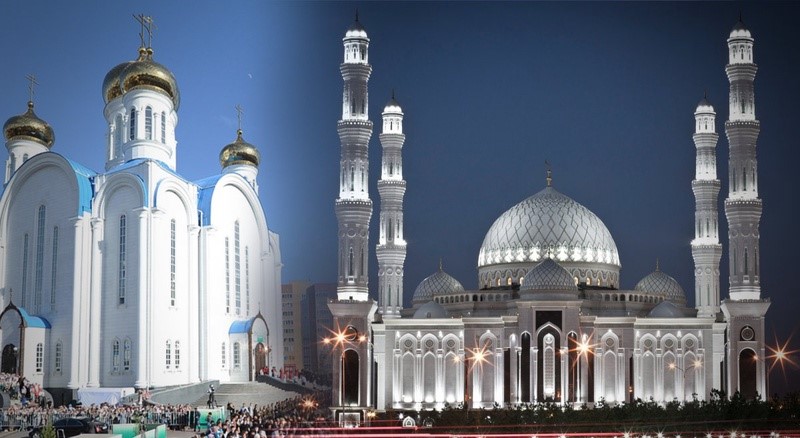
Despite the large number of different religions on the territory of Kazakhstan, majority of population is divided into Muslims who practice Sunni Islam and Christians who practice Russian Orthodox Christianity.
Currency
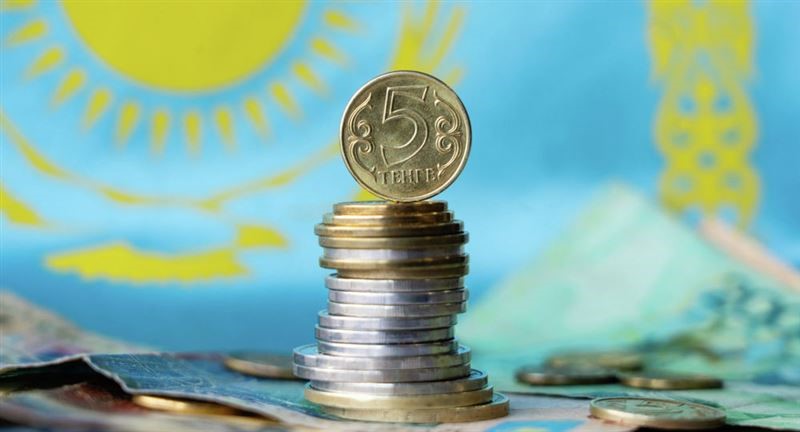
The national currency of Kazakhstan is Kazakhstani tenge. The currency put into circulation on November 15, 1993. It is the day of the national currency introduction into circulation that was declared the National Currency Day. November 15th is also a professional holiday for employees of the financial system of the Republic of Kazakhstan.
The national currency has its symbol (〒).
The most profitable currency conversion is in official exchange offices and banks. In Kazakhstan, credit cards are accepted almost everywhere. Recently, non-cash payments have become widespread in the country. In each city of the country, one can pay using popular applications and QR codes or wire transfer money. Cashless payment for any vehicle (air, taxi, urban transport) is also possible. Shopping, ordering food, paying bills, all those can be done online, one just needs to have a smartphone with an application installed to carry out financial transactions or have a card to be used with a portable POS terminal.
Network and communications
The telecommunications and communication sector of the Republic of Kazakhstan is represented by three areas: telecommunications, Internet and postal communications. Mobile operators are as follows: Kcell and Аctiv, Beeline, Tele2 and Altel. There are about 20 communication operators in the telecommunications market providing long-distance and international telephone services, Internet access and satellite mobile communications. Also there are 3 mobile communication operators.
Today, nobody has any doubts that digital technologies are an integral part of our lives, which results in accelerating its pace and making life easier for humanity. Particular emphasis is made to the development of digital industry in Kazakhstan. To develop the industry, the “Digital Kazakhstan” state program was adopted, which comprises a set of programs aimed at improving the standard of living of each resident of the country through application of digital technologies and provision of the population with ubiquitous access to the Internet.
Currently, two major projects are implemented in the country to ensure further provision of high-speed Internet to rural localities. Upon implementation of the projects, all rural localities with population of 250 people and more will get access to the broadband Internet.
To date, the “electronic government” state program had been implemented in Kazakhstan. Thanks to development of information technologies, government agencies operation became more efficient, in particular when it comes to delivery of public services to the population and business entities.
Postal communication is one of the physical channels for provision of access to information and financial services to the population of rural areas. There are 3448 post offices on the territory of the country.
Useful phone numbers
- Police: 102
- Single Duty-Dispatching Service under Emergencies Department: 112
- Fire Control Service: 101
- Ambulance: 103
- Gas Emergency Service: 104
- Psychological Aid Service: 150