The law of the Republic of Kazakhstan "on Amnesty". "Amnesty does not justify criminal behavior"
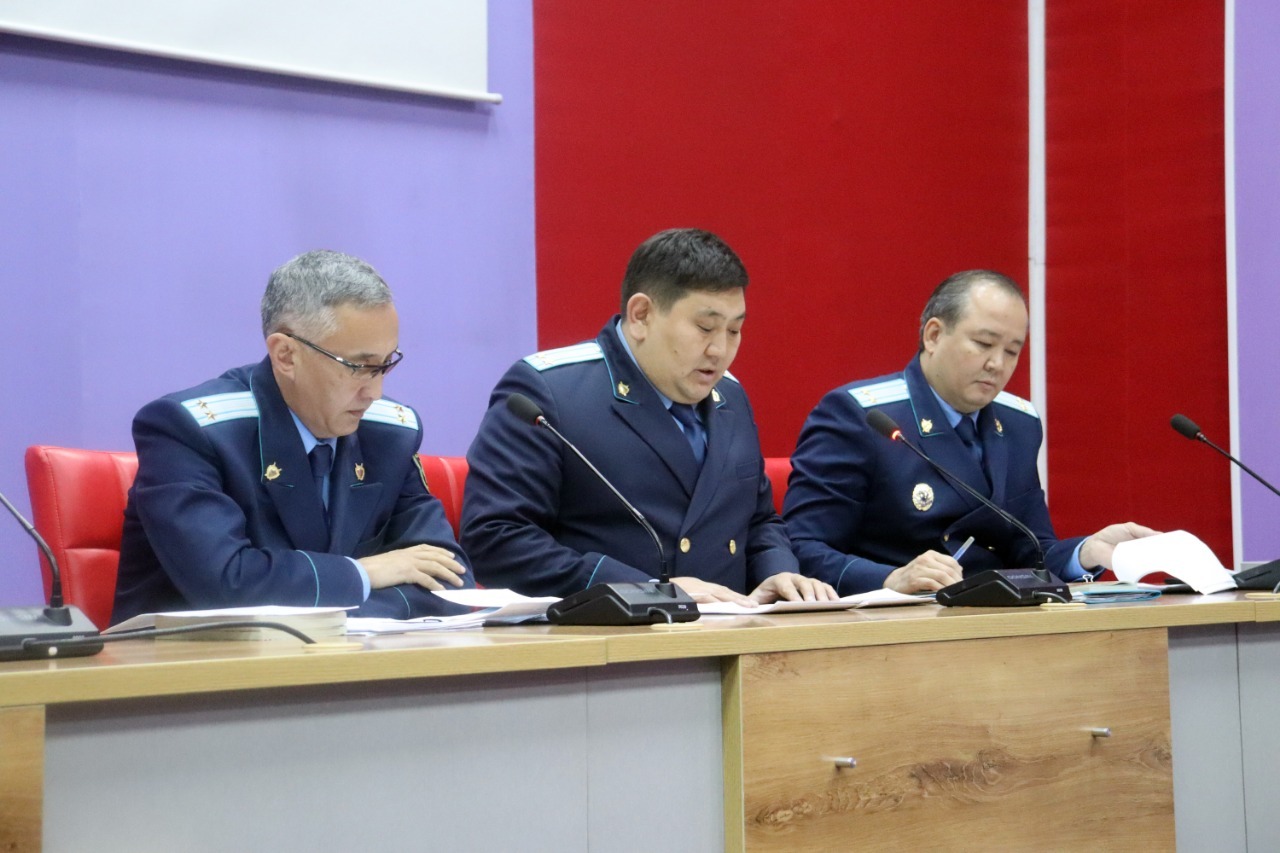
On November 3 of this year, the law of the Republic of Kazakhstan "on amnesty" was put into effect. This law applies to persons who have committed criminal offenses in connection with mass riots on the territory of the Republic of Kazakhstan from January 4 to 7, 2022 or during their suppression. The law was presented by law enforcement officers of Zhetysu region on a wider platform of regional communications.
"Articles 1 and 2 of the law indicate a complete list of articles of the Criminal Code in which Amnesty is applied and types of crimes to which the norms of the law do not apply. The number of such categories is 8. these are terrorist and extremist crimes, torture, crimes against sexual impunity of minors, high treason, corruption crimes, Organization of mass riots, repetition or dangerous repetition of crimes," the speaker said.
It should be noted that this category does not include minors who have committed crimes against sexual impunity of minors and organized mass riots against minors between the ages of 14 and 18.
"Persons convicted of committing criminal offenses, crimes of minor and moderate severity specified in Article 1 of the law are exempt from further serving the main and additional punishment. For serious crimes, the main punishment imposed by the court will be reduced by three quarters, for especially serious crimes – by half. Amnesty does not fully justify the offender and does not allow him to resume his actions. This is a kind of apology given for the gesture of the case. It is aimed only at exemption from punishment," said Kanat Nukhaev, head of the 2nd Department of the prosecutor's Office of Zhetysu region.
"At the moment, 140 crimes for which Amnesty was applied by the courts have been considered. 13 of them were released. In the case of 127, the term has been reduced," Kanat Nukhaev said.
In the event of a pre-trial investigation, attention should be paid to the most important points of the law.
First of all, the bodies of imposition of a crime can be used in cases of criminal offenses, crimes of less serious and moderate severity.
The requirements of the law do not apply to serious and especially serious crimes of this stage, as well as in criminal cases in which money and other valuables are recognized as material evidence.
Proceedings in such cases are carried out on general grounds with the referral of the case to the court.
Second, a decision to terminate a criminal case as a result of an amnesty act may be issued at any stage of pre-trial proceedings in the presence of the following circumstances:
- if the suspect complies with the norms of the law;
- the suspect has a consent to Amnesty;
- the suspect was issued a resolution on the qualification of his actions;
Third, in the presence of circumstances that exclude criminal prosecution as a result of the amnesty act, the criminal prosecution body is obliged to explain to the person the right to apply the amnesty act to him, as well as the legal consequences of its application, as well as to object to the amnesty.
Such petitions must be considered and resolved immediately, and if it is impossible to consider them immediately, no later than three days later.
If a person objects to the application of the amnesty act, the case on the case continues and ends with the referral of the case to the court.
Fourth, first of all, it is necessary to consider the issue of amnesty in relation to suspects and defendants who have applied a preventive measure in the form of detention or house arrest, as well as secret investigative actions are carried out.
Fifth, if there is sufficient evidence and grounds for bringing a person to criminal responsibility in cases where the terms of pre-trial investigation are interrupted, the prosecutor must immediately resolve the issue of resumption of proceedings in the case, take measures to clarify all the circumstances of the case, explaining the right to amnesty to the person, or object to Amnesty.
Sixth, in cases where a person is declared wanted, the amnesty does not apply until his location is established.
At the stage of consideration of cases in court:
When considering criminal cases in court, if the defendant comes to amnesty the public prosecutor directs the court to apply the provisions of the law.
The consent of the victim or his representative to Amnesty is not required.
In addition, if there are convictions that have not entered into legal force at the time of the entry into force of the amnesty act, prosecutors will file appeals with a 15-day deadline for appeal.
Prosecutors participating in the courts of Appeal check the availability of grounds for applying the provisions of the law for criminal offenses committed against the guilty person and, if they are present, issue an opinion on amnesty for convicted persons.
Now, under circumstances that require special attention at all stages of the application of the law.
- the time of committing a crime must be from 00: 00 on January 4 to 24: 00 on January 7, 2022 (registration in the SDTBT can be carried out after this time period);
- criminal offenses must be associated with mass riots and must be committed directly at the place where these riots occurred;
-if in the totality of crimes one of them came to amnesty and the other did not come, it is applied only in the part of the criminal offense specified in Article 1 of the law.
Amnesty is not granted if at least one of these crimes falls under the category of criminal offenses specified in Article 2 of the law.