Nurzhan Kayypzhan, the Chairman of the Judicial Jury under the Supreme Judicial Council of the Republic of Kazakhstan, took part in the Prime Time program on 24kz TV channel, where he informed on key legislative changes related to the activities of the Judicial Jury
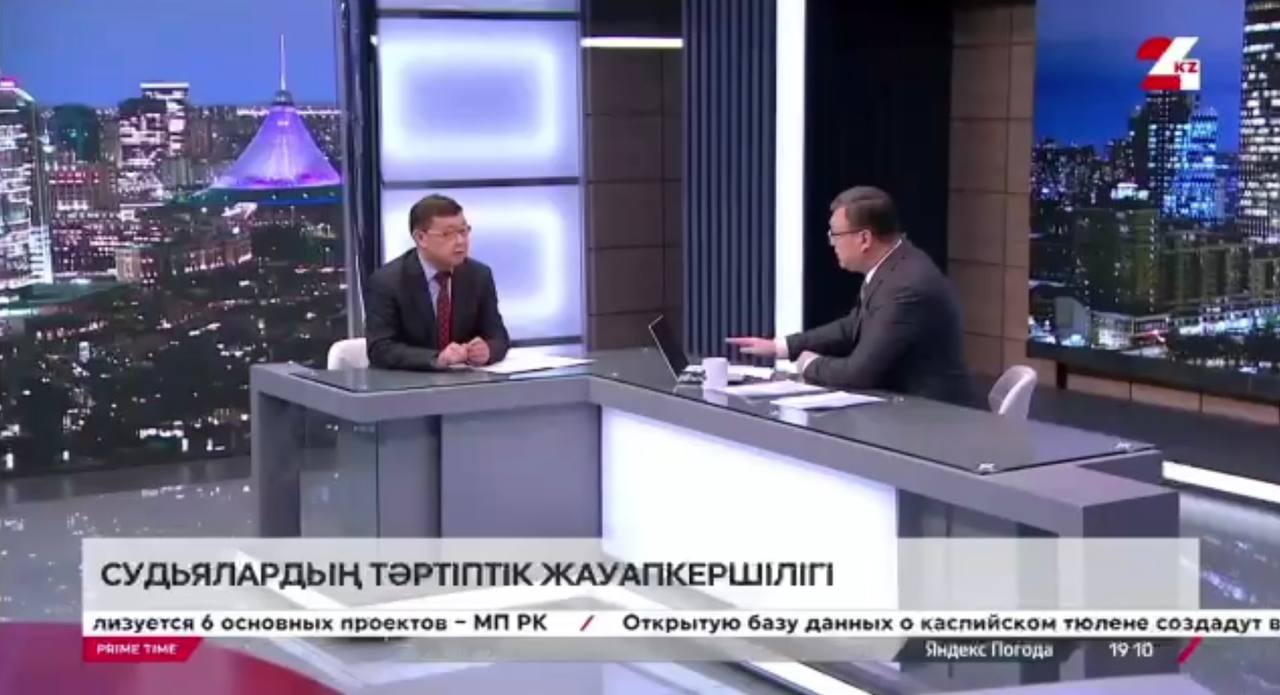
Nurzhan Kayypzhan, the Chairman of the Judicial Jury under the Supreme Judicial Council of the Republic of Kazakhstan, took part in the Prime Time program on 24kz TV channel, where he informed on key legislative changes related to the activities of the Judicial Jury.
Since October 1, 2024, a new mechanism for disciplinary liability of judges has been introduced. As the chairman of the Judicial Jury noted, now issues on gross violations of the law will be considered only on the basis of representations from a higher court, that measure allows to increase objectivity and fairness in the process.
Last year, the Judicial Jury reviewed 77 disciplinary cases and 40 judges were brought to disciplinary liability. Penalties were imposed in the form of remarks, reprimands and dismissal from the post of a judge.
Another important change was the expansion of the Judicial Jury from 9 to 15 people. Currently, it consists of 4 judges of the Supreme Court, 5 judges of regional courts, 4 judges of the district level and 2 representatives of the legal community.
According to N.Kayypzhan, this contributes to making more objective decisions due to taking into account the opinions of representatives of different judicial instances and the legal community. Judges also now have the right to review case materials and to involve lawyers or legal consultants into the consideration of disciplinary cases.
This decision, according to the Chairman of the Judicial Jury, strengthens the protection of the rights of judges and guarantees fairness in the process. In case of disagreement with the decision of the Judicial Jury, the judge may appeal it to the Supreme Judicial Council.
The Council has the right to cancel the decision or send the materials for reconsideration, which is additional step for protecting the rights of judges. All these innovations are aimed at increasing confidence in judicial institutions, ensuring the independence of judges and protecting their rights in disciplinary proceedings.
For the same purpose, Dmitriy Malakhov, the Chairman of the Supreme Judicial Council, holds meetings with citizens on a daily basis, including judges themselves.
During the meeting, the current judges, in addition to issues of disciplinary liability and career advancement, present their proposals for further improvement of the work of the judiciary, developing the criteria for competitive selection, which are discussed and taken into account as part of the further modernization of the Council's activities.