Regional workshop “Continuity of educational levels: the role of teachers and educators in preschool, primary, basic secondary, general secondary education, coordination of educational content”, in order to implement the Decree “On Approval of the List of Border Rural Settlements of East Kazakhstan Region”
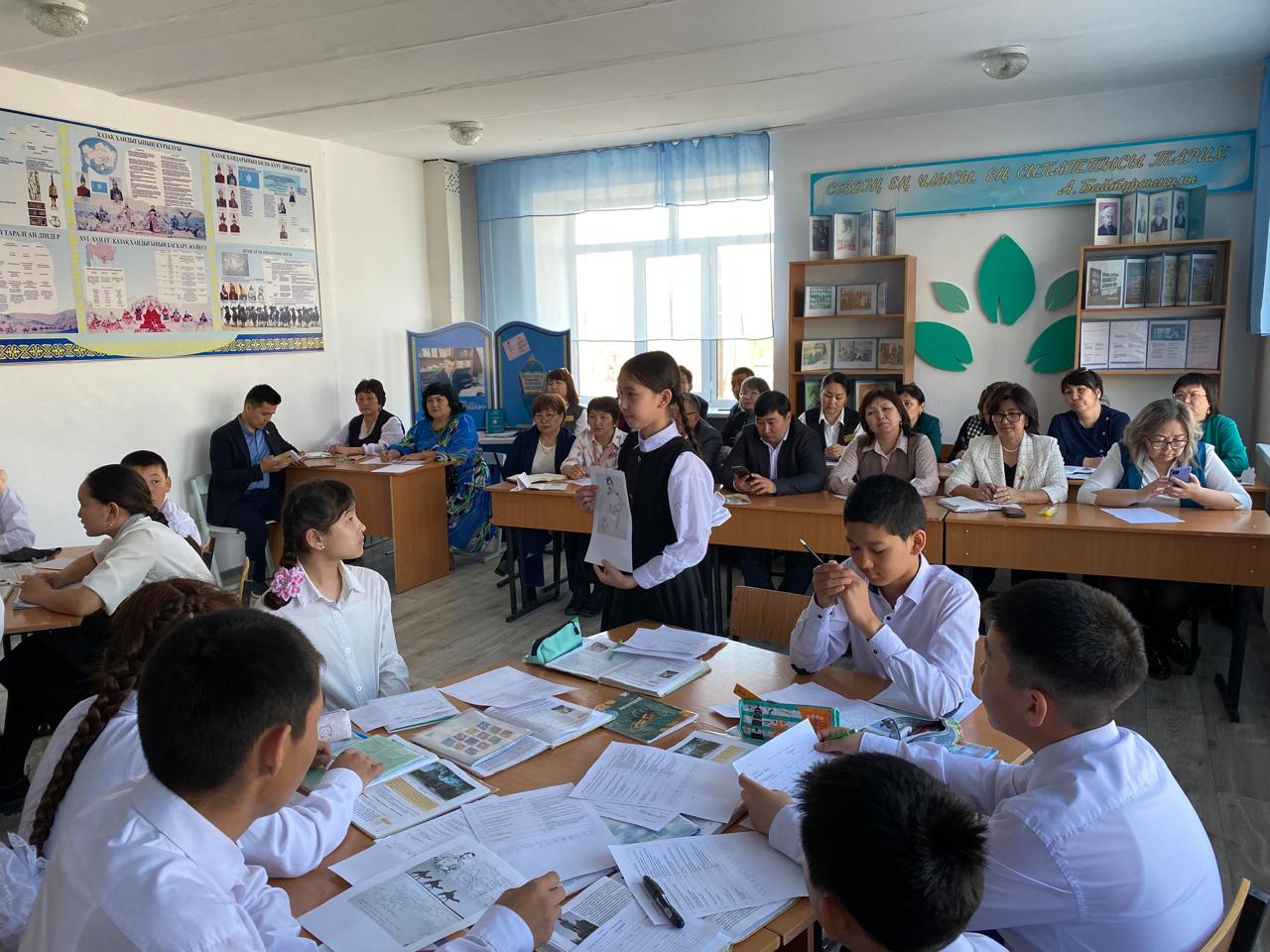
On April 24, 2025, Örken East Kazakhstan Regional Scientific and Methodological Center for Informatization and Education Development of Education Administration of East Kazakhstan region held a workshop titled “Continuity of educational levels: the role of teachers and educators in preschool, primary, basic secondary, general secondary education, coordination of educational content”, in order to implement conceptual approaches to the development of rural schools in the Republic of Kazakhstan. The event took place at Kalzhyr Secondary School of Education Department of Markakol district.
The goal of the workshop was to strengthen and enhance the role of teachers and educators in shaping the continuity of educational and upbringing activities, improving the quality of education, providing methodological and pedagogical support, and sharing the best pedagogical experience among schools.
At the opening ceremony of the workshop, acting head of Education Department of Markakol district G.M. Shayakhmetova welcomed the participants.
G.M. Boshayeva, a methodologist of Örken East Kazakhstan Regional Scientific and Methodological Center for Informatization and Education Development of Education Administration of East Kazakhstan region delivered a keynote presentation on scaling up the Republican project “Auyl mektebi - sapa alany”.
Zh.T. Dutbayev, a headmaster, made a presentation on “School’s approach to fostering educational continuity”.
In order to foster the creative and research skills of school students and enhance the professional growth and pedagogical mastery of teachers, in the practical session titled “Path to success: sharing experience of small schools”, the workshop participants were introduced to the scientific projects of learners from attached small schools: Takyr Basic Secondary School, Zhanaauyl Basic School, Kazakhstan Basic Secondary School.
Teachers from Kalzhyr Secondary School conducted demonstration lessons in Kazakh literature, computer science, physics, biology, English, geography using an interactive whiteboard, and presented their experience to colleagues. Additionally, the participants of the research group, consisting of primary school teachers, a defectologist, a librarian, preschool teachers, teachers of a mini-center and a boarding school, also showcased their work experiences.
A highlight of the workshop was the official opening of a new modernized office of the Youth Resource Center and an assembly hall made possible due to the sponsorship of school graduates.
Recognizing the school as a key driver in improving rural education, organizers also hosted a team-building session for teachers to strengthen school–family relationships and foster collaboration.
The workshop concluded with a feedback session — a “workshop barometer” — to answer raised questions, exchange ideas, and share suggestions for further development. The workshop participants wished the school staff and the project organizers creative success.
Over 70 subject teachers from rural and small schools of the region took part in the workshop.
Moderator of the event: G.M. Boshayeva, a methodologist of Örken East Kazakhstan Regional Scientific and Methodological Center for Informatization and Education Development of Education Administration of East Kazakhstan region.