Nauryz: the Code of History: a lesson through the ages for East Kazakhstan Region schoolchildren
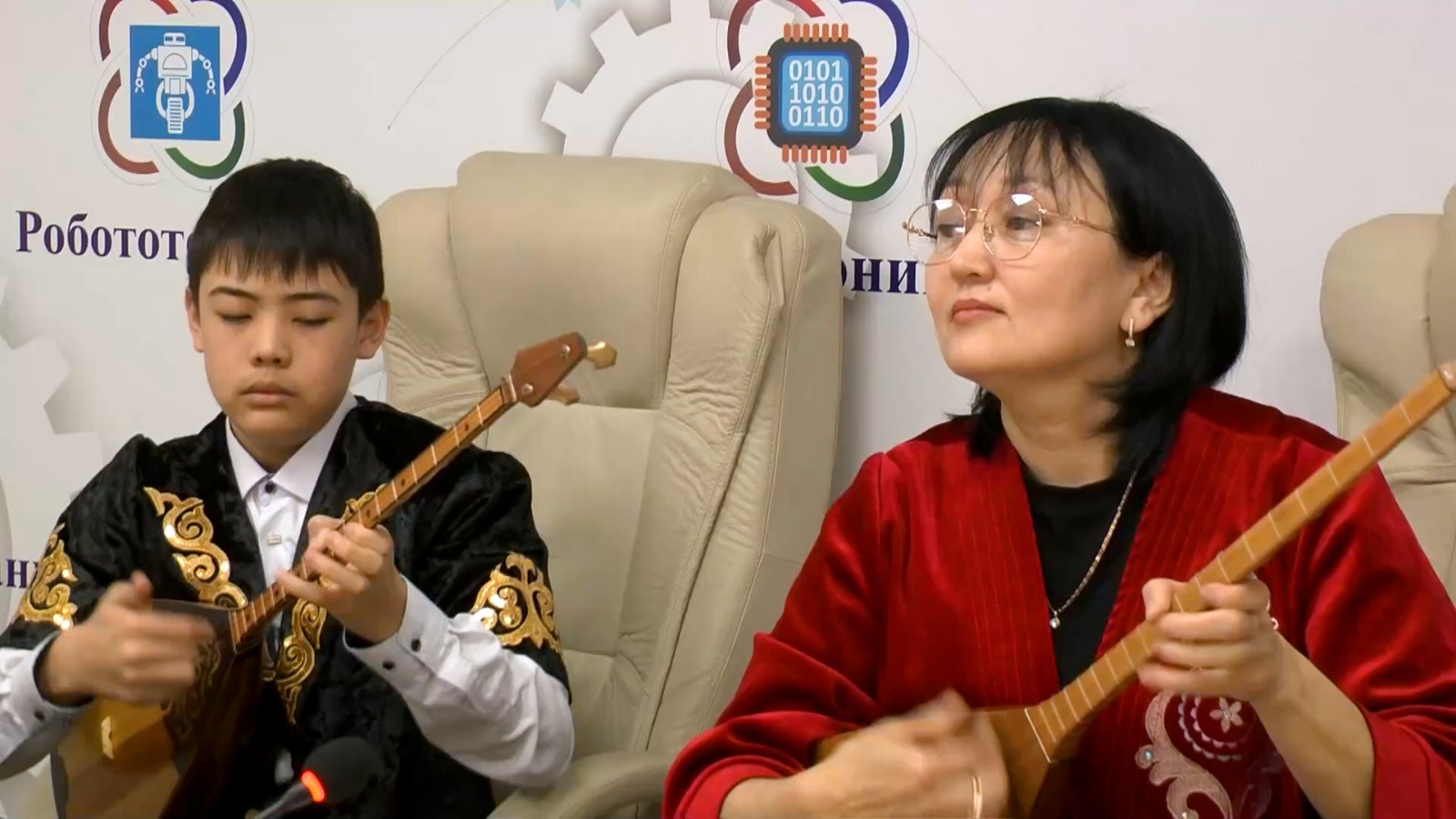
On the eve of the holiday of spring renewal, students of the East Kazakhstan region became participants in an exciting interactive journey. The lesson "Nauryz: The Code of History," organized in the format of an online conference, allowed schoolchildren not only to recall the traditions of their ancestors but also to decipher the sacred meanings embedded in the main holiday of the Turkic peoples.
Nauryz is more than just a change of calendar. It is the day when nature awakens from its winter slumber, and light and warmth conquer the cold. The history of the holiday dates back centuries, to times when people lived in harmony with the cosmos and revered the celestial deity Tengri. On the day of the spring equinox, our ancestors began a new life: they cleaned their homes, forgave grievances, and prepared with special care to welcome the coming year. Every ritual of this holiday was not a coincidence but part of a great "code" connecting humans, nature, and the universe. It was this code that modern schoolchildren had to unravel.
The event was organized by the KSU "East Kazakhstan Regional Scientific and Methodological Center for Informatization and Development of Education 'Örken'." Students of the KSU "School-Center for Additional Education No. 19" began the celebration with a kuy performed by the dombra ensemble "Qazyna" under the direction of Akhmetkaliyeva Karlygash Aipkazovna.
The role of the main guide into the world of history was played by Abeldinova Aliya Sairangazyovna, a history teacher at KSU "School-Center for Additional Education No. 19" in Ust-Kamenogorsk. The teacher, with 14 years of experience, skillfully transformed a standard lecture into a lively dialogue, transporting participants now to the era of the Turkic Khaganate, now to a fantastic future.
The main highlight of the lesson was its interactivity. The speaker constantly addressed the "online audience" with questions, prompting the children to think.
Opening the "portal of time," Aliya Sairangazyovna invited the schoolchildren to analyze the main dish of the holiday — Nauryz-kozhe. Why must it contain exactly seven ingredients? The participants concluded that this is not just a culinary recipe but a model of an ideal society. The listeners reasoned: water is life and source, meat is strength and prosperity, salt is wisdom and sharpness of mind, and milk is purity of thoughts. Thus, a simple dish turned into a philosophical map of human values.
The symbolism of the dwelling was also not left without attention. The presenter asked a question about the shanyrak (the upper part of the yurt). The schoolchildren learned that the dome's structure replicates the trajectory of the sun's movement, and the ritual of cleaning and taking out old dishes before the holiday symbolizes liberation from everything obsolete to let new solar energy into the home.
The culmination of the lesson was a fantastic yet profound question: "If we were to send a message about Nauryz into space to other civilizations, using only three objects, what would you choose?"
The children's answers, though requiring decoding, were full of symbolism: they chose strength (as the power of traditions), memory (as the connection between generations), and future (as hope). The speaker summarized: this is the main code of our history, which is activated every time we celebrate Nauryz.
The interactive lesson "Nauryz: The Code of History" became a vivid example of how modern technologies help preserve ancient traditions. Schoolchildren of the East Kazakhstan region did not just receive ready-made knowledge; they themselves pieced together the meaning of the main spring holiday, understanding that Nauryz is a time of unity, forgiveness, and renewal, which does not lose its relevance through the centuries.
The organizers and the speaker thanked the participants for their activity and expressed hope for new meetings next year, for the history of our land is truly inexhaustible.