Meat cattle breeding in eastern Kazakhstan. Prospects for the development of "Bayys" and "Kazakh Kurdish large-scale projects" (on the example of "Kara Irtysh" Zaisansky district)
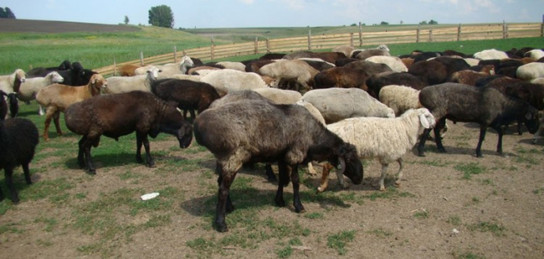
Today, sheep breeding is one of the most important branches of the agro–industrial complex of the region, which is distinguished by the variety of products produced. In addition to meat and lard, it is the main source of raw materials for light industry, namely wool, fur and sheepskin coats.
For the development of sheep breeding, it is undoubtedly important to use the historical experience of the Kazakh people, who for several centuries of emergence, formation and development as an independent nation, pastoral animal husbandry was the main way of earning money in life.
In the region, sheep of coarse-haired and semi-coarse-haired directions of productivity (meat-sucking sheep) are bred. The main feature of such sheep is a chicken – a special fat sac, which is located at the end of the back. It is used by animals to store nutrients, vitamins, minerals and water in case of lack of adequate nutrition. The weight of the formation often reaches 25-30 kg.
At the beginning of 2023, the number of sheep in the region was 491,945. The main number of sheep is concentrated in Tarbagatai – 23% (112,700 heads), Kurchum – 20.2% (99,500 heads), Zaisan – 13.7% (67,346 heads) and Ulan – 17.5% (86,291 heads) districts. Of the total number of available sheep, the specific weight of breeding animals is 43,569 heads or 9.0%, which are concentrated in more than 70 economic entities of the region. The main livestock of breeding sheep is concentrated in Tarbagatai (4.3%), Kurchum (2.5%), Zaisan (1.1%) and Ulan (1.0%) districts.
Among various breeds and types, meat-sucking sheep are characterized by a high degree of adaptability to the extreme conditions of desert and semi-desert pastures and persistent transmission of this valuable feature by inheritance. Among all breeds of sheep bred in the desert and semi-desert zones of Kazakhstan, for the production of mutton, Kazakh short-tailed semi-woolly sheep have become widespread.
The "Kazakh short-tailed rough-haired breed" was bred by folk selection, includes several offspring that differ in terms of productivity and breeding area. The breed is zoned in almost all breeding zones of meat-and-tallow sheep of the country, including in the East Kazakhstan region, where the number of livestock at the beginning of 2023 amounted to 30.3 thousand heads, of which 20.3 thousand purebred heads.
Kazakh fat-tailed sheep, thanks to valuable biological and productive traits, such as precocity, high meat and fat productivity, unpretentiousness to feed and watering, the ability to use the sparse grass of pastures, played a big role in the creation of new breeds.
Five priority sheep breeds are registered in the Kazakh corporation "Asyl Tulik", the first in this list is "Bayys". It confirms its advantages with stable high productivity.
As a result of many years of breeding and research work in the village of Ush-Biik (former Pervomaisky state farm), a new breed of fat-tailed sheep with semi-coarse carpet-type wool was created, well combining high adaptability to extreme conditions of steppe, desert and semi-desert zones of the regions, with high meat-fat-wool productivity.
The new Kazakh short-tailed semi-rough-haired breed of the "Bayys" type was tested in 1994 with three intra-breed (zonal) types and nine lines in the structure and is characterized by adaptability to year-round pasture maintenance, precocity of lambs when growing pasture content, precocity of lambs when growing under the wombs up to four months of age, when they reach more than half of the live weight of adult sheep, the viability of young animals, due to which they reach 75-85 body weight of adult sheep by the age of one and a half years.
"Kara Ertis" farm of breeding breeds was established in 1996. Engaged in breeding sheep of the semi-rough-haired type "Bayys", with a livestock of 4114 heads. It also contains 167 heads of cattle and 718 heads of horses.
For grazing sheep, horses and cows, the farm has private pasture lands with a total area of 30,000 hectares of land located along the Black Irtysh River and a summer pasture in the mountains (zhailau) with an area of 900 hectares.