Olzhas Bektenov held a republican meeting on preparation for the flood period
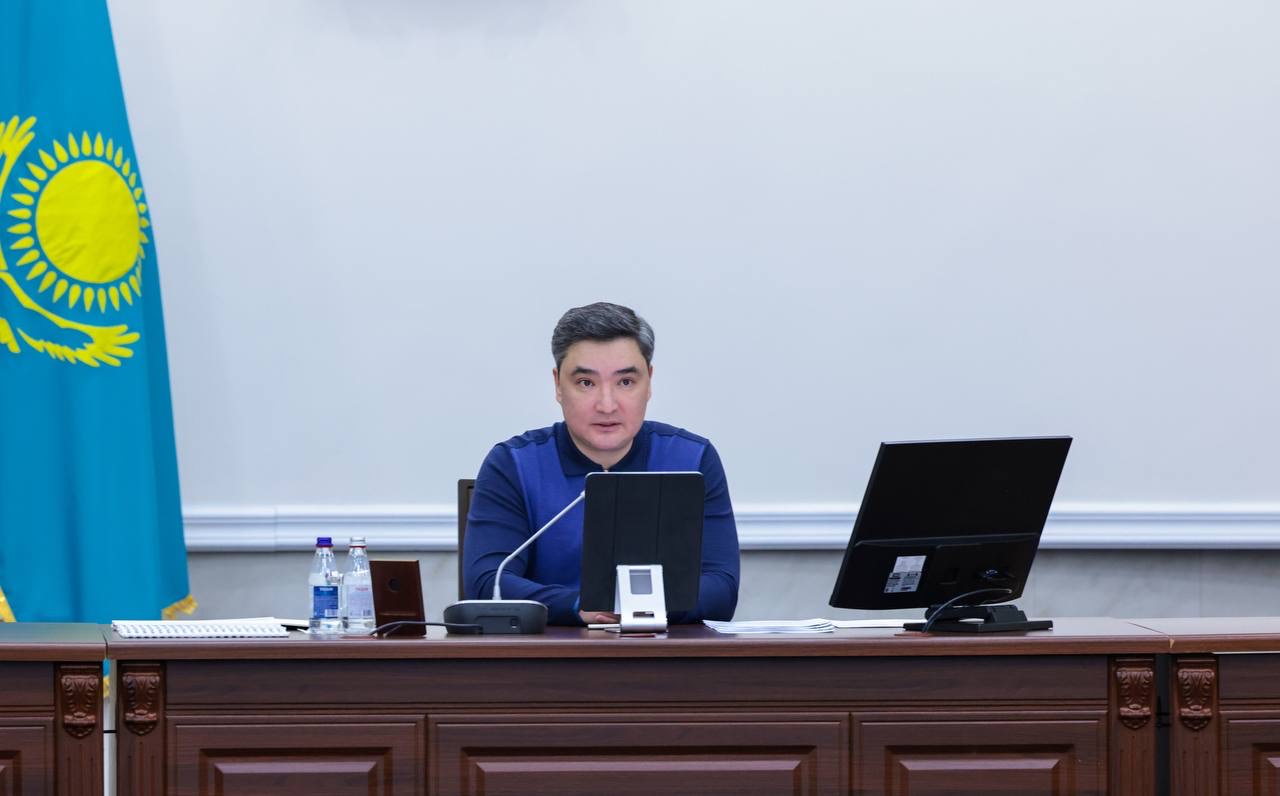
📌 During a working visit to the North Kazakhstan region, Prime Minister Olzhas Bektenov held a national meeting on preparations for the flood period. The measures taken were reported by the Minister of Ecology and Natural Resources Yerlan Nyssanbayev, Minister of Water Resources and Irrigation Nurzhan Nurzhigitov, Minister of Emergency Situations Chingis Arinov, Vice Minister of Digital Development, Innovation and Aerospace Industry Malik Olzhabekov and akims of a number of regions.
🔘 According to the preliminary hydrological forecast of the RSE "Kazhydromet", the weather in February is expected to be warm, with precipitation and temperature changes, due to which an ice crust is possible. Warming and heavy precipitation are predicted in March, which increases the risk of floods. According to the Ministry of Ecology and Water Resources, moisture reserves within and above the norm are observed in the North Kazakhstan, Akmola, Pavlodar, Karaganda, East Kazakhstan regions, Ulytau, Abay, Zhetisu, in the western parts of the Aktobe, Atyrau, Mangistau regions and in the mountainous foothills of the Almaty, Turkestan, Zhambyl regions. At the same time, the depth of soil freezing in a number of regions is less than last year.
➡️ Minister of Ecology and Natural Resources Yerlan Nyssanbayev reported that since this year, in addition to the generalized hydrological forecast for the flood period, detailed information and consultations are issued for each region separately. They indicate maximum water levels and flow rates, runoff volumes at hydrological posts, and expected flood onset dates, indicating specific settlements at risk. Information is also provided on expected meltwater volumes in areas not covered by hydrological monitoring, based on weather station data.
🔷 Vice Minister of Digital Development, Innovation and Aerospace Industry Malik Olzhabekov reported on the implementation of digital solutions using the new Tasqyn flood forecasting information system as an example. Spill modeling is carried out at 142 hydrological posts along 128 river sections. In addition, the operational summary of water discharges from reservoirs has been automated and integrated with the GloFAS global flood warning system, which allows for early notification of risks.
🔷 Minister of Water Resources and Irrigation Nurzhan Nurzhigitov reported on the readiness of the country's hydraulic structures. Based on the results of the surveys, 74 facilities have been restored to date, 46 are at the repair stage, and design estimates have been developed for 18. More than 1,000 km of canals and over 153,000 km of river beds, including areas of strategic importance, have been cleaned, and repair work has been carried out at 205 facilities. Last year, the reconstruction of the Aktobe reservoir with a capacity of 245 million m3 was completed. The restoration of 59 protective dams with a length of 312.4 km is at the completion stage. Calculations of the discharge mode have been made for all large reservoirs. As part of transboundary cooperation, active interaction is underway with neighboring countries to ensure sustainable water use and prevent emergencies during the flood period.
🔷 According to the Minister of Emergency Situations Chingis Arinov, today there are 1,223 populated areas in the flood hazard zone. To protect them, 576 km of protective dams and embankments were erected, 822 km of drainage systems, canals and ditches were repaired and built. 960 culverts on automobile and railway communications were installed and replaced. Dredging work was carried out on an area of about 500 km, bank protection and channel cleaning on dangerous sections of 74 rivers. At the same time, preventive measures have not been fully completed in all regions. This was revealed during joint inspections by the Government Office and the Ministry of Emergency Situations. Control is carried out by the Emergency Prevention Committee, which will take appropriate measures, including administrative liability of akims.
📱 @KZgovernment
📌 The Prime Minister raised issues of the flood period in the Kyzylorda region, taking into account the threats associated with increased water discharges from the Shardara Reservoir and partial freeze-up on the Syr Darya River. Attention was also focused on the Atyrau and Kostanay regions, where there are risks. The regional akims were heard on these issues. Deputy Prime Minister Kanat Bozumbayev made a comment.
“It is too early to talk about full readiness for the flood period. There are a number of problems that have not yet been resolved. This is especially true for regions with increased risks of flooding. Now, first of all, we should check the degree of readiness of settlements for floods. I instruct to create regional commissions, within the framework of which it is necessary to visit each settlement, study the existing risks and take the necessary measures. All akims bear personal responsibility, therefore they must intensify their work and take comprehensive measures to implement the planned anti-flood measures,” Olzhas Bektenov emphasized.
Following the meeting, the Prime Minister instructed:
🔵 Regional akimats — to prepare all resources for flood prevention and liquidation by March 1. Ensure snow removal from populated areas in advance, prepare drainage channels and ditches, and clear storm drains. All flood-prone populated areas must be banked and protected by dams. Instructions were given to prepare stocks of food, fuel, medicines, and other life support products, and to carry out blasting operations on rivers in advance where necessary.
🔵 The Ministry of Water Resources and Irrigation — taking into account forecast data, determine the volumes of reservoir filling and ensure constant monitoring of them. If necessary, take measures in advance to safely discharge water. Organize a constant exchange of information on water consumption and the emergence of threats on transboundary water bodies together with border states.
The Ministry of Digital Development, Innovation and Aerospace Industry, together with the Ministry of Emergency Situations and other government agencies, should use the potential of the Tasqyn information system to determine and forecast actions to carry out flood control work in potential flood zones.
🔵 The Ministry of Emergency Situations should ensure the operational readiness of civil defense forces and means to respond. Work out algorithms for involving rescue teams, including airlifts, together with the Ministry of Internal Affairs - issues of timely evacuation of citizens in the event of a flood threat. It is also necessary to check the readiness of evacuation points and equipment intended for evacuating people.
🔵 Government agencies should analyze the current legislation and, if necessary, make appropriate amendments. In addition, it was instructed to create a national headquarters for coordinating flood control measures and eliminating the consequences of floods, similar to last year.
📌 The Prime Minister instructed akims and departments to complete preparations for the flood season by early March.
📱 @KZgovernment