New vegetable storage facilities, stocks for the off-season and priority crops for cultivation were discussed in the Government
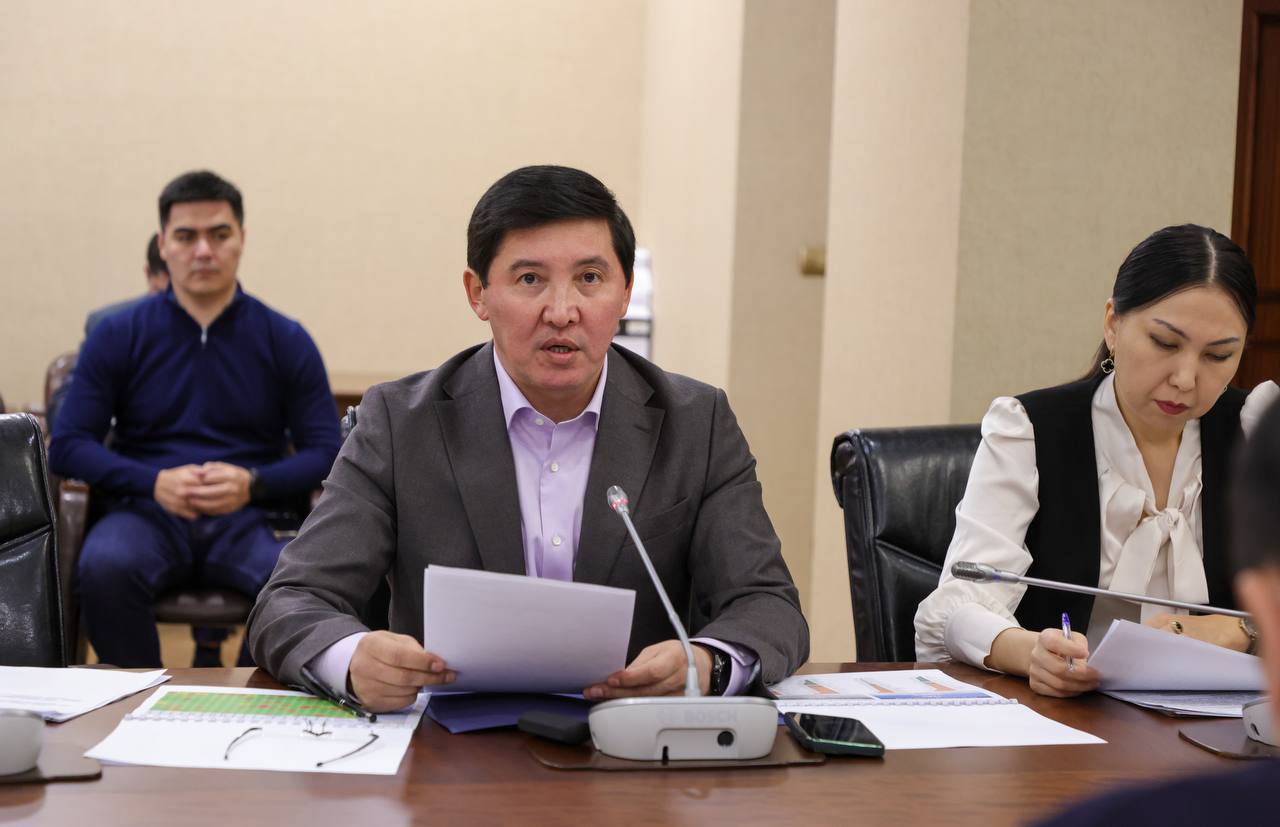
The situation with stabilisation of prices for social foodstuffs comes under the manual control of regional akimats. November will be a determining month in the formation of the annual food inflation rate. Deputy Prime Minister Serik Zhumangarin started the meeting with such a task.
Thus, according to the Committee of Trade, in the first week of November, the growth in prices for socially important retail goods amounted to 0.1%, the main driver - the seasonal increase in prices for eggs (1.7%). At the same time, the long trend of price decrease for buckwheat (-0.2%) and sunflower oil (-0.1%) continues. Seasonal decline in prices for vegetables: potatoes (-1.7%), onions (-1.2%), cabbage (-1.3%), carrots (-1%).
The highest increase in prices for eggs was observed in Almaty - 3.7% during the week. Here also, the cost of pasteurised milk (1.2%) increased, the only one among other regions. Given the risks of off-season price growth, Serik Zhumangarin instructed Akimats to manually control the situation with prices for social products in the regions. The Agency for Protection and Development of Competition - to analyse the reasons for price increases at major producers and inform about the identified facts next week.
According to the Ministry of Agriculture, today the regions have formed all the necessary stocks of vegetables, sugar and buckwheat. There are lags in rice - the total percentage of contracting is 86% of the required volume of demand. Among the laggards are Almaty (94%), West Kazakhstan region (64%), Karaganda region (28%), Mangistau region (61%), North Kazakhstan region (74%).
«On reformatting of forward purchase contracts, for transition to the scheme of purchasing at least 70% directly from agricultural producers and processors, and only 30% - from retailers and wholesalers, of the 8 regions lagging behind in terms of time, 5 have already switched to direct contracts with agricultural producers, except for Almaty, Atyrau region, Shymkent», — informed Vice-Minister of Agriculture Yerbol Taszhurekov.
Deputy Prime Minister set a task to complete this work within a week, paying special attention to the support of poultry farms with working capital.
Vice-Minister of Agriculture Azat Sultanov reported on the situation with the implementation of a comprehensive plan for the construction of vegetable storage facilities for 2023-2025. Today, Kazakhstan has 901 vegetable and fruit storage facilities with a capacity of 1.8 million tonnes (257 potato storage facilities with a capacity of 499.7 thousand tonnes, 580 vegetable storage facilities with a capacity of 1.1 million tonnes, 64 fruit storage facilities with a capacity of 136.9 thousand tonnes).
«According to the comprehensive plan, 92 storage facilities with a total capacity of 689,900 tonnes are to be built between 2023 and 2025, which will bring the total storage capacity to 2.4 million tonnes. In our calculations, we proceed from the number of population and provision of their needs with fruit and vegetable group. In addition, we take into account the regions, the main producers of vegetables, these are Karaganda, Pavlodar, Zhambyl, SKO, where production is more than the norm and they provide food security of major cities. For example, Pavlodar and Karaganda regions provide the food belt of the capital, and Almaty and Zhambyl regions - Almaty. And there should be the necessary storage capacities», — informed Azat Sultanov.
According to the plan, 272,000 tonnes of capacity should be commissioned this year, 206,000 tonnes in 2024 and 160,000 tonnes in 2025.
«The general line of projects on construction of additional storage capacities for vegetables and fruits should go in parallel with projects on irrigation, increase of sown areas and irrigated lands. This task should be taken under control of local executive bodies. We will allocate available funding for irrigation projects to grow those crops that we need and are determined by the country's food security policy», — Serik Zhumangarin emphasised.
Also at the meeting discussed measures of state support for sunflower cultivation. Of the total amount of subsidies allocated in 2023 to support the production of priority crops totaling 9.3 billion tenge, 2 billion tenge is provided for oilseeds. Of all regions, only Kostanay, Almaty and Zhetysu regions have allocated funds to subsidise sunflower. Turkestan region, for example, allocated state support funds to subsidise safflower. According to the Ministry of Agriculture, next year the amount of funds for subsidising sunflower cultivation will remain at approximately the same level.
«In the coming years, new sunflower processing facilities will be commissioned in the regions. The current plants are less than half loaded, and without raw materials, without subsidies for sunflower cultivation, the load will be at the level of 20%. It makes no sense to build new processing facilities. It is necessary to bring the purchase of seeds to a level satisfactory to producers and ensure a stable price for sunflower oil. The state policy is to develop sunflower processing in the country, as the raw material will be taken from us by neighbouring countries. Therefore, the sphere of sunflower cultivation should be supported. Akimats need to introduce a business approach in determining support for priority crops», — said Deputy Prime Minister.
Serik Zhumangarin also instructed the Prodkorporatsiya to work out the possibilities of assisting farmers with the sale of unmarketable grain of the new harvest.