Artur Lastayev: Low level of education increases the risk of recidivism among convicts
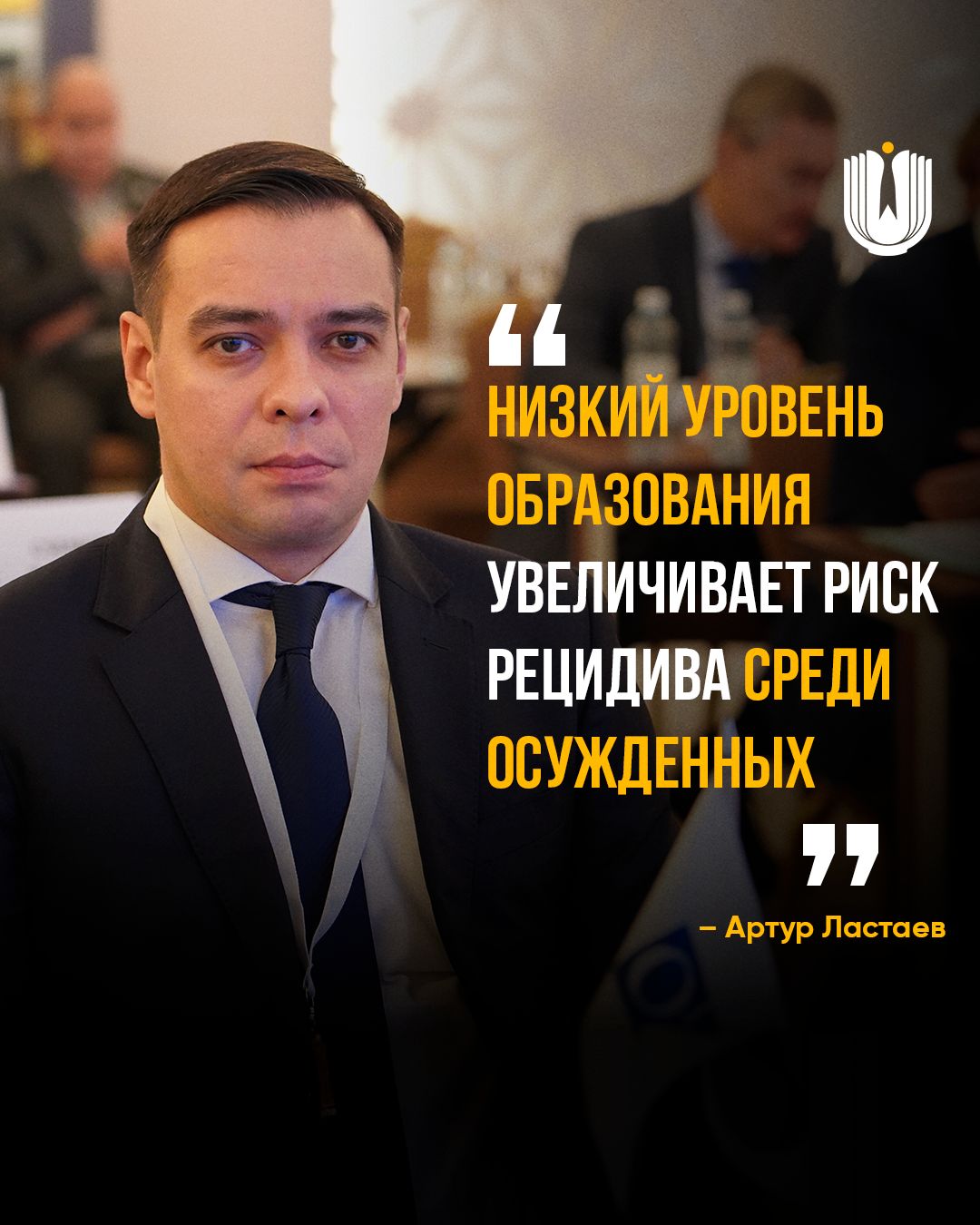
Investigating the issue of the level of education of convicts and their quality of life after release from prison, the Commissioner for Human Rights in the Republic of Kazakhstan Artur Lastaev analysed the average portrait of a convict, formed by the Ministry of Internal Affairs of the Republic of Kazakhstan.
As a rule, this is a person who is unmarried, employed, but with financial difficulties, without higher education.
According to the data of the Ministry of Internal Affairs of the RK, by the end of 2023 out of 28 500 convicts - have no secondary education - 6 %, have secondary education - 59 %, secondary-specialised education - 23,5 %, higher education - 11 %.
The practice shows that convicts without higher education are more prone to recidivism. Low educational level is one of the main reasons for committing offences.
Thus, for example, in 2023, 3,939 persons had their deprivation of liberty replaced by restriction with the use of probation. Of the 201 repeated offences, only 2.5 per cent were committed by persons with higher education.
Those released from places of deprivation of liberty, having no knowledge or speciality corresponding to their interests and abilities, join the ranks of the unemployed. Then, in search of profit, they go on to commit crimes.
Having examined all aspects of the issue, the Ombudsman concluded that higher education would enable prisoners to more successfully realise their opportunities upon release and therefore prevent reoffending.
"The lack of professional or higher education for children can have serious negative consequences for their future and adaptation to life in society. Low income due to lack of work significantly affects all spheres of human life, including contributing to the growth of juvenile delinquency and recidivism," says Artur Lastaev.
In March of this year, the Commissioner submitted a proposal to the Government to consider the issue of expanding access to educational programmes for convicts.
Currently, the country has no systematic practice allowing convicts to pass the Unified National Test, which is required for admission to higher education institutions. In fact, their constitutional right to receive free higher education on a competitive basis remains unrealised.
However, in 2023, inmates were given the opportunity to take the UNT for the first time. The idea was implemented after an appeal to the Ombudsman by inmates of a medium security institution for juveniles.
Teenagers in this facility receive a certificate of secondary education, but they cannot take the UNT and, accordingly, cannot apply for educational grants.
Then the Commissioner appealed to the state authorities and as a result of joint efforts, in the summer of the same year three pupils of the correctional institution took part in the unified test and scored passing grades.
By the way, today there are 90 educational institutions in the CUIS system, including 46 general education schools and 44 vocational colleges.
In 2024, the Ministry of Internal Affairs is implementing a pilot project in two institutions in Almaty and Almaty region to provide inmates with higher education in isolation from society.
Engineering capabilities in penal institutions allow online education to be conducted through special communication channels via the Unified transport environment.
The question arises, why higher education? Well, upon graduation from vocational colleges, inmates receive a state certificate with a grade. But the convicts themselves note that after serving their sentence, the certificate does not give them the opportunity to get a job in the future, as employers require a diploma.
The Ombudsman is sure that obtaining secondary, vocational and higher education can become a tool for re-socialisation of prisoners and in the long term could help them to get on the path of correction and start a new life.
"Currently, convicts have access only to secondary and truncated technical education. However, market labour conditions, especially for young persons, require a more modern approach to educational programmes and the mastery of new professions in demand. The availability of education will encourage convicts to work and take timely measures to pay claims for damages and court costs, including to the state, which is one of the main criteria when considering mitigation of punishment," said the Commissioner for Human Rights.
It is worth noting that obtaining primary, basic secondary, general secondary, technical and vocational education is regarded as an endeavour for correction. It is also encouraged to receive higher and postgraduate education.
A total of 566 convicts, 12 of them minors, are expected to complete general education this year.
In isolation, they can claim to receive higher education and, upon release, to build a decent life with a good job with decent conditions and never go back again