Nur-Sultan has opened child-friendly rooms for children in the process of migration
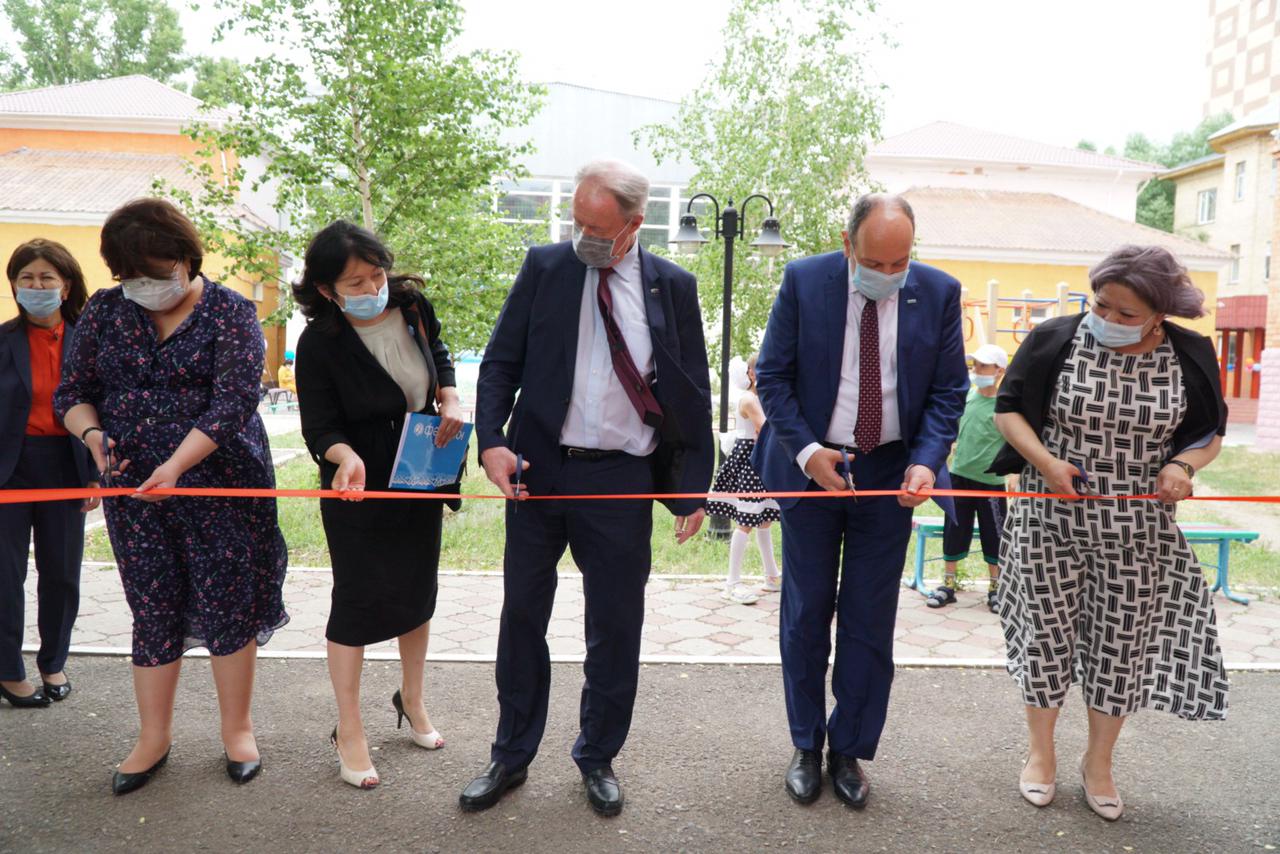
On June 1, 2021, on International Children's Day, the Ambassador of the European Union (EU) to Kazakhstan, the Commissioner for Human Rights in the Republic of Kazakhstan, and the Representative of the United Nations Children's Fund (UNICEF) in Kazakhstan opened child-friendly rooms for migrant children. The renovated facilities provide care and support to the children during their temporary stay at the Nur-Sultan Child Support Center, as well as facilitate their contact with established family members.
The child-friendly rooms were created as part of a program funded by the EU and implemented by UNICEF. The program was aimed at strengthening the system of effective protection through case management services – comprehensive social, psychological, and legal assistance to children in the process of migration. These services guarantee the best interests of the children during their stay in Kazakhstan.
“Many children in migration processes face serious risks, especially when they travel alone. It is very important to create a friendly atmosphere, and such friendly rooms for children are designed to show children that they are protected and that this is a safe place to stay temporarily, " said EU Ambassador to Kazakhstan Sven-Olov Karlsson.
In Kazakhstan, the program covered the cities of Nur-Sultan, Almaty, Shymkent, and Turkestan region. Professional case management services for children affected by migration were tested by civil society organizations, such as the Kazakhstan International Bureau for Human Rights and Rule of Law, Rodnik, and the Sana Sezim Legal Center for Women's Initiatives, together with regional centers for child Support and Adaptation. More than 250 children have already benefited from the services provided in the above-mentioned regions by specialists trained under the program.
The opening of the children's rooms coincided with a meeting of the Project Coordination Board (CPB), organized by UNICEF together with the Commissioner for Human Rights in the Republic of Kazakhstan. The agenda of the CSP meeting included a discussion of the results of the program and their sustainability, presentation of key findings, and recommendations of a comparative analysis of Kazakhstan's national legislation on international standards for the protection of the rights of children affected by migration.
"Every child is born to live in a family. However, if a difficult situation has deprived him of this right, we are obliged to give him new hope and warmth, " said Elvira Azimova, Commissioner for Human Rights in the Republic of Kazakhstan.
"The country pays great attention to the situation and protection of the rights of migrant and refugee children, and measures are being taken to ensure the safety of this category of children. Our common goal is to protect vulnerable children in migration processes, provide them with social, legal and psychological assistance, as well as create a comfortable and friendly environment at all stages of interaction with migrant children," said Bibigul Asylova, Vice Minister of Education and Science of the Republic of Kazakhstan.
Representatives of the Parliament and Government of Kazakhstan, the National Center for Human Rights, the European Union, the International Organization for Migration in Central Asia (IOM), the Regional Office of the United Nations Refugee Agency (UNHCR), embassies of Central Asian countries and the Russian Federation, child support centers, academic organizations, civil society, and UNICEF held an online meeting to note the results achieved and agree on further steps necessary to address the still existing difficulties and support children in migration processes.
"Children affected by migration have the same rights as everyone else. Children in the process of migration-first of all, they remain children, regardless of why they leave home, where they come from, where they are, or how they got there. Every child deserves to live in a safe environment, and our shared priority is to ensure this. I am really happy that on June 1, we celebrate the opening of child-friendly rooms and thereby confirm our support for the most vulnerable children," said Arthur van Diesen, UNICEF Representative in Kazakhstan.
The multi-country program on the protection of children's rights in migration processes is implemented by UNICEF with the support of the European Union in cooperation with the Governments of several countries, including Bangladesh, Malaysia, Myanmar, Kazakhstan, Kyrgyzstan, Tajikistan, Uzbekistan, and Thailand. The main goal is to ensure effective support and protection of children's rights in migration processes. Implementation period: 2017-2021.