How to solve the issue of employment of persons with disabilities in kazakhstan
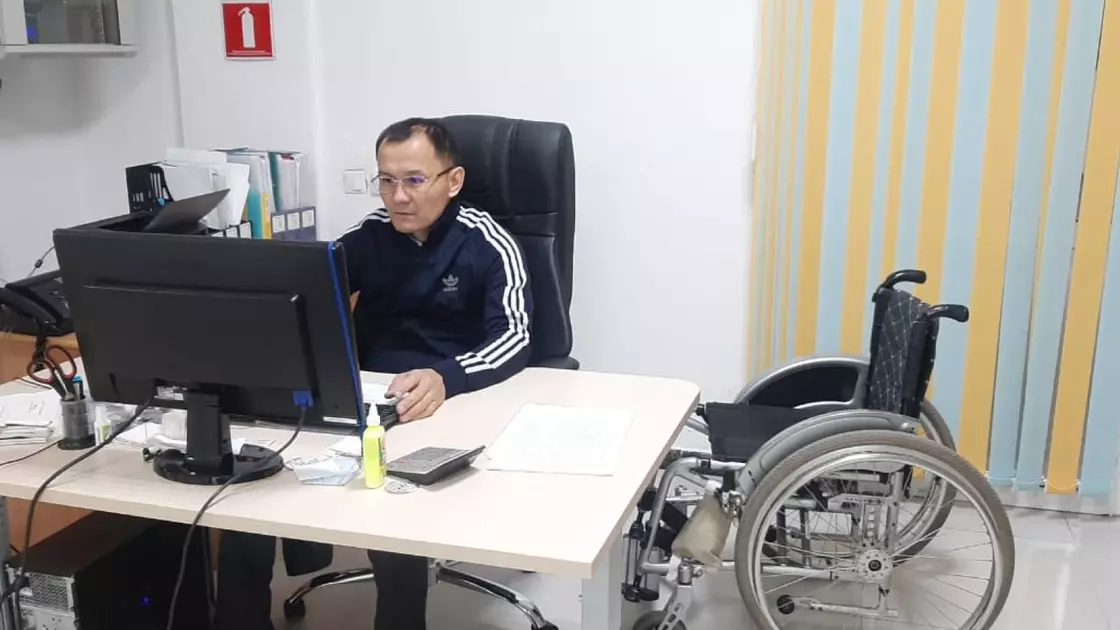
Every person with a disability has the right to work. And our task is to help him with this. In Kazakhstan, out of 705 thousand people with disabilities, 60% or 430 thousand are of working age. Only 25% of them, or 106.5 thousand people with disabilities, have a job, while in Germany, the UK, Australia, and other OECD countries, this figure reaches 40%.
How is the issue of employment of persons with disabilities resolved? Why do employers not know about highly qualified professionals with disabilities, and they, in turn, are sure that they are not needed in the labor market? Read about how the mtszn plans to solve this problem, Vice-Minister of labor and social protection of the population of Kazakhstan Yerlan Aukenov said in the article NUR.KZ.
— Yerlan Muratovich, the issue of employment of people with disabilities is being actively discussed in social networks. What measures the does Ministry take to resolve it?
— I would like to start by saying that the recommendations of the International labor organization on social rehabilitation and adaptation of people with disabilities have two key priorities — employment and education. It is about what allows a person to adapt and socialize through acquiring new skills and knowledge and through employment.
Being in a work team or working online, a person finds himself in society, gets the necessary communication, feels that his knowledge and skills are needed, he is in demand as a specialist. This is a very important part of social adaptation for people with disabilities.
Today in Kazakhstan, only a quarter of all able-bodied persons with disabilities are involved in active work. In this regard, we aim to increase the share of employed persons with disabilities to 30% of the working-age. To do this, it is necessary to additionally employ more than 20 thousand people.
The Ministry of labor and social protection of the population has created a special Project group to address the issue of employment of people with disabilities. There are several projects and programs. One of the main ones is the state program for the development of productive employment and entrepreneurship for 2017-2021 "Enbek".
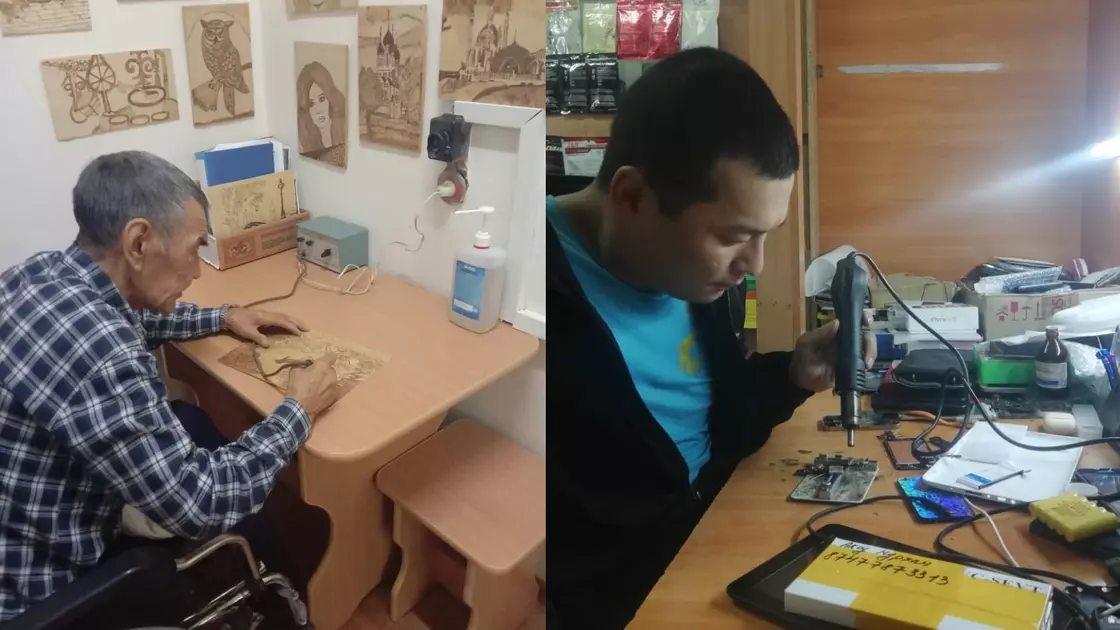
For 9 months of this year, the participants of this program included 10 thousand people with disabilities, of which 9.9 thousand people were employed. 3,115 persons with disabilities are employed in permanent jobs, and 6,877 people are employed in temporary jobs. these include social jobs, youth practice, and community service.
Also, short-term professional training covers 411 people with disabilities and training in the basics of entrepreneurship — 359 people. 206 participants of the program with disabilities received micro-loans, 158 of them opened their own business. Another 508 received grants.
— In other words, state programs and projects are working, but only 25% of people with disabilities are still employed. What do You think is the problem?
— One of the most pressing issues is that employers do not know what positions to take people with disabilities, and people with disabilities do not know where they can get a job, where they can go with certain types of restrictions. To solve this problem, the Ministry, together with UNDP, is developing an Atlas of professions, which will identify more than 400 types of professions for people with disabilities.
This Atlas will be a comprehensive detailed guide from which employers will find out who can be hired for what specialty with what restrictions. And people with disabilities will have a clear idea of what positions they can apply for. In no case will Atlas restrict their choice, only recommend those types of work where people with disabilities will feel more comfortable.
Another problem is the existing mental barrier in our society, the stereotypical thinking associated with the employment of persons with disabilities. Our task is to create conditions to remove this obstacle.
Employers and HR employees, when we talk to them, ask why to hire people with disabilities, if our conditions for them will be difficult, tomorrow they will make claims to us. And the disabled themselves are reluctant to apply to labor exchanges and employment centers, believing that employers will not want to hire them, so as not to create additional conditions.
But in fact, this barrier is far-fetched. There are businesses where people with disabilities work, but their colleagues do not even know that their colleagues have any health restrictions. After all, among people with disabilities, a very small percentage of those who move in wheelchairs — out of 705 thousand people with disabilities in Kazakhstan, only 22 thousand wheelchair users.
There are some types of disabilities that do not affect the quality of work. There are a lot of specialists with disabilities in the labor market: lawyers, economists, financiers, accountants, and professionals in their field.
"Atlas of professions" will help to remove this mental barrier. In October, we plan to complete its development and by the end of the year to conduct awareness-raising work with large enterprises, together with NCE "Atameken
Another question is how to effectively involve people with disabilities in the process. We plan to do this through medical and social expertise. When a person comes to the ITU for examination or re-examination, there will already be an employee of the employment center, who will show the Atlas of professions, explain, give recommendations on which specialties can be chosen with a particular type of disability, and enter the person in the database of the employment center as a potential job applicant.
To do this, the interactive labor exchange will also be updated to adapt it to the specialties that will Be in the Atlas of professions.
— In the world, quotas for employment in enterprises are considered one of the most effective tools for involving disabled people in productive employment. How does this tool work in Kazakhstan?
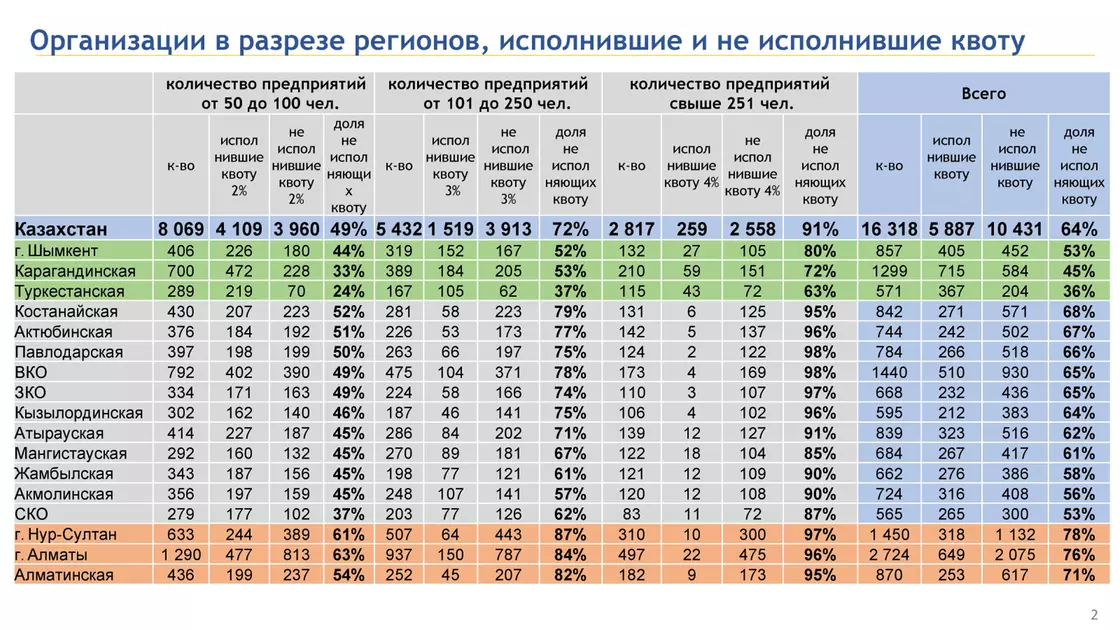
— In 2016, the legislation was amended, according to which there is a quota for jobs for people with disabilities from 2 to 4% of the staff, excluding heavy work and places with harmful and dangerous working conditions. For business entities with employees from 50 to 100 people, the quota is 2%, from 101 to 250 people — 3% and over 250 people — 4%. For comparison, in the world in most countries, this quota is 6%.
Even with such quotas, we have so far reached a result where only a third — 36% of enterprises meet this standard. In other words, there is still a reserve, almost 64% of enterprises still do not fulfill the quota. And this is mainly a problem with large enterprises with more than 250 employees.
These are 2,817 enterprises, and 91% of them do not meet the quotas for the employment of disabled people. 72% of medium-sized enterprises do not fulfill the quota, and 49% of those with 50 to 100 employees.
The Ministry held coordination meetings and sent corresponding letters to all akims. Within the next month, it is planned to adopt a resolution of akimats on quotas for the next year. In the future, by the end of the year, information work will be carried out with enterprises so that during the remaining 2-3 months they will look for people with disabilities on the labor exchange and in our employment centers and take them to work.
Currently, fines are provided for non-compliance with the quota, but we see that this measure is not effective. Therefore, taking into account international experience, we propose to establish compensation contributions as an alternative to fulfilling the quota of jobs for the employment of persons with disabilities.
In other words, if an enterprise cannot or refuses to take on disabled people for some reason, it pays compensation to the state pension fund, and all this money will be used to support the creation of jobs for people with disabilities. We plan to fix this rule by law. This is necessary so that the company that cannot meet the quota has a choice — either to pay a fine or compensation.
And the most important thing is to remove the issue when the company does not know where to find specialists with disabilities. Here, our task is to promote the training of specialists and conduct courses for both employees and employers.
Now maximum conditions are created in this direction in the execution of the election platform of the party "Nur Otan" project "Cederhsa KELESHEK" and orders the project office of the government. And the results are already visible.

For example, only through one of the measures — involving in training and training of personnel — it was possible to increase the number of people with disabilities in the civil service in Kazakhstan from 400 to more than 600 people this year. As a coordinating body, we will continue this work.
A source: https://www.nur.kz/1875905-kak-resit-vopros-trudoustrojstva-lic-s-invalidnostu-v-kazahstane.html