Sustainable Trade Development through Decarbonization and Environmental Standards
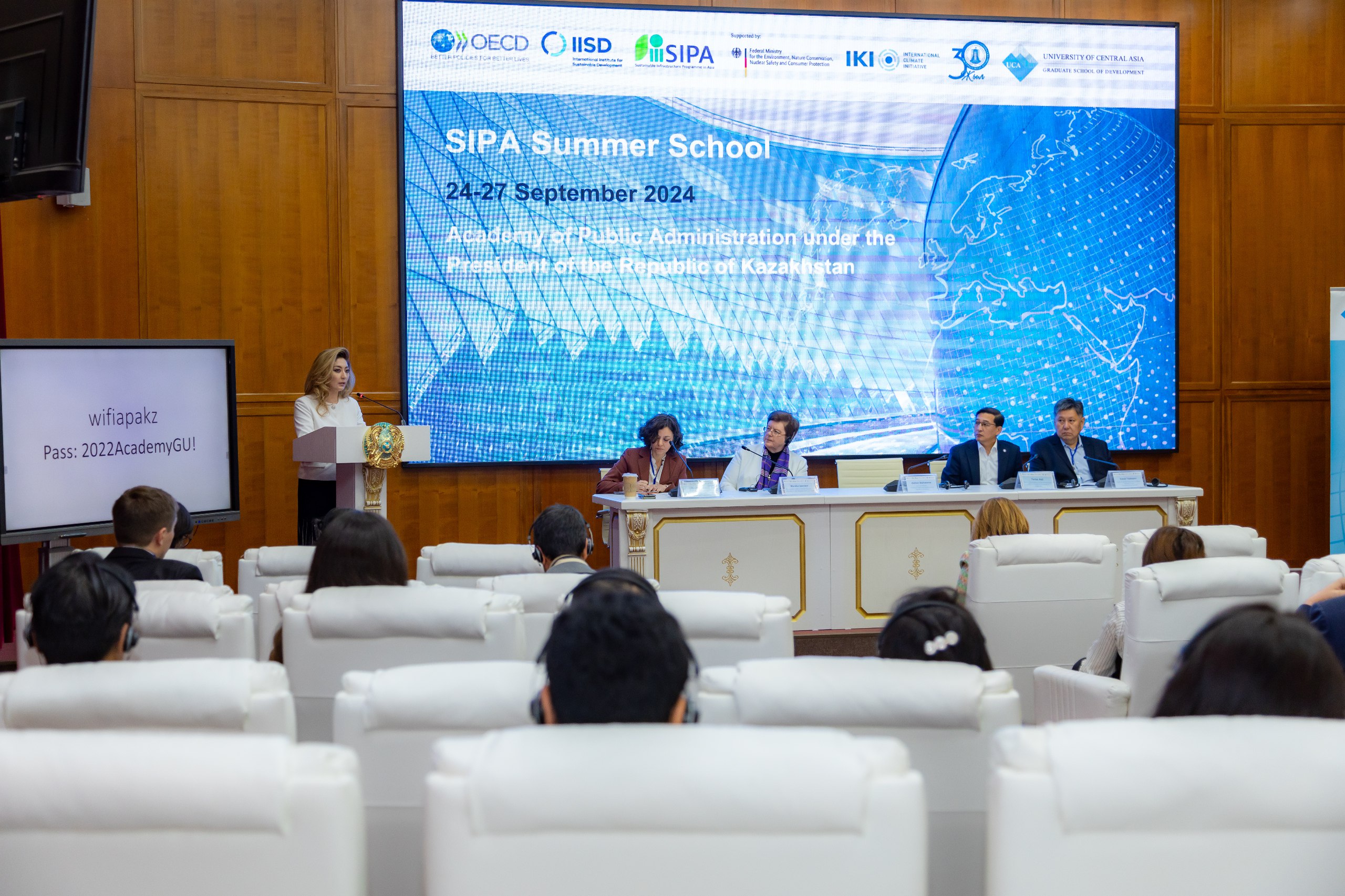
Today, the third SIPA 2024 Summer School on Sustainable Infrastructure began at the Academy of Public Administration under the President of the Republic of Kazakhstan. The event was organized by the Institute of Public Policy and Administration (IPPA) of the University of Central Asia (UCA) in cooperation with the Organization for Economic Cooperation and Development (OECD).
The event featured a keynote speech by the First Vice Minister of Trade and Integration of Kazakhstan, Aizhan Bizhanova, who emphasized the importance of discussing decarbonization and enhancing the environmental sustainability of products in the trade sector.
Kazakhstan became one of the first countries in the region to adopt a Carbon Neutrality Strategy aiming for 2060. The country is actively introducing clean technologies and innovations, as well as investing in energy efficiency.
A new Environmental Code has been introduced in Kazakhstan, aligning with the principles of the OECD and EU countries. Additionally, there is an initiative to establish a Central Asian Climate and Green Energy Project Office in Almaty.
«Today's topic is highly relevant for Central Asian countries. Discussing sustainable infrastructure opens up significant opportunities to enhance the green potential in trade and business. The introduction of the Border Carbon Adjustment Mechanism under the European Green Deal presents specific challenges for our manufacturers. We are ready to work on solutions, considering the importance of reducing our carbon footprint, especially in sectors like metallurgy and chemistry. Our approach is based on finding a balance between environmental requirements and economic viability», - emphasized Aizhan Bizhanova in her speech.
Aizhan Bizhanova also noted that the European Union is a key trading partner for Kazakhstan, with trade turnover exceeding 41 billion US dollars in 2023. Kazakhstan is actively working to increase the share of processed goods in its exports and strives to meet environmental safety standards to maintain competitiveness in the EU market.
Special attention during the discussions was given to the OECD's recommendations on raising awareness about the Border Carbon Adjustment Mechanism, prepared in cooperation with QazTrade. These recommendations help Kazakhstani exporters adapt to the new requirements of international partners.
In concluding her speech, the Vice Minister stressed the importance of balancing the EU's sustainable development goals with maintaining the growth of Kazakhstan's exports.
The German Ambassador to Kazakhstan, Monika Iversen, also delivered a speech. She noted that the transition to more sustainable production methods and the use of renewable energy sources is crucial not only for fulfilling international obligations under the Paris Agreement but also for ensuring economic resilience.
«It is important for Kazakhstani exporters to align their products with environmental safety standards. The 'greenness' level of goods may become a significant factor in the context of customs duties imposed by the European Union», - noted the German Ambassador to Kazakhstan, Monika Iversen.
Background: The Sustainable Infrastructure Program (SIPA) is aimed at supporting the countries of Central and Southeast Asia in securing investments in energy, transport, and industrial infrastructure that meet the goals of the Paris Agreement and the Sustainable Development Goals (SDGs).