Situation on the border: Bishkek remains "deaf" to Nur-Sultan's constructive proposals
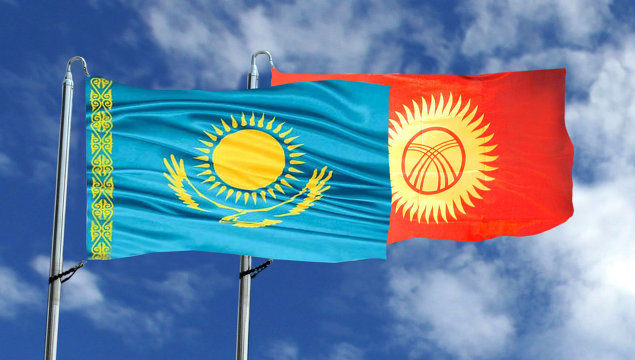
he issue of the situation on the Kazakh-Kyrgyz border has been raised by the Kyrgyz Republic for more than a year.
All this time, Kazakhstan has been unsuccessfully calling on its neighbors to solve the issue of transparency of cargo movement in a comprehensive manner using digital technologies, by exchanging data on moving vehicles, applying electronic seals to trucks, and other methods.
From the beginning of last year to June of this year, almost 80 thousand cargo vehicles passed through the Kazakh-Kyrgyz border in the direction of Kazakhstan and Russia. Of these, a random check of 1,547 vehicles was carried out.as a result, in 1505 cases, gross violations of the tax legislation of Kazakhstan were revealed. For example, fictitious recipients in Kazakhstan or Russia were indicated, and the goods moved did not correspond to what was indicated in the accompanying documents. As a result, additional tax payments were accrued in the amount of more than 5 million US dollars.
Despite these facts, Bishkek remains "deaf" to Nur-Sultan's constructive proposals, continuing to raise issues of"mythical barriers". This behavior of our partners leads to fair suspicions about a deliberate refusal to cooperate in good faith in order to avoid legal movement, first of all, of consumer goods imported from China to the territory of the EEU countries. This is evidenced by the excessive aggravation of this issue, information attacks and consideration of this issue on the WTO platform, to which these issues are not related.
The fact that the issue is "seriously inflated" is also evidenced by the two-way timekeeping of the border crossing point. Thus, due to the capacity of checkpoints, up to 20 vehicles can be inspected at the same time, while the control on the Kazakh border section takes 20-22 minutes, of which 3-5 minutes are spent scanning documents for tax control. This is recorded in the Protocol of the bilateral meeting between representatives of the working groups of the Republic of Kazakhstan and the Kyrgyz Republic, held on June 3, 2020.
At the same time, certain accumulations of vehicles on the Kazakh-Kyrgyz section of the border, observed in recent months, are due to a number of objective reasons.
First, the suspension of 5 road checkpoints out of 7 existing ones due to the COVID-19 pandemic. It should be noted that, despite the pandemic, Kazakhstan did not completely close the checkpoints for the movement of goods, only reducing the number of existing checkpoints to ensure the established sanitary and quarantine standards.
Today, due to the improvement of the epidemiological situation, a decision has been made to gradually resume the work of all checkpoints in the near future. So, starting today, the checkpoint "Sipatay - Batyr" begins to work, which will significantly "unload" the existing checkpoints and speed up the time of passing trucks across the border.
"The decision to close the checkpoints was made by Kazakhstan in order to prevent the import and spread of coronavirus infection. Epidemic well-being is a matter of national security, which is the exclusive prerogative of national governments. It should be noted that a total of 20 checkpoints along the entire perimeter of the state border were closed. Basically, these are the points through which most individuals move, " the Ministry of trade and integration of Kazakhstan reports.
Another factor was the traditional increase in the number of transported heavy trucks, associated with the beginning of the ripening season of fruit and vegetable products. For example, in may last year, 5,589 vehicles passed through 7 checkpoints and the average congestion at the checkpoints was 60-70 vehicles. this year, in may, 4,261 vehicles crossed the border through 2 checkpoints, which caused a congestion of up to 500 vehicles per day during peak days.
Thus, the speed of passing vehicles slowed down due to the number of vehicles per checkpoint. It should be noted that priority is given to vehicles loaded with fruits and vegetables and other perishable products when passing the border.
As noted earlier, the closure of several checkpoints was a forced measure aimed at ensuring the safety of our citizens. Such decisions are made at the national level.
In addition, the implementation of quarantine and control measures by the Kyrgyz side directly at the checkpoints causes congestion on the Kyrgyz side. Ongoing activities include rapid testing for COVID-19, driver questionnaires, and vehicle sanitation. All this together takes quite a long time.
In turn, the Kazakh side only conducts a survey of drivers to comply with the quarantine rules at the border. The procedure is performed during border inspection and does not take additional time. Then, on the territory of Kazakhstan, PCR analysis is taken from drivers of heavy trucks. It is important to note that the driver does not wait for the test results, but goes along the specified route. If an infection is detected in the tests, the driver is found according to the questionnaire data. In case of a negative test, the driver should proceed to the destination without hindrance.
"In General, the purpose of rapid testing of outgoing drivers is not clear. According to all international rules, the state ensures security on its territory. But even if our Kyrgyz colleagues decided to" secure "neighboring countries in this way, why conduct this testing at the checkpoint, because this analysis can be passed at the entrance to it?" - the Ministry of trade and integration reasonably asks.
I would like to confirm once again that the Republic of Kazakhstan does not establish any barriers to the movement of goods.
It should be noted that this issue was considered twice by the Board of the Eurasian economic Commission, taking 4 hours of discussion, as a result, the Board did not decide on the presence of a barrier in the actions of Kazakhstan. In turn, the actions of the state revenue Committee of the Ministry of Finance of the Republic of Kazakhstan in terms of export and tax control are recognized by the EEC Board as legitimate, given that these measures are exclusively within the national competence.
Press service of the Ministry of trade and integration of the Republic of Kazakhstan