The shipment of cheaper grain to the regions has begun
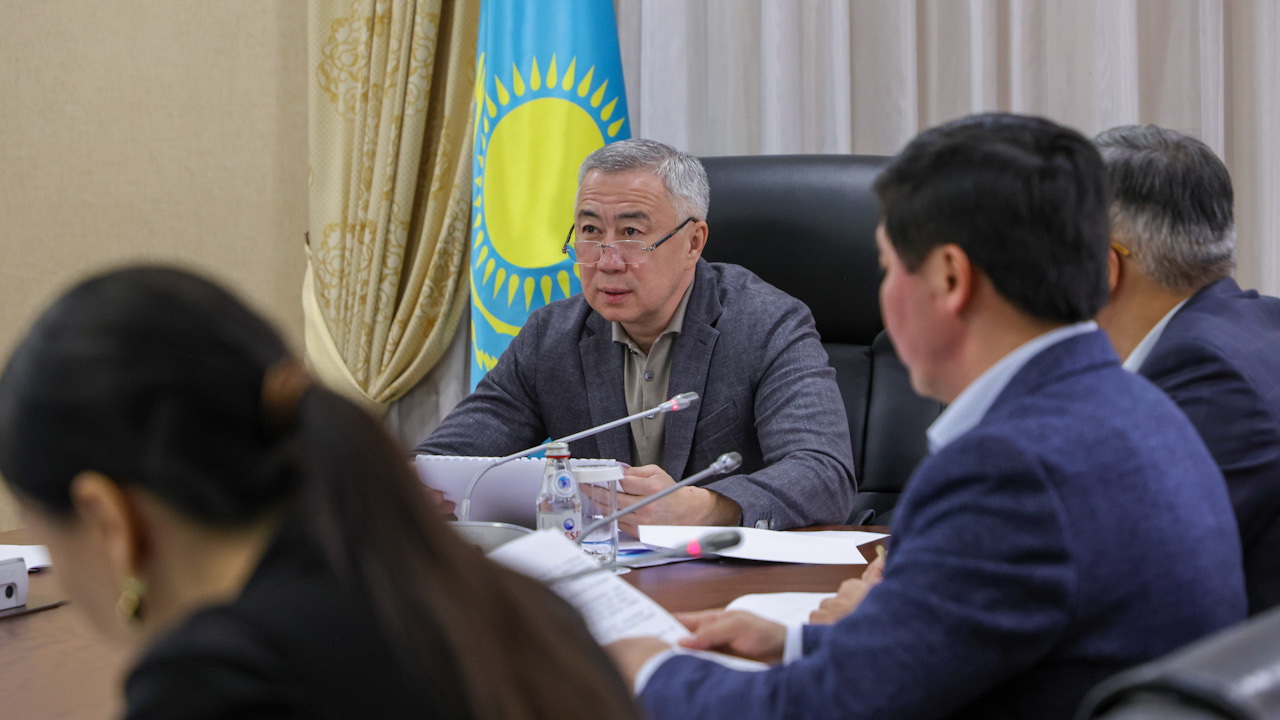
Prices and efficiency of deliveries of socially significant food products to the regions were discussed in the Government at a meeting chaired by Deputy Prime Minister Serik Zhumangarin.
To make any decision that will reduce the delivery time of food to the regions – this order was given by Deputy Prime Minister Serik Zhumangarin of JSC NC «KTZ» a week ago. Vladimir Petrov, General Director of «KTZ–Cargo Transportation» LLP, informed about the results of the work done at the next meeting on price stabilization for socially important food products.
According to the announced data, in just 9 months of 2023, the import of agricultural goods to Kazakhstan amounted to 2.1 million tons.
«Only in October, 341 thousand tons of grain were declared for import, 190 thousand tons of them were agreed. At the same time, according to the basic plan, 58 thousand tons of grain were initially announced, 132 thousand tons were additionally worked out with the Ministry of Trade and the Association of Grain Processors. Applications for 151 thousand tons were rejected only by those applicants who were not on the agreed list. All applications for the import of flour for 10.1 thousand tons are 100% fulfilled. The same situation applies to socially significant food products – all applications for import of NWT in the amount of 145 thousand tons have been fulfilled. Approvals of applications are carried out within a day», – V. Petrov said.
At the same time, since the beginning of October, there has been a lag in the transportation of grain, flour and socially important food products within the country. Plans for grain were fulfilled by 76%, for flour – by 72%, for vegetables – by 94%, for sunflower oil – by 23%. In total, during these days, with the announced plans for the transportation of products within the country in the amount of 619 thousand tons, applications for 181.9 thousand tons were completed.
«All heads of railway departments are instructed to provide first of all the supply/cleaning of wagons for food and consider such applications for a maximum of a day. Round–the–clock duty has been established», – said the General Director of «KTZ-Cargo Transportation» LLP
In general, according to the Bureau of National Statistics, after 4 months of decline in the general index of prices for basic types of food, there is a weekly increase of 0.1% in the off-season. It was mainly due to a seasonal increase in prices for chicken eggs (1.3%). There was also a slight increase in prices for buckwheat (0.7%) and flour (0.5%).
If we consider the situation in the context of regions, the largest price increase since the beginning of the year is in the Ulytau region – 9.6%, Astana is in second place with a general growth index of 7.6%. As Serik Zhumangarin noted at the meeting, this means that the leadership of these regions does not prioritize food security.
The best indicator is observed in the Almaty region (-0.2%). Today, this is the only region that has managed not only to contain, but also to reduce prices for socially significant products sold since the beginning of the year.
Taking into account the increase in flour prices in all regions of Kazakhstan, the meeting heard the progress of work on the shipment of cheaper grain.
«5 regions have started grain export. The first shipments have already been delivered to Turkestan, Pavlodar, and East Kazakhstan regions. The operator of the Kyzylorda region ground grain and sent wagons with flour from Kostanay. At the same time, the flour mills-operators of the Zhetisu, Ulytau and Almaty regions have not yet signed a supply contract with the Food Corporation.And the North Kazakhstan region and the Abai region have not yet identified the operators-millers», –Chairman of the Trade Committee of the Ministry of Trade and Integration Aidar Abildabekov said.
As a positive example, the Chairman of the Trade Committee cited the result of interaction between local government and business in the Pavlodar region. Without waiting for supplies of cheaper grain, the entrepreneur promptly began to supply flour for baking social bread.
Special attention was paid to the situation with the elimination of unproductive intermediaries in the regions. For a detailed analysis of the issue, Serik Zhumangarin instructed the Agencies for the Protection and Development of Competition at the next meeting to present the results of the work of the antimonopoly authority in terms of analyzing the markets of socially important food products and food supply chains from the manufacturer to retail chains.