Export duty: raw materials or processing?
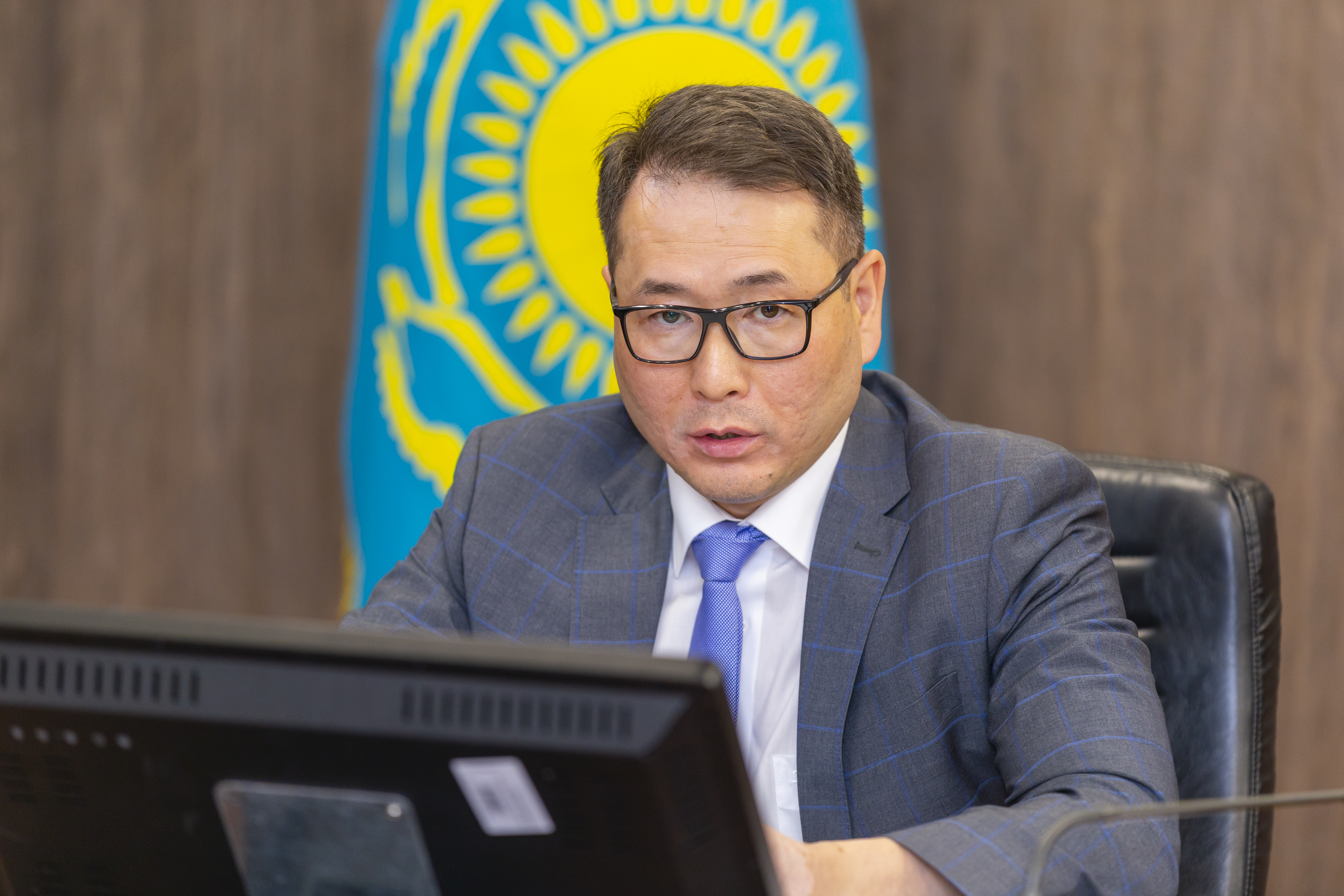
On May 27 this year, under the chairmanship of the First Vice-Minister of Trade and Integration of the Republic of Kazakhstan Arman Shakkaliyev, a meeting was held with Deputy of the Majilis of the Parliament of the Republic of Kazakhstan Aidarbek Khojanazarov, sunflower seed producers, representatives of the Ministry of Agriculture, NCE «Atameken», industry associations and unions, processing enterprises and trading companies. The participants discussed the current situation in the fat and oil industry.
As you know, on February 4, 2023, an order on the introduction of an export duty in Kazakhstan for the export of sunflower seeds in the amount of 20%, but not less than 100 euros per kg. Came into force. Earlier, starting from 2020, the Government of Kazakhstan applied quotas for sunflower exports. As a result of the application of quotas, the production of finished sunflower oil in 2021 increased by 10.2% compared to 2020 and amounted to 331,135 tons. In 2022, compared to 2021, the growth was another 10%, reaching 537,149 tons.
In 2022, the export of sunflower oil increased 2.5 times and amounted to 229 thousand tons (exports in 2021 amounted to 85 thousand tons).
In January-March 2023, oil exports increased by 46% compared to the same period in 2022 and reached 68.6 thousand tons. At the same time, the production of cake increased by 98%, and its export doubled.
As for the cost of sunflower oil, an agreement has now been reached with seed oil processors to fix prices for unrefined oil at the level of 590 tenge per liter, refined – 750 tenge per liter. The price fixing agreement is valid until August 31, 2023. These prices are calculated taking into account the current level of prices for energy, fuel, components and services.
Today, there is a decrease in prices for sunflower oil by 3% in the republic (if we compare December 2022 with May 2023). Average retail prices in the Republic of Kazakhstan per liter are 860 tenge as of May.
The decision to introduce export duties from February 2023 was made at a meeting of the Interdepartmental Commission on Foreign Trade Policy and Participation in International Economic Organizations (IAC). The introduction of this measure is due to the need for further development of the processing sector of the economy and ensuring the domestic market, capacity utilization of domestic oil producers, increasing production and export of value-added products.
As First Vice Minister of Trade and Integration Arman Shakkaliyev noted, the discussion on the feasibility of introducing restrictions has been underway since the beginning of the year.
«Today, statistical data show that from the point of view of the implementation of state policy in the field of agriculture, processing volumes are growing, record oil production is noted. There is a tendency to decrease the price of sunflower oil in the SIFP market, although there is a price heterogeneity of 5-10% in some places. In general, the obvious advantages of this decision – the introduction of export duties are clearly demonstrated by the figures», - Arman Shakkaliyev said.
The opinions of different parties were voiced at the meeting. So, during the meeting, Deputy of the Majilis of the Parliament of the Republic of Kazakhstan Aidarbek Khojanazarov spoke, who thanked the Ministry for promptly responding to the requests of deputies and organizing the meeting.
«I was one of the first who six months ago supported the introduction of tariff measures to regulate sunflower seeds. Today we see a different picture. The situation has developed so that we cannot sell our sunflower at all. This is a question of the current market situation not only because of the duty. Let's set a certain threshold, everything below the threshold should be exported duty–free, and exceeding the threshold should be taxed for the security of the country», - Aidarbek Khojanazarov proposed his decision.
The head of JSC «Atameken-Agro» Kintal Islamov expressed the position of sunflower producers.
«For a farmer to be interested in this crop, there must be a very serious motivation. When prices went up, the income was good, now prices are falling. We made calculations - the margin is quite high. I propose either to lift export restrictions, or to introduce quotas for all producers and processors», - Kintal Islamov said.
In turn, the President of the Grain Union of Kazakhstan Nuraly Ospanov proposed a systematic approach to solving the issue.
«The market situation has developed so that our oil producers, having bought raw materials at one price, having processed it into crude oil, cannot sell the product for export, as prices are going down. World prices decreased by 32% from October to May. Retail prices for refined oil fell in tenge by 12%, and market prices - by 8%. Butter makers do not buy raw materials from our manufacturers, as Russian seeds are cheaper. If a duty is introduced, then it is necessary to introduce a quota at the same time. Whatever the harvest, 30% of the harvest should be allowed for export, 70% should be left for internal processing», - the President of the Grain Union said.
The First Vice Minister of Trade and Integration agreed that the state should have a strategy for the development of the fat and oil industry in the near future. Based on this, it is necessary to develop a systematic approach to the formation of state support tools, the implementation of tariff and non-tariff measures and the use of specific markers.
Acting Chairman of the Board of NCE «Atameken» Yerbol Yeseneyev voiced his position, proposing a transition to tariff quotas for 300-350 thousand tons and additional payment of subsidies to oil processors, as well as reducing the amount of export duty by three times.
According to Yadykar Ibragimov, President of the «National Association of Oilseed Processors» additional quotas for duty-free export of sunflower seeds are meaningless due to dumping and gray imports from Russia, as well as further re-export under the guise of Kazakh seeds to neighboring countries (Uzbekistan, Tajikistan and China).
«The price will decrease, and only grain traders, not domestic agricultural producers, will be able to earn on this», - Yadykar Ibragimov said.
According to Saule Zhurynova, Director of the Department of Agri-food Markets and Processing of Agricultural Products of the Ministry of Agriculture of the Republic of Kazakhstan, the Ministry has already sent a proposal to issue tariff quotas and recalculate the balance to processors.
Summing up the results of the meeting, Arman Shakkaliyev reminded the participants that the Government faces the task of increasing the volume of exports of non-primary goods, including oil, as a finished product.
«Taking into account the discussion, the positions of all interested market participants will be considered at the next meeting of the Ministry of Internal Affairs and a balanced decision will be made», - concluded the First Vice Minister of Trade and Integration.