Serik Zhumangarin held a meeting on curbing the growth of prices for dairy products
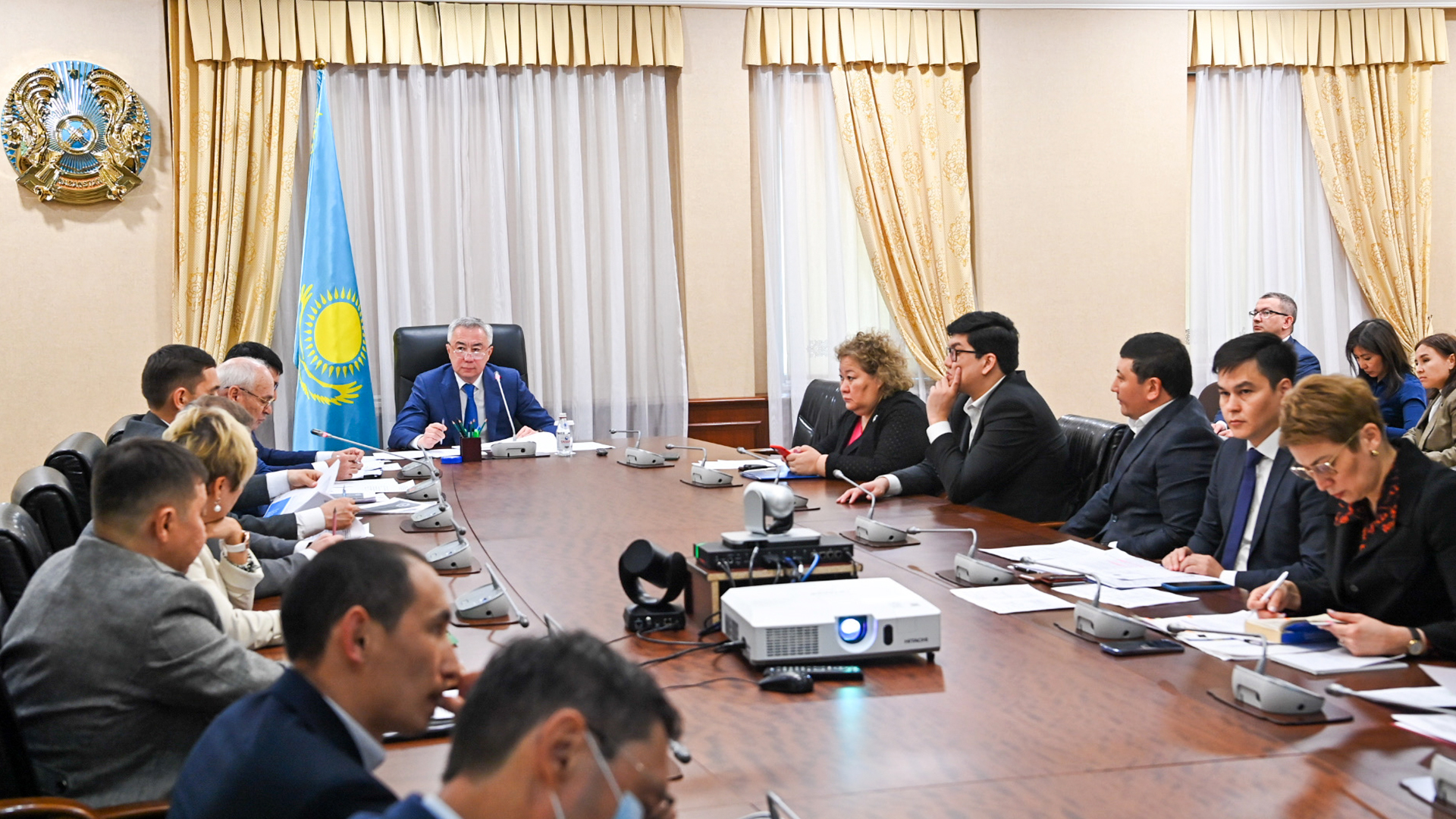
The Government, chaired by Deputy Prime Minister - Minister of Trade and Integration Serik Zhumangarin, held a meeting with representatives of dairy producers, industry associations, NCE "Atameken" and interested government agencies. On the agenda was the issue of curbing the rise in prices for dairy products.
According to the director of the Dairy Union of Kazakhstan Vladimir Kozhevnikov, Kazakhstan has all the necessary capacities for processing milk and meeting the needs of the population in dairy products. But the plants are underutilized due to a shortage of raw materials.
"Today our commodity resources are seriously lagging behind our processing capabilities. There are several reasons, but the main one is the shortage of marketable milk. Today, 50% of the milk received for processing is produced on private farms and does not meet the requirements of technical regulations TS," said Vladimir Kozhevnikov.
Kuanysh Ishchanov, director of Ice-Plus LLP, announced a sharp decline in sales due to the influx of imported milk.
"In April, our sales fell to 50%. Our warehouses are overflowing with dairy products. We buy natural milk more expensive, while finished imported products come to our country at a reduced price," he stressed.
Other manufacturers, in addition to the shortage, declared the high cost of raw materials. In particular, during this year, the price of raw milk rose every month, regardless of the season.
To date, the country's domestic consumption of dairy products is 2.3 million tons per year. 172 dairy processing enterprises annually process 1.8 million tons of milk, which is 46% of the total volume of its production. The capacities of the enterprises allow processing about 2.5 million tons per year, but they are loaded by 77%. As a result, the availability of dairy products due to domestic production reaches 81.6%. The rest is replenished by imports.
The state provides processors with various kinds of state support measures. Over the past 4 years, subsidies in the amount of 35 billion tenge have been issued to milk processing enterprises. All measures of state support have been preserved for the development of milk processing. These are investment subsidies to reimburse part of the costs of construction and modernization of dairy plants, interest rates on leasing and loans. Also, for the development of the raw material base in animal husbandry, breeding work and increasing the productivity and quality of livestock products are subsidized. Over the past 7 years, the volume of subsidies for the development of dairy cattle breeding has increased 1.8 times, in 2022 amounted to 22.5 billion tenge (in 2016 – 12.1 billion tenge).
In addition, assistance is provided to remove various kinds of barriers to trade. There is a Situational Headquarters at the level of three ministries — trade and integration, agriculture and health. This working body coordinates the activities of departments in terms of ensuring control over the compliance of products imported into the country with the mandatory requirements of technical quality regulations and, if necessary, the adoption of operational measures to limit inappropriate imports.
"As for the shortage of raw materials, this year the construction of 65 dairy farms will be launched as part of a large project. 100 billion tenge has already been allocated from the budget for this at a low interest rate. Next year we plan to continue the construction of dairy farms across the country, which will almost completely ensure the production of raw materials in the country in the required volume. We will consider all the proposals received and at the end of May we will meet again to discuss the results," Serik Zhumangarin summed up the meeting.