Products according to gray schemes, vegetables in the off—season and turnover for domestic sugar - the situation over the past week was discussed in the Government
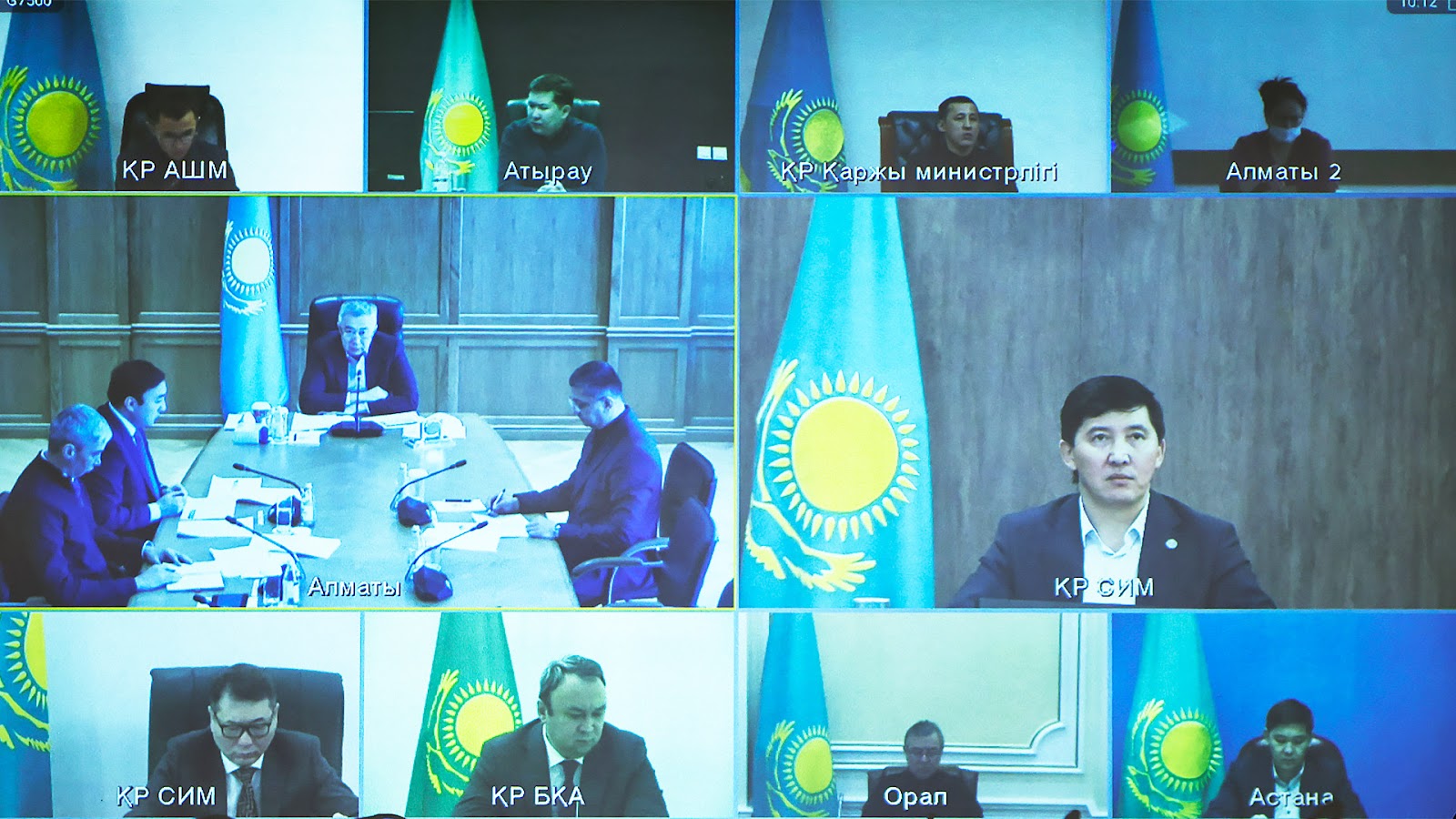
On December 10, 2022, under the chairmanship of Deputy Prime Minister - Minister of Trade and Integration Serik Zhumangarin, the main factors influencing the price situation for socially important food products and measures taken to stabilize prices were considered.
The main focus of the meeting was on the results of the work of the regional commissions to investigate mediation schemes. Over the past week, based on the results of the analysis of electronic invoices, the Trade Committee revealed the facts of the sale of chicken eggs through intermediaries with a surcharge exceeding the statutory one. In particular, in the Karaganda region, Agrofirma Kurma LLP sold eggs of the first category to enterprises of the Karaganda, Zhambyl regions and Ulytau, which resold products with a trade margin of 21 to 45%. Among the buyers of eggs with a trade premium of 45% is the Karaganda bakery. All materials have been submitted to the akimats of the regions for appropriate measures.
Since the beginning of December, the Agency for the Protection and Development of Competition has issued 14 notifications to egg producers on the grounds of anticompetitive concerted actions. To date, poultry farms of Pavlodar, North Kazakhstan, West Kazakhstan regions, Astana have executed 7 notifications by reducing prices by 7-10%.
According to the signs of the establishment of monopolistically high prices and price collusion, 7 investigations have been launched against poultry farms in Kostanay, Almaty, Zhambyl, Turkestan regions, Shymkent.
At the meeting, the interim results of the rating of akimats in terms of the effectiveness of price containment, compiled by the Ministry of Trade and Integration, were announced. The work of akimats is assessed by several indicators, including food inflation, weekly and annual price increases for socially important food products, achievement of the target indicator according to the "turnover scheme", holding fairs, financing sugar factories, work to identify the facts of excess of the trade allowance. The last places in this rating were taken by Akmola region and Ulytau.
"Cases when goods go through intermediaries using gray schemes with high fraud are the result of missed state control, the reality of how the price is formed today, when people in charge on the ground do not put the work of stabilizing prices for products at the forefront. The Trade Committee should continue its work on the analysis of ESF for the entire group of socially significant goods. It is necessary to stop the practice of violating the trade allowance, for which all regional commissions, with the coordination of the Trade Committee, should review their work algorithms, analyze and find the reasons for the sharp rise in prices at meetings at least 2 times a week," Serik Zhumangarin said.
Special attention at each meeting on the stabilization of prices for basic foodstuffs is paid to the process of allocating working capital to domestic sugar factories and the ongoing work to stabilize prices for vegetables in the upcoming off-season. As you know, the main increase in the price index for NWT occurred during the introduction of sanctions against the Russian Federation, the ban on the export of sugar and grain from the Russian Federation in March 2022. Additional factors were the high exchange rate of the ruble and the off-season period, which led to an increase in vegetable prices. At the moment, loan agreements with sugar factories have been signed Atyrau, Zhambyl, Pavlodar, West Kazakhstan region, Karaganda, North Kazakhstan region, Akmola region for a total amount of 7.664 billion tenge. At the signing stage — Zhetysu, East Kazakhstan region, Kostanay, Mangystau, Kyzylorda region, Almaty.
Vice-Minister of Agriculture Zhenis Oserbai explained the mechanism of implementation of the first stage of new approaches to the work of stabilization funds using the example of potatoes. According to calculations, the country's annual demand for potatoes is 1.183 million tons. The main increase in prices for this root crop occurs in April-June, when the old harvest has come to an end, but there is no new one yet. For example, to cover the needs of the domestic market during this period, about 244 thousand tons of potatoes are needed. According to the akimats, about 100 thousand have been contracted in the regions for this period. tons of potatoes, including under forward contracts – 68.3 thousand tons, according to "revolving schemes" – 32 thousand tons. The remaining volumes of demand will be provided through traditional supply channels, i.e. business contracting (through retail chains, wholesale suppliers). In May-June 2023, the demand of the domestic market will be met through the contracting of early potatoes of the Turkestan region and imports from southern countries.
Similar schemes will be implemented for all social types of fruit and vegetable products that are subject to the greatest price increases in the off-season. The specific needs of each region for imports and early vegetables are being clarified.