An information portal on trade facilitation has been launched in Kazakhstan
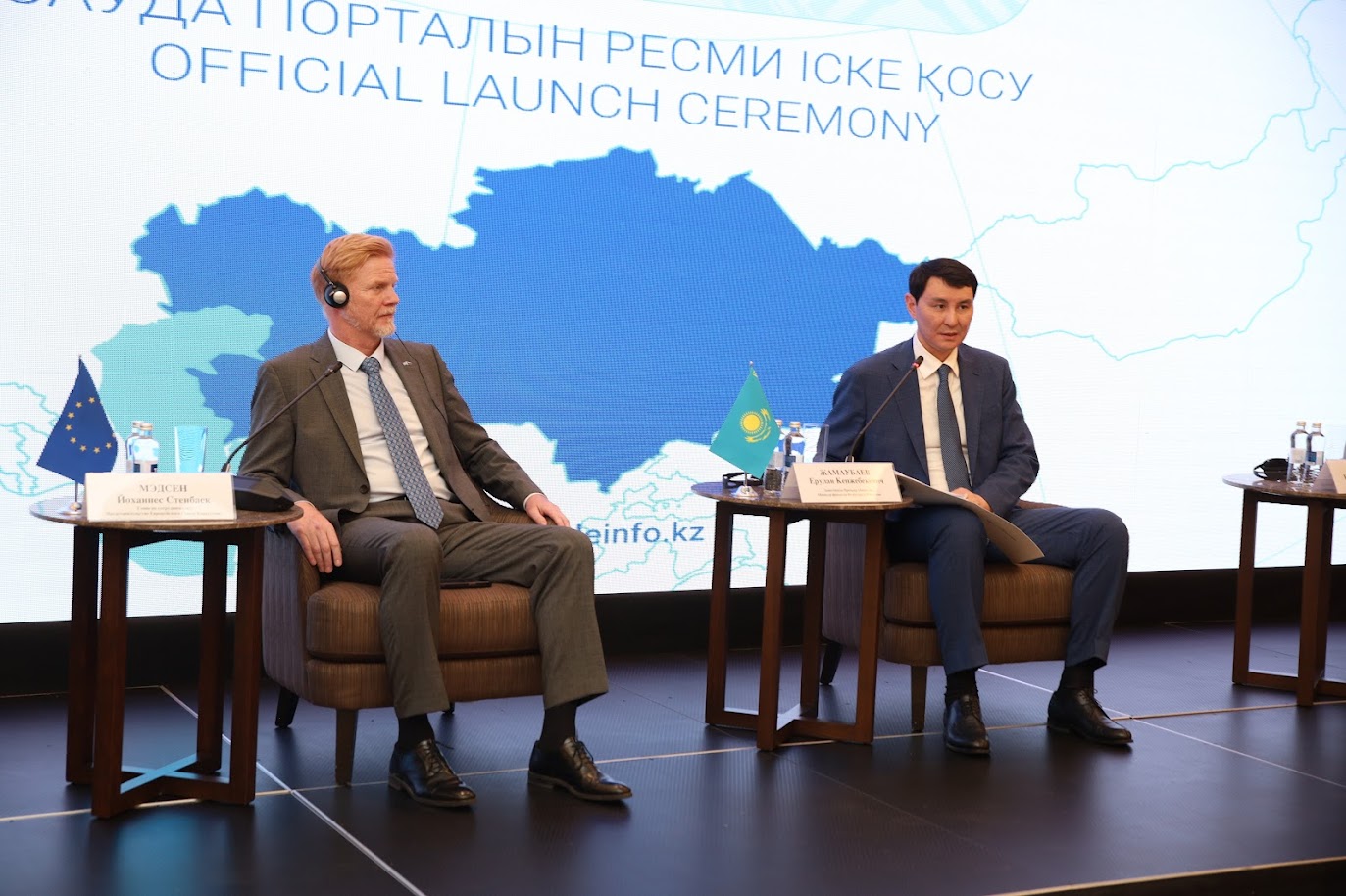
An information portal on trade facilitation has been launched in Kazakhstan for business tradeinfo.kz . The new online platform provides step-by-step information on cross-border trade procedures and makes it more accessible to businesses.
The Ready4Trade-Central Asia project, funded by the European Union and implemented by the International Trade Center, has launched a Trade Portal of Kazakhstan. The portal describes in detail all import, export and transit formalities, necessary documents, forms and procedures. Now the portal describes procedures for more than 50 products.
In Kazakhstan, the platform was developed by JSC "Center for Trade Policy Development "QazTrade" in cooperation with the Ministry of Trade and Integration.
The launch ceremony of the portal was attended by Deputy Prime Minister - Minister of Finance of the Republic of Kazakhstan Yerulan Zhamaubayev, Ambassador of the European Union to the Republic of Kazakhstan E.P. Kestutis Yankauskas, Director General of JSC "Center for Development of Trade Policy "QazTrade" Azamat Askaruly.
In his welcoming speech, Yerulan Zhamaubayev expressed gratitude to the European Union and the International Trade Center for their contribution to the preparation and implementation of the project. He expressed hope that the trade portal will contribute to sustainable and comprehensive economic development not only in Kazakhstan, but also in the entire Central Asian region.
"Now participants in Kazakhstan's foreign economic activity will have access to step-by-step rules and procedures applied to import, export and transit. For us, the trade Portal will become a tool for receiving feedback from domestic businesses. Work in this direction will be actively worked out with business associations and authorized bodies."
In turn, the Ambassador of the European Union to the Republic of Kazakhstan, Mr. Kestutis Yankauskas, thanked all the parties involved in the development of the portal and in particular the Ministry of Trade and Integration and QazTrade for their key role in the implementation of this project. He also noted that the trade portal and trade facilitation initiatives are concrete responses to today's global challenges. In conclusion, Mr. Ambassador stated the commitment of the European Union, along with Kazakhstan and all its participants, to promoting sustainable economic development and achieving other development goals.
Azamat Askaruly, General Director of QazTrade JSC, said that thanks to the launch of the portal, entrepreneurs will have access to accurate and detailed information — rules and procedures applied to import and export, including all forms and documents.
"Since August 2020, QazTrade has been an institutional partner of the Ready4Trade Central Asia project. Taking into account the urgency of increasing interest in increasing supplies by sea and expanding the potential of ports on the Caspian Sea, for the first time we conducted step-by-step documentation of business processes of import and export operations of seaports. I am sure that the Trading Portal will become a guide to all trading procedures," concluded Azamat Askaruly, CEO of QazTrade.
The trade portal of Kazakhstan is one of the components of the "Ready4Trade-Central Asia" project. Similar portals have already been implemented in 30 countries around the world. In Central Asia, there are such projects in Tajikistan and Kyrgyzstan. The next countries where they plan to launch trade portals will be Uzbekistan and Turkmenistan.
The Trade Portal is not only a business reference tool that consolidates information from all supervisory authorities on commercial formalities, it also offers a number of advantages in the field of trade facilitation. In particular, the portal allows you to identify and measure the complexity of commercial formalities faced by businessmen, identify procedures and requirements that are potentially redundant and create unnecessary delays, set goals to optimize and reduce cross-border transactions and measure the effectiveness of business reforms aimed at improving trade procedures.