Free trade zone: The Ministry of Trade summed up the results of 2021
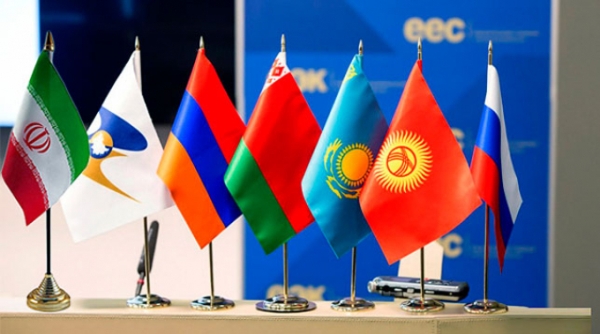
Since the establishment of the Eurasian Economic Union, a number of free trade agreements have already been concluded with Vietnam (entered into force on October 5, 2016) and Serbia (entered into force on July 10, 2021), as well as an Interim Agreement (for three years) with Iran (entered into force on October 27, 2019). The agreement with Singapore has been signed, but has not yet entered into force (signed on October 1, 2019).
Also today, negotiations are underway to conclude a free trade agreement with Egypt and a negotiation process has been launched to conclude a full-scale agreement with Iran.
The potential for increasing trade as a result of the conclusion of agreements with the above countries is more than 400 million US dollars (with Egypt - 291.6 million US dollars, with Iran - 126.3 million US dollars). Such products include flat rolled products, aluminum, aluminum oxide, ferrosilicon manganese, cast iron, alloys, polypropylene, medium and heavy distillates.
During the current year, one round of negotiations with Egypt and Iran was held, as well as 2 inter-sessional meetings with the Egyptian side and 2 technical consultations with the Iranian side.
In addition, since September 2020, Joint research Groups have been studying the feasibility of concluding free trade agreements with Indonesia and Mongolia.
The potential for increasing trade with Indonesia is 525.6 million US dollars, with Mongolia 24 million US dollars. Potential export products: ferrochrome, unalloyed aluminum, aluminum oxide, flat rolled products, medium and heavy distillates.
The conclusion of such agreements allows Kazakh producers to supply goods to new markets at zero or reduced customs duties, which significantly reduces the cost of exported products and contributes to increasing the competitiveness of Kazakh products in foreign markets.