Kazakhstan will not allow the abolition of the right of "veto" in the framework of the EEU
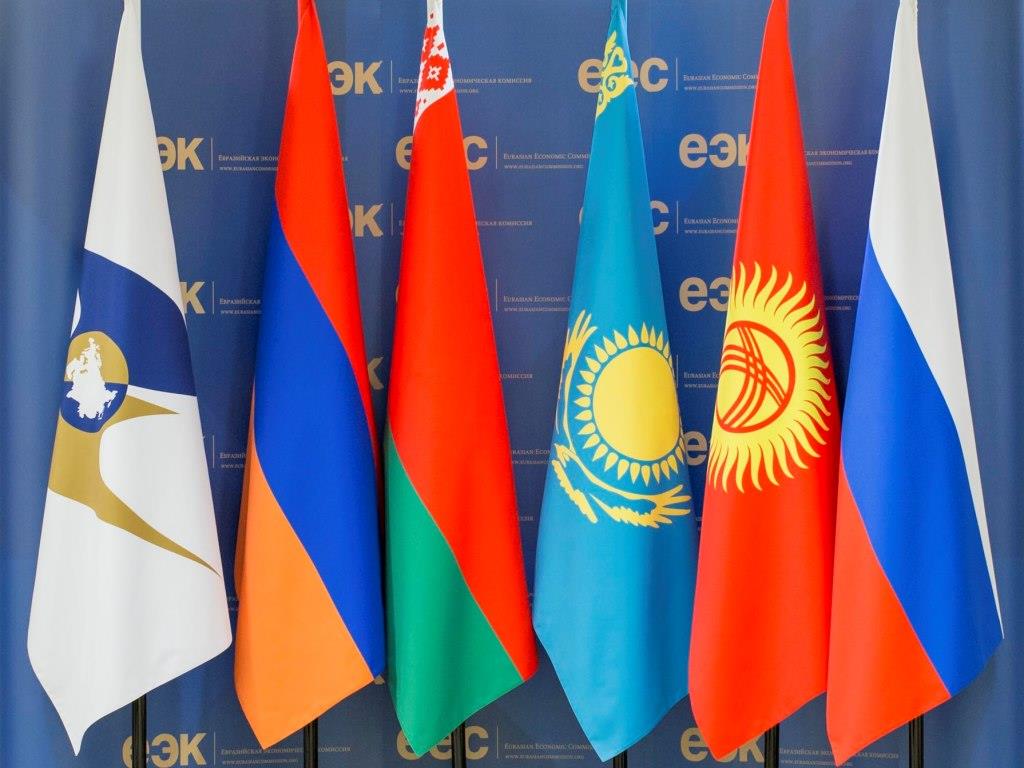
This was stated by Vice-Minister of trade and integration Janelle Kushukova, summing up the meeting of the Eurasian intergovernmental Council.
One of the important issues discussed was the draft Strategic directions for the development of the Eurasian economic integration until 2025. Earlier, during the meeting of the Supreme Council on
may 19, 2020, with the comments Of the President of the Republic of Kazakhstan K. K. Tokayev, the draft Strategy was sent for revision.
"Currently, the discussion of Kazakhstan's proposals to the draft Strategy in terms of the Commission's personnel policy and the use of the right of "veto" to decisions of the EEC on trade measures continues. The negotiations emphasized the principle of selecting candidates to work in the Commission solely on the basis of the professional skills of applicants. It was also noted that the use of the right of "veto" is an absolute sovereign right of the state, which allows it to be heard and prevent the adoption of decisions that do not correspond to economic interests," said Vice-Minister of trade and integration Janelle Kushukova.
The discussion was also held on the issue of resuming passenger traffic between the EAEU countries in the conditions of
COVID-19.
"Currently, the situation with the incidence of COVID-19 coronavirus infection in the world is very alarming. Therefore, this issue is very sensitive for us, since the safety of our citizens is above all else. In this context, we suggested that the sanitary doctors of the EAEU member States, together with the EEC, develop approaches for resuming passenger transport links between the EAEU member States without allowing unnecessary risks," zhanel Kushukova said.
During the consideration of this issue, the heads of government discussed the EDB initiative.
"The Eurasian development Bank proposed the creation of a digital platform that would consolidate the results of tests for COVID-19 of outgoing citizens with subsequent mutual recognition by the EAEU countries. The proposed approach of the EDB will simplify the movement of citizens within the EAEU. In General, we supported this initiative. Now it is necessary to ensure its practical implementation," the Vice - Minister of trade and integration added.
Recall that due to the introduction of quarantine measures in the EAEU member States, passenger services between our countries have been suspended.
In addition, the Prime Ministers considered the issue of regulating cross-border electronic trade in goods in the EAEU.
"Current realities show that the global IT market is developing very rapidly. At the same time, it carries risks in the form of reduced budget revenues, poor quality of goods. And in the new reality, we have agreed on the main directions for regulating cross - border e-Commerce," commented the Vice-Minister of MIT.
The heads of government also agreed on joint export development measures and joint forecasts for the development of the agro-industrial complex within the EAEU. These agreements will allow domestic businesses to expand the range and volume of exports to third-country markets, as well as outline the horizons for further development of the agricultural market.
Recall that on October 9, 2020, the next meeting of the Eurasian intergovernmental Council was held.