The Unlimited Potential of the Silicon-Carbon Nanocomposite
Scientists have created a unique silicon-carbon nanocomposite from rice husks. This development was conducted at the RSE "National Center for Comprehensive Processing of Mineral Raw Materials of the Republic of Kazakhstan," under the Committee for Industry of the Ministry for Investments and Construction of the Republic of Kazakhstan.
Rice husk, a by-product of rice production, serves as a staple food for a significant portion of the world's population. Comprising 20% of the rice's mass, rice husks represent a renewable raw material, thanks to the presence of crucial elements—carbon and silicon.
Utilizing the natural advantages of this material, while also aiming to eliminate the harmful consequences of its massive accumulation (since rice husk does not decompose like typical plant waste), scientists have developed a technology for processing it into a multifunctional silicon-carbon nanocomposite.
The silicon-carbon nanocomposite serves as a filler for rubber products and friction materials, as well as raw material for producing silicon and ferroalloys. Its application extends to agriculture as well.
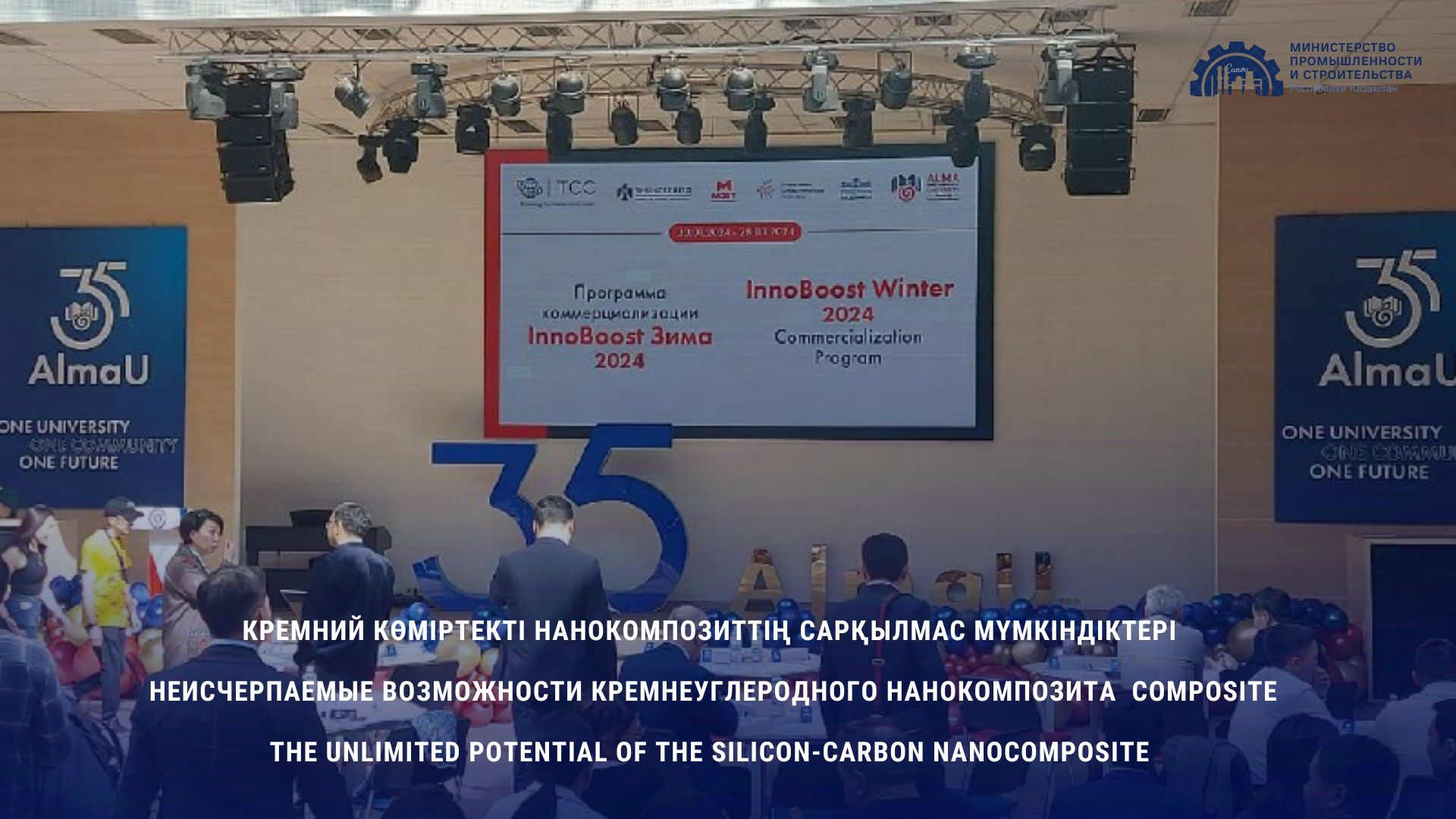
The nuances of the production technology and the inexhaustible possibilities of the silicon-carbon product were shared by scientists with participants at the Deep Tech Innoboost Winter-2024 commercialization program project exhibition, which took place last week at AlmaU University (Almaty). The project elicited genuine interest, highlighted in feedback by Kamil Akatov, Chairman of the Board of the Science Fund.