Food security was discussed at the Forum of Interregional Cooperation in Kostanay
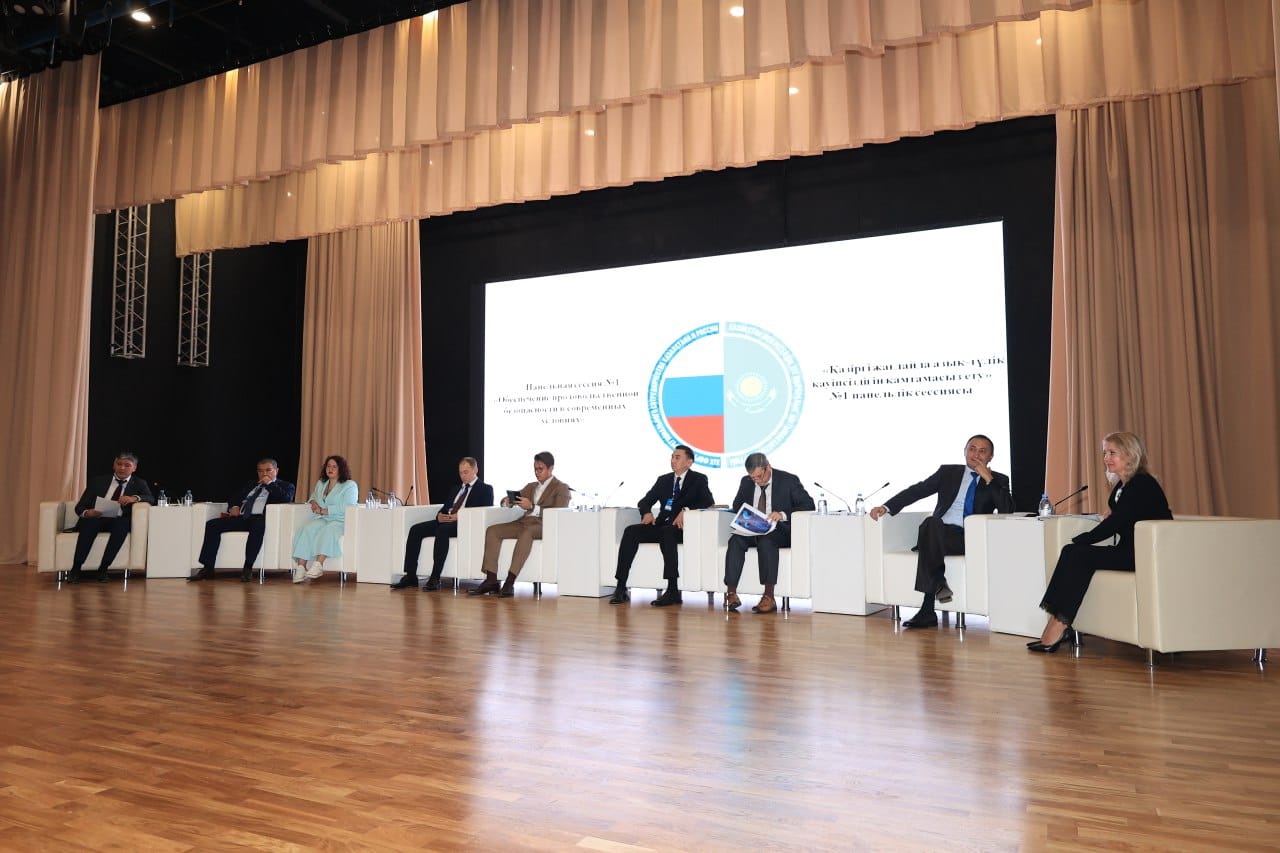
Within the framework of the XIX Forum of Interregional Cooperation of Kazakhstan and Russia, a panel session "Ensuring food security in modern conditions" was held. It was moderated by the head of the sub-regional coordination office of the World Organization for Animal Health in Astana, Mereke Taitubayev.
He noted that the topic of food security is the cornerstone and the most important element of agriculture in Kazakhstan and Russia. According to the FAO report of 2023, the number of hungry people in the world still far exceeds the pre-pandemic level. In 2022, there were between 690 and 783 million hungry people in the world – 122 million more than before COVID-19. Nevertheless, the growth in the number of hungry people in the world has stopped, and in 2022 about 3.8 million fewer people suffered from hunger than in 2021.
"Agri-food systems remain extremely vulnerable to shocks and disruptions including climate variability and extreme weather events, as well as economic downturns. These factors, combined with growing inequality, continue to undermine the ability of agri-food systems to provide nutritious, safe and economically affordable diets for all. These main driving factors of food insecurity and malnutrition are our "new reality"," stressed Mereke Taitubayev.
Then he gave the floor to the Executive Director of the National Association of Oilseed Processors Alexander Yashkov. The speaker began with an acute issue, namely, export duties on sunflower seeds, which began to operate on February 4, 2023 and have already yielded positive results. Firstly, prices for sunflower oil have decreased - today the selling price for sunflower oil from creameries averages 450-550 tenge/liter. The price reduction has had a positive impact not only on ordinary Kazakhstanis, but also on catering, confectionery, poultry and livestock farms, paint and varnish factories and others.
Secondly, the production of sunflower oil has increased: as a result of the 2022/2023 season, the production of unrefined sunflower oil amounted to 417.6 thousand tons, which is 50% more than last season. The production of refined sunflower oil also increased and reached 145.3 thousand tons.
Thirdly, the import of bottled oil decreased by 11.3% and at the end of the season amounted to 39.7 thousand tons. Fourth, exports of finished products increased by 77%, amounting to 310.6 thousand tons. Alexander Yashkov stressed that the listed results correspond to the message of the Head of State.
"In the next 3 years, the foreign exchange earnings of Kazakh fat and oil products may exceed $ 700 million. The actual figure for 2022 is $521 million. Our products are sold both in the direction of China and in the direction of Central Asia and Europe. Uzbekistan is in second place in terms of imports of Kazakh fat and oil products, Tajikistan and Latvia are also among the top five importers," the speaker said.
Alexander Yashkov added that, unfortunately, the forecast for the gross harvest of sunflower seeds this year is disappointing. According to the Association's estimates, due to difficult weather conditions, the harvest of oilseeds may not exceed 850 thousand tons. This is 17% less than in 2022, which means that creameries will be forced to work in conditions of a shortage of raw materials.
«Профильным министерствам необходимо думать о том, как сохранить сырье для производства подсолнечного масла и высокобелковых кормов (шрота, жмыха) внутри страны. Несмотря на введенную пошлину, экспорт семян подсолнечника продолжается, в сезоне 2022/2023 г экспорт семечки составил 312,4 тыс. тонн. Годом ранее показатель был на уровне 223,7 тыс. тонн», - объяснил Александр Яшков.
Chairman of the Management Board of JSC NC "Food Corporation" Asylkhan Juvashev shared Kazakhstan's experience in ensuring food security. In particular, the speaker spoke about the reserve stock of food grain created by the Food Corporation, the volume of which is 500 thousand tons. This reserve is created in case of natural and man-made emergencies. To respond to the possible consequences of drought, sharp shortages and rising prices, the Food Corporation has formed a feed fund in the amount of 228 thousand tons of grain.
Good results are demonstrated by the forward purchase of agricultural products program, under which agricultural enterprises receive financing for VPR – in the person of the Food Corporation, they have a guaranteed sale of manufactured products. In 2023, 200 agricultural enterprises for 292,119 tons of grain worth 21.2 billion tenge, including 1.2 billion tenge for the purchase of 6,000 tons of rice, were financed under the forward purchase program. Also in 2023, the Food Corporation launched a pilot project in the Kyzylorda region for the forward purchase of 6 thousand tons of rice groats. Asylkhan Juvashev stressed: the project supports SHPT in the region and strengthens the role of the Food Corporation in stabilizing prices for SHPT.
In addition, in 2023, the Food Corporation introduced an additional tool to support agricultural entities – the issuance of a commodity loan to finance the VPR. Thanks to this, farmers can use the grain of the Corporation to implement their production plans without attracting funds. The issuance of a commodity loan for the implementation of the VPR, similar to the forward purchase program, is carried out under the guarantees of the SEC and the STB. As of today, the Food Corporation has issued a commodity loan to 66 SHTP in the amount of 602.8 thousand tons.
Anna Usacheva, Logistics Director of Europac, told the session participants about the development of international agricultural products. The speaker stressed that wheat and sunflower are the basis of agricultural turnover between Russia and Kazakhstan. The share of wheat and meslin exports from Russia to Kazakhstan accounts for 11.8%, sunflower seeds and sunflower oil – 3%. Both chocolate (7.8%) and poultry meat (7.4%) are exported from Kazakhstan to the neighboring country. In physical terms, the export of agricultural products from Russia to Kazakhstan in 2023 amounted to 4.3 million tons – 24% more than in 2022 (3.5 million tons).
According to Anna Usacheva, the key logistics hubs in mutual and transit trade between Russia and Kazakhstan are Lokot, Kartaly, Orsk, Uralsk; the key ports are Aktau, Kuryk; the main Caspian port is Astrakhan.
"In our opinion, the most promising projects for the development of agricultural trade between Russia and Kazakhstan are the Silk Road land project and the Kuryk port project. Silk Road facilities will be located in Orsk and Orenburg. It will reach its design capacity in 2026. The throughput capacity is more than 15,000 TEU, the cargo turnover is 2.5 million tons per year, the capacity is about 3,000 containers in one–time storage, more than 100 thousand square meters of warehouse space," said Anna Usacheva.
According to the speaker, the Kuryk port is a new project in maritime logistics. It is planned that it will reach its design capacity by 2030, but the capacity will be introduced gradually, starting from 2024. Kuryk's throughput capacity is more than 150,000 TEU, 1.65 million tons per year of bulk and general cargo transshipment capacity, the capacity of the terminal for bulk cargo is 5.5 million tons per year.
At the end of the session, its participants exchanged experiences and discussed what advanced methods in agriculture will help ensure food security. Experts also agreed that Kazakhstan and Russia have every chance to become leaders in food security in the EAEU – for this, the countries have well-structured logistics and established trade turnover.