KAZAKH AND RUSSIAN EXPERTS EXCHANGED EXPERIENCE IN THE DIGITALIZATION OF AGRICULTURE
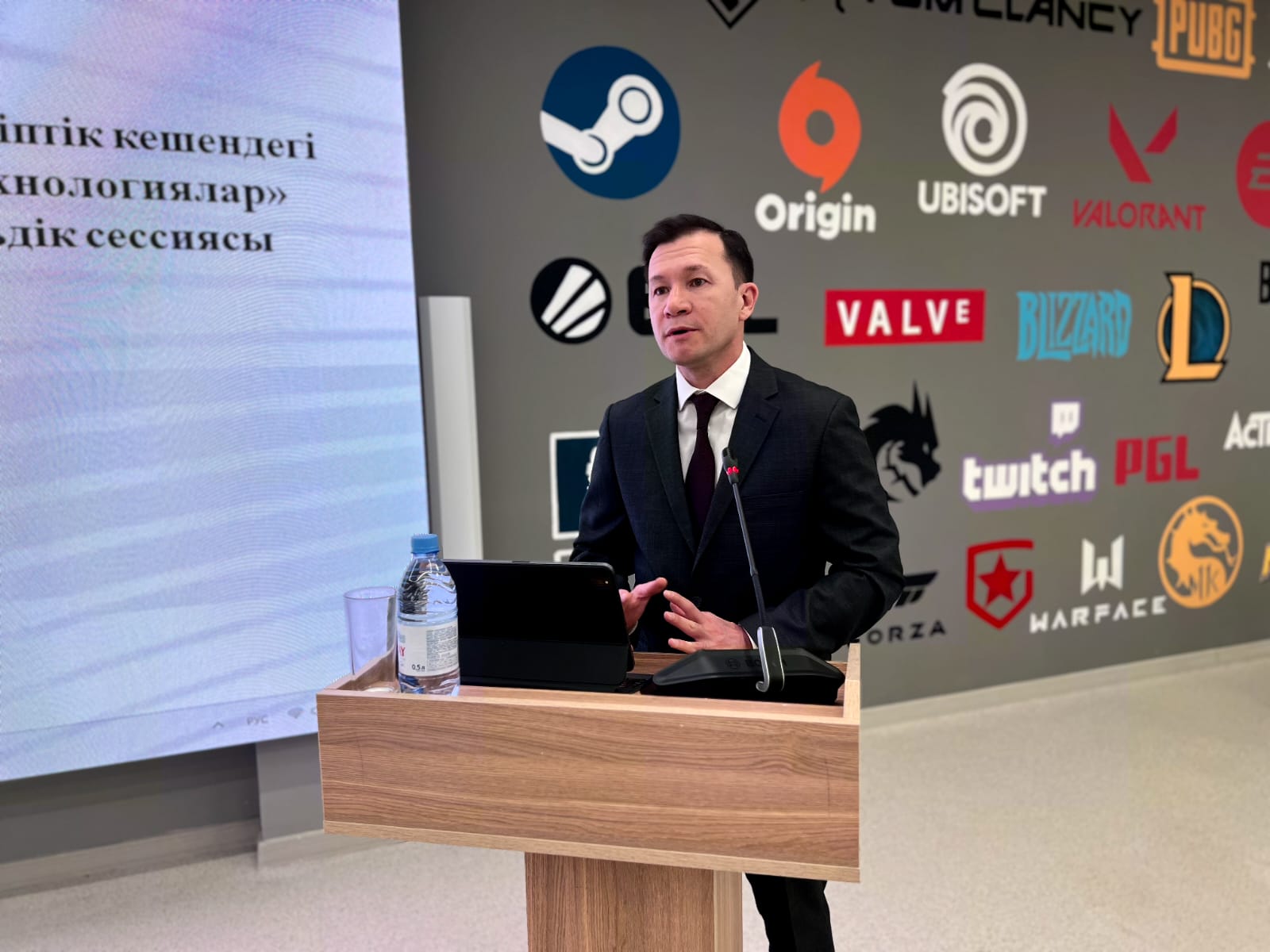
Digitalization in the agro-industrial complex was discussed by experts at a panel session that took place at the XIX Forum of Interregional Cooperation between Kazakhstan and Russia. The session was opened by Vice Minister of Agriculture Baglan Bekbauov, who told how Kazakhstan is introducing new technologies in the agro-industrial complex.
For example, thanks to the use of a complex of satellite and computer technologies with an average yield of 13 kg / ha, Kazakh farmers managed to get up to 25 quintals. On lands with high fertility, this indicator exceeded 40 kg/ha, reducing production costs.
Moreover, "digital" farms are being actively introduced in the republic – with the help of state support, their number has grown almost 4 times, from 40 to 150. In crop production, a digital farm uses electronic field maps, GPS navigation systems, territory control systems and access to the combine harvester, and so on. In animal husbandry – milking parlors with software, automatic systems for water supply, feed and manure removal, ultrasound machines, animal activity monitoring systems, robot milkers.
"Such results have been achieved through the modernization of industry information systems. Kazakhstan is the first EAEU country that has started using a unified system of accounting for farm animals. More than 35 million agricultural animals are registered in the system, about 4.5 thousand veterinary specialists work in it," Baglan Bekbauov said.
It is equally important that in Kazakhstan more than 90 thousand agricultural producers receive subsidies through a special electronic platform – that is, the process is fully automated. Agricultural producers and other trade participants receive electronic accompanying documents without visiting government agencies. The automated information system of the State Land Cadastre stores 6.5 million data in electronic format on land plots. The Ministry of Agriculture also plans to introduce an industry-specific traceability system for agricultural products, following the example of the Grain system in Russia.
From the speech of the Director of the Spatial Data Department of JSC NC "Kazakhstan Garysh Sapary" Daniyar Kakpenov, the participants of the session learned about the use of space monitoring to solve agricultural problems. Thus, space monitoring of pasture lands is carried out to assess the condition, degradation and productivity of pasture vegetation by seasons. And if 60 administrative districts were monitored in 2022, then from 2023 - on the entire territory of Kazakhstan. Monitoring of arable land also covers the entire country and the entire process of crop rotation. Thanks to monitoring, the acreage, the condition of crops, the degree of contamination, and harvesting of grain crops are determined.
In addition, Kazakhstan has an AGROSPACE platform for transmitting geospatial data on farmland to substantiate an application for subsidies through a Unified state Subsidy Information System. AGROSPACE has established business processes related to the confirmation of the boundaries and areas of agricultural production, as well as the introduction and correction of personal data of agricultural producers. Via Telegram channel t.me/agrospace_kz agrarians are promptly advised and trained to work on the platform.
The next speaker at the session was Shalkar Amanturov, Deputy Chairman of the Analytical Center for Economic Policy in Agriculture LLP, with a report on the traceability of animal husbandry. The speaker said that today 5 information systems are used in the agro-industrial complex of Kazakhstan: "Identification of farm animals" (ICI); "Information and analytical system of the Republican System of Animal Husbandry" (RSJ); "Automated information system of the State Land Cadastre" (GZK); "Unified automated management system of branches of the agro-industrial complex" (EASU); Unified State Information System of Subsidies" (EGISS).
The speaker added that ACEP LLP has finalized the old and developed new systems that are important for Kazakhstan's animal husbandry. These are: Vetlab (veterinary laboratory tests), "RPO" (foci of particularly dangerous diseases of agricultural animals), "Processing Center" (generation and issuance of individual numbers of animals and their monitoring, "Veterinary and sanitary examination" (issuance of certificates of espertiza at slaughter points and their monitoring), Vetmobile (mobile application for veterinarians), Torttulik (mobile application for owners of agricultural animals).
From the report of the Deputy head of the Rosselkhoznadzor Svetlana Alekseeva, those present at the session learned how digital systems work in managing the safety of agricultural products. According to the speaker, the integration processes directly between the Rosselkhoznadzor and the Committee for Veterinary Control and Supervision of the Ministry of Agriculture of the Republic of Kazakhstan have not been completed today. To ensure the food security of both countries, it is advisable to return to the integration plans that they previously jointly approved and are implementing in the field of veterinary and phytosanitary. In conclusion, Svetlana Alekseeva made a proposal to Baglan Bekbauov to exchange specialists so that they thoroughly studied the digital systems of their colleagues.
The panel session resulted in a discussion of the prospects for the development of the agro-industrial complex and the fact that without digitalization this sphere can no longer exist. Specialists of Kazakhstan and Russia agreed to exchange important developments in agriculture and jointly improve existing technologies, since the agro-industrial complex of both countries is closely interconnected.