Republican budget 2024: social obligations - priority preserved
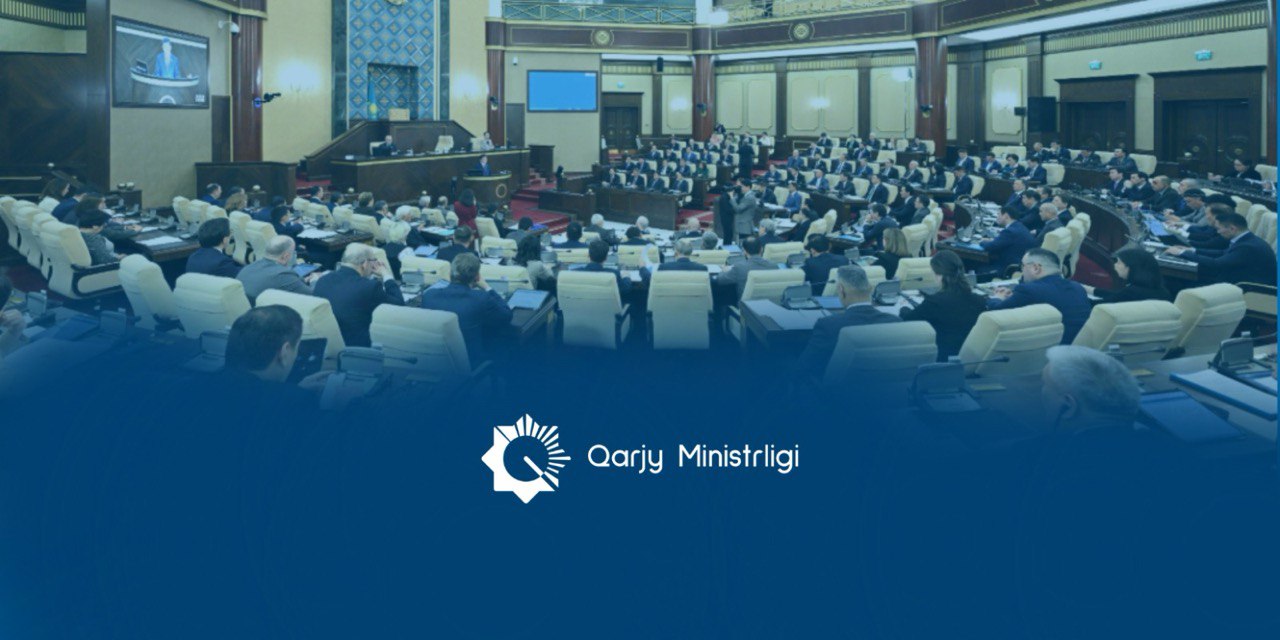
Finance Minister Madi Takiyev presented in the Mazhilis the report of the Government of the Republic of Kazakhstan on the execution of the republican budget for 2024.
According to preliminary data, real GDP growth was 4.8%. Budget revenues were executed by 98% and amounted to about 20 trillion tenge. Expenses amounted to 23.5 trillion tenge. Thus, the budget deficit was equal to 3.6 trillion tenge or 2.7% of GDP.
Inflation compared to 2023 decreased from 9.8% to 8.6%.
In general, the Government fulfilled all social obligations, including 7.1 trillion tenge allocated to support the regions, 8.8 trillion tenge for the social sphere.
From January 1, 2024, the size of solidarity pensions is indexed by 9%. On behalf of the Head of State, a phased increase in the basic pension continues: its minimum amount has been increased from 60% to 65% of the subsistence level, and the maximum from 100% to 105%. Accordingly, the minimum total pension (solidarity and basic) in 2024 amounted to 86,068 tenge, and the maximum - 197,873 tenge.
In addition, from January 1, 2024, the amount of social payments from the State Social Insurance Fund has been increased by 7%. Thus, 1.3 million people received payments for disability and loss of a breadwinner for a total of 958.3 billion tenge. Disability payments were made to 541 thousand citizens in the amount of 477.3 billion tenge. In addition, 1.3 thousand families with children received support in the amount of 652 billion tenge.
Income
The annual plan for the revenues of the republican budget was fulfilled 97.2%, the budget received 19.6 trillion tenge. Of these, the own revenues of the republican budget (excluding transfers) - 13.5 trillion tenge (95.7%).
The decrease in income revenues in the current year is due to a combination of adverse economic factors. As a result of a decrease in production, production and supplies, as well as an increase in logistics costs caused by geopolitical instability, 188 large enterprises recorded a decrease in revenues by 1.4 trillion tenge.
The second important factor was the unprecedented increase in the return of value added tax (VAT) from the budget. In 2024, this amount reached 1.2 trillion tenge, which is almost three times more than in the previous year (430 billion tenge). Moreover, in the first five months of this year, 673 billion tenge has already been returned, and by the end of the year the volume of refunds is expected to be comparable to last year.
The third constraining factor was the persistence of volatility in global commodity markets, especially for key export metals. Thus, the cost of zinc decreased by 22% - from 3129 to 2449 US dollars per ton, aluminum - by 8% (from 2398 to 2199 dollars), copper - by 5% (from 8930 to 8443 dollars). This negatively affected foreign exchange earnings and a decrease in export earnings.
Finally, the revenue side was affected by a decrease in imports from third countries. During the reporting period, imports decreased by $2 billion. This also led to a decrease in indirect tax revenues on imported goods.
At the same time, work continued to reduce the shadow turnover in the economy, including through the digitalization of fiscal administration, which provided additional budget revenues in the amount of 1.2 trillion tenge. This is a 37% increase compared to 2023.
Additional taxes were charged on acts of inspections in the amount of about 377 billion tenge. As a result of desk control, 262 billion tenge was collected in the budget.
At the end of the reporting year, the amount of arrears was reduced by 18% or by 62 billion tenge (at the end of the reporting year, the amount of arrears amounted to 282 billion tenge).
Expenses
Budget expenditures for the reporting period were executed by 98% and amounted to 23.6 trillion tenge. 526 billion tenge remained undeveloped, of which 12 billion tenge are unallocated balances of the Government reserve fund and other savings.
Despite this, priority areas with high social significance were financed during the year. In particular, 93.8 billion tenge was allocated from the republican budget to increase the wages of preschool teachers. In addition, 4,557 families from among the socially vulnerable segments of the population are provided with housing.
Within the framework of infrastructure development, 3,412,2 km of water supply and sanitation networks were built and reconstructed (including 1,160,7 km at the expense of the republican budget and 2,251,5 km at the expense of the National Fund). 90.1 km of heating networks were also repaired.
As a result of the implementation of budgetary investment projects in 2024, 62 settlements with a total population of 213 thousand people received gas supply. Under the program "Auyl - El besigі" about 152 rural settlements are covered as part of the implementation of 168 projects.
Significant funds were also directed to the development of transport infrastructure - construction, reconstruction and repair work covered 12 thousand km of roads. The agro-industrial complex was supported by 505 subjects, lending covered 3,585 farms, 577 thousand tons of agricultural products were purchased. This made it possible to carry out spring field work on an area of over 3.2 million hectares in a timely manner.
National projects
751 billion tenge was allocated from various sources of financing for the implementation of three key national projects - "Comfortable School," "Modernization of Rural Health Care" and "Affordable Internet."
647 billion tenge was transferred to the regions for the development of educational infrastructure within the framework of this project at the expense of the National Fund. As a result, 254 thousand student places were introduced and the construction of 105 new schools was completed. In 2025, it is planned to commission another 112 schools.
91.3 billion tenge was allocated to improve the medical infrastructure in rural areas. The construction of 460 healthcare facilities has already been completed. By the end of 2025, it is planned to complete the construction of another 195 facilities and modernize 32 multidisciplinary central district hospitals. There is a positive trend in solving the personnel deficit: compared to 2023, the shortage of doctors decreased by 17%.
13 billion tenge was allocated for the development of digital infrastructure. As a result, 5G communication is provided in 30% of cities of republican significance and 15% of cities of regional significance, which contributes to the expansion of digital opportunities for citizens and businesses.
"Summing up the execution of the republican budget for 2024, it is safe to say that the Government has ensured the stability of macroeconomic indicators, fulfilled all social obligations and maintained a course towards sustainable development. Despite external challenges and the impact of global instability, we managed to maintain inflation control, ensure financing of priority projects and support the most vulnerable categories of citizens. Significant work has been done to digitalize fiscal administration and increase the transparency of the budget process. We continue to move from quantitative indicators to qualitative results, "said Madi Takiyev.