Central Asian countries strengthen cooperation in higher education
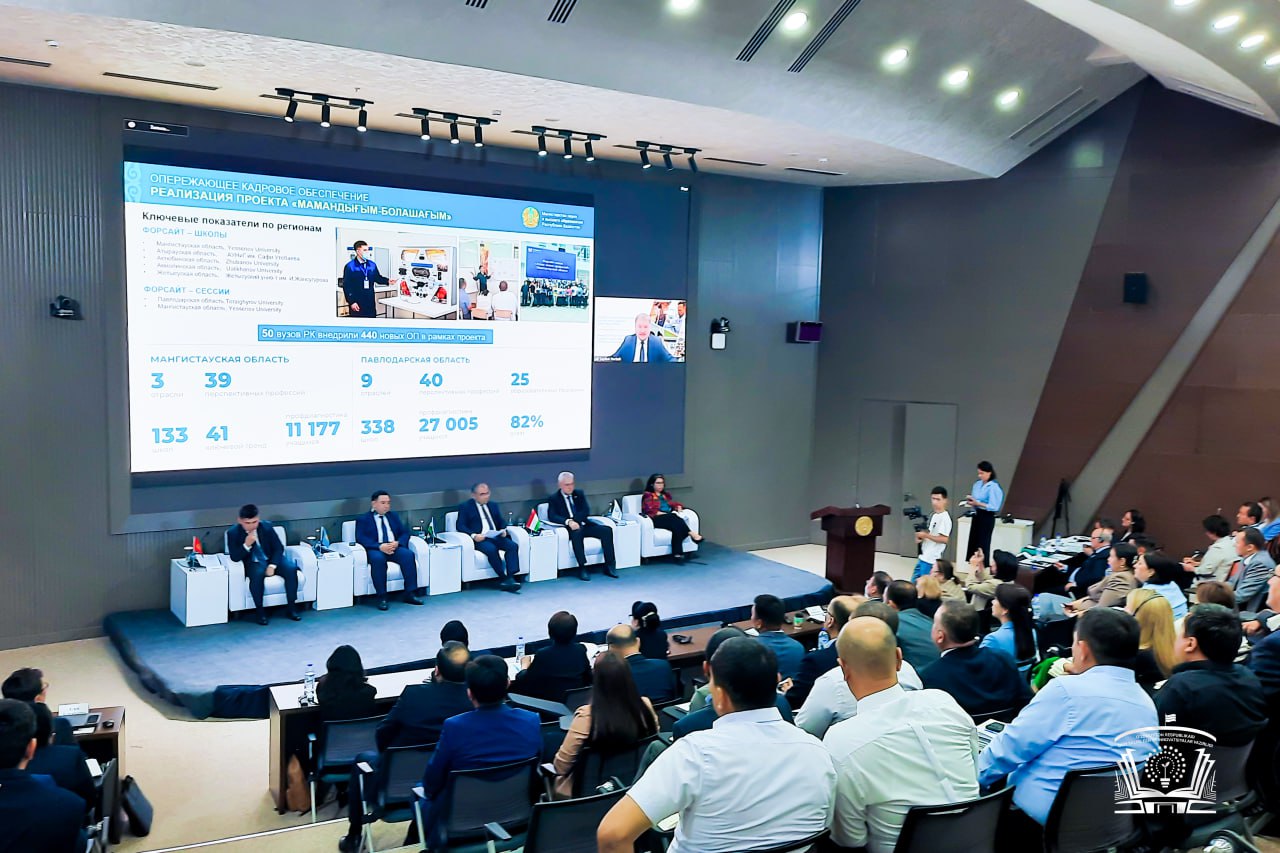
TASHKENT, September 21, 2023 – A high-level conference to foster dialogue and cooperation between Central Asian countries in higher education, co-organized by the World Bank and the Ministry of Higher Education, Science, and Innovation of Uzbekistan kicked off today in Tashkent.
The conference in Tashkent was attended in person and online by the Ministers and Deputy Ministers of Education and Science of Kazakhstan, the Kyrgyz Republic, Tajikistan, and Uzbekistan, other government officials, rectors of leading Central Asian universities, representatives of international development organizations, and regional and international experts in higher education.
The Kazakh delegation was headed by Vice-Minister of Science and Higher Education of the Republic of Kazakhstan Talgat Yeshenkulov.
Central Asian countries have a large and dynamic higher education sector that has undergone significant transformations since their independence. First and foremost, the numbers of higher education institutions and students have substantively increased over the last decades. Today, over 430 universities are operating in Kazakhstan, the Kyrgyz Republic, Tajikistan, and Uzbekistan providing educational services to 1.8 million students.
At the same time, Central Asian countries have realigned their higher education systems with market dynamics, progressively opening the way to the establishment of private institutions, research commercialization, and technology transfer.
Currently, the region is following a strategy of internationalization of the educational processes. The adoption of the Declaration on the Creation of the Central Asia Higher Education Area (Turkestan Declaration), signed in June 2021 in the city of Turkestan, Kazakhstan, marks an important milestone in intensifying collaboration among the countries of the region in higher education and research.
Global experience shows that regional integration of higher education systems is an effective instrument to address similar obstacles in the sector and offers opportunities for long-term growth across industries. By fostering cooperation, knowledge sharing, and resource pooling among universities, the quality of higher education and research in Central Asia can be improved.
During the conference, the World Bank presented a report "Towards Higher Education Excellence in Central Asia: A Roadmap for Improving the Quality of Education and Research through Regional Integration". It suggests a roadmap to stimulate the Central Asian governments’ cooperation across three priority areas. These include policy recommendations to improve access, quality, and relevance of higher education; strengthen research and innovation capacity; and advance instruments for an integrated regional higher education area.
Among other recommendations, the report suggests adopting unified regional accreditation standards to ensure that the quality of higher education is comparable across the region, as well as regional labor market forecasting to help guide the relevance of higher education programs.
The report also stresses the importance of developing incentives to conduct and publish quality research results to strengthen innovation capacity as well as the creation of a regional fund to support research and cooperation between universities and research institutes.
Finally, the report recommends implementing mechanisms supporting the recognition of qualifications to facilitate mobility and employability in Central Asia, in addition to the launch of a regional short-term mobility program for students and faculty members.
The conference participants discussed the recommendations proposed by the World Bank and identified further steps for enhancing regional cooperation in the higher education sector.