Message of the Head of State Kassym-Jomart Tokayev to the people of Kazakhstan
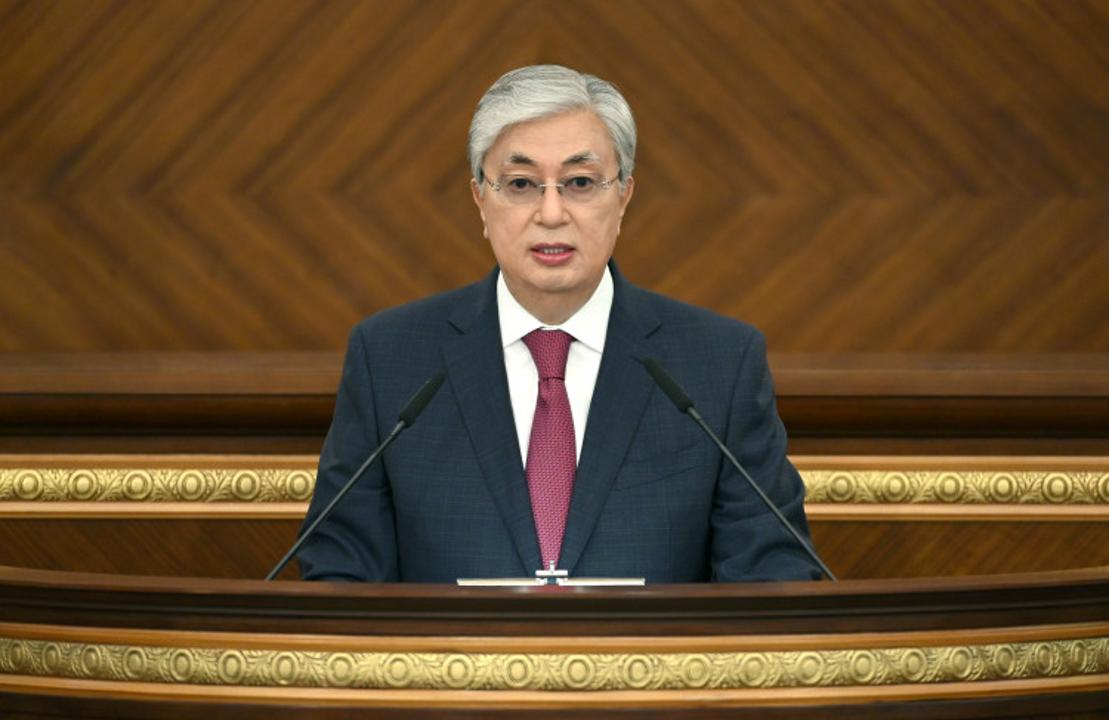
THE UNITY OF THE PEOPLE AND SYSTEMIC REFORMS ARE A SOLID FOUNDATION FOR THE COUNTRY'S PROSPERITY
Dear compatriots!
Dear Members of Parliament and Members of the Government!
This year we are celebrating the 30th anniversary of Independence – this is our highest value.
Thanks to the far – sighted policy of the First President-Elbasy, Kazakhstan achieved significant success and has become known all over the world.
In unity and harmony, we were able to build a new state – this is our main achievement.
We have strengthened the spirit of the nation by laying a solid foundation for development. They have become an influential member of the world community. Thanks to the stability in society, we have entered the path of sustainable progress.
We are building a strong state together. Sovereignty is not just empty slogans and big words. It is important for us that every citizen feels the fruits of Independence, the main of which are peaceful life, social harmony, improving the welfare of the people, and the confidence of young people in the future.
All our initiatives are aimed at this. Thanks to the unity and creative work of Kazakhstanis, we successfully overcome all difficulties and trials.
Our country is on the threshold of the fourth decade of Independence. It is already obvious that this time will not be easy. Therefore, we must be ready for any challenges and threats, continuously improve and always move forward.
My current Message to the people of Kazakhstan is devoted to the following issues.
І. ECONOMIC DEVELOPMENT IN THE POST-PANDEMIC PERIOD
Kazakhstan, the largest economy in Central Asia, is currently experiencing the consequences of the pandemic. Nevertheless, despite the difficulties, we are consistently implementing our course.
In order to determine the medium-term economic policy and systematize state initiatives, we adopted the National Development Plan until 2025 and switched to a new system of state planning. National projects will be approved.
Our strategic goal is to strengthen our leading role in Central Asia and strengthen our position in the global economy.
To further attract direct investment, a new tool has been introduced – a Strategic Investment Agreement.
Specific measures have been taken to optimize the quasi-public sector. The merger of the Baiterek and KazAgro holdings has been completed. Portfolio companies have been reduced by half, and their staffing has been reduced by one and a half times. As a result, a new, powerful development institute was created.
In the context of the pandemic, the state provided large-scale and operational support to citizens and businesses.
The program "Economy of simple things" has proved its effectiveness. As part of its implementation, more than 3.5 thousand projects were launched, 70 thousand jobs were created, goods and services worth 3.5 trillion tenge were produced.
Thanks to the Business Roadmap program, 66 thousand projects received state support. This helped to create and save more than 150 thousand jobs.
The initiative on the early use of pension savings had a serious economic, but above all a social effect. This measure has helped more than a million of our fellow citizens to improve their housing conditions or reduce the mortgage burden.
In general, there is a positive trend in the economic development of our country. Nevertheless, we must openly say that the situation is still difficult.
Therefore, I decided to extend the validity period of the "Economy of Simple Things" and "Business Roadmap" programs for 2022. The total amount of funds allocated for their financing will be at least one trillion tenge.
Largely due to the low state debt and the presence of significant reserves, Kazakhstan is relatively successfully overcoming the consequences of the pandemic. This is our serious competitive advantage; it is important not to lose it.
However, recently there has been a trend when the budget deficit and transfers from the National Fund are increasing to cover expenditure obligations. It will not be possible to follow such an "easy" path all the time. The stock of financial stability is far from unlimited. It is obvious that measures are needed to increase budget revenues. But first of all, we need to control the volume and efficiency of public spending.
To restore the assets of the National Fund, the implementation of the budget rule should be accelerated. The relevant legislative amendments should be adopted by the end of this year.
In general, the country needs a set of rules for managing public finances: public debt, budget policy, and the National Fund. I ask the Government and the National Bank to prepare a Concept for public finance management by the end of the year.
At the same time, it is necessary to continue working on the diversification of the economy, expanding the range of manufactured goods and the geography of exports.
According to the results of 2020, for the first time in 10 years of industrialization, the contribution of the manufacturing industry to the development of the economy exceeded the share of the mining industry. The medium-term goal is to increase manufacturing exports by 1.5 times to $ 24 billion by 2025, and labor productivity by 30%.
The law "On Industrial Policy" being developed should provide answers to the questions facing the manufacturing sector. One of them is the problem of access to raw materials. It is necessary to introduce a simple rule – the price of raw materials for the domestic industry should be affordable, and the volume should be sufficient. By the end of the year, the Government should find the best solution to this important task.
At the same time, it should be borne in mind that the resource potential of our country is not fully disclosed, geological knowledge remains at a low level.
It is necessary to expand investors access to high-quality geological information. To do this, an effective National Geological Service should be created on the basis of disparate subordinate organizations. This organization should not become a monopolist who decides who and how to allow access to the subsoil. Its role is to provide comprehensive service support to investors.
The subsurface use industry needs a new impetus, especially in terms of geological exploration and integrated study of subsurface resources. The reforms initiated within the framework of the National Plan should be brought to a practical conclusion – to create an open digital database of geological information, to provide investors with access to it.
The subsoil is a national treasure. Decisions on access to them through behind-the-scenes discussions in the quiet of offices should be outlawed. The relevant authorities will ensure control over this issue.
Further. The excessive presence of the state in the economy seriously hinders its growth and competitiveness, leads to corruption and illegal lobbying. State-owned enterprises still dominate in many sectors and enjoy monopoly benefits.
We have started to solve these problems. Thus, the Concept of Public Administration provides for measures to reduce the quasi-public sector, increase its efficiency, transparency and accountability. The Supreme Council for Reforms has approved a new privatization plan. Now we need strict control.
But there are other questions. In particular, why do individual national companies and state-owned enterprises operate at a loss, and their first managers are not responsible for this? The government will have to solve this problem.
We also faced an uncontrolled increase in inflation. The National Bank and the Government were powerless in front of it, citing global trends. Such excuses highlight the vulnerability of the national economy. Another question arises: what is the role of our professional economists?
The main task of the National Bank and the Government is to return inflation to the 4-6% corridor.
As a result of the implementation of anti-crisis measures with a total volume of 6.3 trillion tenge, an excess money supply has appeared in the economy. But there are niches in which these funds do not arrive. Second-tier banks do not invest in small projects, especially in rural areas.
Therefore, it is necessary to use the potential of microfinance organizations. They work on the ground, know the customers, their business and opportunities. The National Bank and the Financial Regulation Agency should prepare a package of decisions on this issue.
The work on reducing the level of stressful assets is of great importance.
We have made a decision – the state should not help bankers. At the same time, frozen assets should be returned to economic circulation, but only on a market basis. This requires a legislative framework. The government, together with the Financial Regulation Agency, should submit a bill to the Parliament by the end of the year.
Now about the non-monetary components of inflation. The main one is food prices.
A lot is said about the huge agricultural potential of Kazakhstan. But a lot of problems have accumulated in the field of agriculture.
First of all, this is inefficient pricing and distribution of food products. Earlier, I spoke about the importance of creating a network of wholesale and distribution centers. This task is currently being implemented.
It is important to ensure access to them for small agricultural producers, including, possibly, personal subsidiary farms. Monopolization of this market is unacceptable.
It is also necessary to ensure uniform control over prices along the chain from producer to consumer. Several departments are now responsible for this work. After the next jump in prices, instead of thoughtful analysis and taking effective measures, they begin to "nod at each other." It's time to put things in order in this case. It is necessary to delimit areas of responsibility, define one body as the main one, prescribe clear regulations for the interaction of other departments. The government must make a decision on this issue within a month.
Secondly, unfavorable weather conditions exposed serious problems in animal husbandry. We took prompt measures to stabilize the food supply situation. However, systemic action is still needed in this area.
It is necessary to expand the area of cultivation of fodder crops and strengthen control over the observance of crop rotation, to make wider use of the possibilities of space monitoring and remote sensing of lands. It is also important to improve the efficiency of pasture use.
Today, farmers do not have access to grazing areas due to their belonging to persons with well-known surnames, who have built impregnable fortresses from their possessions. Mayors cannot solve this problem for various reasons, including personal dependence.
The government, together with the authorized bodies, needs to take decisive measures to remedy the situation. Particular attention should be paid to providing the private farmsteads of villagers with pasture lands. Their legal status and support tools must be prescribed in a separate Law “On Personal Subsidiary Farms”. The government needs to develop a bill as soon as possible.
The sphere of veterinary medicine also requires improvement, which needs a clear delineation of functions and powers between the center and the regions. The health and productivity of livestock depends on the effective work of veterinarians in the field. And this, directly affects the well-being of rural residents.
Expansion of exports of a significant part of agricultural products is impossible without a modern veterinary service. Therefore, consistent work is required in this area: digitalization of processes, automation of data collection and transmission, personnel training and salary increases. By the end of the year, the Government must take concrete measures to reform the veterinary system.
Thirdly, there is inconsistency in our agricultural policy. With the change of ministers, politics also changes. In such conditions, it is difficult for farmers to plan work for the future. It is necessary to work out a single general line. In accordance with it, it is required to revise and stabilize the mechanisms of subsidies.
Over the past five years alone, more than 2 trillion tenge has been allocated for subsidies. Unfortunately, more than half of the criminal cases in the agro-industrial complex are related to the theft of subsidies. This situation is unacceptable.
It is necessary to strengthen the regulatory framework, introduce a system of effective planning and monitoring. The procedure for issuing subsidies should be clear and transparent. Subsidies should be fully available to small and medium-sized farms.
It is necessary to study in detail the instruments for stimulating the technological re-equipment of agriculture. About 90% of the technologies used in the agro-industrial complex are completely outdated and in need of modernization.
The agricultural subsidy policy needs to be brought in line with the industrial policy of the state. I ask the Government and the Baiterek holding to prepare a package of proposals on these issues.
In general, the main task of the agro-industrial complex is to fully provide the country with basic food products.
This year I signed a law that finally put an end to the sale and lease of agricultural land to foreigners and companies with foreign participation.
The Land Code has been amended to encourage domestic investors to invest in the development of rural areas. These changes make it possible to involve agricultural land in a full-fledged economic turnover.
I am sure that all these decisions will have a positive effect on our agro-industrial sector, which will become one of the key points of growth of the national economy.
In the modern world, one of the main factors of competitiveness is deep digitalization.
The transfer of modern digital technologies, the introduction of elements of Industry 4.0 are extremely important for Kazakhstan. We must actively work with our strategic partners abroad.
At the same time, it is important to nurture and strengthen the domestic IT sector. The country needs young, educated, motivated personnel. Within the framework of the National Digitalization Project, it is necessary to train at least 100 thousand highly qualified IT specialists.
The export of services and goods of the digital industry should reach at least $ 500 million by 2025.
These and other challenges will require a complete digital reboot of the public sector. Here, the main and long-standing problem is the lack of effective integration of information systems of state bodies. This issue requires a radical, speedy solution.
First, a fundamentally new architecture of "digital government" has to be built. All IT initiatives of the public sector will be based solely on the new platform of the Kazakhstani state security department. It will eliminate duplication, ineffective costs and bureaucracy, 100% of public services will be available to citizens from smartphones.
Secondly, we are launching a Digital Transformation Center, in which all business processes of government agencies will be revised and converted into digital format.
Thirdly, it is necessary to create a platform for interaction between national companies and the IT community. The digital needs and demands of the quasi-public sector should be met as much as possible by the efforts of domestic companies.
Fourth, it is necessary to gradually expand and update data transmission lines, linking them with international corridors. Modern data centers are to be built that can serve neighboring countries.
We must realize our enormous information and telecommunications potential. In the new digital age, it will have geopolitical significance. Kazakhstan should become the central digital hub in a significant part of the Eurasian region.
To solve this problem, it is necessary, of course, to strengthen the personnel plan. I ask the Prime Minister to give me his suggestions.
Further. The situation in Afghanistan, the general growth of global tensions, put before us the task of rebooting the military-industrial complex and the Military Doctrine.
Strengthening defense capability, increasing the responsiveness to threats should also become priorities of national importance. We must prepare for external shocks and worst-case scenarios. Modeling of risks coming from the outside has become highly relevant. It is necessary to conduct stress tests, work out scenarios, on the basis of which the action plans of the state apparatus will be developed and adjusted.
- IMPROVING THE EFFICIENCY OF THE HEALTHCARE SYSTEM
“Health is the main wealth,” says our proverb.
The coronavirus has become a serious challenge for the health care system. The epidemic that has gripped the world is not receding. Every day, thousands of our fellow citizens fall ill, many die.
Since the early days of the pandemic, we have taken immediate action to control the spread of the infection.
Kazakhstan is one of the few countries that has released its own vaccine against coronavirus. We have no doubts about the efficacy and safety of our drug QazVac, in which other countries are already showing interest.
We have a sufficient supply of vaccines, Kazakhstanis have the opportunity to choose - many states cannot afford it.
Mass vaccination continues in the country, but its opponents are still present in society. They not only refuse to be vaccinated, but also urge the population to do so. Succumbing to their influence, many were disoriented.
All these people should understand that they are responsible not only for themselves, but also for the lives of others. Therefore, it is impossible to follow the lead of people campaigning against vaccination.
Humanity has experienced more than one epidemic. We must not forget that many dangerous diseases were stopped only after the advent of vaccines.
In the near future, new strains of coronavirus may appear in the world, experts predict other pandemics. We cannot simply wait out these processes. We have to learn to live and develop in such conditions.
Therefore, it is now important to purchase booster vaccines, to speed up the purchase of vaccines registered by the World Health Organization.
It is also necessary to prepare the entire health care system for the transition to regular vaccinations.
A National Biosafety Forecasting System of the country should be established. This measure is provided for in the relevant bill. I ask the Parliament to ensure its adoption by the end of the session.
Many laboratories for sanitary and epidemiological expertise do not meet international standards. Within the framework of the “Healthy Nation” national project, it should be envisaged to equip at least 12 laboratories with high-tech equipment. This will increase the level of compliance of our laboratories with international standards up to 90%.
The situation with diseases not related to coronavirus should not be allowed to worsen. In a pandemic, routine screenings and surgeries are postponed. Many children do not receive routine vaccinations. Of course, this state of affairs is unacceptable.
The medical field needs substantial funding. We are talking about infrastructure, personnel, drug supply.
The pharmaceutical industry requires special attention. The fight against the virus has shown that the industry has become an important factor in competitiveness and security. Therefore, it will be necessary to create a Center for laboratory and technical testing of medical devices, accredited in accordance with all international standards.
Cooperation with global pharmaceutical corporations should be intensified. It is important to attract investors, to ensure the transfer of technologies and the latest developments. It is necessary to expand the volume and range of off-take contracts with domestic producers. The share of medicines and medical devices of domestic production must be increased from the existing 17 to 50% already in 2025.
The key to health is physical culture. I reiterate: it is necessary to create all conditions for mass and children's sports. Akims of the regions should ensure the phased construction of the sports infrastructure.
In general, in connection with the results of the Tokyo Olympics, there is a need to consider the state of affairs in sports at a separate meeting.
III. QUALITY EDUCATION
Since January of this year, the salary of teachers has increased by 25%. Over the next three years, we will additionally allocate 1.2 trillion tenge for these purposes. The measures taken are bearing fruit - the average score of applicants to pedagogical specialties has sharply increased.
We will continue our policy of supporting teachers. At the same time, in the context of global changes, there is a high probability that the knowledge acquired will become outdated before the graduate enters the labor market. Therefore, the relevant ministry faces the urgent task of adapting curricula to new realities.
The results of distance learning during a pandemic indicate the insufficient efficiency of national telecommunication networks. This led to the emergence of a large number of students who do not possess basic, elementary knowledge. Another problem has arisen, one might say, trouble - children drop out of school because they do not see the need for it.
The government is instructed to seriously address this issue, in particular to improve the quality of information systems for remote learning formats. Our education must be accessible and inclusive.
But there is some positive news as well. This year, several Kazakhstani schoolchildren at once became winners and prize-winners of international subject Olympiads.
Such talented children need to be fully supported. We will provide them with grants for admission to universities on an out-of-competition basis, and pay one-time cash bonuses. Teachers who raised children should also be encouraged morally and financially.
It is fundamentally important to support children from socially vulnerable families within the framework of “universal education”. Material support measures should be supplemented with an educational project "Digital Teacher".
The education system needs motivated and qualified teachers. I believe that retraining of teachers is required every three years, and not every five years, as it is now. After all, they should be the carriers of new knowledge, real enlighteners. At the same time, cases should not be allowed when teachers take courses at their own expense.
The shortage of places in schools remains an acute problem of the secondary education system - the deficit is 225 thousand. If urgent measures are not taken, then by 2025 it could reach one million seats. Earlier, I gave instructions on the construction of at least 800 schools by the end of 2025. Today I set the task to bring this figure to 1000 schools.
In addition to construction at the expense of the budget, it is necessary to involve the private sector in solving this acute problem.
A phased transition to per capita financing and full-fledged rural schools should be started.
Early vocational guidance for children is of particular importance. The younger generation should be conscious of the choice of a future profession. The government, together with the Atameken National Chamber, needs to tackle this important task.
We will continue to implement the Free Technical and Vocational Education project.
Today, 237 thousand people from among the NEET youth remain unreached. Every year 50 thousand applicants enter on a paid basis, 85% of them are classified as low-income. This situation needs to be corrected. It is necessary to ensure one hundred percent coverage of free TVE in demanded specialties.
Another opportunity for obtaining a profession should be the army. It is necessary to work out the issue of mastering by conscripts of working specialties needed in the real sector of the economy.
The task of the line ministry is to ensure the improvement of the quality of higher education. Universities are obliged to be responsible for the proper training of personnel.
The most important priority is the development of science. To solve the accumulated problems in this area, it is necessary to amend the legislation by the end of the year.
First of all, it is necessary to ensure a stable and decent salary for leading scientists, including it in the basic funding of science. At a meeting of the National Council of Public Trust, I instructed to introduce direct funding for research institutes involved in fundamental science. The line ministry should develop clear and transparent rules for the selection and funding of such scientific organizations.
Further. A serious barrier to the development of basic science is the limited grants to three years. In such a short planning horizon, it is difficult to achieve any meaningful results. Consideration should be given to increasing the terms of grant funding for science to five years.
The problem of objectivity of decisions of the National Scientific Councils is still on the agenda. I believe that the need has ripened to introduce the institution of appeal.
In general, Kazakhstani education and science are faced with a large-scale, urgent task - not just to keep up with new trends, but to be one step ahead, to generate trends.
- IMPROVEMENT OF REGIONAL POLICY
The main principle of the "hearing state" is that the state apparatus should work in the interests of citizens. This primarily concerns local authorities.
It is the City halls that are called upon to interact with citizens and promptly solve their problems. However, this often does not happen. Top management now and then has to correct decisions made in the regions or even make decisions for them.
Mayors of different levels are not always capable of strong independent steps, they work with an eye to the Center. This is largely due to the fact that the current level of accountability of mayors to citizens is insufficient. The assessment of their activities practically does not depend on the opinion of the residents of the regions themselves. Therefore, it is necessary to optimize the mechanism for evaluating the work of mayors at all levels.
Independent opinion polls should be an important point. They give an objective picture of the real attitude of the population to the quality of the work of the authorities. Citizens' voices are heard directly through polls, not through formal reports. The Presidential Administration should prepare a package of proposals on this issue.
In regional policy, primary attention should be focused on reducing imbalances in socio-economic development. It is necessary to correctly combine the specific tasks for each region with national priorities.
Within the framework of the National Development Plan, 25 specific tasks were identified to improve the quality of life of citizens. These are the main directions of our work. Therefore, the Government and mayors will have to update the Regional Development Plans in accordance with the approved national goals.
Of course, one of the main tools for reducing imbalances is the prioritization of budget expenditures. The allocation of funds from the republican budget should not depend on the "breakthrough power" of mayors, any personal preferences and other subjective factors.
To "reboot" the budgeting processes, it is necessary to use the per capita financing mechanism more widely; it is necessary to introduce an objective method of allocating budget limits.
It is necessary to simplify budget processes, radically reduce bureaucracy in this matter, and expand the use of digital tools for planning and budget execution. It is necessary to introduce a block budget with increased responsibility of administrators of budget programs. The government needs to develop a package of amendments to budget legislation and by-laws.
An extremely acute problem is the systematic overestimation of the estimated cost of projects. This applies to both small facilities, such as kindergartens and schools, and large infrastructure projects. The current regulatory framework and practice should be radically revised as soon as possible. The Government, the Accounts Committee is instructed to submit proposals by December 1.
The next question is increasing the financial independence of the regions.
Since 2020, the corporate income tax from SMEs has been transferred to local budgets. During this period, despite the decline in economic activity, revenues to local budgets were 25% higher than the plan. This indicates the increased interest of mayors in the development of local business, an increase in investment and the tax base.
The movement in this direction must be continued. I ask the Government to prepare a package of relevant proposals by the end of the year.
Kazakhstan is in line with a steady trend towards urbanization. The million-plus cities should become the backbone of the global competitiveness of Kazakhstan, and the regional centers should become points of growth for the regions. Therefore, it will be necessary to develop a Law on the Development of Agglomerations and new standards for integrated urban development.
Adherence to the “people to infrastructure” principle is essential. The focus should be on the development of promising villages. The main goal is to ensure their compliance with the System of Regional Standards. These approaches should be enshrined in the Territorial Development Plan.
27 monocities now account for about 40% of industrial production. They are home to 1.4 million of our fellow citizens. We need verified decisions regarding the further functioning of monotowns. In the near future we will discuss this issue at a separate meeting.
Development of local self-government is an important priority. In the cities of central subordination and regional centers, a “public participation budget” has been successfully introduced. Dozens of improvement projects have been implemented in accordance with the real needs of citizens. This is a successful experience. Now it is necessary to increase the share of "people's participation" in the budget for improvement and housing and communal services 10 times.
To strengthen the "internal connectivity" of the country, it is necessary to complete all the initiated projects on transport infrastructure. Within the framework of the state program "Nurly Zhol", a single transport network is being formed, connecting the center with the regions. Strategically important infrastructure and social projects have been implemented. The task of the mayors and the Government is to launch similar Infrastructure Development Programs for each region.
On the ground, there are long-overdue issues of infrastructure modernization.
The government, together with the Samruk-Kazyna Fund, should start implementing the following large-scale projects. These are the construction of a combined cycle plant at the Almaty CHPP-2 site, the modernization of CHPP-3 and the expansion of CHPP-1. Commissioning of 1000 MW of new generating capacities in the southern region. Reconstruction of cable networks in Almaty and Almaty region. The total investment in these projects will amount to more than one trillion tenge.
Together with strategic investors in various regions of the country, we will commission about 2,400 MW of renewable energy capacities.
Much attention needs to be paid to environmental problems in the country, especially air quality.
In the medium term, the 10 most polluted cities need to be gasified and switched to alternative energy sources.
To improve the situation with gas supply to the western regions, implementation of three projects for a total of 700 billion tenge will begin this year. These are the construction of a gas processing plant at Kashagan, the construction of a looping line for the Makat-North Caucasus gas pipeline, and the modernization of the Beineu-Zhanaozen gas pipeline.
The next important question. In the next ten years, the United Nations projects a global water scarcity. By 2030, the world's water shortage could reach 40%. Therefore, we need to improve water conservation through the latest technology and digitalization. This is a strategic task - there is no other way to prevent water shortages. The government needs to prepare specific solutions that will stimulate the introduction of water-saving technologies and effectively regulate water consumption.
To preserve the ecosystems of water bodies and the careful use of resources, we will begin the reconstruction of 120 canals. 9 new reservoirs will be built in Akmola, Almaty, West Kazakhstan, Zhambyl, Kyzylorda, Turkestan regions. We have all the necessary resources to implement this large-scale project.
To provide drinking water to the districts of the Atyrau and Mangistau regions, the Astrakhan-Mangyshlak main water pipeline will be modernized and a new desalination plant will be built in the Kenderli village.
In general, the problem of access to drinking water has not been resolved, despite the fact that colossal funds have been allocated for this purpose for decades. Therefore, I set a task within the framework of the National Regional Development Project to provide 100% of cities and villages with clean drinking water within five years. This is a priority task for the Government.
There is one more question that I would like to dwell on separately. The world is moving towards greening industry and economy. Today these are no longer just words, but concrete decisions in the form of taxes, duties, measures of technical regulation. We cannot stand aside - all this affects us directly through export, investment and technology transfer. This is, without any exaggeration, the issue of sustainable development of Kazakhstan.
Therefore, I have set the goal of achieving carbon neutrality by 2060. It is necessary to work in this direction very pragmatically. The population and economy of our huge country are growing, and energy is needed for quality growth.
With the gradual decline of the coal era, in addition to renewables, we will have to think about sources of reliable basic energy generation. By 2030, there will be a shortage of electricity in Kazakhstan.
World experience suggests the most optimal way out - a peaceful atom. The question is not easy, therefore, it must be approached as rationally as possible, without speculation and emotions. During the year, the Government and Samruk-Kazyna should explore the possibility of developing safe and environmentally friendly nuclear energy in Kazakhstan.
This issue must be considered from the point of view of the development of engineering, the formation of a new generation of qualified nuclear engineers.
A promising area is also the production of "green" hydrogen, hydrogen energy in general. The government is instructed to prepare proposals on this issue as well.
- FORMATION OF EFFECTIVE ECOSYSTEM IN THE LABOR MARKET
The pandemic has brought about a significant transformation of the labor market. First of all, this is the rapid development of the remote work format.
A new trend is gaining momentum amid the emergence of many new professions, automation and digitalization of most processes. In such realities, personal competitiveness can only be ensured by repeated retraining and mastering new professions. Therefore, a law "On professional qualifications" is needed. It should regulate the issues of recognition of qualifications, stimulate employees to improve their competencies.
Total digitalization has led to new forms of employment based on Internet platforms. Striking examples of this are taxi drivers, couriers and others. This area needs government assistance in terms of social and health insurance, pensions, taxation.
Migration processes also have a great influence on our labor market. Kazakhstan is the second country in the CIS in terms of the number of accepted labor migrants. We need the right solutions to problems in this area. The government will have to develop a new Migration Policy Concept. It should also reflect the mechanisms for protecting the rights of our citizens working abroad.
New approaches are also required to the issues of internal labor mobility. The government will have to reformat the existing mechanism for allocating benefits to citizens moving from the south to the north of the country. In particular, benefits can be provided not only through akimats, but also by reimbursing the costs of employers who independently hire workers from the southern regions.
It is necessary to actively help migrants who want to be engaged in independent business. It is also necessary to consider the possibility of providing them with land plots not only for the construction of houses, but also for agricultural activities, to provide wider access to government support measures.
I would like to dwell on one more issue separately. Kazakhstan is a welfare state. Comprehensive assistance to citizens in difficult situations is one of our priorities. But, unfortunately, paternalistic sentiments and social dependency are strengthening in society.
There are many citizens in the country who deliberately exploit state social programs. This situation creates wrong attitudes in the public mind. As in any civilized country, they must answer before the law and society. At the same time, those who need real help remain outside the perimeter of support measures. Of course, the possibilities of our country are great, but they are not limitless.
The desire to receive unreasonable social benefits deactivates a person from earning by their labor. This inappropriate lifestyle has already begun to negatively affect the value system of young people. Therefore, we need fundamental changes in the consciousness of citizens, society, and legislation. In the upcoming Social Code, all these issues need to be given close attention.
- POLITICAL MODERNIZATION AND PROTECTION OF HUMAN RIGHTS
Phased political modernization is one of the main tasks of the strategic course of our state.
Over the past two years, we have managed to carry out a number of serious transformations in this area. A new law has been adopted, which enshrined the principle of notification of rallies; the threshold for the passage of parties to the Mazhilis has been reduced to 5%; added “against all” column to ballots.
These and other steps found active support in society. They strengthen our vector for sustainable democratic development, qualitatively change the political system, and promote wider involvement of citizens in government.
But it is impossible to stop at what has been achieved. Our goal is to further improve the efficiency of the state, transparency and competitiveness of the political process. Therefore, political reforms will continue.
For the consistent strengthening of statehood, we will carry out all the transformations gradually, taking into account our specifics. This is the only true way to build a strong, just and progressive state. Our citizens fully share this approach.
The most important step was the introduction of direct election of rural mayors. This is a fundamental moment of the political reform proposed by me in last year's Address. This decision directly affects the interests of villagers, that is, more than 40% of Kazakhstanis. We are on the right track. And already in 2024, citizens will have the opportunity to elect district mayors in a pilot mode.
An important factor in the further modernization of local self-government is the development of civic culture.
The Presidential Administration will have to develop an effective mechanism to support civil initiatives in rural areas. It is necessary to adapt the system of grant financing to the requests of rural NGOs, to introduce a simplified procedure for their receipt. This will give a good impetus for social activity in the countryside.
The introduction of a thirty percent quota for women and youth in the electoral lists pushed the parties to work more actively, to rejuvenate their ranks, and to look for new faces. At the same time, the quota was not properly reflected in the final composition of the people's deputies. Therefore, in order to obtain a full-fledged effect, it is necessary to legislate the norm on the mandatory consideration of this quota when distributing deputy mandates.
We are building an inclusive society. So far, in our country, people with special needs are poorly represented in social and political life. I propose to expand the list of quota categories of citizens, in addition to women and youth, by establishing a quota for people with special needs.
You know that I always highlight the field of human rights protection as a separate block. Over the past two years, we have made significant progress in this direction.
In January of this year, I signed the Law on the Ratification of the Second Optional Protocol to the International Covenant on Civil and Political Rights, aimed at abolishing the death penalty. Now we have to harmonize the norms of the Criminal Code with the provisions of the Second Optional Protocol. I hope the corresponding law will be adopted by the end of the year.
At the beginning of the summer, in accordance with my decree, the Government approved the Comprehensive Plan for the Protection of Human Rights. This important document lays down a long-term institutional framework for further improvement of the human rights protection system in Kazakhstan.
After the adoption of the Comprehensive Plan, active work began on ensuring gender equality. In this regard, it is necessary to ensure maximum support for the economic and political positions of women in society. The Presidential Administration is responsible for this work.
Changes should also be made to the Concept of Family and Gender Policy.
Serious changes are taking place in the law enforcement system. Administrative justice has been functioning since July 1, 2021. This institute builds up the relationship between the state apparatus and citizens in a new way. Modern formats of court activities are being introduced, redundant court procedures are being reduced. At the legislative level, the interpretation of all contradictions and ambiguities of the legislation in favor of citizens and business is provided.
With the introduction of the three-tier model, the protection of participants in criminal proceedings has increased. Since the beginning of this year, the unjustified involvement of more than two thousand citizens into the criminal orbit has been prevented.
The efficiency of prosecutorial supervision has increased - 98% of baseless decisions were canceled within three days. It is necessary to gradually expand the competence of prosecutors in the preparation of indictments. This will increase their responsibility and strengthen mechanisms for the legal assessment of the results of the investigation.
The internal affairs bodies are freed from a number of non-core functions. The status of district inspectors has been increased - they are endowed with additional powers in the field of crime prevention.
In a number of regions, a police service model has been launched in a pilot mode. The next stage is its scaling. The success of this work largely depends on the involvement of local authorities, which must understand the essence of the innovations and provide assistance to the police.
At the same time, the practical issues of combating crime must not be overlooked. Citizens' fair indignation is causing an increase in fraud. The Prosecutor General's Office will have to develop a set of measures to combat fraud and financial pyramids.
The prevention and suppression of sexual crimes against children, especially those left without parental care, should be under special control.
The spread of drugs, including synthetic drugs, poses a terrible threat to the well-being of future generations. Law enforcement agencies are instructed to put up a powerful barrier to the spread of this infection among our citizens, especially among young people.
An effective fight against corruption should be continued. By the end of the year, the specialized agency needs to submit for approval a strategic document that defines the program of our actions for the medium term. At the same time, special attention should be paid to the eradication of “everyday corruption”.
While defending the rights of citizens, we must not forget about the rights of human rights defenders, including lawyers. It is necessary to ensure the safety of their activities, to suppress illegal actions that impede their work.
All of the above measures are an integral part of our strategic course aimed at improving the political system and protecting human rights.
VII. CONSOLIDATION AS A MAIN FACTOR FURTHER PROGRESS
Kazakhstan is entering a completely new era, bringing fundamental changes in all spheres of life. In the context of global instability and a multitude of new challenges, we need to strengthen our values and form a clear image of the future.
Our main principle "unity in diversity" is unshakable. Therefore, the harmonious development of interethnic relations has always been and will be one of the main directions of the state policy of Kazakhstan. And this is not just rhetoric, this approach is supported by the absolute majority of Kazakhstanis. For our citizens, consent, tolerance is life itself, a living reality, conditioned by the interpenetration of cultures and languages.
We, according to the Constitution, are a single nation, and this is our unconditional strength. While supporting pluralism of opinions, we will at the same time strictly suppress any forms of radicalism, we will not allow encroachment on our state sovereignty and territorial integrity.
We must protect the unity and harmony in society like the apple of our eye. It is essential that all citizens realize the importance of harmonious interethnic and interfaith relations.
We have always been immune to disunity. And we will not tolerate discrimination on the basis of language, nationality or racial grounds, humiliation of honor and dignity, we will hold them accountable according to the law. Such irresponsible steps, contrary to the Constitution, run counter to the interests of our country.
The development of the Kazakh language is one of the key priorities of state policy. We have achieved serious results in this.
The Kazakh language is rightfully becoming the language of education and science, culture and office work. In general, it is consistently expanding the scope of its application. This is a natural phenomenon. Therefore, there is no reason to talk about the disadvantaged position of the Kazakh language.
In accordance with our Constitution, the state language is Kazakh. The Russian language has the status of an official language. Its use, according to our legislation, cannot be hindered.
Every citizen who connects his future with our country must make every effort to learn the state language. This is one of the manifestations of true patriotism.
We only benefit from the fact that our youth speaks different languages, including Russian.
The border between Kazakhstan and Russia is the longest in the world, and Russian is one of the six official languages of the United Nations. Therefore, this issue must be approached from the point of view of common sense.
We need to develop a culture of civilized dialogue and mutual respect. A large role in this is assigned to the Assembly of the People of Kazakhstan. Each of us should feel responsible for the Motherland, for all our citizens.
In matters of consolidating society, strengthening national identity, an important role is assigned to the effective use of the country's historical heritage and cultural potential. In this regard, Kazakhstan has ample opportunities, including for beneficial positioning in the international arena.
At the same time, our policy on this issue requires revision. Now, for some reason, the state most often finances projects only of certain figures who are happy to absorb budgets.
Young and talented sculptors, painters, theater-goers, musicians, writers who master new genre formats and constantly experiment, but at the same time survive at the expense of patrons, remain in the underground. But thanks to them, Kazakhstani culture is gaining a global sound.
Therefore, by the end of the year, the Government, together with experts, needs to present a plan of practical measures aimed at promoting a new culture and its talented representatives.
Consideration should be given to establishing a Creative Industry Support Fund.
The intelligentsia at all times played a special role in our country. She has always led our nation forward, guided the youth, fought against ignorance, and was engaged in enlightenment. These qualities are at the heart of our national code, and we must not lose it.
This is the age of the Internet. A huge stream of negative information poisons the consciousness of the modern generation. False meanings and short-lived values are becoming widespread. This is a very dangerous trend.
At such moments, the active position of the intelligentsia is especially important. Its credibility is determined not by awards, but by real deeds.
The main task is to instill universal human values in young people. In our society, it is necessary to cultivate such qualities as patriotism, desire for knowledge, hard work, solidarity and responsibility.
Therefore, I urge the intelligentsia not to stay away from solving problems that affect the future of the country.
It is important for us to develop traditions of dialogue and civic participation, to cultivate progressive values that underlie our internal solidarity and unity.
Only together can we strengthen our unique country identity. As the First President of Kazakhstan Nursultan Nazarbayev has repeatedly emphasized, interethnic and interfaith harmony is our invaluable asset.
For the sake of the future state, we are obliged to preserve and strengthen internal stability and national unity.
Dear compatriots!
These are the key priorities of our immediate agenda.
The main wealth of Kazakhstan is its people.
Ensuring the well-being of the people is a key goal of my work as President.
Therefore, today I would like to voice a number of additional initiatives aimed primarily at improving the welfare of Kazakhstanis.
FIRST INITIATIVE
I believe that there is a need to revise the level of the minimum wage. On the one hand, this is the most important macro indicator, on the other hand, it is an indicator that is understandable to everyone.
The minimum wage has not increased since 2018. The global coronavirus crisis has increased the pressure on the incomes of the population. In addition, in terms of the minimum wage, Kazakhstan is inferior to a number of CIS countries. Therefore, I make a decision - from January 1, 2022, to increase the minimum wage from the current forty-two and a half to 60 thousand tenge.
This measure will directly affect more than one million people, and indirectly - all workers. It will reduce the "shadow" salary fund, the size of which today reaches 30, and maybe 40% of the declared.
An increase in the minimum wage will have a positive economic effect in the form of an increase in domestic consumption. This, according to experts, will lead to an increase in GDP by 1.5%.
At the same time, it is necessary to move away from the inappropriate use of the minimum wage as a calculation indicator in tax, social and other spheres.
I ask the Government and Parliament to ensure that the necessary changes to the legislation are made by the end of this year, with the entry into force in January next.
SECOND INITIATIVE
More than 6.5 million people in Kazakhstan are employees. You know that well. The main source of income for them is wages.
At the same time, over the past ten years, the growth of the wage fund has lagged behind the growth of profit for business owners by almost 60%. In this regard, the Government will develop "soft" measures to stimulate businesses to increase the wages of their employees.
For employers who raise wages of employees, benefits will be provided in the framework of regulated procurement, as well as preferential access to government support.
THIRD INITIATIVE
The burden on the payroll needs to be made clearer and simpler. This is especially true for micro and small businesses.
I propose to introduce for such a business a single payment from the wage bill with a reduction in the total load from 34% to 25%. This will stimulate the business to “bring out of the shadows” thousands of employees who can become full-fledged participants in the pension system, social and health insurance system.
Campaigning should not be allowed on this issue. Appropriate payment systems need to be prepared to avoid disruptions and business costs. The system should be operational from January 1, 2023.
FOURTH INITIATIVE
Since 2020, the salaries of more than 600 thousand civil servants from among teachers, doctors and social workers have been increased.
However, this measure did not affect other civil servants. These are cultural workers, archivists, librarians, technical workers, gamekeepers, drivers and others.
Therefore, from 2022 to 2025, the state will annually increase the salaries of these categories of civil servants by 20% on average. In general, this initiative will directly affect 600 thousand Kazakhstanis.
FIFTH INITIATIVE
The housing issue will always be one of the most important for people.
Programs such as "Baspana Hit" and "7-20-25" will end soon. At the same time, rates on market mortgages are still high and are not available to all Kazakhstanis. In this regard, a comprehensive housing program will be developed. Its administrator will be Otbasy Bank, which is being transformed into a national development institution. The bank is faced with the task of ensuring the accounting and distribution of housing among citizens on the basis of the “one window” principle.
I have already noted the positive effect of the initiative for the early use of pension savings. She also pushed people to demand payment from employers, which is called "white". To maintain this trend, I consider it necessary to allow the transfer of a part of pension savings above the sufficiency threshold to an account with Otbasy Bank for the subsequent purchase of housing. This will also stimulate the habit of accumulating funds and managing them wisely.
Dear deputies!
During the first session, the Parliament of the VII convocation adopted 63 laws.
As a result of the well-coordinated work of both Chambers, a legislative basis was created for the implementation of the systemic transformations and reforms carried out in the country.
The regular session of the Parliament has started today. We have many important tasks before us. All bills must undergo a high-quality and deep study. You should always be persistent in upholding the interests of the people.
Each decision must be made, taking into account not only the needs of society, but also the capabilities of the state.
I wish you success in this responsible work!
Dear compatriots!
Our course is unshakable, the goal is clear.
We know what needs to be done to achieve it. We consistently translate our plans into reality and we will complete all undertakings. We are ready for any challenges and difficulties.
As the Head of State, I will do my best for the good of the people.
Today, in order to solve the tasks facing us, it is necessary to consolidate the state and the whole society. Otherwise, it might be too late tomorrow.
Anyone who doubts the course of the Head of State, does not cope with the work, perhaps wants to somehow sit out, evades the implementation of the President's instructions - it seems to me that they should leave their posts.
We are now entering a decisive stage in our development. The state apparatus is obliged to function as a single mechanism. Only in this case will we ensure the achievement of the set goals.
The cohesion of the nation is the main factor in the success of our country. When we are one, we are invincible.
It is not for nothing that the people say: "Where there is agreement, there is happiness."
Our strength lies in unity! Together we will work for the good of our country!
May our sacred Motherland be eternal!