ДЕКЛАРАЦИЯ VII СЪЕЗДА ЛИДЕРОВ МИРОВЫХ И ТРАДИЦИОННЫХ РЕЛИГИЙ
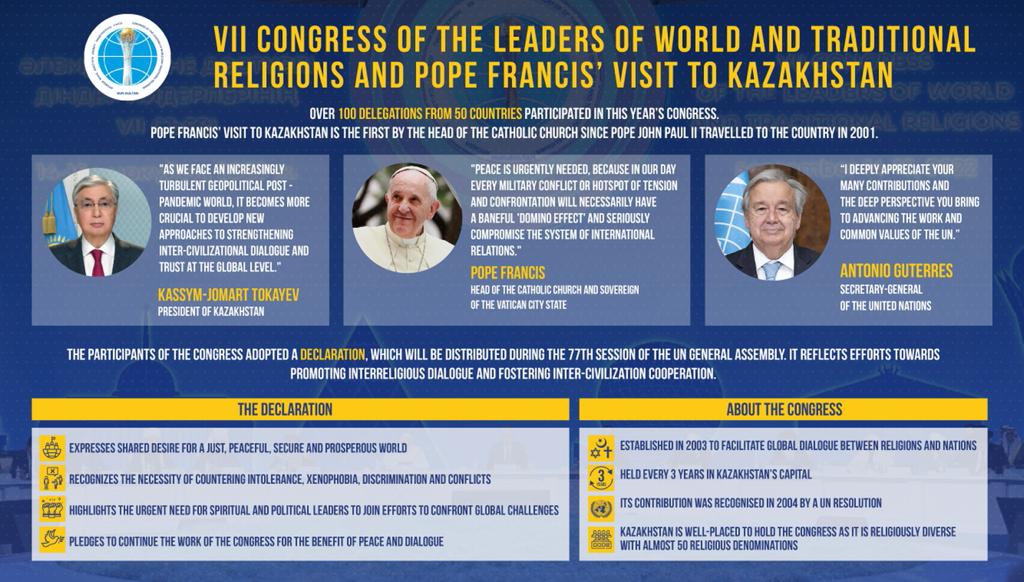
Мы, участники VII Съезда – духовные лидеры мировых и традиционных религий, политики, руководители международных организаций,
руководствуясь нашим общим стремлением к справедливому, мирному, безопасному и процветающему миру,
утверждая важность общих ценностей в духовном и социальном развитии человечества,
признавая необходимость противодействия и преодоления нетолерантности и призывов к ненависти, ксенофобии, дискриминации и конфликтов, на основе социальных, этнокультурных и религиозных различий,
уважая богатство религиозного и культурного разнообразия,
осознавая, что благотворительные деяния, сострадание, милосердие, справедливость и солидарность способствуют сближению людей и обществ,
признавая ценность образования и духовности для личностного и межрелигиозного развития,
подтверждая важность роли и прав женщин в обществе,
констатируя, что материальное неравенство приводит к негодованию, социальной напряженности, конфликтам и кризисам в нашем мире,
признавая важность решения глобальных вызовов в нашем постпандемическом мире, включая изменение климата, нищету и голод, организованную преступность, терроризм и наркотики,
осуждая самым решительным образом экстремизм, радикализм и терроризм, которые ведут к религиозным гонениям и подрыву человеческой жизни и достоинства,
осуждая создание очагов межгосударственной и международной напряженности в мире,
выражая серьезную озабоченность по поводу глобального увеличения числа мигрантов и беженцев, нуждающихся в гуманитарной помощи и защите,
выражая твердое стремление содействовать созданию условий для диалога и примирения между конфликтующими сторонами,
осознавая острую необходимость совместной работы духовных и политических лидеров в решении проблем нашего мира,
приветствуя все международные, региональные, национальные и местные инициативы, особенно, усилия религиозных лидеров по содействию межрелигиозному, межкультурному и межцивилизационному диалогу,
выражая намерение активизировать сотрудничество между религиозными сообществами, международными, национальными и государственными учреждениями, а также неправительственными организациями в постпандемический период,
вновь подтверждая работу Съезда лидеров мировых и традиционных религий в качестве международной платформы для межрелигиозного диалога для представителей многих религий, конфессий и вероучений,
указывая на возможность Съезда лидеров мировых и традиционных религий для принятия дальнейших конкретных шагов по расширению межрелигиозного, межкультурного и межцивилизационного диалога,
- ПРИШЛИ К ОБЩЕЙ ПОЗИЦИИ И ЗАЯВЛЯЕМ О СЛЕДУЮЩЕМ:
- Мы приложим все усилия, чтобы Съезд лидеров мировых и традиционных религий продолжал свою постоянную деятельность во благо мира и диалога между религиями, культурами и цивилизациями.
- Мы заявляем, что в условиях постпандемийного развития мира и глобализации процессов и угроз безопасности Съезд лидеров мировых и традиционных религий выполняет важную роль в реализации совместных усилий по укреплению диалога во имя мира и сотрудничества, а также продвижения духовных и нравственных ценностей.
- Мы признаем, что негативные последствия пандемий можно преодолеть только совместными усилиями, работая сообща и помогая друг другу.
- Мы убеждены в том, что развязывание любого военного конфликта, создание очагов напряженности и противостояния имеет «эффект домино», который ухудшает международные отношения.
- Мы считаем, что экстремизм, радикализм, терроризм и все другие формы насилия и войн, какими бы мотивами и целями они ни прикрывались, не имеют ничего общего с истинной религией, и должны быть решительным образом отвергнуты.
- Мы убедительно просим национальные правительства и уполномоченные международные организации оказать всестороннюю помощь всем религиозным группам и этническим общинам, подвергшимся ущемлению прав и насилию со стороны экстремистов и террористов, а также в результате войн и военных конфликтов.
- Мы призываем мировых лидеров отказаться от всей агрессивной и деструктивной риторики, которая ведет к дестабилизации мира, и прекратить конфликты и кровопролитие во всех уголках нашего мира.
- Мы призываем религиозных лидеров и видных политических деятелей из разных уголков мира неустанно развивать диалог во имя дружбы, солидарности и мирного сосуществования.
- Мы выступаем за активное вовлечение лидеров мировых и традиционных религий и видных политических деятелей в процесс урегулирования конфликтов для достижения долгосрочной стабильности.
- Мы отмечаем, что плюрализм и различия в цвете кожи, поле, расе, языке и культуре являются выражением премудрости Божьей воли в творении. Бог допускает религиозное разнообразие и, таким образом, неприемлемо любое принуждение к той или иной религии и религиозной доктрине.
- Мы призываем к поддержке практических инициатив по реализации межрелигиозного и межконфессионального диалога во имя построения социальной справедливости и солидарности для всех народов.
- Мы солидарны с усилиями Организации Объединенных Наций и всех других международных, правительственных и региональных институтов и организаций по содействию диалогу между цивилизациями и религиями, государствами и нациями.
- Мы признаем важность и ценность Документа «О человеческом братстве в пользу мира и мирного сосуществования» между Святым Престолом и Аль-Азхар Аль-Шариф (принятого резолюцией ГА ООН «Международный день человеческого братства» A/RES/75/200 от 21 декабря 2020 года) и «Мекканской декларации» (принятой в мае 2019 года в Мекке), которые призывают к миру, диалогу, взаимопониманию и взаимоуважению среди верующих во имя общего блага.
- Мы приветствуем прогресс, который был достигнут мировым сообществом в сферах науки, техники, медицины, промышленности и других областях, но при этом отмечаем важность их гармонизации с духовными, социальными и человеческими ценностями.
- Мы осознаем, что зачастую социальные проблемы толкают людей на крайние взгляды и поступки, и призываем все государства мира к обеспечению адекватных условий жизни для своих граждан.
- Мы отмечаем, как люди и общества, которые игнорируют важность духовных ценностей и моральных ориентиров, подвержены потере своей человечности и креативности.
- Мы призываем мировых политических и бизнес лидеров акцентировать внимание на преодолении диспропорций в развитии современных обществ и сокращать разрыв в благосостоянии разных слоев населения и разных стран мира.
- Мы отмечаем позитивное влияние диалога между лидерами мировых и традиционных религий на социально-политические процессы в государствах и обществах, способствующие сохранению мира.
- Мы исходим из того непреложного факта, что Всевышний создал всех людей равными, независимо от их расовой, религиозной, этнической или иной принадлежности или социального статуса, поэтому уважение друг к другу и взаимопонимание лежат в основе всей религиозной проповеди.
- Мы призываем политических и общественных деятелей, журналистов и блогеров, признавая их свободу слова, остерегаться религиозных обобщений и не отождествлять экстремизм и терроризм с какой-либо нацией или религией, а также не использовать религию в политических целях.
- Мы выступаем за повышение роли образования и религиозного воспитания, особенно среди молодежи, в укреплении уважительного сосуществования религий и культур и развенчании опасных псевдорелигиозных предрассудков.
- Мы обращаем особое внимание на важность укрепления института семьи.
- Мы выступаем в защиту достоинства и прав женщин, повышения их социального статуса как равноправного члена семьи и общества, а также поощрение их участия в мирных процессах в культурной и религиозной сферах.
- Мы отмечаем неизбежность мирового цифрового развития, а также важность роли религиозных и духовных лидеров во взаимодействии с политическими деятелями в вопросах решения проблем цифрового неравенства.
- Уважая свободу выражения мнений, мы стремимся развивать диалог со СМИ и другими институтами общества, чтобы разъяснять значение религиозных ценностей для продвижения религиозных знаний, межрелигиозной толерантности и гражданского мира, а также развивать общую терпимость к религиям.
- Мы призываем всех людей веры и доброй воли объединиться в это трудное время и внести свой вклад в обеспечение безопасности и гармонии в нашем общем доме – планете Земля.
- Мы обращаемся с молитвой в поддержку всех людей доброй воли на планете, которые вносят значительный вклад в расширение межцивилизационного, межрелигиозного и международного диалога во имя более процветающего мира.
- Мы призываем поддерживать акты милосердия и сострадания в регионах, пострадавших от военных конфликтов, а также в результате природных и техногенных катастроф.
- Мы призываем к солидарности в поддержке международных организаций и национальных правительств в их усилиях по преодолению последствий пандемии коронавируса.
- Мы подтверждаем, что цели Съезда и данной Декларации состоят в том, чтобы направлять современное и будущие поколения человечества в продвижении культуры взаимоуважения и миролюбия; чтобы они были доступны для использования в государственном управлении любой страны мира, а также международными организациями, включая институты ООН.
- Мы поручаем Секретариату Съезда разработать Концепцию развития Съезда лидеров мировых и традиционных религий как глобальной межрелигиозной диалоговой площадки на 2023-2033 годы.
- Мы подтверждаем роль Республики Казахстан как авторитетного и глобального центра межцивилизационного, межрелигиозного и межконфессионального диалога.
- Мы благодарим Республику Казахстан и Президента Касым-Жомарта Токаева за созыв VII Съезда лидеров мировых и традиционных религий, их гуманитарные инициативы, а также за их вклад в обновление и прогресс, мир и гармонию.
- Мы благодарим Республику Казахстан за прекрасную организацию Съезда, а также казахстанский народ – за его радушие и гостеприимство.
- Мы подтверждаем нашу коллективную заинтересованность в продолжении деятельности Съезда лидеров мировых и традиционных религий и намерение провести следующий VIII Съезд в 2025 году в столице Республики Казахстан городе Нур-Султан.
* * *
Настоящая Декларация принята большинством делегатов VII Съездом лидеров мировых и традиционных религий, и передается властям, политическим лидерам, религиозным деятелям по всему миру, соответствующим региональным и международным организациям, институтам гражданского общества, а также религиозным объединениям и ведущим экспертам. Она будет также распространена в качестве официального документа 77-ой сессии Генеральной Ассамблеи ООН.
Принципы, содержащиеся в нынешней Декларации, могут распространяться на всех региональных и международных уровнях, для учета во всех политических решениях, законодательных нормах, образовательных программах и средствах массовой информации во всех заинтересованных странах.
ДА БУДУТ БЛАГОСЛОВЕННЫ НАШИ ЧАЯНИЯ
И ДА БУДУТ ДАРОВАНЫ
ПРОЦВЕТАНИЕ ВСЕМ НАРОДАМ И СТРАНАМ!
РЕСПУБЛИКА КАЗАХСТАН
Г. НУР-СУЛТАН
15 СЕНТЯБРЯ 2022 ГОДА
Imam Yahya Pallavicini’s statement at the Session 3
of the Seventh Congress of Leaders of World and Traditional Religions
“The contribution of religious leaders and politicians to promoting global interfaith dialogue and peace and countering extremism, radicalism and terrorism”
Nur-Sultan
15 September 2022
Interreligious cooperation as the antidote to hatred and violence
Excellency Maulen Ashimbayev,
It is my honour to convey the best wishes and greetings of Peace to You, to the distinguished leaders of the Republic of Kazakhstan and to the blessed people of this beautiful land from Italy and from COREIS, the Italian Religious Islamic Community, as well as from EULEMA the European Council of Muslim Leaders.
Fraternity conjures up a familiarity, an intimacy, a union between two or more human beings by virtue of a common origin that both precedes and determines the existence of brothers and sisters, an origin that can be represented by the love of the same parents, or by certain people belonging to the same religious community or by obedience to a contemplative “confraternity”, by virtue of a call or vocation that follows a specific authorized rule.
People can be brothers because they are children of the same family as Cain and Abel or Ishmael and Isaac or Moses and Aaron and interpret this fraternity through fratricide or through noble lineage working to complement each other on a mission to give testimony to and adore the One God.
Pope Francis’ encyclical letter entitled “Fratelli tutti” (“All brothers”), alongside the Document on Human Fraternity for World Peace and Living Together (Abu Dhabi, 2019) clearly condemns all fratricide and violence, hatred and social injustice, especially in the name of the pretext of a religious reason or justification.
The two sons of the patriarch of Abraham’s monotheism, Ishmael and Isaak, have two almost parallel paths that never seem to meet: each is the son of Hagar and Sarah respectively and of the father and prophet Abraham, who seems to be the only thing the two brothers have in common. Yet both, upon the death of their father and after having buried him together, inherit his duty to pass on sincere worship to the One God and both will generate a blessed lineage of believers faithful to the teaching of the prophets despite episodes of fratricidal violence, civil disorder and political corruption occurring over the centuries. These are sacrilegious disorders precisely because they ignore the sacred nature of human life but also of prophetic fidelity.
Islamic doctrine describes both Moses and Aaron as prophets i.e. as elected to the service of guiding the people to react to the forgetfulness of God’s order and identity. Moses is also given the task of passing on a message, a Revelation, a sacred Law, to his people. His brother Aaron does not have this duty, but has the gift of supporting his brother’s mission with the quality of communication, language, speech, towards both Pharaoh and his own people, both to mediate against the arrogance of the King of Egypt and to calm the impatient minds of the Jews before reaching the Promised Land. The new cycle for this religious community will begin thanks to the asymmetrical competition of the two brother prophets.
This fraternity in prophecy, interpreted in an enlightened way by Moses and Aaron, is a teaching for the Muslim faithful to recognize the unity of prophecy and fraternity in the complex articulation and differences in roles to follow.
The history of Islamic civilisation also confirms these complementary elements between the two brothers of the al-Ghazali family, Abu Hamid Muhammad and Ahmad: the first becomes a spiritual teacher after a journey as a scholar, philosopher and theologian, while the other brother remains concentrated and solitary as an ascetic and mystic. While the first brother Abu Hamid Muhammad al-Ghazali is given the role of orthodox clarification and doctrinal renewal, both juridical and ensuring spiritual orientation for the entire Muslim community, we cannot fail to respect the great religious devotion and inner concentration of the second brother.
Yet how can we deny the combination of the qualities of both brothers for common enlightenment? Be careful not to fall into the trap of exalting one brother by virtue of his fame or of idealizing the other brother out of a presumed elective affinity.
Respecting fraternity does not, in fact, mean defending Cain no matter what, or justifying the envy of the brothers of the prophet Joseph who stage his death, turning his father, the prophet Jacob, blind with pain, or exalting Aaron’s qualities of understanding and communication, or acting as rivals over the primacy of promise and sacrifice, to be associated with Ishmael or Isaac.
Fraternity can never be respected if the defence of a weakness is flaunted and, due to incorrect compensation, there is a tendency to scale down and relativize the strength of faith of another brother. If this were the case, this “compensation” would in actual fact undermine the fraternity, to the detriment of its sacral identity and the Order of God, to promote a “fraternal” communion devoid of reference to the tradition of prophecy, without love for the father and for the nature and purpose of religion.
The Revelation of the Quran contains various passages in which the believer is called upon to react to the negative potential of man, who has the ability to corrupt the nature of Creation and of humanity and to spread blood, hatred and violence, miserably betraying the primordial pact with his Lord. According to some Muslim exegetes, this is the “reason” that would justify Iblis, Satan, in his disobedience to prostrate himself before the first man, Adam: how can a being of “light” bow down before a being of “mud”? Does God really propose such a contradiction? Since then humanity has been tempted into pride in mastering the world by forgetting or associating individually with the Lord of the Worlds. To convert believers back to the “True Religion”, God cyclically sends His prophets and messengers and heirs.
On one hand, therefore, traditional sources remind us of the virtue of the elect who overcome the mystification of doctrine and, on the other hand, remind us of the awareness of the dark and perverse sides of the soul in the decadence of times. It is paradoxical that some worshippers of sacred texts seem to be radically disinterested in these two operational aspects, election and purification, manipulating religion into a game of power or juridical moralism.
In the inspired awareness of this profound intellectual crisis, Pope Francis meets, talks and testifies with other spiritual authorities, the Israeli rabbis, Patriarch Bartholomew and Patriarch Kirill, Imam al-Tayyeb and Ayatollah al-Sistani. He presents an integral fraternity without claiming to represent it in an absolute let alone relative way, but he is open to recognizing a sacred dignity that his colleagues interpret as authoritative servants of the Spirit and teachers of a blessed religious expression of the same Christian family or of the same family of Abraham.
Alternatively, there is respect for doctrinal and theological jurisdictions and the relative temporal, national and cultural declinations. These “stations of fraternity” experienced in the course of his eight years of pontificate and travels are accompanied by the three encyclical letters Lumen Fidei, Laudato sì and Fratelli tutti.
Pope Francis’ intuition to suggest as a rule in one of his sermons that “no one is saved alone”, citing the image of a boat in which we are all forced together has, perhaps, the value of a test of humility for the Christian people, but also of a common fraternity among “all” believers in the call to eschatology, to the meaning of faith and of life, before death. Is this image not perhaps also a common religious perspective in all doctrines? And so, in light of the signs of the times, this fraternity cannot fail to be a religious and spiritual alliance in which every believer needs to purify himself of the weights and superstructures that risk sinking the boat or excluding him from the Ark of Seeds of the Seven Laws of Noah.
The Pact between God and man is the fulcrum of this Ark of the Covenant which must be inhabited by custodians of Tradition who are loyal to the sacred, sensitive to the action of Metaphysics, to the transcendence and immanence of God.
It is certainly a sacred, interreligious fraternity because it assumes, at the end of time, a character that truly embodies migration, liberation, illumination, elevation and extinction in satisfying a taste for the presence of God.
This is why the search for an election and purification can only be found among observant believers who share an affinity for humble service and sincere contemplation. These last words, contemplation and service, play the role of supporting and protecting the path to stations unveiling fraternity in traditional life, in the community and in the world, awaiting the return to the beginning.
Even in the history of Islamic civilisation, contemplative orders have helped to preserve and retransmit the intellectual renewal of a rule of spiritual support and protection to cultivate the Way to Know God. And this election will not be able to be fulfilled if no barrier is placed, even at external level, to the rampant madness of polytheism and idolatries where everyone invokes and believes in their own mental and emotional construction of divinity, without any tolerance but with hatred and violence against the other believer and citizen.
We too are convinced, as Pope Francis writes in his encyclical letter that “Truth in fact, is an inseparable companion of justice and mercy.
God is one and the same for everyone, but religions are different. If we truly make of God “the highest possible conception” by avoiding confining Him in one particular idea, we can accept that His revelation is inexhaustible. Thus, Muslims find the Quran the teaching the God’s message to humanity is always the same, but it takes on different forms to adapt to the characteristics of the peoples to whom it is addressed.
These differences are therefore providential since they enable us to grasp a universal metaphysical message in specific and adapted doctrinal and ritual forms. The origin of this diversity escapes us and can only be resolved in God. There can be no “rational solution” to the apparent inconsistencies between the dogmas and rites belonging to Christianity and Islam. While waiting (to return to God) we are invited to compete with one another in doing good!
Prophet Muhammad said: “I am the closest of the people to Jesus in this life and in the Hereafter. There is no prophet between me and him. The prophets are paternal brothers. Their mothers are different, but their religion is one.
Imam Yahya Pallavicini
Vice President of the Italian Islamic Religious Community (COREIS)