Webinar: Kazakhstan in World War II: An Understudied Chapter in World History
The Embassy of Kazakhstan in the United Kingdom of Great Britain and Northern Ireland
is pleased to invite you to a webinar
Kazakhstan in World War II: An Understudied Chapter in World History
2 September 2020, Wednesday, 13.00-14.30
(08:00 EST | 13:00 BTS | 18:00 Nur-Sultan Time | 20:00 SST)
The National Army Museum
Royal Hospital Rd, Chelsea, London SW3 4HT
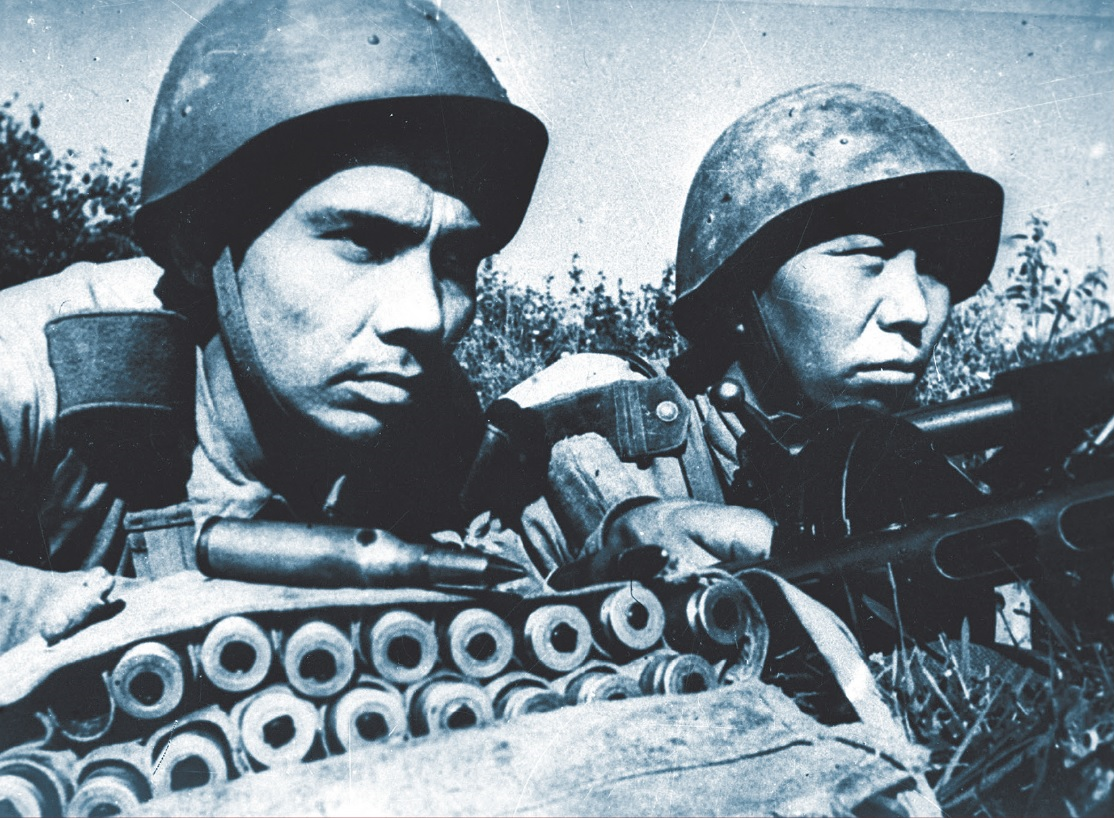
To counter the Nazi aggression and their Operation Barbarossa, the largest and most powerful invasion force in human history, the Soviet authorities mobilised a huge army, including more than one million people in the Kazakh Republic, or nearly 25% of its population, of whom less than 50% returned home. These soldiers fought in landmark & watershed battles at Stalingrad, Moscow, Kursk, and participated in the liberation of Europe and the Battle of Berlin. There can be no real statistical measurement of the human and material cost of this bloodiest and largest war in history. But for the people of Kazakhstan, the human misery, deprivation, and suffering, the dislocation of peoples and of economic life that the war involved happened on top of the preceding several famines of the 1930s, Stalinist purges and forced collectivisation efforts which had incurred the horrifying death toll of nearly 2 million Kazakhs and disrupted a centuries-long traditional nomadic lifestyle. The war, however, united the people of Kazakhstan driven by the sense of a common historic community, patriotism, and their allegiance to ancestral lands. Kazakhstan not only sent its sons and daughters to fight and die on the front lines of World War II, it also supplied food and ammunition in the common effort against the advancing Nazis.
On the eve of the 75th commemoration of the end of WWII, this event will bring together British, American and Kazakh speakers who will discuss and chronicle the efforts of the people of Kazakhstan in that epic struggle. The panellists’ presentations will be followed by an online Q&A session.
The conference will be held in a hybrid format with the Museum’s Director Justin Maciejewski and the Kazakh Ambassador Erlan Idrissov speaking from the premises of the National Army Museum in Central London while Dr Roberto Carmack and Dr Raffaello Pantucci will be joining virtually from Washington, D.C. and Singapore respectively. The audience is welcome to connect and participate online.
Speakers
Justin Maciejewski DSO MBE
Director, National Army Museum
Erlan Idrissov
Ambassador of the Republic of Kazakhstan
to the United Kingdom of Great Britain and Northern Ireland
Dr Roberto Carmack
An independent historian & author of the recently published book
‘Kazakhstan in World War II: Mobilization and Ethnicity in the Soviet Empire’
Moderated by
Dr Raffaello Pantucci
Senior Associate Fellow, Royal United Services Institute (RUSI)
Panellists’ brief bios
Dr Roberto Carmack is an independent historian living in the Washington, DC area and is a member of the US Army Reserve. He received his PhD from the University of Wisconsin-Madison and recently published a book based on his dissertation research titled Kazakhstan in World War II: Mobilization and Ethnicity in the Soviet Empire (University Press of Kansas, 2019). Dr Carmack was a Fulbright fellow in Kazakhstan with the US Department of State in 2011-2012. His research interests include Central Asian military history, Soviet ethnic policies, and comparative empires.
Erlan Idrissov is the Ambassador of the Republic of Kazakhstan to the United Kingdom of Great Britain and Northern Ireland. Born on 28 April 1959 in Karaganda Region of Kazakhstan, Ambassador Idrissov graduated from the Moscow State Institute of International Relations in 1981 and the Diplomatic Academy of the Ministry of Foreign Affairs of the USSR in 1992. Representing Kazakhstan as Ambassador to the United Kingdom since 2017, Ambassador Idrissov has twice been Kazakhstan’s Minister of Foreign Affairs, and served for five years as the country’s Ambassador to the United States in 2007-2012. Ambassador Idrissov authored numerous articles on Kazakhstan’s foreign policy and multilateral diplomacy. He speaks English, French, Urdu and Hindi.
Justin Maciejewski DSO MBE is the Director, National Army Museum. He brings to the National Army Museum team his experience of leadership both in the commercial sector as well as the military, following five years with McKinsey & Company as a management consultant and a 27-year career in the British Army. He has a lifelong interest in Military History. His last appointment in the Army was Director Combat, the professional head of the Royal Armoured Corps and the Infantry. Prior to that he had extensive command and staff experience and was awarded the DSO after commanding his battalion, the 2nd Battalion The Rifles, in Iraq. On leaving the Army, Mr Maciejewski held a brief visiting fellowship at Oxford in 2012 as part of the Changing Character of War Programme under Professor Sir Hew Strachan. He is a graduate of the UK Joint Services Staff College Higher and Advanced Courses. He holds an MA in Defence Studies from Kings College, London and graduated in History from Cambridge University where he specialised in British Imperial and Military History.
Dr Raffaello Pantucci is a Senior Associate Fellow, Royal United Services Institute (RUSI). Dr Pantucci’s research focuses on terrorism and counter-terrorism as well as China’s relations with its Western neighbours. He currently spends his time between London and Singapore. Prior to joining RUSI in London in 2013, Raffaello lived for over three years in Shanghai, where he was a visiting scholar at the Shanghai Academy of Social Sciences (SASS). Before that he worked in London at the International Institute for Strategic Studies (IISS), and earlier than that at the Center for Strategic and International Studies (CSIS) in Washington. He has also held positions at the European Council of Foreign Relations (ECFR) and at the International Centre for the Study of Radicalisation (ICSR) at King’s College, London. He is the author of We Love Death As You Love Life: Britain’s Suburban Terrorists (London: Hurst, April 2015/US: Oxford University Press, September 2015) and is currently completing a writing project looking at Chinese interests in Central Asia under contract to a major publisher.