Меню
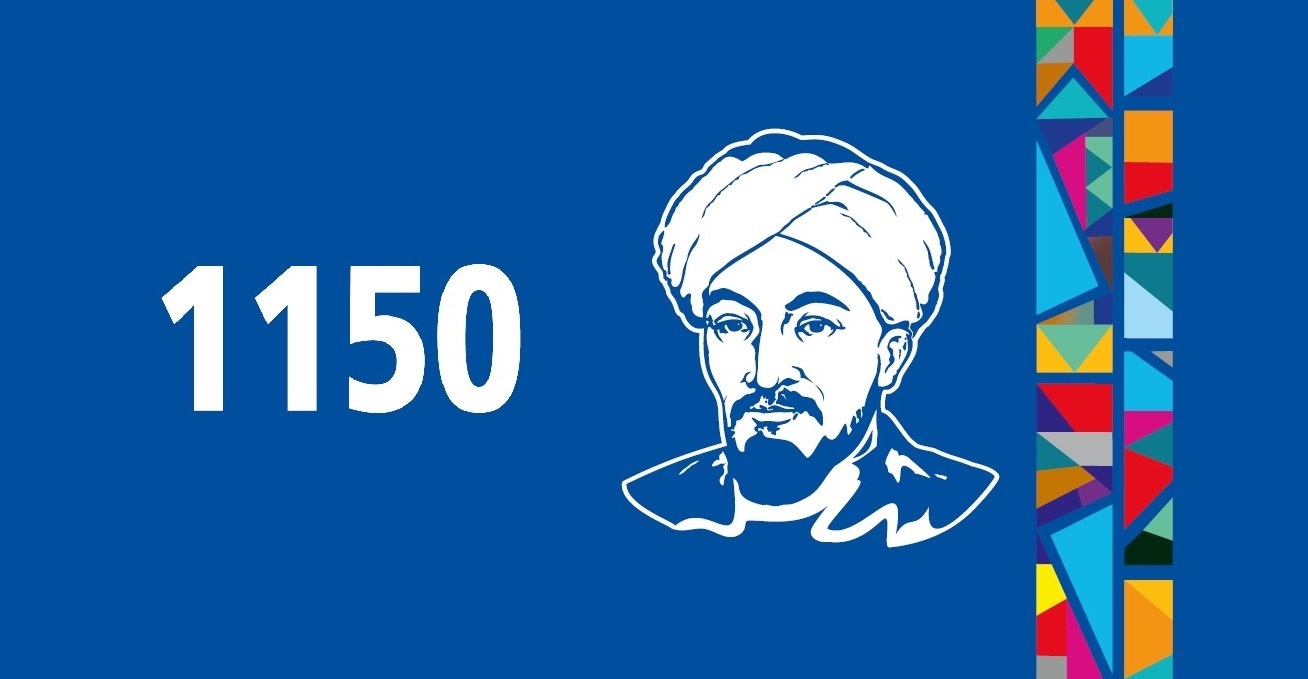
Abū Naṣr Muḥammad ibn Muḥammad al Fārābī, known in the West as
Alpharabius (born in 870 (or 872); died in 950 (or 951)), was a renowned
philosopher and jurist who wrote in the fields of political philosophy,
metaphysics, ethics and logic. He was also a scientist, cosmologist,
mathematician and music scholar.
In Islamic philosophical tradition he was often called "the Second Teacher",
following Aristotle who was known as "the First Teacher". He is credited with
preserving the original Greek texts during the Middle Ages because of his
commentaries and treatises, and influencing many prominent philosophers, like
Avicenna and Maimonides. Through his works, he became well-known in the
West as well as the East.
The main-belt asteroid 7057 Al-Fārābī was named in his honour.
Biography
The existing variations in the basic accounts of al-Farabi's origins and pedigree
indicate that they were not recorded during his lifetime or soon thereafter by
anyone with concrete information, but were based on hearsay or guesses (as is
the case with other contemporaries of al-Farabi). Little is known about his life.
Early sources include an autobiographical passage where al-Farabi traces the
history of logic and philosophy up to his time, and brief mentions by Al-Masudi,
Ibn al-Nadim and Ibn Hawqal. Said Al-Andalusi wrote a biography of al-Farabi.
Arabic biographers of the 12th–13th centuries thus had few facts to hand and
used invented stories about his life.
From incidental accounts it is known that he spent significant time (most of his
life) in Baghdad with Christian scholars including the cleric Yuhanna ibn
Haylan, Yahya ibn Adi, and Abu Ishaq Ibrahim al-Baghdadi. He later spent time
in Damascus and in Egypt before returning to Damascus where he died in 950-1.
His name was Abū Naṣr Muḥammad b. Muḥammad Farabi, sometimes with the
family surname al-Ṭarḵānī, i.e., the element Ṭarḵān appears in a nisba. His
grandfather was not known among his contemporaries, but a name, Awzalaḡ,
suddenly appears later in the writings of Ibn Abī Uṣaibiʿa, and of his great-
grandfather in those of Ibn Khallikan.
His birthplace could have been any one of the many places in Central Asia-
Khurasan that is known by that name. The name "parab/farab" is a Persian term
for a locale that is irrigated by effluent springs or flows from a nearby river.
Thus, there are many places that carry the name (or various evolutions of that
hydrological/geological toponym) in that general area, such as Fārāb on the
Jaxartes (Syr Darya) in modern Kazakhstan, Fārāb (modern Türkmenabat) on
the Oxus Amu Darya in Turkmenistan, or even Fāryāb in Greater Khorasan
(modern day Afghanistan). The older Persian Pārāb (in Ḥudūd al-ʿĀlam) or
Fāryāb (also Pāryāb), is a common Persian toponym meaning "lands irrigated by
diversion of river water". By the 13th century, Fārāb on the Jaxartes was known
as Otrār.
Scholars largely agree that Farabi's ethnic background is not knowable.
Iranian origin theory
Medieval Arab historian Ibn Abī Uṣaibiʿa (died in 1270) – al-Farabi's oldest
biographer – mentions in that al-Farabi's father was of Persian descent. Al-
Shahrazūrī who lived around 1288 A.D. and has written an early biography also
states that Farabi hailed from a Persian family. According to Majid Fakhry, an
Emeritus Professor of Philosophy at Georgetown University, Farabi's father
"was an army captain of Persian extraction." Dimitri Gutas, professor of Arabic
and Islamic Studies in the Department of Near Eastern Languages and
Civilizations at Yale University, notes that Farabi's works contain references and
glosses in Persian, Sogdian, and even Greek, but not Turkish. Sogdian has also
been suggested as his native language and the language of the inhabitants of
Fārāb. Muhammad Javad Mashkoor argues for an Iranian-speaking Central
Asian origin. A Persian origin has been stated by many other sources as well.
Turkic origin theory
The oldest known reference to a Turkic origin is given by the medieval historian
Ibn Khallikān (died in 1282), who in his work Wafayāt states that Farabi was
born in the small village of Wasij near Fārāb (in what is today Otrar,
Kazakhstan) of Turkic parents. Based on this account, some modern scholars
say he is of Turkic origin.
Dimitri Gutas, an American Arabist of Greek origin, criticises this, saying that
Ibn Khallikān's account is aimed at the earlier historical accounts by Ibn Abī
Uṣaibiʿa, and serves the purpose to "prove" a Turkic origin for al-Farabi, for
instance by mentioning the additional nisba (surname) "al-Turk" (arab. "the
Turk") – a nisba Farabi never had. However, Abu al-Fedā', who copied Ibn
Ḵhallekān, corrected this and changed al-Torkī to the phrase "wa-kāna rajolan
torkīyan", meaning "he was a Turkish man." In this regard, Oxford professor
C.E. Bosworth notes that "great figures [such] as al-Farabi, al-Biruni, and ibn
Sina have been attached by over enthusiastic Turkish scholars to their race".
Life and education
Al-Farabi spent almost his entire life in Baghdad. In his auto-biographical
passage, Farabi stated that he had studied logic, medicine and sociology up to
and including Aristotle's Posterior Analytics. His teacher, bin Ḥaylān, was a
Nestorian cleric. He was in Baghdad at least until the end of September 942. He
finished the book in Damascus the following year, by September 943. He also
studied in Tétouan, Morocco and lived and taught for some time in Aleppo.
Farabi later visited Egypt, finishing six sections summarising the book Mabādeʾ
in Egypt in July 948 – June 949 when he returned to Syria, where he was
supported by Sayf al-Dawla, the Hamdanid ruler. Al-Masudi, writing barely five
years after the fact, says that Farabi died in Damascus in Rajab 339 (between 14
December 950 and 12 January 951).
Works and contributions
Farabi made contributions to the fields of logic, mathematics, music,
philosophy, psychology, and education.
Alchemy
Al-Farabi wrote The Necessity of the Art of the Elixir
Logic
Though he was mainly an Aristotelian logician, he included a number of non-
Aristotelian elements in his works. He discussed the topics of future contingents,
the number and relation of the categories, the relation between logic and
grammar, and non-Aristotelian forms of inference. He is also credited with
categorising logic into two separate groups, the first being "idea" and the second
being "proof".
Al-Farabi also considered the theories of conditional syllogisms and analogical
inference, which were part of the Stoic tradition of logic rather than the
Aristotelian. Another addition al-Farabi made to the Aristotelian tradition was
his introduction of the concept of poetic syllogism in a commentary on
Aristotle's Poetics.
Music
Al-Farabi wrote a book on music titled Kitab al-Musiqa (The Book of Music). In
it, he presents philosophical principles about music, its cosmic qualities, and its
influences.
He also wrote a treatise on the Meanings of the Intellect, which dealt with music
therapy and discussed the therapeutic effects of music on the soul.
Philosophy
As a philosopher, Al-Farabi was a founder of his own school of early Islamic
philosophy known as "Farabism" or "Alfarabism", though it was later
overshadowed by Avicennism. Al-Farabi's school of philosophy "breaks with
the philosophy of Plato and Aristotle [... and ...] moves from metaphysics to
methodology, a move that anticipates modernity", and "at the level of
philosophy, Alfarabi unites theory and practice [... and] in the sphere of the
political he liberates practice from theory". His Neoplatonic theology is also
more than just metaphysics as rhetoric. In his attempt to think through the nature
of a First Cause, Alfarabi discovers the limits of human knowledge".
Al-Farabi had great influence on science and philosophy for several centuries,
and was widely considered second only to Aristotle in knowledge (alluded to by
his title of "the Second Teacher") in his time. His work, aimed at synthesis of
philosophy and Sufism, paved the way for the work of Ibn Sina (Avicenna).
Al-Farabi also wrote a commentary on Aristotle's work, and one of his most
notable works is Al-Madina al-Fadila (The Virtuous City) where he theorised an
ideal state as in Plato's The Republic. Al-Farabi argued that religion rendered
truth through symbols and persuasion, and, like Plato, saw it as the duty of the
philosopher to provide guidance to the state. Al-Farabi incorporated the Platonic
view, drawing a parallel from within the Islamic context, in that he regarded the
ideal state to be ruled by the prophet-imam, instead of the philosopher-king
envisaged by Plato. Al-Farabi argued that the ideal state was the city-state of
Medina when it was governed by the prophet Muhammad as its head of state, as
he was in direct communion with Allah whose law was revealed to him.
Physics
Al-Farabi wrote a short treatise "On Vacuum", where he thought about the
nature of the existence of void. He also may have carried out the first
experiments concerning the existence of vacuum, in which he investigated
handheld plungers in water. His final conclusion was that air's volume can
expand to fill available space, and he suggested that the concept of perfect
vacuum was incoherent.
Psychology
He wrote Social Psychology and Principles of the Opinions of the Citizens of
the Virtuous City, which were the first treatises to deal with social psychology.
He stated that "an isolated individual could not achieve all the perfections by
himself, without the aid of other individuals," and that it is the "innate
disposition of every man to join another human being or other men in the labour
he ought to perform."
He concluded that to "achieve what he can of that perfection, every man needs
to stay in the neighbourhood of others and associate with them."
In his treatise On the Cause of Dreams, which appeared as chapter 24 of his
Principles of the Opinions of the Citizens of the Virtuous City, he distinguished
between dream interpretation and the nature and causes of dreams.