Joint Statement on the Results of the Consultative Meeting of the Heads of State of Central Asia
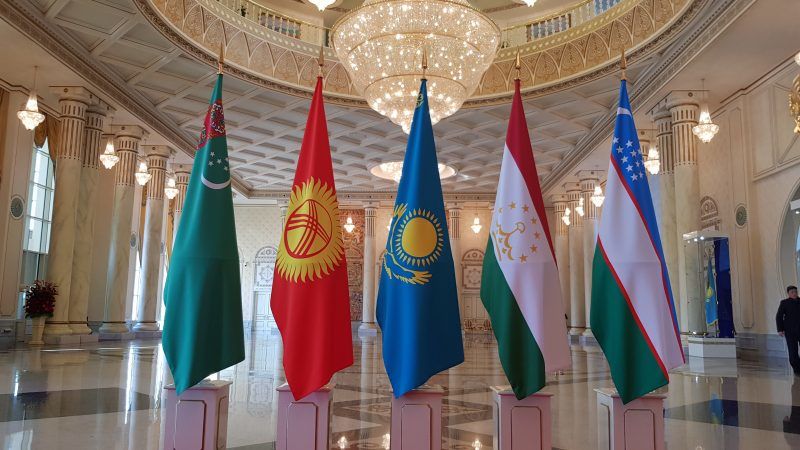
On August 6, 2021, a Consultative meeting of the Heads of State of Central Asia was held in the city of Turkmenbashi (Turkmenistan), in which the President of the Republic of Kazakhstan, the President of the Kyrgyz Republic, the President of the Republic of Tajikistan, the President of Turkmenistan and the President of the Republic of Uzbekistan took part. The talks were held in an atmosphere of friendship, mutual respect and trust, constructivism, and mutual understanding.
Following the meeting, the Heads of State,
- noting the ongoing process of development of regional cooperation on the basis of historically established friendly and good-neighborly relations,
- building on the principles of the Charter of the United Nations and a reaffirming firm commitment to upholding the universally recognized norms of International Law,
- stressing the need to consider and resolve topical issues of the development of the Central Asian region through negotiations and consultations on the basis of mutual respect, equality, consideration of each other's interests,
- noting the readiness of their states for open and broad interaction in the interests of ensuring peace, stability, and security in the region,
- proceeding from a common desire to further expand and strengthen relations in all areas of mutual interest, including politics, sustainable and stable development, trade, economic and investment and financial, transport and communications, water and energy, information technology, environmental and cultural humanitarian cooperation,
- noting that joint initiatives of the Central Asian states in solving important global and regional problems have tangible results on the world stage,
- stressing the importance of close partnership between the states of the region in countering global challenges and threats, including the coronavirus pandemic, as well as jointly overcoming its negative consequences,
- reaffirming that the regular Consultative meetings of the Heads of State of Central Asia make it possible to discuss and make proposals on topical issues that contribute to the further strengthening of multilateral interstate cooperation in the region, declare as follows:
- The Heads of State noted that the current Consultative meeting is being held in the year of the 30th anniversary of the independence of the Central Asian states. In this regard, the Parties emphasize the historical significance of this forum in further strengthening and developing relations between the countries of Central Asia.
- The Parties confirm the relevance and necessity of comprehensive development of multilateral interaction through bilateral and multilateral events, mutual visits in order to promote peaceful development, prosperity, and stability of all states of the Central Asian region.
- The Parties note that the Consultative meeting in the city of Turkmenbashi made it possible to comprehensively consider promising directions, forms, and mechanisms for the further development of mutually beneficial regional cooperation in the field of ensuring security and stability, in the spheres of trade, economy and investment, transport and transit, agriculture and food security. in matters of industrial cooperation, water and energy resources, environmental protection, tourism, science, education, culture, and gender equality.
- The Heads of State noted the importance of using the potential of their countries in order to create a space in the region for a safe, sustainable, broad, and open partnership. In this regard, the Parties emphasized the importance of holding consultations and strengthening contacts and ties through the ministries of foreign affairs, diplomatic missions, consular offices, as well as permanent missions of Central Asian states to the UN and other international organizations.
- The Parties believe that in the current year, 2021, declared by the UN General Assembly as the International Year of Peace and Confidence, it is necessary to intensify the consolidated activities of the Central Asian states in the international arena in order to achieve concrete results in the implementation of large-scale and long-term strategies, concepts and programs adopted the international community represented by the United Nations.
- The Heads of State stressed that 2021 marks the 15th anniversary of the signing of the Treaty on a nuclear-weapon-free zone in Central Asia, as well as the 30th anniversary of the closure of the Semipalatinsk nuclear test site. In this regard, the Presidents expressed their readiness to continue active cooperation of the states of the region on the implementation of the Treaty on a nuclear-weapon-free zone in Central Asia, and noted the need to intensify interaction with other nuclear-free zones in order to consolidate efforts in nuclear disarmament and non-proliferation.
- The Parties confirm that one of the most important factors in maintaining and strengthening security and stability in Central Asia is the earliest possible settlement of the situation in neighboring Afghanistan.In this regard, the Parties expressed their readiness to provide all possible assistance in the earliest possible achievement of civil peace and harmony in Afghan society. In this regard, the Parties support the efforts of all interested states and international organizations aimed at ensuring security and stability in Afghanistan, restoring the country's socio-economic infrastructure, and its involvement in world economic relations.
- The Parties spoke in favor of working out the issue of creating a dialogue on security and cooperation in Central Asia as a permanent consultative platform for considering topical issues of the region's development on a systematic and regular basis.
- The Parties consider the primary task to ensure the sustainable development of the Central Asian region through further strengthening ties in trade, economic, investment, industrial, financial, energy, agricultural, communication, social, environmental, and other areas of mutual interest. In order to jointly develop the financial system and attract investments to the region, the Parties agreed to use the site of the Astana International Financial Center as an economic platform connecting the countries of the Central Asia region, as well as with foreign investors.
- The Parties recognize the importance of strengthening the interaction of competent authorities in the field of regulation of migration processes between the states of Central Asia, as well as the need to ensure the protection of the rights and interests of migrant workers, to provide them with legal, social, informational and advisory assistance.
- The Parties note the importance of building up mutual trade and the need to further develop common mutually beneficial approaches to effectively solving the problem of simplifying trade procedures in the region. The Parties note the need to intensify work to expand cooperation between business circles and regions of the Central Asian states in order to increase mutual trade, implement joint economic projects, including the development of trade and production sites in the border areas, as well as a network of wholesale distribution centers.
- The Parties emphasize the importance of further deepening multilateral cooperation in the transport and transit sector in order to ensure free and unhindered transit of goods and cargo, including the creation of new and modernization of existing international routes for air, road, rail, river, and sea transport, multimodal transport corridors, international multifunctional centers of logistics, trade, and tourism, the introduction of innovative, energy-saving and electronic technologies, the simplification of cross-border procedures in accordance with the best international practices and the implementation of other joint infrastructure projects that ensure the effective use of the transit potential of the region. The Parties will make every effort to jointly develop the North-South and East-West international corridors. The Parties noted the need to accelerate the creation of a regional Conference on transport communications, agree on the Program and Agreement on the joint development of the transport system in Central Asia, taking into account the ongoing and promising projects to form profitable international transport corridors with the participation of the states of the region. The Parties supported the initiative of the Uzbek side to create a regional center for the development of transport and communication connectivity, under the auspices of the United Nations. The Parties intend to increase the volume of mutual trade by creating regional value chains and joint industrial clusters, enhancing cooperation in promoting the digital economy.
- The Parties stated the need to create a five-sided Council of industrialists and entrepreneurs of the Central Asian countries in order to impart a purposeful and systemic character to mutual cooperation in trade, economic, energy, transport, logistics, and innovation.
- The Parties express their intention to join efforts for joint implementation of innovative programs and projects, as well as to promote effective cooperation in the field of science, technology and innovation, joint research, exchange of experience between research centers in order to find new sources of social and economic growth.
- The Parties advocate deepening cooperation in the field of education, scientific diplomacy, within the framework of rectors' forums, scientific conferences, and symposia of the scientific, pedagogical, and student community and youth through the development of a regional program of interuniversity and scientific exchanges. The Parties emphasize the progress in the development and use of information and communication technologies, as well as their growing impact on everyday life. The states intend to join forces to counter new threats to information security in compliance with the principles and norms of international law.
- All Central Asian states note the need to strengthen regional cooperation in mitigating and adapting to climate change, combating desertification, rational use of water and energy resources, environmental protection and ecology, preserving glaciers and reclaiming uranium tailings, promoting projects and programs aimed at introducing resource-saving and green technologies, including the development of renewable energy sources. In these areas, the Parties are ready to make joint efforts to improve mechanisms for long-term and mutually beneficial cooperation to achieve sustainable development goals in the region. The Parties noted the importance of existing hydropower facilities and those under construction to facilitate the solution of water and energy issues in Central Asia, taking into account the interests of all countries in the region. The Parties emphasize the importance of reaching a common understanding and promotion of international and regional initiatives on the UN platform, such as the adoption of resolutions of the 75th session of the UN General Assembly, namely Nature knows no boundaries: transboundary cooperation is a key factor in the conservation, restoration and sustainable use of biodiversityUnited Nations Conference on the mid-term comprehensive review of the progress in achieving the goals of the international decade for ActionWater for sustainable development, 2018-2028Declaring the Aral sea region as a zone of environmental innovations and technologiesCooperation between the United Nations and the International Fund for saving the Aral seaand «International cooperation and coordination of activities for the rehabilitation of the population, environmental restoration and economic development of the Semipalatinsk region in Kazakhstan Taking into account the negative impact of global climate change on glaciers in the world and, in particular, in Central Asia, the Heads of State supported the proposal of the President of the Republic of Tajikistan to declare 2025 the international year for the preservation of glaciers and create an International Glacier Protection Fund. The Heads of State expressed support for the initiative of the President of Turkmenistan to develop a UN Strategy aimed at implementing measures to develop low-carbon energy, as well as to create, under the auspices of the UN, an international Road Map for the development of hydrogen as one of the priority areas in the energy sector.
- The Heads of State recognized the importance of consolidating efforts to comprehensively address the problems associated with improving the socio-economic and environmental situation in the region, including in the Aral Sea basin, especially in areas prone to environmental crisis and the negative impact of climate change.
- The Parties emphasized the need to take coordinated measures aimed at reducing water pollution, atmospheric air, preserving glaciers of land degradation, increasing the area of forest plantations, reducing the risks of natural disasters, including floods, mudflows, droughts, as well as providing clean drinking water and others. The Heads of State emphasized the importance of the ongoing work to improve the organizational structure and legal framework of the International Fund for Saving the Aral Sea, taking into account the interests and participation of all Central Asian states.
- Today, when humanity is faced with a new global threat - the coronavirus pandemic, the states of Central Asia are taking comprehensive measures to counter the spread of this infection. Fully balancing their steps in this direction with the activities of the world community, the Parties support important international initiatives in the fight against coronavirus. The Heads of State expressed support for the initiative of the President of the Republic of Kazakhstan to establish a network of Regional Centers for disease control and biosafety under the auspices of the UN, as well as the establishment of a special multilateral body under the auspices of the UN - the International Biological Safety Agency, accountable to the UN Security Council. In this regard, the Parties agreed to intensify interaction through scientific diplomacy, to create all the necessary conditions for systemic communication of medical scientists, experts, and specialists in other related fields of knowledge. In order to consolidate the efforts of the Central Asian states in countering the spread of dangerous infections, the Parties consider it necessary to consider creating a regional mechanism to study the nature of the origin of viruses and other infections, the forms of manifestation of diseases caused by them, methods of treatment and prevention of infectious diseases.
- In the context of the need to improve the resilience of food systems, the Parties agreed to maintain supply chains and widely implement green corridors for food and essential goods.
- The Parties agreed to develop intercultural dialogue in the interest of the peoples living in Central Asia, and in the spirit of the international decade for the rapprochement of cultures proclaimed by the United Nations, to preserve and promote the diversity of cultures and interethnic tolerance,cooperate and provide mutual support in the study and protection of ethnopolitics, tangible and intangible cultural and natural heritage of the region, improve literary ties, hold international festivals, forums and competitions, deepen interaction in the field of musical, theatrical, visual and craft arts, cinematography, television and radio broadcasting, archival, museum and library affairs, as well as to develop direct ties between citizens, especially young people, and tourist exchanges. In order to impart a systemic and regular nature to interaction in this direction, the Parties agreed to create a Forum for cultural dialogue of Central Asia as a single platform for cultural and humanitarian exchange under the name Central Asia: One Past and One Future
- Taking into account the important role of sport in strengthening friendship between peoples, the Heads of State agreed to continue to develop physical culture and sports, to support the holding of international sports events in the territories of the Parties, to encourage cooperation between organizations and institutions of physical culture and sports. It was also noted the need to consolidate efforts to promote the national sports of the parties to the international sports arena.
- The Heads of State noted the need for close cooperation in the field of tourism, including with a view to accelerating the recovery of this sector after the pandemic and the resumption of tourist exchange between the countries of the region. The Parties also agreed to intensify work on the creation of tourist zones and clusters in cross-border areas, the joint promotion of tourism products and routes in order to create a single space in Central Asia. The Parties advocate close cooperation between government tourism authorities and tourism companies, as well as between other organizations involved in the development of international and domestic tourism. The Parties will continue to facilitate the exchange of information on the development of tourism activities, printed materials, films, cooperate in advertising campaigns, conferences and seminars, the organization of exhibitions and fairs.
- The Heads of State instructed the Foreign Ministries to complete in the near future the work on agreeing on the draft Roadmap for the development of regional cooperation for 2022-2024 (following the results of the Consultative meetings of the Heads of State of Central Asia).
- The Heads of State instructed the Foreign Ministries to prepare for signing at the next Consultative meeting of the Heads of State of Central Asia a Treaty on friendship, good neighborliness, and cooperation for the development of Central Asia in the 21st Century.
- The Presidents decided to use the single Symbol of the Consultative meetings of the Heads of State of Central Asia and approved the Regulations on it.
- The Presidents decided to establish the Badge of honor of the Heads of State of Central Asia and approved the Regulations on the Badge of honor and its description.
- The Heads of State praised the Forum for Dialogue of Women of Central Asia, the Economic Forum of Central Asian countries, the International Exhibition of national products of Central Asian countries, the International Festival of the national cuisine of Central Asian countries, and the Gala concert of the masters of culture and art of the Central Asian countries held in Turkmenbashi The Heads of State instructed the Ministers of Foreign Affairs to prepare proposals on the timing and venue of the fourth Consultative meeting of the Heads of State of Central Asia and to develop an agenda for the Consultative meeting. The Consultative meeting took place in a traditionally friendly, warm, and confidential atmosphere. The Heads of State expressed gratitude to the President of Turkmenistan Gurbanguly Myalikguliyevich Berdimuhamedov for the hospitality and high level of organization of the Consultative meeting.