Kazakhstan and Germany Strengthen Foreign Policy Dialogue
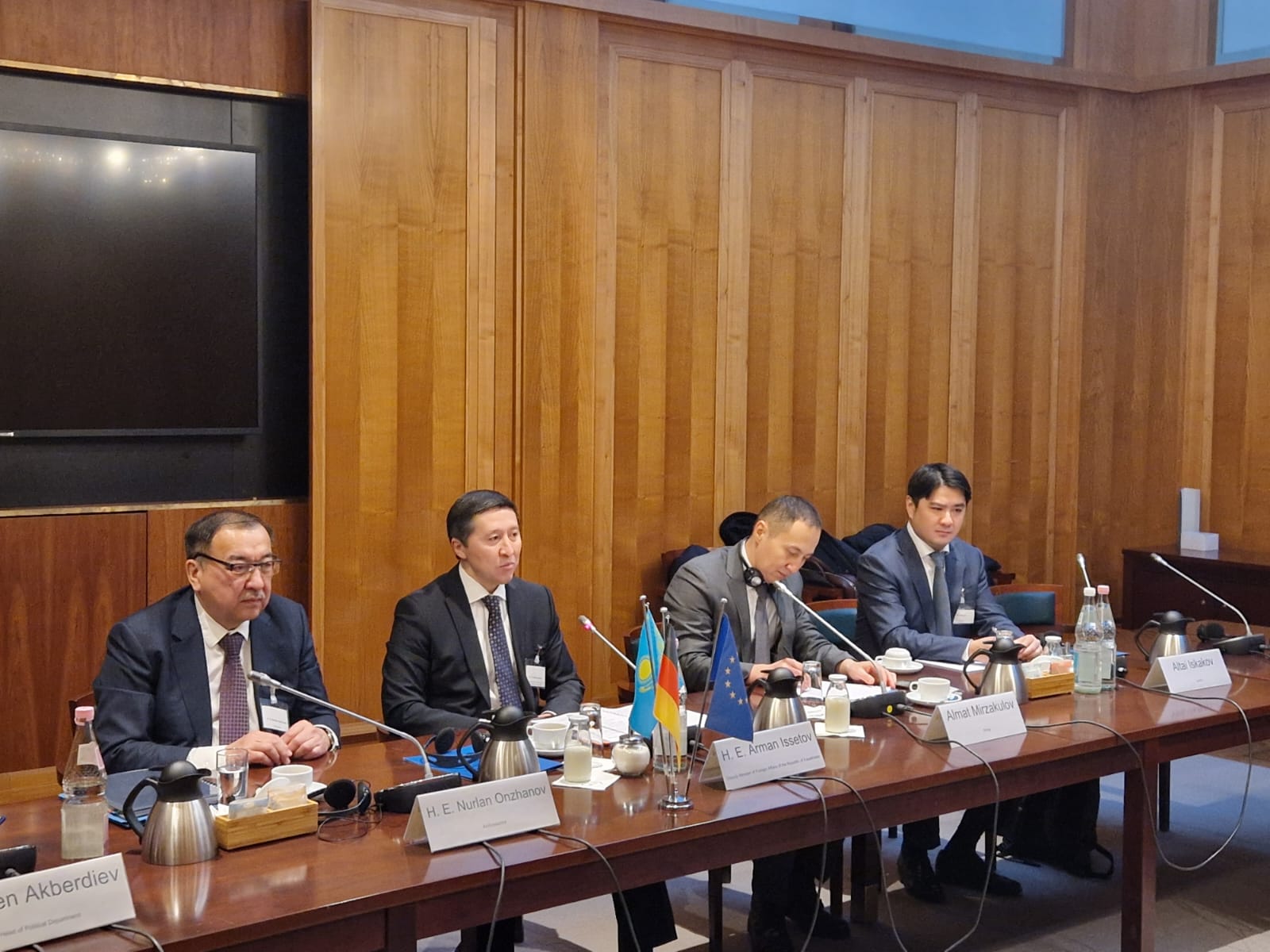
Berlin, 2 December 2025 – On Tuesday, another round of inter-ministerial consultations took place between the Republic of Kazakhstan and the Federal Republic of Germany. The Kazakh delegation was headed by Deputy Minister of Foreign Affairs of the Republic of Kazakhstan Arman Issetov, while the German side was represented by the Federal Foreign Office Commissioner for Cooperation with Eastern Europe, Caucasus, and Central Asia Niklas Wagner.
During the consultations, the parties discussed a broad range of political, economic and cultural-humanitarian issues. They reviewed the results of their joint work for 2025, examined current projects and explored prospects for expanding bilateral cooperation.
Special attention was given to regional cooperation in Central Asia. The sides noted the steady development of interregional initiatives and exchanged views on opportunities for deepening practical engagement.
In the context of the Strategic Regional Partnership between Central Asia and Germany (C5+1), the discussions addressed environmental priorities, climate adaptation, protection of the environment and water-resource management. Both sides underscored the importance of joint efforts to support sustainable development in the region, including through the implementation of collaborative projects in ecology and water diplomacy.
In this regard, a bilateral meeting also took place between Kazakhstan’s Deputy Foreign Minister Issetov and the Political Director of the German Federal Foreign Office D. Mutter to discuss further cooperation within the C5+1 format.
In addition, the consultations addressed prospects for further deepening cooperation with the European Union, including issues of trade and economic activity, infrastructure and transport connectivity, digital technologies and energy partnership.
On current international matters, the participants exchanged assessments of the global geopolitical situation and reaffirmed their commitment to maintaining constructive dialogue, international law and the principles of multilateralism.
Following the meeting, both sides expressed their intention to continue regular consultations and expand practical cooperation across all areas of the bilateral and regional agenda.