On May 31, Kazakhstan celebrates the Day of Remembrance of Victims of Political Repressions
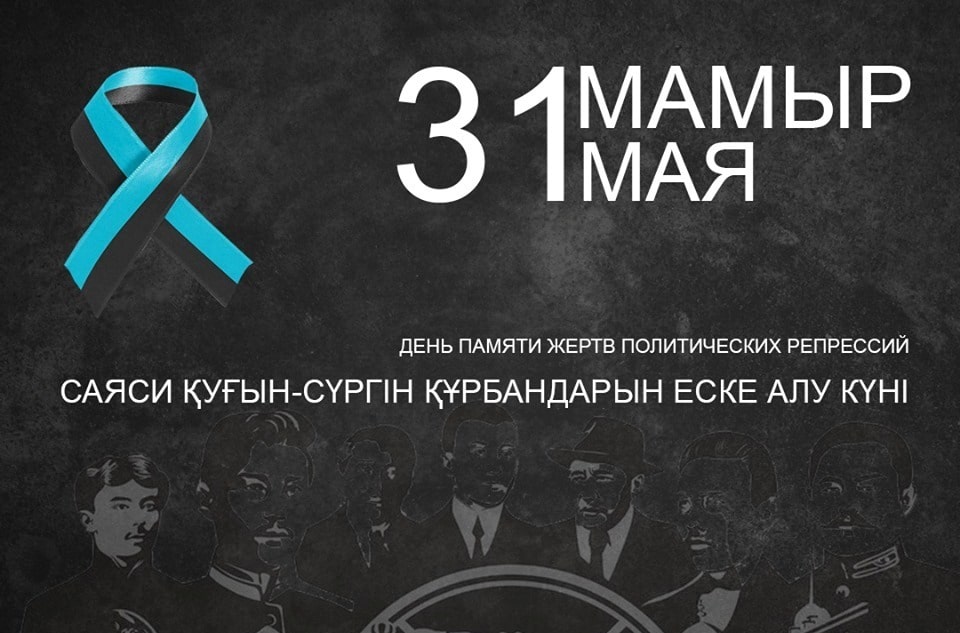
On May 31, Kazakhstan celebrates the Day of Remembrance of Victims of Political Repressions. Since 1997, on this day, people who were shot and innocently imprisoned in camps are remembered. These are representatives of all peoples and social groups that lived on the territory of the Soviet Union and suffered from mass persecution. The repressions continued for more than two decades after the end of the civil war of 1918-1920.
From 1921 to 1954 in Kazakhstan alone, almost 100,000 people were convicted on political charges, of which about 25,000 were shot. And this number does not yet reflect the huge part of the repressed who received a sentence with the wording “without the right to correspondence” - most often this was a message to relatives about the death penalty of the convict. Historians have different data, but, of course, we are talking about tens of millions of destinies, one way or another affected during the Stalinist repressions.
All the peoples of the former USSR suffered from those events, but for the Kazakh nation this period of history turned out to be the most tragic: the entire flower of the Kazakh intelligentsia fell under the millstone of political repression, and this is the majority of educated Kazakhs, who at the time of the 1917 revolution numbered several thousand.
Political repression reached its greatest extent after the civil war. In the late 1920s, as a result of the constant search for "enemies of the people" on the territory of Kazakhstan, they dealt with the most active figures of the Alash Orda, including those who held fairly high positions and had services to the country.
At the end of 1928, almost all active members of the Alash party were arrested on false charges: Akhmet Baitursynov, Alikhan Bokeikhanov, Myrzhakyp Dulatov, Mukhamedzhan Tynyshbaev, Magzhan Zhumabaev, Saken Seifullin, Ilyas Zhansugurov, Beimbet Mailin, Sanjar Asfendiyarov, Sultanbek Khodzhanov, Turar Ryskulov , Smagul Sadvakasov, Abdrakhman Baidildin and others. These, as well as other prominent figures, were called "bourgeois nationalists." Some of them were shot, others died in the camps.
In 1937, the majority who managed to survive were charged again, in connection with which people were still shot. Some were exiled to other union republics.
The repressed were accused of nationalism, sabotage, sabotage and espionage in favor of foreign states. Often people were accused of anti-Soviet agitation and propaganda. Often the slander came from their own fellow citizens - neighbors, colleagues and colleagues. Later it turned out that almost all of these cases were fabricated. Those who tried to defend the interests of the Kazakh people, opposed the so-called excesses and abuses by government officials, and those who opposed the forced collectivization were persecuted - this led to the death of millions of Kazakhs from starvation.
Many cases were reviewed after Stalin's death, most of the prisoners were released from the camps. Those who were shot or killed were rehabilitated posthumously.
According to the Decree of the First President of the Republic of Kazakhstan dated April 5, 1997, May 31 was declared the Day of Remembrance for Victims of Political Repressions.