Президент Казахстана принял участие в VII Съезде лидеров мировых и традиционных религий
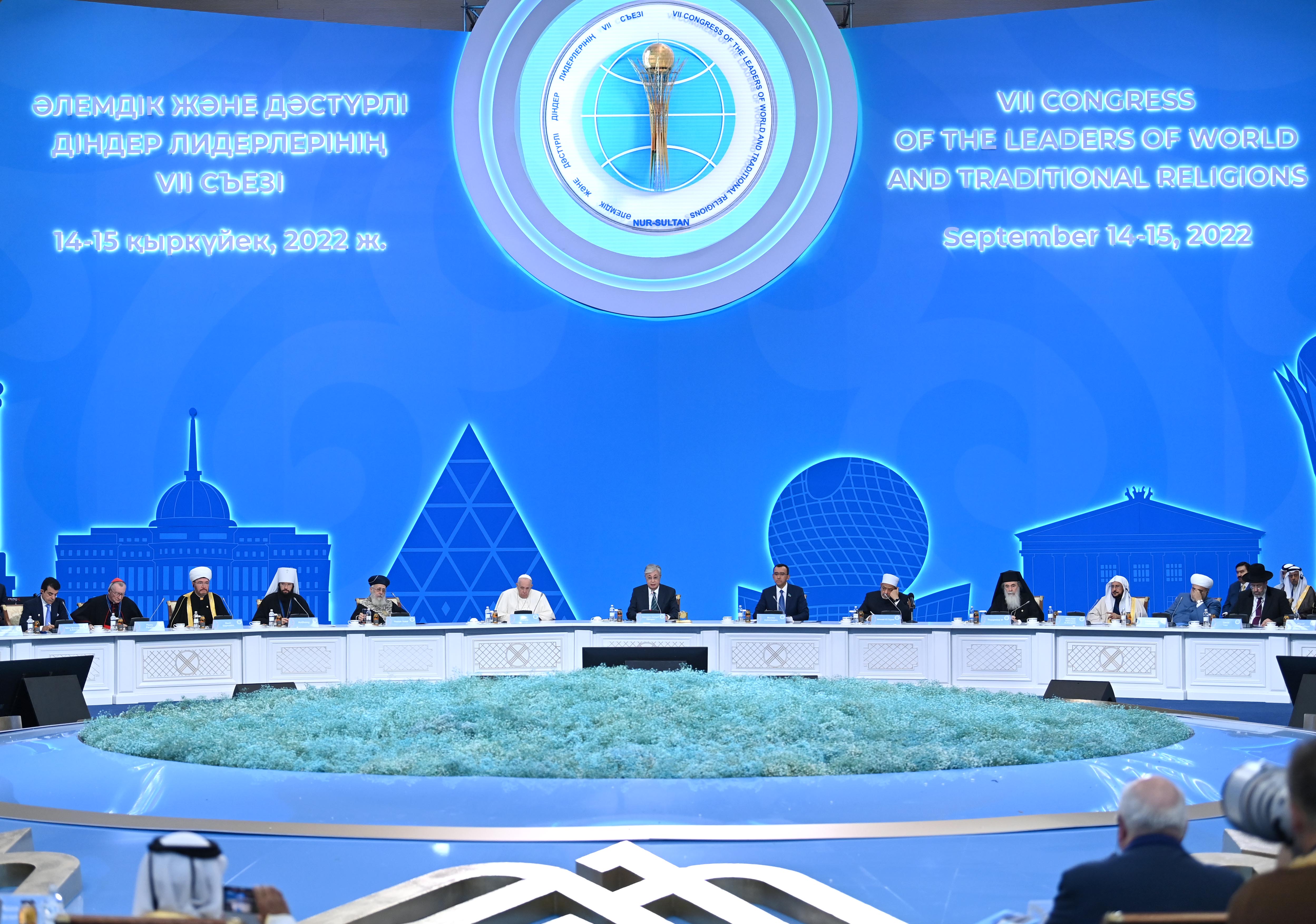
On September 14, 2022, the VII Congress of Leaders of World and Traditional Religions began its work in the capital of Kazakhstan, Astana. President of Kazakhstan Kassym-Jomart Tokayev delivered a welcoming speech.
The main topic of the Congress is defined as "The role of the leaders of world and traditional religions in the spiritual and social development of mankind in the post-pandemic period."
On the eve of the VII Congress, on September 13, the XX meeting of the Secretariat of the Congress was held under the chairmanship of the Speaker of the Senate of the Parliament of Kazakhstan, head of the Secretariat of the Congress of Leaders of World and Traditional Religions Maulen Ashimbaev.
The visit of Pope Francis, Supreme Imam of al-Azhar Sheikh Ahmed at-Tayeb, Ashkenazi Rabbi of Israel David Lau is a feature of this year's religious forum.
It is also noteworthy that for the first time the delegation of Turkmenistan, headed by the Supreme Mufti of Turkmenistan Yalkap Khozhagulyev, takes part in the work of the Congress.
Within the framework of the congress, a number of topical thematic blocks were considered, which were put into the format of sectional meetings of the forum.
In total, 108 delegations from 50 countries of the world take part in the congress, including spiritual leaders of world and traditional religions from Islam, Christianity, Buddhism, Judaism, Hinduism, Taoism, Zoroastrianism, Shintoism, as well as political and public figures, representatives of international organizations, the expert community .
A large number of representatives and foreign media arrived in the capital of Kazakhstan. According to official figures, about 200 foreign journalists have registered, including representatives of Euronews, BBC, CNN, Bloomberg, Al Jazeera and others.
At the end of the event, the Participants of the VII Congress of Leaders of World and Traditional Religions adopted a final declaration consisting of 35 points. The Declaration was adopted by the majority of the delegates of the VII Congress and will be transmitted to the authorities, political leaders, religious figures around the world, relevant regional and international organizations, civil society institutions, as well as religious associations and leading experts.