Important moments of the third day of the X Civil Forum of Kazakhstan
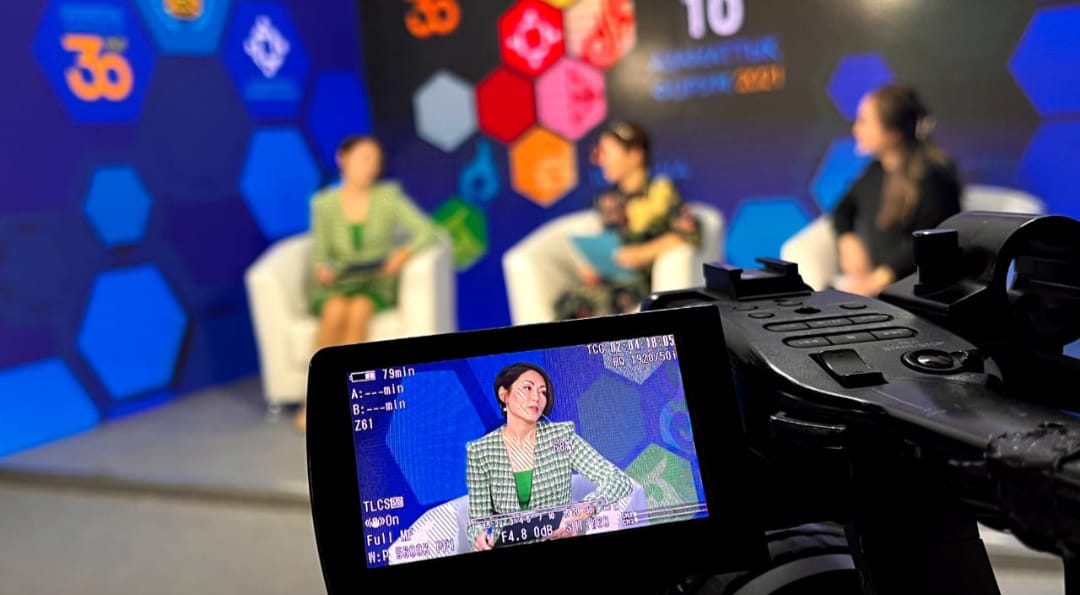
November 24, 2021, Nur-Sultan.
Today, the dialogue between the government and civil society was held on the theme "Fair State is a responsible citizen".
Recall that these days the main event of Kazakhstan in 2021 in the sphere of interaction between the State and the non-governmental sector - X Civil Forum “30 years of Partnership for the sustainable development of society and the State” - is taking place.
At the discussion platforms of the Civil Forum, well-known public figures, journalists, deputies, businessmen talked about "Rukhani Zhangyru", entrepreneurial initiatives from the perspective of NGOs, decision-making mechanisms for the "Participation Budget" program and other topics that concern the country's civil society.
The third day was opened by a session dedicated to civil society and the “Rukhani Zhangyru" program.
In the context of tasks implementation of public consciousness modernization based on the principles of "Rukhani Zhangyru" program, the speakers proposed to pay special attention to the professional organization of data decoding processes for the population, with their mandatory participation (participatory approach). The speakers also came to the conclusion that the expansion of the network of accelerators of the Rukhani Zhangyru projects can become a driver for accumulating and scaling best practices, achieving a synergistic effect from combining the resources of the public sector, business and civil society institutions, as well as to fill the failures of the public administration system.
No less important issues were raised on the discussion platform “Support for entrepreneurial initiatives: NGOs position”. According to experts, taking into account the social orientation of any entrepreneurial initiative of non-profit organizations, it is recommended to make amendments and additions to the legislation of the Republic of Kazakhstan. In particular, changes in tax administration by reducing tax rates, simplifying tax accounting, as well as equalizing the entrepreneurial activity of NGOs with the activities of small businesses.
According to the concept of “The Hearing State”, fundamentally new ways of interaction between the State and society are being created, a vivid example of which is “Good governance”. According to the speakers of the discussion, "Good governance“ is a philosophy of organizing life in the State, in which an important role is given to the ”window of opportunity" when civil society participates in making managerial decisions. As it was announced, there is no universal scheme of “good governance", and there are only principles that countries should pay attention to, including participation, engagement and interaction.
The issue of the development of civil society through the prism of sociology was also raised today.
During the discussion, the speakers discussed the interaction between NGOs and professional research organizations to improve the quality of NGO work. Following the meeting, they proposed to increase the level of solidarity within the sector in solving multidisciplinary issues. “We see unnecessary competition where there should be interaction of organizations from different spheres” the speakers note. They also proposed to conduct a basic sociological study on the state of Civil Society and ideological work to promote the ideas of tolerance to "others" and multiculturalism. In conclusion, the experts added that the effectiveness of NGOs is an increase in efficiency through periodic monitoring and evaluation of work, in this case, an objective view contributes to the adjustment of plans and strategies.
Ensuring equal access of disabled children and children with disabilities to quality education at all levels was also discussed today. According to experts, in achieving the guaranteed realization of the rights of children with disabilities to inclusive education at the place of residence, compliance with the right of parents to choose an educational organization and form of education for a child, the development of special educational and methodological documentation, the introduction of special conditions during the final state certification, coverage of civic initiatives to support employment and emotional burnout of parents raising children with disabilities, and much more will help.
During the dialogue platform on the Participation Budget program, as a mechanism for influencing decision-making, it was proposed to ensure transparency and information about this initiative at all stages of its implementation and to determine an accessible and clear online mechanism for participation. The experts participating in the discussion also stressed the importance of considering the possibilities of expanding the initiative beyond the current directions, as well as including in the plan of implementation of the state social order a lot to assist in the implementation of the initiative "Budget of people's participation ".
The topic of cooperation between the State and the third sector was continued in the next expert discussion "NGOs and the media: expectation vs. reality”.
According to the speakers, it is necessary to prepare and adopt the agreement as a national document that creates a basis for adequate relations between the two sectors. During the discussion, they voiced the following recommendations: to the training of journalists, such a valuable source of information as non-governmental organizations should be more actively used, which have accumulated data useful for the work of journalists in various sectors - from economics to ecology, from gender issues to education, and also train NGOs to "package" their information so as to be competitive in the information field, as a result of which journalists and NGO representatives will be given the opportunity to establish working contacts.
One of the new and key topics of the third day of the X Civil Forum was addressed during the dialogue platform "Open Kazakhstan: Best practices of interaction of the non-profit sector of border countries”, which was attended by experts from both Kazakhstan and Russia, Azerbaijan, Uzbekistan, the Kyrgyz Republic.
At the end of the meeting, the speakers came to the conclusion of strengthening cooperation between the civil society of the Central Asian countries through holding Civil Forum at the regional level and through the development of social entrepreneurship. Having considered the cases of Russian-Kazakh business projects, the speakers proposed to create and promote sectoral associations of cross-border NGOs to solve environmental, social and other issues. In addition, as it became known, a Memorandum will be signed between the Public Foundation "Civil Alliance of Kostanay region "Green" and the Ural Eurasia Expert Club (Yekaterinburg) in Almaty.
Today's discussion platforms were attended by such eminent persons of Kazakhstan's Civil society as journalists Dinara Satzhan, Gulnar Bazhenova, Syrym Itkulov, Diana Okremova, sociologists and political scientists, experts Gulmira Ileuova, Yulia Kuchinskaya, Yulia Natarova, Ilyas Tleubergen, Evgenia Schreiber, NGO leaders Nurgul Ulzhekova, Saltanat Esmagambetova, Daniyar Nurpeisov and many others.