Kazakhstan's Best AI Solutions Identified: Results of the alem.ai Battle with a Prize Fund of 25 Million Tenge
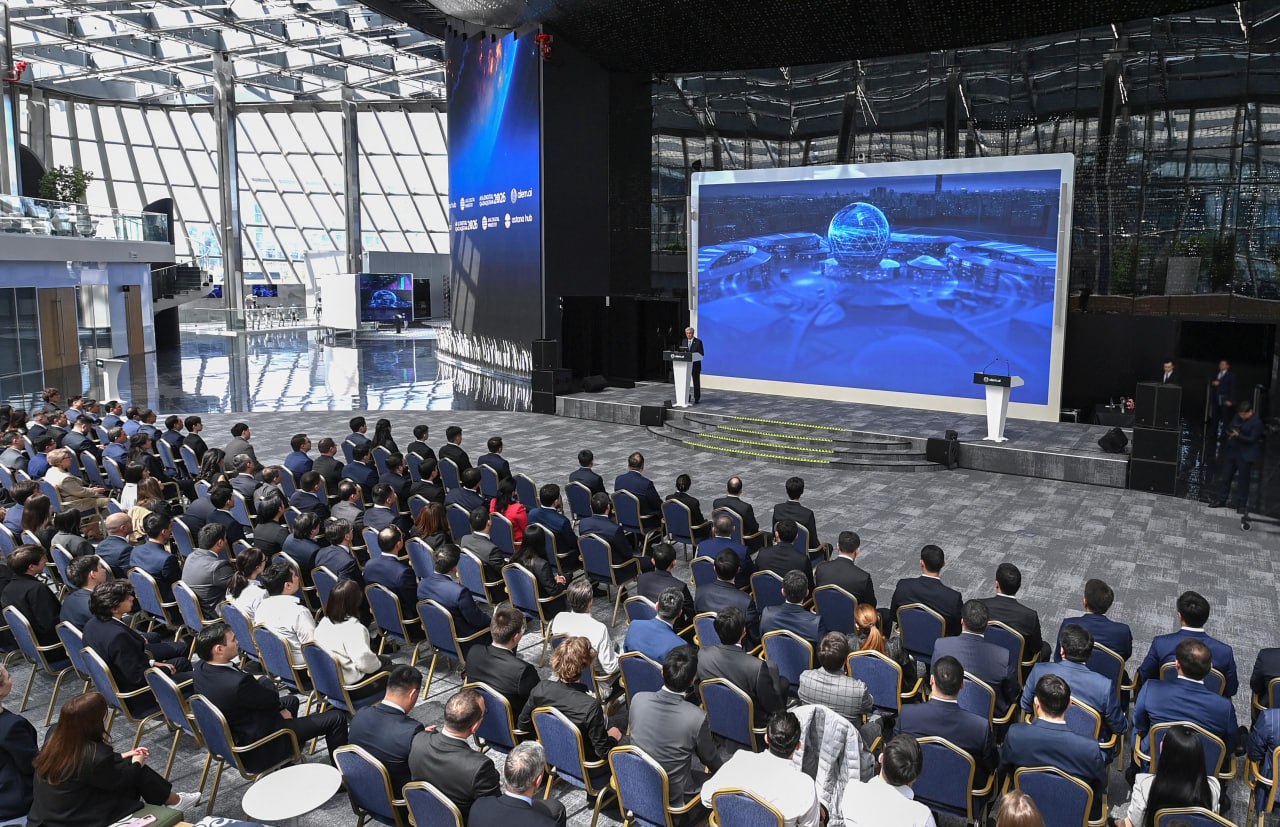
The national AI project competition alem.ai battle has concluded at the International Artificial Intelligence Centre alem.ai, having attracted approximately 830 applications from across all regions of Kazakhstan. Twenty of the strongest teams reached the final.
In the Year of Digitalisation and Artificial Intelligence, the competition became one of the largest AI initiatives, bringing together schoolchildren, students, startups, and researchers. The initiative covers the full development cycle of AI solutions — from first prototypes to projects with proven market demand and real users.
Opening the final, Deputy Prime Minister and Minister of Artificial Intelligence and Digital Development of the Republic of Kazakhstan Zhaslan Madiyev noted that alem.ai battle reflects the systematic work being done to develop the AI ecosystem and human capital in the country.
"AI talent today is a real driving force for Kazakhstan. We are creating an ecosystem where the path to success is clear to everyone: from writing your first lines of code at school to a world-class research project. The ministry's task is to ensure this seamless connection across generations. We are engaging thousands of young minds so that tomorrow the phrase 'Made in Kazakhstan' becomes an internationally recognised mark of quality in artificial intelligence," he stressed.
The competition was held across four key categories, with winners determined in each.
In the AI Young Talents category (schoolchildren), victory went to the SuGuard project. The team developed an AI system for the non-invasive assessment of glucose levels and early detection of diabetes risk. The result earned participants gaming laptops for further development and scaling of their idea.
In the AI Driving Power category (students), the winning team was Ustaz AI, which received 5 million tenge. Their platform takes on a significant portion of teachers' routine work: generating assignments, producing learning materials, and helping manage the educational process — allowing teachers to focus on more meaningful engagement with their students.
In the AI Innovators category (researchers), first place and 7 million tenge went to Robio. This is an AI-powered hardware solution - a tactile glove with artificial intelligence that helps doctors identify breast tissue abnormalities with exceptional precision at early stages. The technology digitises the palpation process, converting subjective sensations into precise, measurable data and enabling the detection of lesions, their size, and localisation. According to the team, the system demonstrates approximately 90% accuracy, outperforming human perception across a number of parameters; the project has already been validated on prototypes and is preparing for clinical trials.
In the AI Future Builders category (startups), the main prize of 10 million tenge went to NCSpeech. This is a decentralised service that integrates into SuperApps and converts users' waiting time into valuable AI assets, enabling the collection of high-quality "live" datasets for model training. The solution addresses one of the market's key challenges - the shortage of real-world data, particularly for sovereign models and low-resource languages. The project already demonstrates proven traction and experience working with enterprise clients, including in international markets, and has attracted pre-seed investment from Antler.
Togzhan Syrymova, head of the Robio project, shared her reflections on the victory:
"For us, participating and winning in the competition is, above all, confirmation that our project has real value not only from a scientific but also from a practical standpoint. It means we are moving in the right direction — transitioning from laboratory research to creating a technology that can be implemented in medicine. This victory opens new opportunities for us: strengthening collaboration with clinical partners, attracting investment, and accelerating the transition to clinical trials. It is also recognition of the hard work of the entire team. Reaching the final and winning is the result of lengthy research, experimentation, and the continuous refinement of our technology."
Project evaluation was carried out by an expert jury comprising leading representatives of the venture industry and the technology business: Askar Belisbekov, CEO of Qazaqstan Venture Group LTD; Ruslan Rakymbay, Investment Director at Quest Ventures; Bakhtiyyor Eshonkulov, CEO of Astana Hub Cloud; Rinata Ilyubayeva, CEO of Tumar Innovation Hub; and Aslan Sultanov, founder of White Hill Capital.
The competition was organised by Astana Hub with the support of the Ministry of Artificial Intelligence and Digital Development of the Republic of Kazakhstan.
alem.ai battle is part of the strategic alem.ai initiative aimed at developing human capital and shaping a new generation of artificial intelligence specialists.