Digital transparency: how the Ministry of Finance is strengthening control over the use of public funds
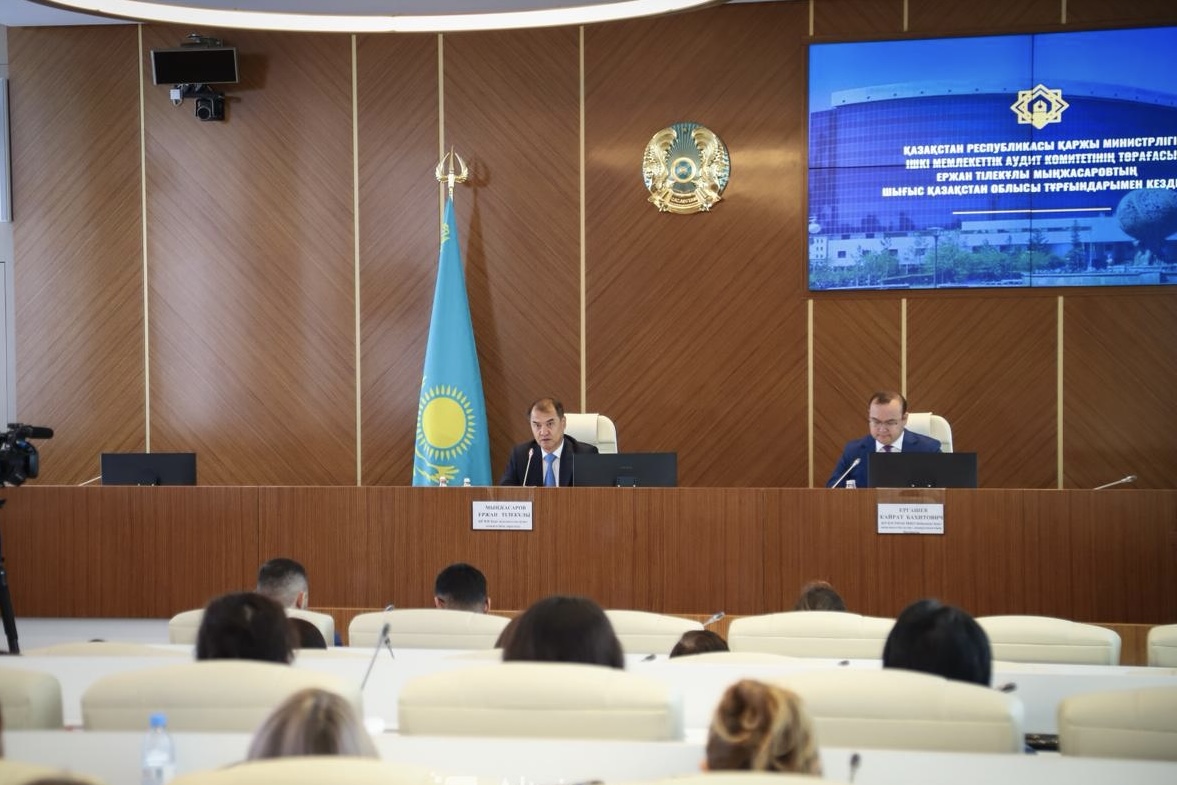
The Ministry of Finance is implementing the “Listening State” concept, which envisions open dialogue with citizens. This approach allows for the consideration of the real needs of Kazakhstan’s population, the adaptation of legislation to modern conditions, and a prompt response to emerging challenges.
As part of the implementation of this concept, today in Ust-Kamenogorsk, Chairman of the Committee for Internal State Audit of the Ministry of Finance of the Republic of Kazakhstan, Yerzhan Mynzhasarov, met with citizens and representatives of budgetary organizations from the East Kazakhstan region.
In his speech, the head of the agency presented the Committee’s performance results for the first half of the current year and highlighted achievements in applying a risk-oriented approach, preventive audit methods, and the active implementation of digital audit tools.
To date, the Committee has outlined new conceptual directions for development. A transition will be made to desk-based control over the fulfillment of contractual obligations, the planning of public expenditures and accounting in government institutions, as well as to a notification system for payroll monitoring and preventive audit control in the real sector.
One of the key innovations has been the launch of the "Online Budget Monitoring" module, deployed within the information system of the Ministry of Finance of the Republic of Kazakhstan. Since the beginning of the year, this tool has helped identify unlawful payments totaling 1.2 billion tenge, of which 775.4 million tenge have already been returned to the budget.
Another significant audit tool is the "Cloud Accounting" project, which enables real-time tracking of over 192 million accounting records and transactions.
The ultimate goal of this tool is to provide ongoing support to state audit entities, eliminate potential manipulations in accounting, and enable remote monitoring, which reduces the burden on audit subjects and enhances financial discipline.
An equally important area of work is the audit of government expenditures at the planning stage. With the help of the "State Planning" information system, deficiencies and inefficient budget requests are being identified already during the budget formulation phase. For example, during the planning of the 2026–2028 budget, instances of poor planning were identified totaling 1.5 trillion tenge.
“We are building a system in which every tenge of budget funds can be tracked in real time. This eliminates opportunities for abuse and increases public trust in state institutions. Digital tools allow not only for identifying violations after the fact, but also for preventing them at the planning and execution stages of the budget. This approach makes state audit as transparent as possible, improves management efficiency, and creates a solid foundation for the country’s sustainable economic development,” emphasized Yerzhan Mynzhasarov, Chairman of the Committee for Internal State Audit of the Ministry of Finance of the Republic of Kazakhstan.