Constitution of Kazakhstan published in Braille for the first time
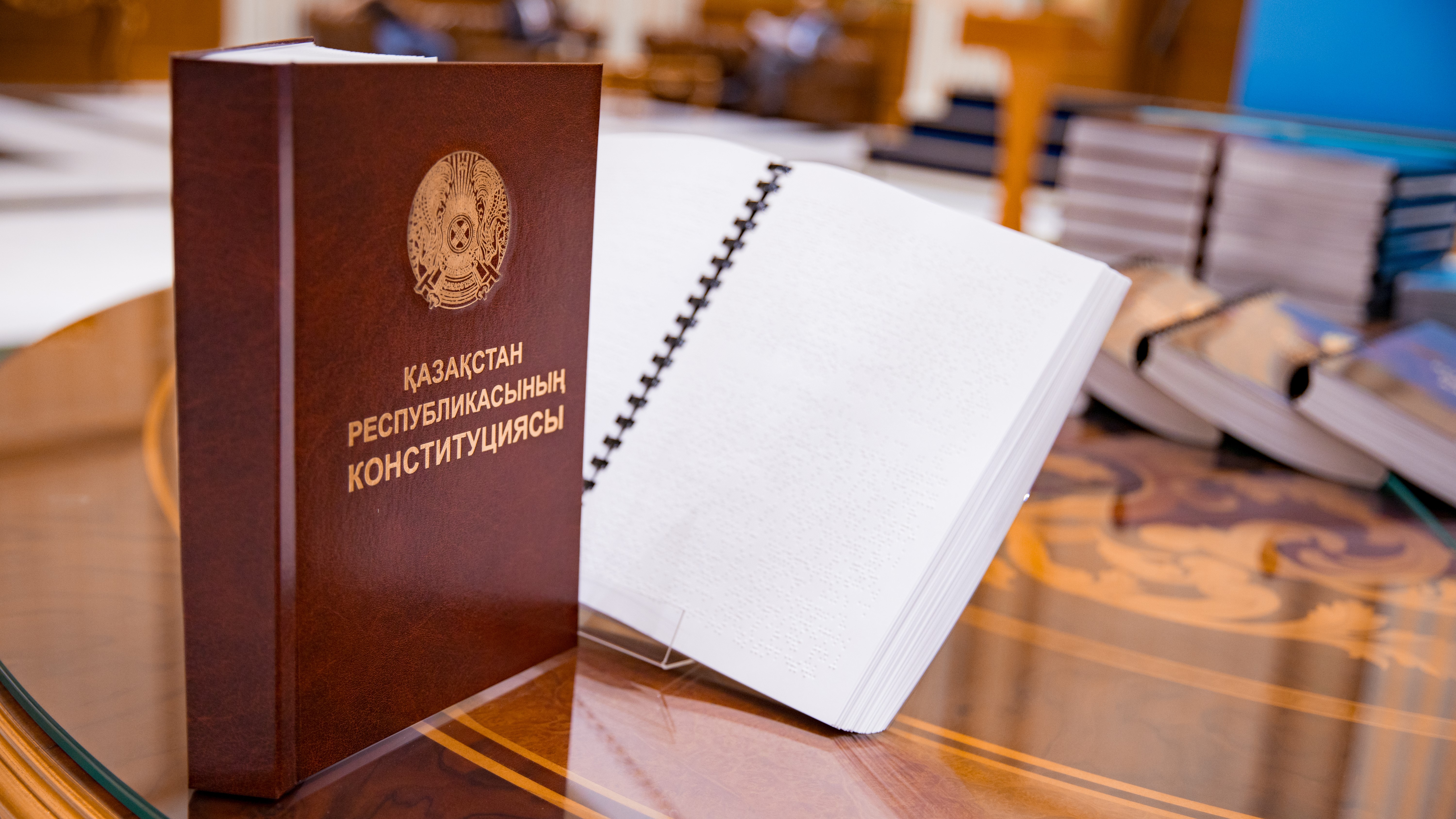
The Constitutional Court has presented the Constitution of the Republic of Kazakhstan in Braille for the first time, available in both state and Russian languages. This initiative, aimed at making the Basic Law accessible to citizens with serious visual impairments or blindness, is supported by the OSCE Programme Office in Astana and the Ministry of Culture and Information.
The presentation was attended by ambassadors from foreign states, representatives of international organizations accredited in Kazakhstan, members of Parliament and state bodies, as well as representatives from non-governmental organizations and the scientific community of Kazakhstan.
Elvira Azimova, Chairman of the Constitutional Court, noted that creating an accessible environment is fundamental to the constitutional guarantees of equality before the law and access to justice. “The ‘Fair Kazakhstan’ policy confirms the state's commitment to ensuring human rights and freedoms and to combating discrimination. The Constitutional Court will continue to promote the principles of equality, dignity, and justice for all, in accordance with the Constitution of Kazakhstan and the Universal Declaration of Human Rights. The publication of the Constitution in Braille is our joint contribution to promoting this policy,” said Azimova.
In turn, Volker Frobarth, Head of the OSCE Programme Office in Astana, emphasized that the publication of the Constitution of Kazakhstan in Braille demonstrates the commitment of Kazakhstan's constitutional review body to human rights values and an inclusive approach to ensuring equal access to information.
Kazakhstan is a party to the UN Convention on the Rights of Persons with Disabilities, which calls on States parties to take appropriate measures for the full participation of individuals in all aspects of life. This includes ensuring that persons with disabilities have access to information, education, equality before the law, equal legal protection, and access to justice.
Braille editions of the Constitution will be distributed to 56 institutions, including national and regional libraries, training centers, and specialized schools.
According to the World Health Organization, there are 160,000 visually impaired people in Kazakhstan. The Ministry of Labour and Social Protection reports that there are 85,000 blind people in Kazakhstan, including more than 4,000 visually impaired children, of whom about 350 are blind.