Healthcare experts discussed mechanisms for responding to biological threats at state border checkpoints
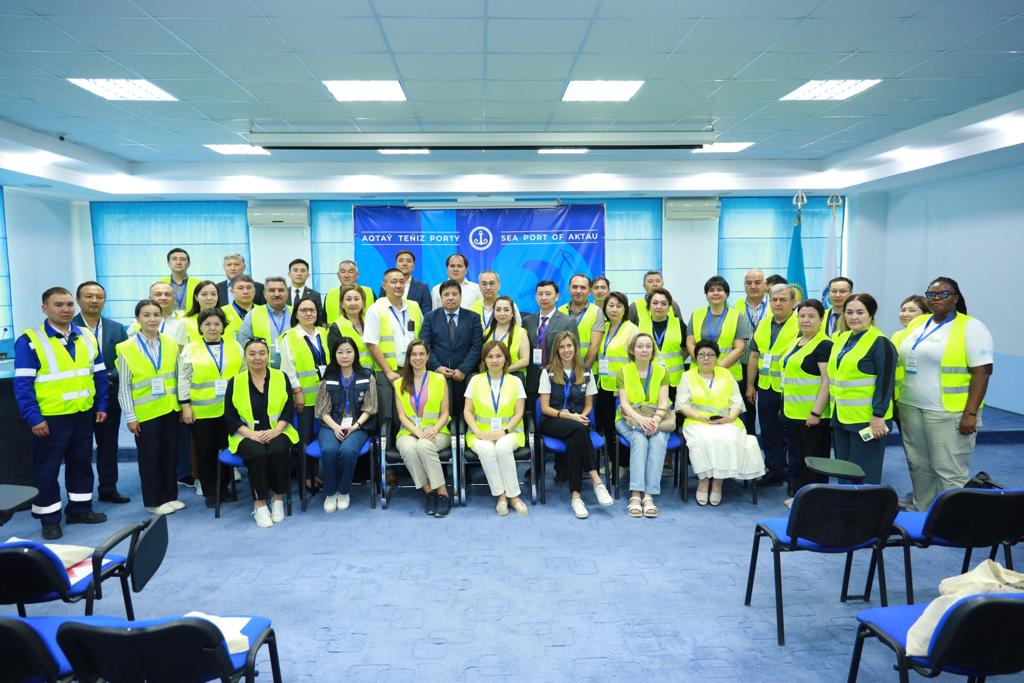
From May 29 to June 2, 2023, Aktau is hosting the Subregional Training Workshop on the International Health Regulations (2005): a framework for assessing core capacity requirements at designated airports, seaports and ground crossings. The event was attended by representatives of national public health authorities, customs and border services of the countries of Central Asia and Azerbaijan, experts from the Regional European Bureau of the World Health Organization (WHO), the International Organization for Migration at the UN, the General Directorate of Border and Coastal Health of Turkey and other international organizations.
The subregional workshop was organized by the Ministry of Healthcare of the Republic of Kazakhstan in cooperation with the WHO Country Office in Kazakhstan.
At the workshop, participants discussed the use by States Parties of a mechanism for responding to biological threats at points of entry at airports, seaports and ground crossings in accordance with the International Health Regulations (IHR). In addition, country representatives shared their experience of measures taken to prevent the importation and spread of infectious diseases among the population in accordance with the IHR and experience in combating COVID-19.
The trainees also got acquainted with the WHO guidelines on the certification of airports and seaports, on the inspection of ships and the issuance of ship sanitary certificates. WHO recommendations were practically applied in the exercises during the workshop.
Based on the results of familiarization with the activities of the sanitary and epidemiological service for the implementation of sanitary and quarantine control at the Aktau International Airport and the Aktau seaport, WHO experts and seminar participants noted the high readiness to respond to public health emergencies and the level of interdepartmental interaction of all control services at points of entry.
Based on the results of the seminar, the Ministry of Healthcare of the Republic of Kazakhstan plans to conduct an internal assessment at the country's checkpoints for compliance with the IHR, develop standard operating procedures for cross-border cooperation, improve the skills of specialists at sanitary quarantine points and conduct interdepartmental trainings for authorized bodies at checkpoints.