Asan DARBAYEV, CRNM: "Non-fulfillment of obligations revealed"
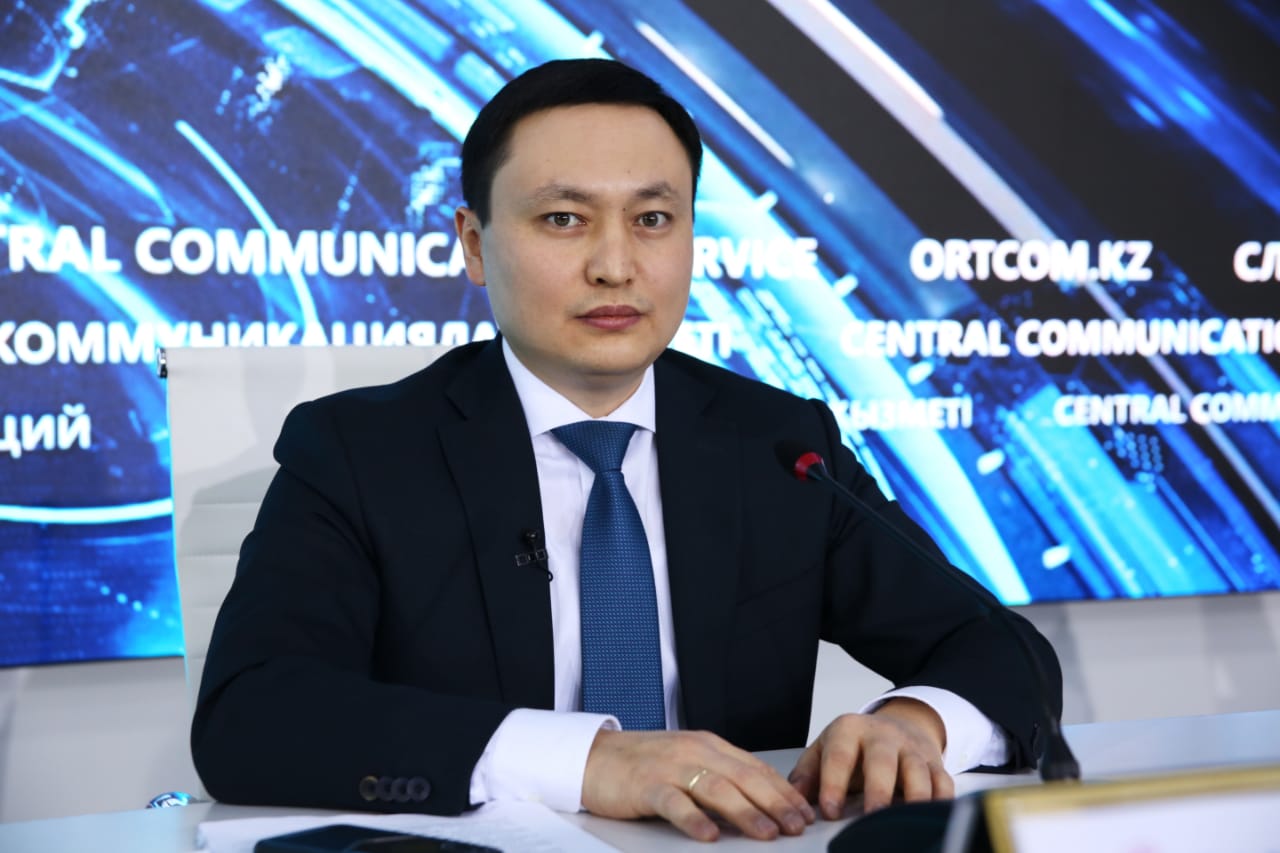
Every year residents of the cities of Kazakhstan cannot understand why the heating tariff is different every month. The main question that people ask is: "Are we being cheated?". Chairman of the Committee on Regulation of Natural Monopolies of the Ministry of National Economy of the Republic of Kazakhstan Asan Darbayev in an interview with the DC told how the tariff for heat is formed and in which cities the subjects of natural monopolies have already received their deserts for collecting extra money from the population.
- Asan Kobentaevich, the heating tariff is constantly changing from November to April. Please tell us how it can fluctuate taking into account the temperature of the air outside, which affects the tariff in the heating season?
– The level of the tariff for thermal energy depends on the level of costs required for the production, transportation and supply of thermal energy. In addition, its level depends primarily on the cost and type of fuel (gas, coal, fuel oil), in the structure of which it reaches about 60%. Accordingly, the change in fuel prices, as well as for its transportation, entails a significant change in the tariff for heat supply services.
So, in the northern regions, coal is the main type of fuel in the production of thermal energy. The technological process in the production of heat in the southern regions is designed to use fuel oil and natural gas as fuel. In addition, the tariff for heat supply services is differentiated depending on whether or not the consumer has a heat energy metering device (hereinafter referred to as OPUTE).
At the same time, the cost of payment for heating services is formed based on the quadrature of the apartment and the outdoor temperature, which is based on the dependence of the volume of consumption of thermal energy required for heating 1 sq. m. Accordingly, the lower its degree, the more gigacalories are needed to generate heat.
I'll give you an example. In December, the outdoor air temperature is significantly lower than in November, respectively, in order to maintain the parameters of the coolant (in accordance with the established temperature regime), the volume of thermal energy consumption for heating increases.
The amount of payment for heat in the presence of the same OPUTE is determined based on the monthly reading and the approved tariff. And in the absence of an OPUTE, payment for thermal energy is made by the population, based on the rate of consumption of thermal energy per 1 sq. m, approved by the local executive body, and the tariff for heat supply services for the population that does not have metering devices.
The presence of an OPUTE in the house is effective primarily for the consumer himself, as it allows you to save on heat supply services.
Currently, the average equipment of OPUTE with basic subjects of natural monopolies in cities of republican and regional significance is about 74%. Equipment over 90% in Nur-Sultan (JSC "Astana-Teplotransit", 99%), West Kazakhstan region (Uralsk, JSC "Zhaiykteploenergo", 100%), Karaganda region (Karaganda, LLP "Teplotransit Karaganda", 94%).
In accordance with the Law of the Republic of Kazakhstan "On ensuring the uniformity of measurement", meters are subject to verification, which is carried out by the state metrological service, as well as metrological services of legal entities accredited for this type of activity, 1 time every 4-5 years, depending on the type of metering device.
Thus, we urge consumers, together with KSK, or AXIS or PT, to carry out the verification of metering devices in a timely manner, in order to save their own money – in residential buildings where the verification period of metering devices has expired, currently payment is made according to the approved consumption rate (approved by local executive bodies), which is higher compared to the payment, which was made based on the monthly readings of household metering devices.
– Why in two identical houses in the same city in the same month, the heating fee may differ by 2 times (conditionally, in house A 44 tg / sq., and in house B 78 tg/ sq.)? What is the reason for this?
– It should be noted that in accordance with the legislation of the Republic of Kazakhstan on natural monopolies, the tariff for heat supply services is differentiated depending on the presence or absence of OPUTE.
Thus, the reasons for the difference in heating fees in two identical houses may be the presence/absence of an OPUTE (if the device is installed in one house and there is no device in the other, then, accordingly, the house that does not have it will pay more). If there is an OPUTE in both houses, the difference in cost is related to the actual consumption of the amount of thermal energy (the first house can consume more than the second house). In addition, the reasons for the difference in the fee may be the interval for taking meter readings (for example, in November – 29 days, in December - 32 days).
Also, in some cases, different payments in two similar houses are caused by different age and condition of the houses, differing levels of energy saving, and so on.
– How can the consumer check that due to seasonal fluctuations in the heating tariff, the monopolist heat supplier is shortchanging us? Do they return money to people if it turns out that they were charged more than they needed?
– In accordance with the Standard Contracts for the Provision of Regulated Services, the consumer has the right to demand from the supplier a recalculation for the payment of services for the supply of thermal energy and compensation for real damage caused by under-delivery or supply of substandard thermal energy, in accordance with the terms of the concluded contract.
It should be noted that at the beginning of this year, as part of complaints and appeals from citizens regarding illegal and inflated heat bills in receipts for December 2020 and January 2021, unscheduled inspections were opened in a number of regions of the country against natural monopolies providing services in the field of heat supply.
Thus, according to the results of completed unscheduled inspections in the regions, violations were revealed in terms of poor-quality provision of services, inconsistencies of concluded contracts with consumers with Standard contracts for the provision of regulated services, as well as incorrect accrual of payment for services provided.
These violations were detected in Nur-Sultan, Karaganda, Kyzylorda and Pavlodar regions. According to the revealed violations against monopolist entities, orders were issued to eliminate violations of the legislation on natural monopolies and administrative penalties were brought to administrative responsibility and administrative fines were imposed under parts 4) and 5) of Article 164 of the Administrative Code. The total amount of fines imposed amounted to 70.4 million tenge.
Also, monopolistic entities (Shymkent, Aktobe, Ust-Kamenogorsk, Kostanay, Kyzylorda) made a refund of consumers' funds in the amount of 8.2 million tenge by recalculating the amount of payment for heat supply services. In addition, consumers who do not have an OPUTE are annually refunded the overpaid money for heat, taking into account the actual outdoor temperature during the heating period.
The refund of funds to consumers for heat supply services is made by reducing the amount of payment for the invoices issued by the amount of recalculation. As a result of recalculation, the refund of the accrual of funds is reflected in the consumer's personal account and is written in a separate line in the form of an advance (balance).
Over the past heating period of 2020-2021, the subjects of natural monopolies providing services in the field of heat supply, based on the outdoor temperature, recalculated. The amount of payment for thermal energy to be refunded amounted to 413,909.03 thousand tenge, including VAT.
– Did the CRNM manage to contain the tariffs? If yes, then briefly - in which regions and for which services?
– Currently, the Committee on Regulation of Natural Monopolies of the Ministry of National Economy is systematically working to prevent unjustified growth of utility tariffs.
It should be noted that the cost of the tariff for regulated services of natural monopolies is formed taking into account many factors.
At the same time, the level of the tariff for heat supply depends primarily on the cost and on the type of fuel (gas, coal, fuel oil), in the structure of which it reaches about 60%. Also affected are: an increase in prices for materials and raw materials in unregulated sectors of the economy, for goods and services of third-party organizations; changes in the level of tax rates; the number of subscribers; the volume of services provided; the value of assets on the balance sheet of the enterprise; the length of heating networks, and so on.
At the same time, in accordance with the legislation of the Republic on natural monopolies, the authorized body analyzes reports of subjects of natural monopolies on the execution of the approved tariff estimates; the execution of the approved investment program; compliance with quality and reliability indicators of regulated services, as well as - the achievement of performance indicators of subjects of natural monopolies.
Particular attention is paid to monitoring the implementation of investment programs. Monitoring of the subject's implementation of investment programs and tariff estimates is carried out annually. Failure by the subject to fulfill certain obligations, for example, for modernization and development, which the subject assumed upon receipt of the tariff, entails the introduction of a compensating tariff by the Committee (return of undeveloped funds to consumers).
In 2021, according to the results of the analysis of the execution of tariff estimates and investment programs of natural monopolies in the field of heat supply, non-fulfillment of obligations of the SEM were revealed, in connection with which temporary compensating tariffs for 103 natural monopolies totaling over 6.6 billion tenge were approved in the regions of the country, taking into account the refinancing rate, the largest of them in the following cities: Kyzylorda, Kokshetau and Uralsk.
Thus, the Committee is taking measures to curb the growth of tariffs by introducing temporary compensating tariffs; reducing non-priority activities of the investment programs of the SEM. In general, the above measures made it possible to ensure the preservation of tariffs without increasing for the population.
At the same time, in the city of Shymkent and the North Kazakhstan region (Petropavlovsk), tariffs for heating services for the population remain at the level of two years ago. In addition, the current tariffs for the population compared to January 2019 for basic entities providing heat supply services have been reduced in cities, the largest of them are in Taldykorgan (7.75%); Kostanay (12.77%) and Kyzylorda (14.47%).
Thus, as a result of the work carried out, the growth of tariffs for heat supply services of basic subjects for the population was restrained, on average, a decrease of 10.54%, for other consumers – by 1.04%.
The Committee, for its part, is doing a lot of work to prevent unjustified tariff increases for the population, observing the balance of interests of both consumers and subjects.
Source: https://dknews.kz/ru/kommentarii-dk/205714-asan-darbaev-krem-vyyavleny-neispolneniya