The activities of monopolists and dominants in state-regulated markets in a competitive environment.
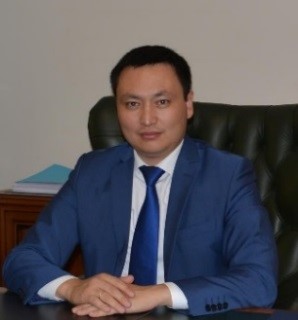
Author of the article: Darbayev Asan Kobentaevich, Chairman of the Committee on Regulation of Natural Monopolies of the Ministry of National Economy of the Republic of Kazakhstan
This year is marked by the 30th anniversary of the antimonopoly service. The creation of the antimonopoly authority dates back to the adoption on June 11, 1991 of one of the first "market" laws of the country designed to promote the development of entrepreneurship in the new conditions of economic reform - "On the development of competition and restriction of monopolistic activity".
At that time, the authorized body was under the jurisdiction of the President of the Republic and was accountable to the Supreme Council, which emphasized the importance that the country's leadership attached to these issues.
In the future, the antimonopoly authority underwent reorganization several times.
Thus, in 2004, the Agency of the Republic of Kazakhstan for Regulation of Natural Monopolies and Protection of Competition was reorganized again into the Agency of the Republic of Kazakhstan for Regulation of Natural Monopolies, with the transfer of the function of protection of competition to the Ministry of Industry and Trade of the Republic of Kazakhstan.
In August 2014, the Head of State signed a Decree "On the reform of the public Administration system of the Republic of Kazakhstan", according to which the Ministry of National Economy of the Republic of Kazakhstan was formed, which included the Agency for Statistics, the Agency for Regulation of Natural Monopolies, the Agency for Protection of Competition and the Agency for Consumer Protection.
In the same year, the Regulation on the Committee for Regulation of Natural Monopolies and Protection of Competition of the Ministry of National Economy of the Republic of Kazakhstan was approved. Subsequently, in 2017, consumer protection functions were added.
At the same time, in 2019, the Committee on Regulation of Natural Monopolies, Protection of Competition and Consumer Rights of the Ministry of National Economy was reorganized by dividing it into three committees and separating the Committee on Regulation of Natural Monopolies under the Ministry of National Economy.
The main task of the Committee is to participate in the formation and implementation of state policy in the areas of natural monopolies, as well as in the implementation of state price regulation and state control over compliance with the pricing procedure and the duties of a socially significant market entity.
In accordance with the Law "On Natural Monopolies", 14 spheres belong to the spheres of natural monopolies, while the Committee currently regulates 11 spheres. Earlier, until 2017, the authorized body deregulated 6 spheres in terms of individual services of airports, air navigation, ports, as well as oil and gas transportation. The first President of the country - Elbasy in 2014 stressed the need to modernize housing and communal services, water and heat supply networks.
Since 2015, taking into account the best international experience, a new policy of marginal long-term tariffs with a validity period of more than five years has been introduced, provided that they work on the basis of investment programs.
Today, about 250 subjects of natural monopolies operate at investment tariffs, which provides consumers with stability and predictability of tariffs, improving the quality of services by investing in the modernization of fixed assets.
This allowed investors to determine the investment horizon, entrepreneurs to predict the costs of tariffs and stop the growth of infrastructure depreciation.
World experience testifies to the possibility of effective functioning of these enterprises in private ownership.
For example, in England, after conducting extensive public and advertising campaigns in December 1989, shares of water and sewer holding companies were sold on the London Stock Exchange in the amount of about $ 8.4 billion. Currently, these ten privatized water and sewer holding companies serve about three quarters of the population of England and represent a combination of various forms of ownership.
They are independent of each other entities. These companies do not receive budget funding either at the state or municipal level. They generate funds for capital investments and operational programs by collecting payments from consumers, as well as using borrowed funds raised from capital markets, or by issuing shares placed on stock exchanges.
Also, experts generally positively assess the results of the privatization of the largest German state-owned enterprises. In Germany, there are two types of privatization, in the first case, the predominant state participation in capital remains (as, for example, with Deutsche Bahn AG) and in the second - the state parts with most of the capital (as, in the case of Deutsche Post AG). When privatizing enterprises or reducing the state's participation in capital in the field of public services, an assessment was made of how justified their privatization or outsourcing was. At the same time, there is a rule according to which the federal government should retain participation only in those state-owned enterprises in which it is extremely interested. In other cases, the priority in entrepreneurial activity belongs to a private initiative.
The study of international experience demonstrates that joint ownership of heat supply facilities is more widespread.
Companies with mixed ownership exist in France, for example, in Paris and Grenoble, where 51% of the shares are held by the municipality, the remaining 49% by one of the world's largest private energy service company Dalkia. In Helsinki (Finland), two companies are joint-stock companies with most of the shares held by the municipality. In Riga (Latvia), ownership is threefold: 49% of the shares are held by the state, 49% by the municipality, and 2% were given to the bank at one time to serve as an arbitrator, and now a foreign company has bought these 2%.
In Sweden, the share of municipalities and the state in the central heating supply is about 60%. Lithuanian legislation prohibits the purchase of heat power facilities into ownership – at least 70% of the shares of utility companies must belong to the municipality.
Today, Kazakhstan offers three formats for transferring SEM to a competitive environment: full targeted sale, partial sale (with at least 51% of the participation (shares) in communal ownership, i.e. to retain participation only in those enterprises in which there is significant significance) and transfer to trust management (DU) with subsequent redemption.
In order to strengthen the counter obligations of buyers, it is proposed to establish a condition on the availability of experience in managing organizations in the field under consideration, as well as to minimize risks in the sale of such assets - their transfer at the initial stage to the DU with subsequent redemption, which will allow a rational assessment of potential buyers of assets.
The establishment of facts of improper performance of contractual obligations is the basis for the return of assets to state ownership.
At the same time, measures will be taken to minimize the risks of inefficient functioning of subjects. So, a private investor will have to prove that he can provide better service and not more expensive than the state.
When implementing or transferring to the trust management of entities, it will be necessary to establish clear requirements for the activities of the entity, for example:
- establish a positive trend to reduce annual depreciation;
- establish positive dynamics to reduce annual losses;
- improving the efficiency of the entity by attracting new technologies aimed at reducing the cost of producing services (including energy efficiency);
- improving the quality of services provided (reducing emergency shutdowns, improving the quality of drinking water in apartments, providing hot water at the proper temperature, ensuring the supply of heat in apartments at the proper temperature, and more).
In general, the transfer of SEM to a competitive environment will contribute to:
- more effective management of enterprises, due to the interest of a private investor in achieving the established indicators and increasing the profitability of the enterprise;
- solving the problem of frequent turnover of the management of enterprises and making decisions that are of a short-term nature;
- reduce the funds allocated from the budget for the maintenance of these enterprises (subsidies, transfers);
- improving the quality and continuity of services provided to the population;
- to ensure the widespread implementation in the country of the principles of the "Yellow Pages Rule" (non-interference of the state in those areas of the economy where business is represented).
In general, the country's leadership today pays special attention to the development of competition and the creation of market relations, including in regulated markets.
Source: http://czk.kz/journal/zhurnal-rynok-i-konkurentsiya/2021-god/02-2021/
"Market and Competition" magazines
Since July 1, 2017, airport services in international directions have been deregulated, aviation security, excess parking of aircraft, provision of parking for aircraft at the base airfield.
In 2020, based on the results of the analysis of regulated services in the field of seaports (tanker ship entry), it was decided to deregulate services for the entry of a vessel into a seaport for transshipment of oil and petroleum products through pipelines to/from a tanker/tankers with subsequent exit from the port for export outside the Republic of Kazakhstan.
Since 2017, state price regulation has been abolished in some regulated markets: in the field of railway transport, electricity and heat power, production of petroleum products, oil transportation, civil aviation, port activities, telecommunications and postal communications, as well as gas. This is in line with the OECD recommendations presented following the results of the competition policy review in the Republic of Kazakhstan.
At the same time, taking into account that the abolition of price regulation leads to certain risks of biased price growth for services provided by market entities of certain industries that have a multiplier effect on the country's economy, price regulation of subjects of socially significant markets in 5 areas has been introduced: electric energy, gas, airports and rail transportation.
The Committee carries out state regulation of prices and state control over compliance with the pricing procedure and duties of a socially significant market entity, monitors prices of socially significant market entities, coordinates marginal prices for goods sold by socially significant market entities, and also conducts public hearings when considering notifications of socially significant market entities about the upcoming increase in prices for goods.
Pricing in socially significant markets is carried out in accordance with the Rules of Pricing in Socially Significant markets approved by the Order of the Minister of National Economy of the Republic of Kazakhstan dated February 1, 2017 No. 36.
Currently, the Committee regulates the activities of 61 subjects of socially significant markets, including 37 in the field of electric power, 18 in the field of gas, and 6 in the field of railway transport.
At the same time, work on the privatization of natural monopolies is actively underway today.
The Head of State has repeatedly stressed that "the state is not the best economic manager."
Therefore, the denationalization of the economy plays an important role in the development of equal competition.
In pursuance of the instruction of the Head of State, in order to further reduce the state's participation in the country's economy, a new 5-year Comprehensive Privatization Plan has been prepared until 2025. The new Plan includes 736 organizations, including 111 heat and water supply facilities.
Thus, as part of the implementation of the Comprehensive Plan until 2020, 45 objects in the field of heat and water supply have been alienated.