On the regulation of natural monopoly entities in the public utilities sector
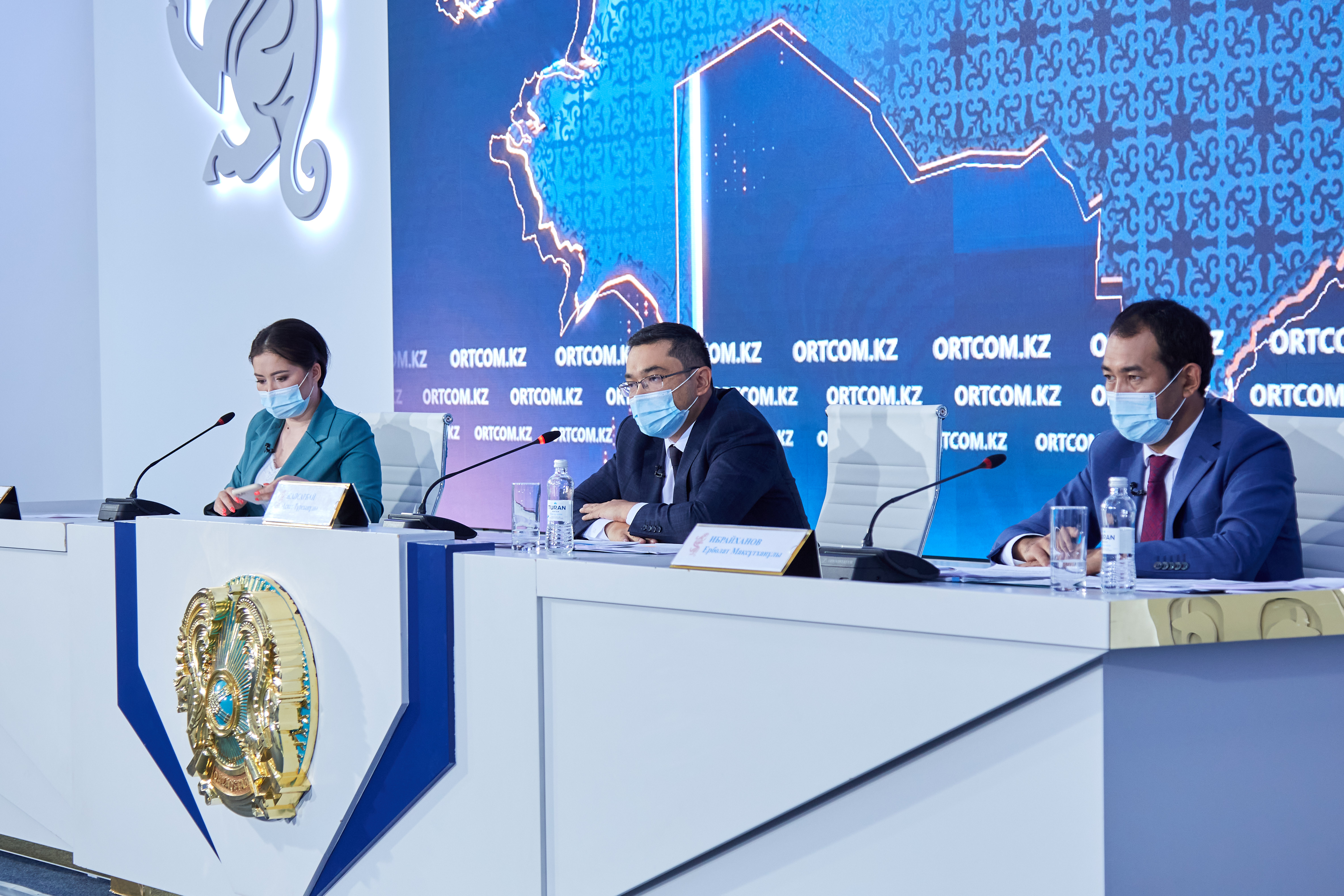
At a press conference today at the Central Communications Service under the President of Kazakhstan, Askhat Zhapsarbay, Acting Chairman of the Committee for Regulation of Natural Monopolies of the Ministry of National Economy of Kazakhstan (hereinafter - CRNM, Committee) spoke about how CRNM regulates subjects of natural monopoly in the utilities sector.
Askhat Zhapsarbay reported that since the beginning of 2021 it was projected to increase tariffs for the population for the services of 106 subjects of natural monopolies by 63%. However, the Committee did not allow this increase until the end of the first quarter of 2021, having taken appropriate measures in the form of introducing temporary compensatory tariffs, i.e. their reduction, reduction of non-priority measures laid down in the investment programs of monopolists and other measures.
"These measures have made it possible to keep tariffs at the same level for households until the end of the first quarter of 2021," the acting chairman of the CRNM stressed.
Also, he compared January 2020 with January 2021, where on average tariffs even decreased by -0.4%, including heating by -3.75%, water supply by -0.34%, wastewater by -1.37%, and only electricity tariffs increased by 3.92% due to increase in tariffs at plants as per the order of the Ministry of Energy.
As a result of ongoing efforts to curb tariff increases for households, a 0.11% contribution to inflation has been secured in all regions. This year, the estimated contribution from regulated service tariffs will also be below the established inflation corridor.
The acting head of the tariff regulator said that on behalf of the President of the Republic of Kazakhstan a road map has been developed, under which in 2020 the control over the activities of monopoly entities has been strengthened, the analysis of procurement of monopoly entities has been carried out, transparency of tariff setting, feedback to the population and reasonable tariffs have been provided, the efficiency of monopoly entities has been improved.
He also stressed that investment in the housing and utilities sector is not the least important for the interests and well-being of citizens.
"For the period 2021-2025 the investment programmes for housing and communal services were approved for a total amount of 966.6 billion tenge (including 171.4 billion tenge for heat power, 80.9 billion tenge for water supply and 23.8 billion tenge for sewage)," Zhapsharbay said. KZT636.3bn for electricity, KZT54.2bn for gas transportation," said Askhat Zhapsarbay, who shared information on investments to be made in the housing and utilities sector in 2021-2025.
In 2020, the CRNM fined natural monopolies by 1.006 billion tenge and in the first half of 2021 by 332.8 million tenge for violations of the law on natural monopolies.
"In the first half of 2021, 270 instructions were given, of which 162 were executed," Zhapsarbay said.
Also, the acting chairman of the CRNM noted that special attention is paid to monitoring the implementation of investment programmes.
An analysis of 1,389 reports (a total of 2,341 reports were received) revealed entities' failure to meet their obligations, resulting in provisional compensatory tariffs totalling KZT 10.2 billion (KZT7.9 billion for the failure to meet tariff estimates and KZT2.3 billion for investment programmes) that were provisionally approved in all regions.
In addition, as part of CRNM's annual effort to reimburse overpayments to consumers for heat based on the actual outside temperature during the heating season, more than 415 million tenge will be refunded to consumers for the 2020-2021 heating season.
"The recalculation of funds will be reflected in the consumer's personal account and will be entered in a separate line as an advance (balance) from the beginning of the new heating season," Askhat Zhapsarbay pointed.
He also reported on the changes in electricity and gas tariffs and what influenced this change.
For example, the Ministry of Energy's increase of tariffs of energy producing organisations by an average of 15% from April 1st this year led to an average price increase of 12.5% across the country, with an average price increase of 10% for households.
"In addition, the increase in tariffs of power generating organisations (plants), taking into account the RES surcharge, was on average 7.2%, and for the end consumer the projected increase in electricity prices was 3.5%," Askhat Zhapsarbay continued.
Also, the acting minister said that due to the increase in wholesale prices of marketable gas from 1 July this year by an average of 10% across the country, the increase in prices of marketable gas for end consumers from July 1st 2021 is about 6%.
"The ministry still continues to work to reduce the burden on the population as much as possible, taking into account the balance of interests of both consumers and entities," Askhat Zhapsarbay stressed.
In addition to all the mechanisms for public feedback, the CRNM operates the "Monopolist" information database, which gives absolutely everyone access to the materials of tariff estimates and investment programmes of monopolists at any time of the day or night.
"Nine thousand documents with third-party access have been filed through this information base," Askhat Zhapsarbay said.
There is also a Council on Tariff Policy, which is an advisory and consultative body under the Ministry of National Economy, and there are 17 regional commissions on tariff setting in the regions, which also include members of the public.
At the end of his speech, Askhat Zhapsarbay outlined the objectives that CRNM aims to achieve by the end of 2021.
"The main objective of the CRNM is to prevent unjustified growth of utility tariffs by the end of 2021, to improve the NPA in the sphere of natural monopolies, to develop new approaches to differentiated tariff setting for different consumer groups, as well as mechanisms of targeted assistance for the most socially vulnerable segments of population and others," the acting CRNM chairman said.
In conclusion, he assured that CRNM has always had and will continue to have a policy where the interests of consumers come first.